
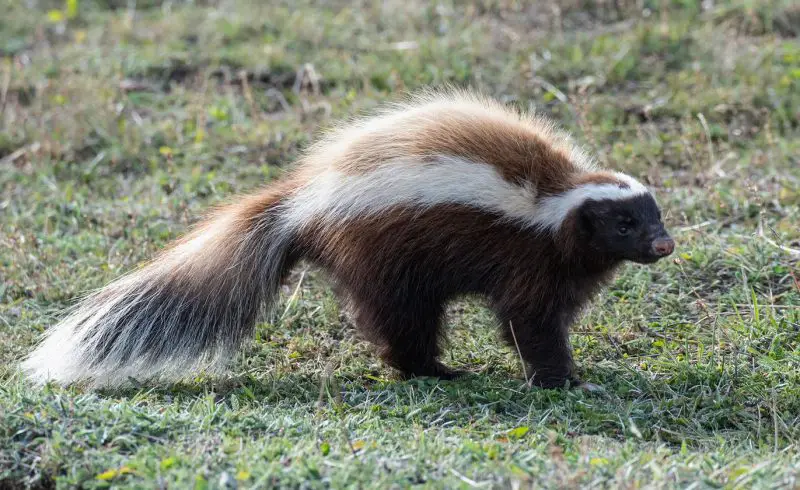
Florida homeowners are used to sharing space with wildlife. Raccoons wander neighborhoods at night. Armadillos leave shallow digging marks. Opossums quietly pass through gardens. But when small, neat holes suddenly appear across lawns, flower beds, or landscaped areas, many residents wonder what is responsible.
In some cases, the culprit turns out to be a skunk. While not always the first animal people associate with Florida, striped skunks do live in parts of the state, especially in northern and central regions. Their digging habits can leave subtle but noticeable evidence in residential yards, often discovered in the morning after nighttime activity.
Understanding why skunks dig, what those holes mean, and how environmental conditions influence their behavior helps homeowners respond calmly rather than assuming property damage or aggressive wildlife activity. Most skunk yard activity reflects feeding behavior rather than conflict.
Table of Contents
- 1 Are Skunks Actually Common in Florida
- 2 Why Skunks Dig Small Holes in Yards
- 3 Florida Climate Encourages Skunk Foraging
- 4 Healthy Lawns Often Attract Digging Wildlife
- 5 Nocturnal Habits Explain Overnight Damage
- 6 Distinguishing Skunk Holes From Other Wildlife
- 7 Landscaping Features That Attract Skunks
- 8 Burrows Versus Feeding Holes
- 9 Seasonal Patterns of Skunk Activity in Florida
- 10 Human Expansion Increases Wildlife Overlap
- 11 Are Skunks Dangerous to People or Pets
- 12 Ecological Benefits of Skunks
- 13 Misconceptions About Skunk Behavior
- 14 Preventive Strategies for Homeowners
- 15 Structural Concerns and Yard Holes
- 16 Cultural Presence of Skunks in Florida
- 17 Long-Term Outlook for Skunks in Florida
- 18 When Professional Help May Be Needed
- 19 FAQs About Skunk Holes in Florida Backyards
- 19.1 Why do skunks dig small holes in Florida lawns
- 19.2 Are skunk yard holes dangerous to property
- 19.3 How can I tell if a skunk made the holes
- 19.4 Do skunks damage lawns intentionally
- 19.5 Are skunks aggressive toward people
- 19.6 What attracts skunks to Florida backyards
- 19.7 Is it safe to let pets outside if skunks are nearby
- 19.8 Will skunks eventually leave on their own
- 20 Final Thoughts
Are Skunks Actually Common in Florida
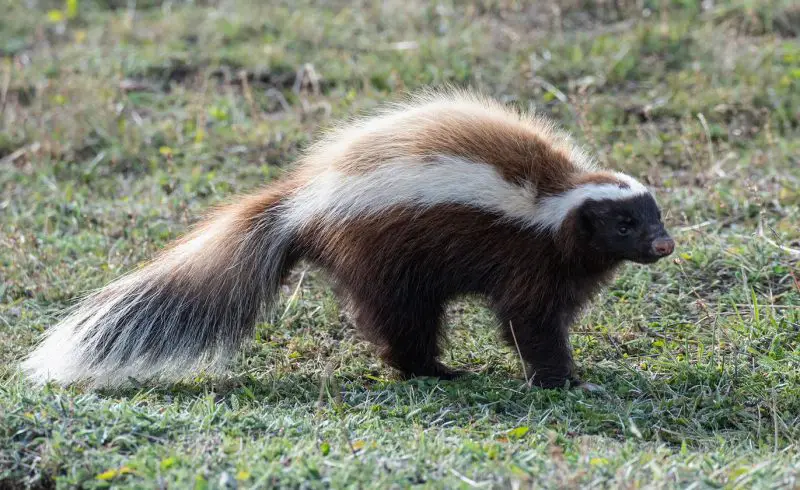
Striped skunks occur across a large portion of North America, and parts of Florida fall within their southern range. They are most commonly found in northern and central Florida, where mixed forests, agricultural edges, wetlands, and suburban greenbelts provide the blend of shelter and food sources they prefer. South Florida generally supports fewer populations, largely due to habitat differences and higher competition from other wildlife species, although occasional sightings still happen.
Florida’s relatively mild winters play a major role in supporting skunk survival. Unlike northern states where prolonged cold can limit activity, Florida temperatures rarely force skunks into extended inactivity. Abundant insect life, year-round vegetation growth, and reliable water sources allow them to remain active most months of the year. This consistency naturally increases the chances of backyard encounters, even if residents rarely see the animals directly.
Because skunks are nocturnal and tend to avoid human contact, homeowners often notice only indirect signs of their presence. Small holes in lawns, disturbed mulch beds, or overturned garden soil frequently serve as the first clues. These subtle indicators reflect environmental suitability rather than sudden population surges, even though they may appear new or surprising.
Their presence usually signals habitat compatibility more than an increase in skunk numbers.
Why Skunks Dig Small Holes in Yards
Food drives most skunk digging behavior. Skunks feed heavily on soil invertebrates such as beetle larvae, grubs, ants, termites, worms, and similar organisms. Moist lawns, irrigated gardens, compost-rich soil, and shaded turf areas often concentrate these prey species, making residential yards attractive feeding grounds.
Equipped with strong front claws and a sensitive sense of smell, skunks detect prey beneath the soil surface. Once located, they dig shallow, cone-shaped holes, usually only a few inches deep. Because they forage while moving continuously, the holes often appear scattered across an area rather than clustered in one spot.
This activity reflects routine feeding rather than territorial behavior or aggression. Most holes are superficial and cosmetic, affecting lawn appearance more than structural integrity. Understanding this distinction helps homeowners interpret yard changes more accurately and avoid unnecessary concern.
Digging represents survival behavior, not hostility.
Florida Climate Encourages Skunk Foraging
Florida’s climate strongly influences wildlife behavior, including skunk foraging patterns. Warm temperatures stimulate insect populations year-round, ensuring a steady food supply. Frequent rainfall keeps soil soft and supports invertebrate survival, which makes digging easier and more productive.
Residential irrigation systems, landscaping practices, and humidity levels further enhance insect availability. Lawns receiving regular watering often attract grubs and other insects, which in turn attract nocturnal foragers like skunks. Even during drier periods, localized moisture near air conditioning runoff, irrigation systems, or shaded vegetation can maintain prey populations.
Climate conditions therefore shape skunk visibility without necessarily affecting population size. Weather patterns influence activity levels and encounter frequency more than many homeowners realize.
Environmental factors guide wildlife behavior quietly but consistently.
Healthy Lawns Often Attract Digging Wildlife
Interestingly, lawns showing skunk digging are often biologically productive. Healthy soil supports insect populations, organic matter, microbial communities, and nutrient cycling that benefit plant growth. These same factors attract wildlife that feeds on soil organisms.
While digging can temporarily disrupt lawn appearance, it sometimes signals fertile soil conditions rather than environmental imbalance. Many gardeners recognize that insect presence correlates with productive soil ecosystems. Skunk activity may therefore reflect natural ecological processes already occurring underground.
Understanding this connection can reduce alarm. Wildlife signs frequently indicate environmental vitality rather than damage alone.
Nature often communicates through subtle clues.
Nocturnal Habits Explain Overnight Damage
Skunks are primarily nocturnal animals, foraging after sunset when temperatures are cooler and predator risk decreases. This explains why homeowners typically discover fresh holes in the morning despite not witnessing the activity.
Nighttime feeding also minimizes direct human interaction. Skunks generally prefer avoidance and rely on escape or defensive displays rather than confrontation. Their well-known spray is usually a last resort triggered by perceived threat rather than routine behavior.
Motion-activated cameras frequently reveal skunks quietly investigating lawns at night, often moving methodically rather than aggressively. Observing these patterns helps clarify that yard changes rarely indicate sudden wildlife arrival.
Gradual activity often appears sudden simply because it occurs unseen.
Distinguishing Skunk Holes From Other Wildlife
Florida hosts several digging animals, so correct identification helps avoid misinterpretation. Armadillos typically leave slightly deeper, elongated holes and may create more extensive soil disturbance. Raccoons often tear sod or dig more aggressively while searching for food. Moles create tunnels beneath the surface rather than open holes.
Skunk holes tend to be small, shallow, and cone-shaped, with loose soil pushed outward. Their relatively uniform size and scattered distribution often distinguish them from other wildlife signs.
Accurate identification supports appropriate response strategies and reduces unnecessary worry.
Misidentification often drives exaggerated concern.
Landscaping Features That Attract Skunks
Certain landscaping elements naturally increase the likelihood of skunk visits. Moist lawns, mulched garden beds, compost piles, outdoor pet food, fallen fruit, and lighting that attracts insects all create favorable feeding conditions.
These features do not cause wildlife problems directly but provide resources that animals utilize. Adjusting irrigation schedules, securing compost, and reducing accessible food sources can decrease wildlife interest without harming soil ecology.
Habitat management often proves more effective than deterrents alone.
Small environmental adjustments frequently produce noticeable results.
Burrows Versus Feeding Holes
Most backyard holes result from feeding, but skunks may also dig burrows for shelter. These larger openings usually appear near structures, woodpiles, dense vegetation, or brush lines where protection from weather and predators is available.
Burrows provide daytime resting places and safe refuge during harsh weather. Feeding holes, however, remain far more common in residential yards.
Recognizing the difference helps homeowners determine whether activity is temporary or ongoing.
Context guides appropriate response.
Seasonal Patterns of Skunk Activity in Florida
Even without harsh winters, Florida experiences seasonal fluctuations that influence wildlife behavior. Spring and summer typically bring increased insect activity, encouraging more frequent skunk foraging. Autumn may also see sustained feeding as animals take advantage of available food.
Winter rarely halts activity entirely, although cooler temperatures may slightly reduce movement. These predictable seasonal patterns help explain periodic increases in yard disturbance.
Understanding cycles reduces surprise and improves interpretation.
Nature tends to follow recurring rhythms.
Human Expansion Increases Wildlife Overlap
Ongoing residential development across Florida continues expanding into areas previously occupied primarily by wildlife. Retention ponds, landscaped communities, irrigated lawns, and green corridors often replicate natural habitats.
Wildlife adapts quickly. Skunks find food sources, shelter opportunities, and reduced predator pressure in suburban environments. This overlap increases sightings even if population numbers remain stable.
Visibility often reflects proximity rather than population growth.
Human expansion reshapes ecological boundaries.
Are Skunks Dangerous to People or Pets
Skunks rarely behave aggressively toward humans. They generally prefer avoidance and rely on warning signals before spraying, including foot stomping, tail raising, and brief facing behavior. Respecting these signals typically prevents escalation.
Rabies risk exists with any wild mammal but remains relatively low. Most skunks encountered in residential settings are healthy and non-threatening.
Maintaining distance and supervising pets outdoors usually prevents problems.
Understanding behavior promotes safer coexistence.
Ecological Benefits of Skunks
Despite nuisance perceptions, skunks contribute positively to ecosystems. Their feeding helps control insect populations that might otherwise damage lawns, gardens, or crops. Digging activity can aerate soil and improve nutrient mixing.
Skunks also serve as prey for larger predators, contributing to balanced food webs. Eliminating them indiscriminately can disrupt natural pest control dynamics.
Predators often stabilize ecosystems in subtle ways.
Balance benefits biodiversity.
Misconceptions About Skunk Behavior
Popular culture often exaggerates skunk aggression and odor frequency. In reality, spraying is energetically costly and typically reserved for perceived threats. Most backyard visits involve quiet feeding rather than defensive encounters.
Understanding actual behavior helps reduce unnecessary fear. Accurate information encourages rational responses rather than reactive ones.
Knowledge replaces myth.
Education improves coexistence.
Preventive Strategies for Homeowners
Reducing skunk digging usually involves environmental management rather than aggressive action. Responsible grub control, balanced irrigation, secure garbage storage, removal of outdoor pet food, fencing adjustments, and general yard maintenance all help reduce attractants.
Consistency over time produces better results than drastic short-term interventions.
Preventive awareness supports sustainable coexistence.
Small habits matter.
Structural Concerns and Yard Holes
Most feeding holes are superficial. However, burrows near foundations, crawl spaces, or decks should be monitored because repeated digging could eventually affect soil stability.
Observation and early response help prevent long-term issues.
Context determines significance.
Awareness supports informed decisions.
Cultural Presence of Skunks in Florida
Although not as iconic as alligators or armadillos, skunks remain part of Florida’s wildlife diversity. Folklore, roadside encounters, and suburban sightings contribute to their cultural presence.
Public perception often blends storytelling with ecological reality.
Symbolism shapes interpretation.
Familiarity grows gradually.
Long-Term Outlook for Skunks in Florida
Climate suitability, adaptable feeding habits, and expanding suburban habitats suggest skunks will remain part of Florida’s wildlife landscape. Continued monitoring helps wildlife agencies balance conservation with public safety.
Environmental awareness supports long-term coexistence.
Adaptation continues as landscapes change.
When Professional Help May Be Needed
Persistent burrowing near structures, unusual wildlife behavior, or recurring property concerns may justify consultation with wildlife professionals. Experts can assess habitat conditions and recommend humane management strategies.
Early intervention often prevents escalation and reduces long-term frustration.
Professional insight complements homeowner awareness.
FAQs About Skunk Holes in Florida Backyards
Why do skunks dig small holes in Florida lawns
Most digging happens while skunks search for insects such as grubs, beetle larvae, ants, or worms. Florida’s warm climate keeps insect populations active, which naturally attracts nocturnal foragers like skunks.
Are skunk yard holes dangerous to property
Usually not. Feeding holes tend to be shallow and cosmetic. Only larger burrows near foundations, decks, or crawl spaces may require attention if activity continues.
How can I tell if a skunk made the holes
Skunk holes are typically small, cone-shaped, and only a few inches deep. They often appear scattered across moist turf or garden beds and usually show loose soil pushed outward.
Do skunks damage lawns intentionally
No. Digging reflects feeding behavior, not territorial aggression or deliberate destruction. They are responding to available food sources underground.
Are skunks aggressive toward people
Generally, no. Skunks prefer avoidance and only spray defensively if they feel threatened. Calm behavior and distance almost always prevent conflict.
What attracts skunks to Florida backyards
Common attractants include moist lawns with grubs, compost piles, pet food left outdoors, fallen fruit, accessible garbage, and dense landscaping that provides shelter.
Is it safe to let pets outside if skunks are nearby
Yes, but supervision helps prevent curious pets from approaching wildlife. Most encounters happen when pets investigate rather than when skunks initiate contact.
Will skunks eventually leave on their own
Often yes. If food sources decline or habitat conditions change, skunks typically move elsewhere without intervention.
Final Thoughts
Small holes appearing in Florida backyards often tell a quiet ecological story rather than signaling a serious problem. Skunks usually dig while searching for insects, responding to healthy soil conditions, available moisture, and accessible food sources. Their activity rarely reflects aggression or structural risk, even though it may look alarming at first glance.
Understanding wildlife behavior helps replace worry with perspective. Florida’s climate and expanding suburban landscapes naturally create overlap between humans and adaptable animals like skunks. With simple awareness, balanced landscaping practices, and respectful distance, coexistence becomes much easier.
Wildlife presence often reflects functioning ecosystems. Interpreting those signs accurately allows homeowners to protect their property while appreciating the natural processes unfolding just beneath the surface.