
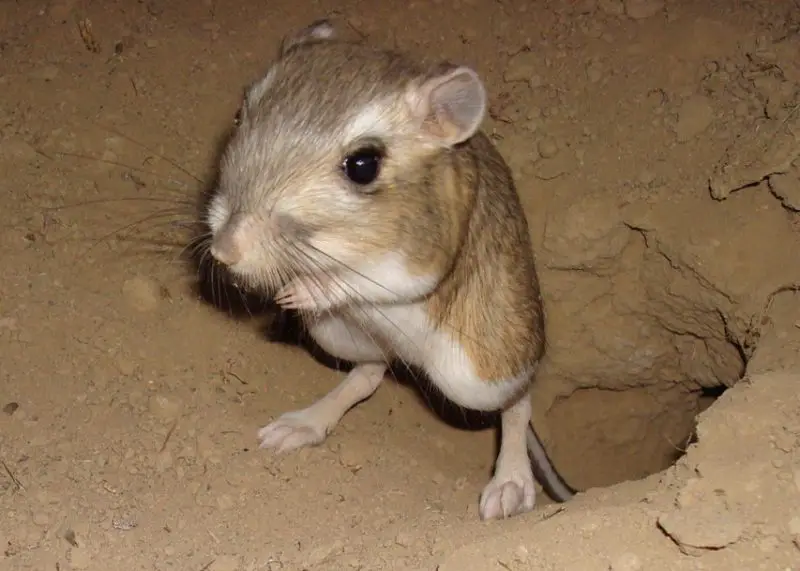
In Nevada, the landscape feels open, dry, and often empty at first glance. Sparse vegetation, wide stretches of ground, and quiet neighborhoods give the impression that little is happening at ground level. During the day, this feeling only intensifies. Heat settles in, movement slows, and the environment seems still.
But what most Nevada residents don’t realize is that beneath this stillness, a completely different world becomes active the moment temperatures drop. As the sun sets and the air cools, small desert rodents begin to emerge from hidden burrows, cracks, and underground systems that extend far beyond what is visible. They move quickly, deliberately, and often without being noticed.
These animals are not random nighttime visitors drifting through neighborhoods. They are permanent residents, deeply adapted to desert life and highly capable of using human environments as part of their survival strategy. Once you understand how they move, where they hide, and what they rely on, it becomes clear that many homes in Nevada are surrounded by constant, unseen activity.
Table of Contents
- 1 Most Desert Rodents Are Active When You Are Not
- 2 Burrow Systems Are More Extensive Than They Appear
- 3 They Follow Fixed Routes Across Your Property
- 4 They Are Extremely Efficient With Water
- 5 They Store Food in Hidden Locations
- 6 They Are Constantly Avoiding Predators
- 7 Artificial Light Changes Their Behavior
- 8 They Can Live Very Close Without Being Detected
- 9 Seasonal Changes Influence Activity Patterns
- 10 They Are More Organized Than They Appear
- 11 FAQs About Desert Rodents Around Nevada Homes
- 12 Final Thoughts
Most Desert Rodents Are Active When You Are Not
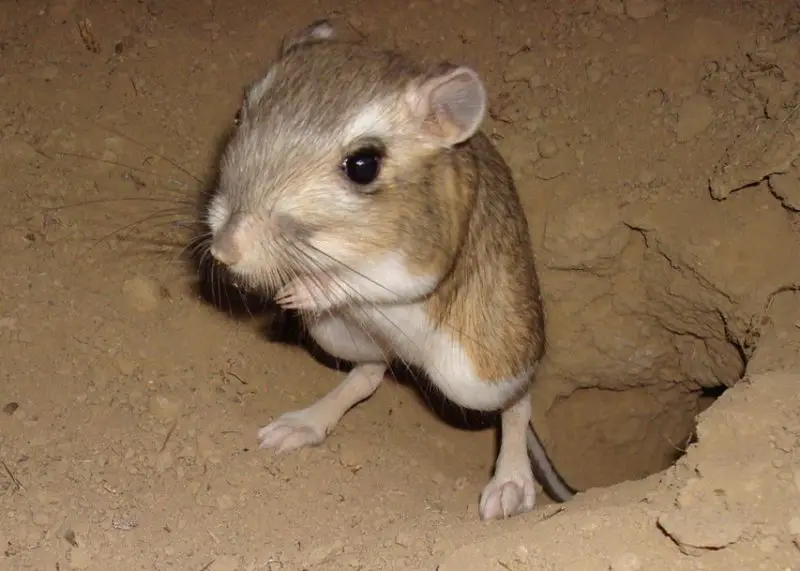
Desert rodents in Nevada are almost entirely nocturnal. This behavior is not simply a preference. It is a survival necessity. Daytime temperatures can become extreme, making movement dangerous and energy-consuming.
At night, conditions shift. Cooler air reduces stress on the body, and the risk of dehydration decreases. This is when rodents leave their burrows to forage, explore, and maintain their territories.
Because of this timing, most of their activity happens while people are indoors or asleep. A yard that feels quiet during the day may be crossed multiple times during the night, with rodents following established paths between food sources and shelter.
This disconnect between human schedules and animal activity is one of the main reasons their presence is underestimated. They are not absent. They are simply active at different times.
Burrow Systems Are More Extensive Than They Appear
One of the defining features of desert rodents is their use of underground space. Burrows are not just simple holes. They are complex systems designed to regulate temperature, provide protection, and support daily life.
In Nevada soils, these burrows can extend deeper than expected, with multiple chambers and exits. Each section serves a purpose, from nesting areas to storage spaces.
The entrances may be small and easy to overlook, often blending into the surrounding ground. A single visible hole can connect to a much larger network beneath the surface.
These underground systems allow rodents to avoid heat during the day and remain protected from predators. They also create stable environments where temperature and humidity are more controlled.
For homeowners, this means that visible signs often represent only a fraction of what is actually present.
They Follow Fixed Routes Across Your Property
Desert rodents do not move randomly. Like many animals, they establish regular routes that connect key resources. These routes are used repeatedly, creating predictable patterns of movement.
In Nevada neighborhoods, these paths may run along walls, fences, or the edges of structures. They provide both direction and protection, allowing rodents to move quickly while staying close to cover.
Over time, these routes become ingrained. Even small changes in the environment are incorporated into their navigation, but the overall pattern remains consistent.
If you were able to observe your yard over several nights, you would likely see the same paths being used again and again. What seems like scattered activity is actually highly organized movement.
They Are Extremely Efficient With Water
Water is one of the most limited resources in desert environments, and desert rodents have evolved to survive with very little of it.
Many species obtain most of their moisture from the food they eat, particularly seeds and plant material. Their bodies are adapted to conserve water, reducing the need for direct sources.
This efficiency allows them to live in areas where water is rarely visible. Even in residential settings, they do not rely heavily on outdoor water sources.
For Nevada residents, this means that removing visible water does not necessarily eliminate rodent activity. These animals are adapted to survive without it.
Their relationship with water is internal, controlled, and highly efficient.
They Store Food in Hidden Locations
Food storage is a critical part of survival for desert rodents. In an environment where resources can be unpredictable, storing food allows them to maintain stability over time.
Rodents collect seeds, plant material, and other food items, storing them in burrows or hidden locations above ground. These caches are carefully placed and often distributed across multiple sites.
This strategy reduces risk. If one cache is lost, others remain. It also allows rodents to return to familiar feeding points without needing to search extensively each night.
In Nevada yards, this behavior can go completely unnoticed. Small movements, brief digging, and quick returns to burrows are all part of a larger system of resource management.
They Are Constantly Avoiding Predators
Desert rodents live under constant pressure from predators. Owls, snakes, foxes, and other animals rely on them as a food source.
This pressure shapes every aspect of their behavior. Movement is quick and direct. Time spent in open areas is minimized. Routes are chosen for safety as much as efficiency.
Even their pauses are strategic. A rodent may stop suddenly, not out of confusion, but to listen and assess its surroundings.
In Nevada environments, where cover can be limited, this constant awareness becomes even more important. Every movement is calculated, every decision tied to survival.
Artificial Light Changes Their Behavior
Human environments introduce new variables, one of the most significant being artificial light. Outdoor lighting can alter how desert rodents move and behave.
Bright areas may be avoided, as they increase visibility to predators. At the same time, light can attract insects, which in turn may attract certain rodents.
This creates a complex interaction. Some areas become less active, while others may see increased movement depending on conditions.
In Nevada neighborhoods, lighting patterns can influence where rodents travel, where they pause, and how they navigate space.
Understanding this relationship helps explain why activity may vary across different parts of a property.
They Can Live Very Close Without Being Detected
One of the most surprising aspects of desert rodents is how close they can live to human spaces without being noticed.
Burrows may exist just feet from foundations, under walkways, or near landscaping features. Yet because activity occurs at night and entrances are subtle, their presence remains hidden.
Even when signs appear, they are often overlooked. Small holes, slight soil disturbances, or faint tracks can be easy to miss.
This proximity creates a kind of invisible coexistence. Rodents use the same space as humans, but at different times and in different ways.
For many Nevada residents, this means that the absence of sightings does not equal the absence of activity.
Seasonal Changes Influence Activity Patterns
While desert rodents remain active year-round, their behavior shifts with seasonal conditions.
In cooler months, activity may extend into earlier evening or later morning hours. In hotter periods, movement becomes more concentrated during the coolest parts of the night.
Food availability also changes. Seasonal plant growth influences where rodents forage and how they manage their stored resources.
These shifts are subtle but consistent. Over time, they create patterns that align closely with environmental conditions.
In Nevada, where seasonal differences can be significant, these adjustments are essential for survival.
They Are More Organized Than They Appear
From the outside, desert rodents may seem like simple creatures moving quickly through the night. But their behavior reveals a high level of organization.
Routes are maintained. Resources are managed. Risks are assessed continuously. Each action connects to a broader system of survival.
This organization is not visible in a single moment. It becomes clear only when patterns are observed over time.
In Nevada yards, this means that what looks like random activity is actually structured and repeated behavior.
FAQs About Desert Rodents Around Nevada Homes
Why do I see small holes in my yard?
Small holes are often entrances to burrow systems. These openings allow rodents to access underground chambers used for shelter and storage.
Are desert rodents dangerous?
Most desert rodents avoid human contact and are not aggressive. However, like all wild animals, they should not be handled.
Why do they come out at night?
Nighttime activity helps them avoid extreme heat and reduces exposure to predators. It is a key part of their survival strategy.
Do they need water sources near homes?
Many desert rodents obtain moisture from food and do not rely heavily on direct water sources. Their bodies are adapted to conserve water.
Can they damage property?
Burrowing can affect soil stability in some cases, especially near structures. However, most activity remains below the surface and goes unnoticed.
Why do I rarely see them?
Their nocturnal behavior and small size make them difficult to observe. Most activity occurs when people are not watching.
Do they stay in one place?
Many rodents maintain consistent territories with established burrows and routes. They may remain in the same area for extended periods.
How can I tell if they are active?
Signs include small burrow entrances, tracks, and subtle soil disturbances. Activity is often more noticeable at night.
Final Thoughts
Desert rodents in Nevada are not just random parts of the landscape. They are constant, adaptive, and deeply integrated into the environment around homes and neighborhoods. Their presence is quiet, their movement precise, and their behavior shaped by the demands of desert life.
What most residents don’t realize is how much of this activity happens just out of sight. Beneath the surface and under the cover of darkness, a complex system is always in motion.
Once you begin to recognize the signs, the perception of stillness begins to shift. The quiet desert is no longer empty. It is active, layered, and full of life that moves according to patterns most people never see.
And in that realization, the landscape changes. Not because it becomes different, but because you finally begin to notice what was there all along.