
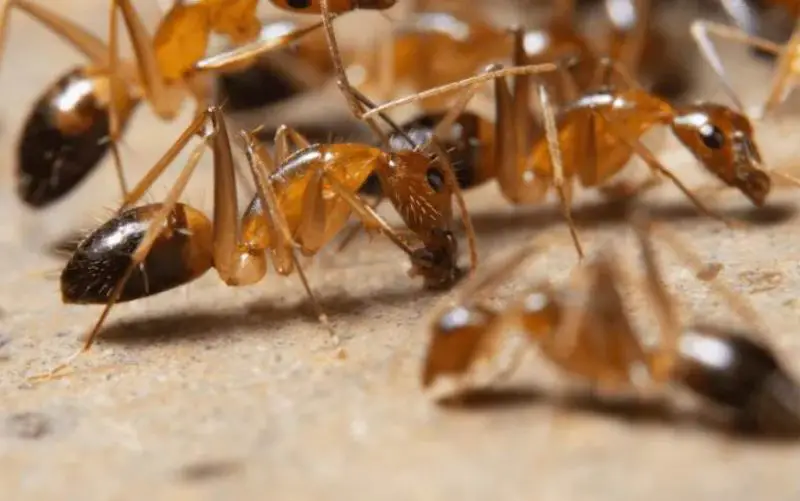
Ghost ants are one of the most confusing and frustrating household pests Florida residents deal with. One day the kitchen looks clean and calm. The next, tiny ants appear along countertops, sink edges, cabinet seams, or appliance bases. They seem to come from nowhere, disappear just as fast, and then return in a different spot.
What makes ghost ants especially unsettling is how small, pale, and elusive they are. Many homeowners do not even realize they are ants at first. By the time they recognize the problem, the ants have already established hidden pathways inside the home.
Ghost ants showing up in Florida kitchens is not accidental. It is the result of Florida’s climate, modern home design, moisture patterns, food residues, and the unique biology of the species itself. Understanding why they appear requires looking beyond surface cleanliness and into how kitchens function as micro-habitats.
Table of Contents
- 1 What Are Ghost Ants?
- 2 Why Florida Is Ideal for Ghost Ants
- 3 Kitchens Provide Everything Ghost Ants Need
- 4 Why Ghost Ants Seem to Appear Suddenly
- 5 Florida Homes Create Hidden Ant Pathways
- 6 Why Ghost Ants Favor Sweet Foods
- 7 Moisture Is Often the Real Trigger
- 8 Why Ghost Ants Ignore Traditional Ant Baits at First
- 9 Polygyny Makes Ghost Ants Hard to Eliminate
- 10 Seasonal Patterns in Florida Kitchens
- 11 Why Kitchens See More Activity at Night
- 12 How Florida Landscaping Contributes
- 13 Why Clean Kitchens Still Get Ghost Ants
- 14 Signs of a Hidden Ghost Ant Nest
- 15 Why DIY Sprays Often Make Things Worse
- 16 Long-Term Control Requires Environmental Change
- 17 Why Ghost Ants Are a Florida-Specific Problem
- 18 Are Ghost Ants Dangerous?
- 19 Preventing Future Infestations
- 20 FAQs About Ghost Ants in Florida Kitchens
- 21 Final Thoughts
What Are Ghost Ants?
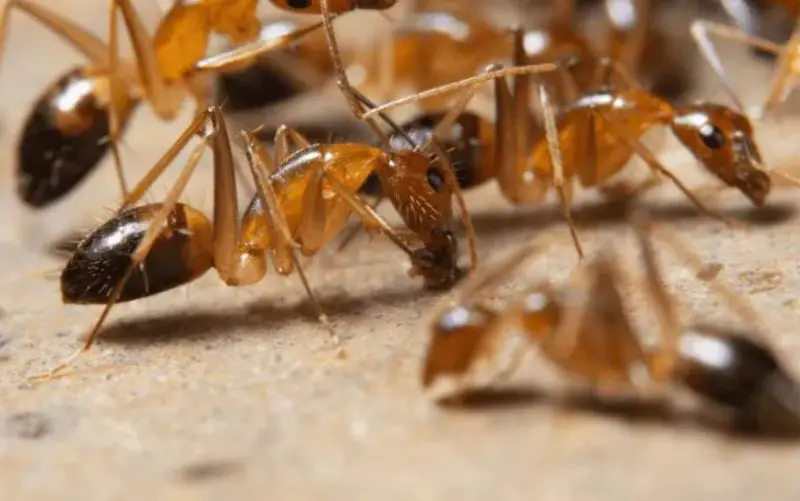
Ghost ants (Tapinoma melanocephalum) are tiny ants, typically only 1.3–1.5 millimeters long. Their name comes from their appearance. The head and thorax are dark brown, while the abdomen and legs are pale or translucent, making them difficult to see on light surfaces.
This coloration allows them to blend into countertops, walls, and flooring, especially under artificial lighting. In motion, they can appear like moving shadows or specks rather than insects.
Ghost ants are tropical ants. Florida’s climate makes the state one of their strongest strongholds in the United States.
Why Florida Is Ideal for Ghost Ants
Florida provides almost perfect conditions for ghost ants to thrive year-round.
Warm temperatures allow continuous activity without seasonal die-offs. High humidity supports hydration, which ghost ants require due to their small body size. Frequent rainfall and irrigation create moisture pockets inside and around homes. Dense urban and suburban development gives ants endless access points.
Unlike colder states where ghost ants struggle to survive outdoors, Florida allows them to live both outside and inside structures. This constant external population pressure increases the likelihood of indoor invasions, especially in kitchens.
Kitchens Provide Everything Ghost Ants Need
Ghost ants do not enter kitchens randomly. Kitchens offer a combination of resources that are difficult for ants to ignore.
Food residues are the most obvious factor. Even clean kitchens produce microscopic crumbs, sugar traces, grease films, and organic residues. Ghost ants do not need visible spills. Thin layers of residue left from cooking, washing dishes, or food preparation are enough to sustain them.
Moisture is equally important. Sinks, dishwashers, refrigerators, and plumbing lines all produce condensation or minor leaks. Florida’s humidity magnifies this effect. Ghost ants are highly sensitive to moisture and are drawn to areas where humidity remains stable.
Warmth from appliances such as refrigerators, ovens, and dishwashers creates temperature gradients that ants use for movement and nesting proximity.
Why Ghost Ants Seem to Appear Suddenly
One of the most confusing aspects of ghost ants is how suddenly they appear.
This happens because ghost ants often nest inside walls, cabinets, appliance housings, or structural voids rather than forming visible mounds. For long periods, they remain hidden while scouts explore food sources.
Once a scout finds a reliable resource, it lays down a chemical trail. Because ghost ants are extremely small, even a short trail can support rapid recruitment.
To homeowners, it looks like ants appeared all at once. In reality, the colony was already present.
Florida Homes Create Hidden Ant Pathways
Modern Florida homes unintentionally support ant movement.
Wall voids provide protected corridors with stable humidity. Cabinet seams and drawer tracks allow ants to move without exposure. Electrical outlets, plumbing penetrations, and appliance gaps act as entry and exit points.
Baseboards and countertop seams guide ants along edges where they are less likely to be disturbed. Ghost ants rarely cross open spaces unless necessary.
This hidden network allows ants to relocate quickly, making infestations feel unpredictable.
Why Ghost Ants Favor Sweet Foods
Ghost ants are particularly attracted to sugars.
They feed heavily on sweet liquids, syrups, fruit juices, honey, soda residue, and even toothpaste or soap containing sugars. In kitchens, these resources are common but often invisible.
They also feed on proteins and fats when necessary, but sweet residues drive most infestations.
This is why ghost ants often appear near sinks, coffee makers, trash cans, pet bowls, and recycling bins.
Moisture Is Often the Real Trigger
Many ghost ant infestations are driven more by moisture than food.
Leaking pipes under sinks, slow drains, refrigerator drip pans, and condensation behind dishwashers create persistent humidity. Even when leaks are minor, they support ant survival.
In Florida, outdoor moisture migrates indoors through slab foundations and walls, further increasing humidity near floors and cabinets.
Ghost ants use moisture gradients to navigate. Kitchens often sit at the center of these gradients.
Why Ghost Ants Ignore Traditional Ant Baits at First
Homeowners often report that ghost ants avoid common ant baits.
This happens because ghost ants change food preferences based on colony needs. At times they seek sugars. At other times they prioritize proteins.
Many over-the-counter baits are too strong, dry, or incorrectly formulated for ghost ants. Some sprays even cause colonies to split rather than die, making the problem worse.
Because ghost ants form multiple nests, killing one group does not eliminate the colony.
Polygyny Makes Ghost Ants Hard to Eliminate
Ghost ants are polygynous, meaning they have multiple queens within a single colony.
If part of the colony is threatened, it can bud off into new nests elsewhere in the home. This is why spraying visible ants often leads to activity in a new area days later.
Florida homes with complex layouts provide endless nesting options, from wall voids to cabinet interiors to insulation spaces.
Seasonal Patterns in Florida Kitchens
Unlike ants in colder climates, ghost ants do not disappear seasonally in Florida.
However, activity often increases during:
-
Heavy rain periods
-
Extreme heat waves
-
Sudden temperature drops
-
High indoor humidity spikes
These conditions push ants to relocate resources or seek more stable environments, often inside kitchens.
Why Kitchens See More Activity at Night
Ghost ants are primarily nocturnal.
At night, kitchens are quieter. Vibrations decrease. Temperatures stabilize. Relative humidity increases slightly. Human disturbance drops to near zero.
These conditions make it safer for ants to forage openly. This is why homeowners often notice ghost ants late at night or early in the morning.
How Florida Landscaping Contributes
Outdoor landscaping plays a role in indoor infestations.
Mulch beds, irrigation systems, dense vegetation, and foundation plantings hold moisture and support outdoor ghost ant populations. From there, ants follow plumbing lines, electrical conduits, and foundation cracks into kitchens.
Homes with heavy irrigation near the foundation are especially vulnerable.
Why Clean Kitchens Still Get Ghost Ants
Cleanliness alone does not prevent ghost ants.
Even spotless kitchens produce moisture and microscopic residues. Ants are not responding to clutter or filth. They respond to access, humidity, and trace nutrients.
This is why infestations occur in new homes, luxury apartments, and professionally cleaned kitchens.
Signs of a Hidden Ghost Ant Nest
Ghost ants rarely nest in open view.
Signs of hidden nests include:
Repeated sightings in different kitchen areas
Ants emerging from electrical outlets
Activity that disappears when disturbed
Ants trailing behind appliances
Recurring infestations after cleaning
These signs indicate nesting within structural voids.
Why DIY Sprays Often Make Things Worse
Sprays kill visible ants but do not reach queens.
Worse, they cause colonies to split. This fragmentation leads to new nests forming elsewhere in the home, increasing activity rather than stopping it.
Ghost ants are especially prone to this response due to their colony structure.
Long-Term Control Requires Environmental Change
Effective control focuses on changing conditions, not just killing ants.
Reducing indoor humidity limits survival. Fixing leaks removes moisture sources. Sealing entry points breaks movement pathways. Using slow-acting baits allows ants to carry poison back to queens.
In Florida, long-term success requires patience and strategy rather than quick fixes.
Why Ghost Ants Are a Florida-Specific Problem
Ghost ants exist elsewhere, but Florida’s environment amplifies the issue.
Few states combine constant warmth, high humidity, dense housing, and year-round ant activity. Florida kitchens sit at the center of this overlap.
What feels like bad luck is actually geography.
Are Ghost Ants Dangerous?
Ghost ants do not sting and rarely bite.
They are considered nuisance pests rather than dangerous insects. However, they can contaminate food and surfaces due to their foraging behavior.
Their presence is more about sanitation and comfort than direct health risk.
Preventing Future Infestations
Prevention focuses on consistency.
Seal cracks and gaps
Control indoor humidity
Fix leaks promptly
Wipe surfaces regularly
Store food in sealed containers
Avoid over-irrigation near foundations
In Florida, prevention is an ongoing process rather than a one-time fix.
FAQs About Ghost Ants in Florida Kitchens
Why do ghost ants keep coming back?
Hidden nests and multiple queens allow colonies to recover quickly.
Are they coming from outside?
Often yes, but many nests are inside walls or cabinets.
Do they live in kitchens permanently?
They nest nearby and forage in kitchens when conditions allow.
Will cold weather kill them?
Florida winters are not cold enough to eliminate them.
Are professional treatments necessary?
Severe infestations often require professional baiting strategies.
Final Thoughts
Ghost ants show up in Florida kitchens because those spaces provide the perfect mix of food traces, moisture, warmth, and protected pathways. Their tiny size, multiple queens, and nocturnal habits make them seem mysterious and unstoppable.
They are not a sign of poor hygiene.
They are a sign of how well Florida homes support tropical insects.
Once you understand the conditions driving their behavior, the problem stops feeling random and starts making sense.