
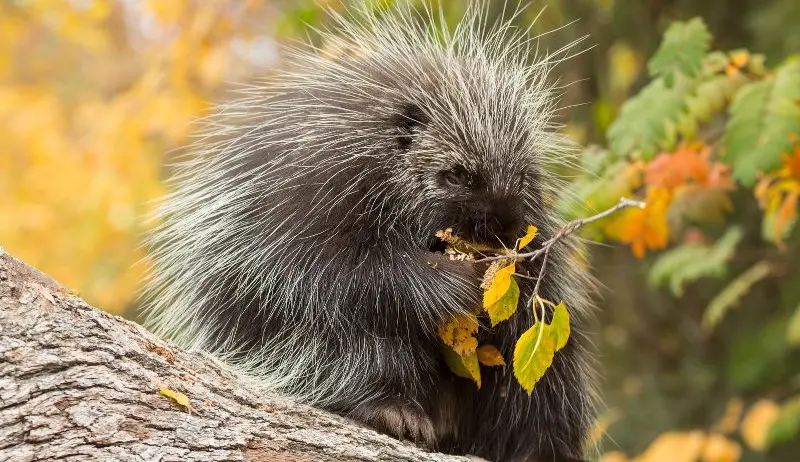
Winter in Maine is not just cold. It is prolonged, heavy with snow, and unforgiving to animals that cannot migrate or hibernate.
For the North American porcupine, winter survival depends on one simple but remarkable strategy.
They eat trees.
Specifically, they eat bark.
While many animals retreat underground or leave the region entirely, porcupines remain active all winter long, living in snow-covered forests and surviving almost entirely on woody plant tissue. This ability is not accidental. It is the result of specialized digestion, behavioral adaptation, and an intimate relationship with Maine’s winter forests.
Table of Contents
- 1 Maine’s Winter Environment and the Survival Challenge
- 2 Why Porcupines Do Not Hibernate or Migrate
- 3 The Winter Diet Shift: From Green Plants to Trees
- 4 What Parts of the Tree Porcupines Eat
- 5 Preferred Tree Species in Maine Winters
- 6 How Porcupines Physically Handle Bark Consumption
- 7 Energy Conservation: Why Porcupines Move So Little in Winter
- 8 Winter Shelter and Tree Roosting Behavior
- 9 Snow as Both Obstacle and Advantage
- 10 Coping With Nutritional Stress
- 11 Why Porcupines Target Certain Trees Repeatedly
- 12 The Role of Winter Bark Feeding in Forest Ecology
- 13 Predators and Winter Risk
- 14 Human Conflict in Winter
- 15 Climate Change and Future Winters in Maine
- 16 Why Bark Feeding Is a Winning Strategy
- 17 FAQs About Porcupines and Winter Bark Feeding in Maine
- 17.1 Do porcupines really live on bark all winter?
- 17.2 Why don’t porcupines starve eating such poor food?
- 17.3 Do porcupines kill trees?
- 17.4 What trees do porcupines prefer in winter?
- 17.5 Do porcupines stay in trees all winter?
- 17.6 Are porcupines active during winter storms?
- 17.7 Does deep snow help porcupines survive?
- 17.8 Are porcupines protected in Maine?
- 18 Final Thoughts
Maine’s Winter Environment and the Survival Challenge
Winter in Maine is not a brief seasonal phase. It is a dominant force that reshapes forests for nearly half the year. Snow often begins accumulating in November and can persist well into April. Temperatures regularly remain below freezing for weeks at a time, and deep snowpacks compress the forest floor, making ground travel slow and energetically costly.
By midwinter, nearly all soft vegetation is gone. Grasses and herbs are buried or dead. Berries and fruits have long since been consumed or decomposed. Even fallen leaves offer little nutritional value. For most herbivores, the forest floor becomes a biological desert.
For animals that rely on tender plant material, winter is a season of extreme scarcity. But for porcupines, winter represents something different. It is not a time of disappearance or shutdown. It is a time of adjustment.
They do not flee the cold.
They do not sleep through it.
They change what they eat.
Why Porcupines Do Not Hibernate or Migrate
The North American porcupine is a large, slow-moving rodent built for endurance rather than speed. Migration is not realistic. Traveling long distances through deep snow would cost more energy than it could recover from feeding.
Hibernation is also not an option. Porcupines lack the physiological mechanisms needed to dramatically lower body temperature and shut down metabolism for months at a time. Their digestive system requires regular intake to function, even at a reduced winter pace.
Instead, porcupines remain active throughout the year. Their winter strategy is based on behavioral flexibility rather than dormancy. They alter movement patterns, reduce energy expenditure, and most importantly, shift to a food source that remains available no matter how deep the snow becomes.
Trees do not disappear in winter.
Their bark remains exposed.
That reliability is the foundation of porcupine survival.
The Winter Diet Shift: From Green Plants to Trees
Summer and Fall Feeding Patterns
During spring, summer, and early fall, porcupines eat a wide variety of foods. Leaves, grasses, forbs, berries, fruits, and tender shoots dominate their diet. These foods are rich in nutrients, high in moisture, and relatively easy to digest.
This diverse diet allows porcupines to build fat reserves before winter arrives. Autumn feeding is especially important. The energy stored during this period determines how well an individual will endure the lean months ahead.
As temperatures drop and daylight shortens, these soft foods disappear rapidly.
Why Bark Becomes Essential
By early winter, porcupines begin relying more heavily on woody vegetation. As snow deepens, the shift becomes complete. By midwinter, bark and tree tissues make up nearly the entire diet.
Tree bark is far from ideal food. It is fibrous, low in protein, and difficult to digest. But it has one critical advantage. It is always available above the snow.
Porcupines are among the few mammals capable of surviving long periods on this resource. Evolution has shaped both their teeth and digestive system to extract enough energy from bark to stay alive when nothing else remains.
What Parts of the Tree Porcupines Eat
Porcupines are selective feeders, even in winter. They are not randomly chewing wood. They target specific tissues that offer the greatest nutritional return.
The Cambium Layer
The cambium is a thin, living layer located just beneath the outer bark. It is responsible for transporting nutrients and producing new growth in trees.
This layer contains sugars and carbohydrates that are far more valuable than the outer bark itself. For porcupines, cambium is the primary winter energy source.
By gnawing through the bark, porcupines expose this layer and strip it away in long, smooth patches. The distinctive feeding scars left behind are a clear sign of winter porcupine activity.
Inner Bark and Phloem
Along with cambium, porcupines consume inner bark and phloem tissues. These layers offer limited nutrition but remain digestible when processed slowly through the gut.
Together, these tissues provide just enough energy to maintain basic bodily functions during winter.
Twigs, Buds, and Needles
When available, porcupines supplement bark feeding with twigs, buds, and needles, especially from coniferous trees. These parts are easier to chew and help balance the diet slightly, though they do not replace bark as the primary food source.
Preferred Tree Species in Maine Winters
Porcupines are selective about which trees they feed on, and those preferences become more pronounced in winter.
Common winter food trees in Maine include eastern hemlock, white pine, red spruce, balsam fir, sugar maple, yellow birch, and aspen.
Among these, hemlock plays a particularly important role. Its bark remains accessible above deep snow, and its cambium provides more usable energy than many other species. Hemlock stands often show heavy winter feeding damage where porcupines are present.
Forests rich in preferred tree species tend to support higher porcupine densities because they offer reliable winter nutrition.
How Porcupines Physically Handle Bark Consumption
Ever-Growing Incisors
Porcupines possess large incisors that grow continuously throughout their lives. The front surface of each tooth is coated with hard enamel, while the back surface is softer.
As the porcupine gnaws, the softer back wears away faster, keeping the cutting edge sharp. This self-sharpening system allows porcupines to chew tough bark and wood without dulling their teeth.
Powerful Jaw Muscles
Strong jaw muscles generate the force needed to strip bark, even when frozen temperatures make wood harder and more brittle. Chewing is slow but relentless.
This mechanical efficiency is essential for processing enough bark each day to meet minimal energy needs.
Specialized Digestive System
Porcupines rely on microbial fermentation in a large cecum to break down cellulose. Symbiotic bacteria convert woody fibers into usable nutrients through slow fermentation.
Digestion takes time, but efficiency matters more than speed. This system allows porcupines to survive months on food that would starve most herbivores.
Energy Conservation: Why Porcupines Move So Little in Winter
Winter porcupines conserve energy aggressively. Every movement costs calories that are difficult to replace.
They move slowly.
They feed for long periods.
They rest extensively.
Traveling long distances through deep snow would burn more energy than bark can provide. Instead, porcupines establish small winter home ranges centered around a few key trees.
Some individuals feed on the same tree night after night, minimizing travel and maximizing feeding efficiency.
Winter Shelter and Tree Roosting Behavior
Using Trees as Both Food and Shelter
Porcupines often roost in the same trees they feed on. Dense conifers, especially hemlock and spruce, provide shelter from wind, snow, and extreme cold.
A single tree may function as both pantry and bedroom throughout winter. This reduces exposure and energy loss.
Ground Dens and Rock Crevices
When available, porcupines also use hollow logs, rock crevices, or abandoned dens for shelter. These locations offer insulation during storms and cold snaps.
However, in deep snow conditions, many porcupines remain in trees for extended periods, descending only when necessary.
Snow as Both Obstacle and Advantage
Deep snow restricts movement, but it also offers protection. Predators such as coyotes and bobcats struggle to pursue porcupines through deep, powdery snow.
Tree-based feeding further reduces vulnerability by keeping porcupines off the ground. Snow indirectly encourages safer feeding behavior by limiting travel options.
Coping With Nutritional Stress
Tree bark is low in protein and minerals. Over the course of winter, porcupines often lose body weight. This loss is expected and generally not fatal.
Once spring arrives and fresh vegetation becomes available, weight is gradually regained. Winter survival is not about maintaining peak condition. It is about lasting until better food returns.
Porcupines endure winter.
They do not thrive in it.
Why Porcupines Target Certain Trees Repeatedly
Returning to the same tree night after night minimizes energy expenditure and simplifies feeding. Familiar trees require less exploration and provide predictable nutrition.
Repeated feeding can girdle trees, eventually killing them. While this causes localized damage, it also creates standing dead trees that benefit birds, insects, and other mammals.
Porcupines unintentionally shape forest structure through this behavior, acting as small-scale ecosystem engineers.
The Role of Winter Bark Feeding in Forest Ecology
Winter porcupine feeding influences forest composition over time. Selective feeding can reduce dominance of certain species while opening canopy gaps that allow new growth.
Dead trees created by girdling provide nesting sites for woodpeckers, owls, and cavity-nesting mammals. In this way, winter bark feeding contributes to biodiversity.
What appears destructive on a single tree often benefits the broader ecosystem.
Predators and Winter Risk
Adult porcupines face few predators due to their quills. Fishers are the primary predator capable of killing them, even in winter.
Deep snow and tree-based feeding reduce encounters. Most winter mortality is linked to starvation, disease, or human-related causes rather than predation.
Human Conflict in Winter
Winter bark feeding sometimes brings porcupines into conflict with people. Ornamental trees, orchards, and managed forests can suffer noticeable damage.
Understanding porcupine winter behavior helps guide non-lethal management strategies, including tree protection and habitat planning.
Climate Change and Future Winters in Maine
Warmer winters may not benefit porcupines as much as expected. Freeze-thaw cycles can harden bark and disrupt digestion. Reduced snow cover may increase predation risk and force porcupines to travel farther for food.
Changes in forest composition could also affect the availability of preferred winter trees, altering long-term survival patterns.
Why Bark Feeding Is a Winning Strategy
Porcupines survive Maine winters because they depend on a food source that never disappears.
Trees stand above the snow.
Cambium remains accessible.
Digestive adaptations do the rest.
This strategy has allowed porcupines to endure some of the harshest winters in the Northeast for thousands of years, proving that survival does not always require abundance.
Sometimes, it requires knowing how to live on what remains.
FAQs About Porcupines and Winter Bark Feeding in Maine
Do porcupines really live on bark all winter?
Yes. In Maine, porcupines rely almost entirely on tree bark, cambium, and twigs during winter months.
Why don’t porcupines starve eating such poor food?
Their slow metabolism and specialized gut bacteria allow them to extract enough energy to survive, even on low-nutrient bark.
Do porcupines kill trees?
Sometimes. Repeated girdling can kill trees, especially smaller ones, but this is a natural part of forest dynamics.
What trees do porcupines prefer in winter?
Hemlock, pine, spruce, fir, maple, birch, and aspen are common winter food trees in Maine.
Do porcupines stay in trees all winter?
They spend much of winter in trees, especially during deep snow, but also use ground shelters when available.
Are porcupines active during winter storms?
Activity decreases during severe storms, but porcupines continue feeding whenever conditions allow.
Does deep snow help porcupines survive?
Yes. Snow reduces predator access and encourages tree-based feeding, which lowers risk.
Are porcupines protected in Maine?
Yes. Porcupines are native wildlife, and management regulations apply depending on location and circumstance.
Final Thoughts
Porcupines survive Maine’s long winters not through speed, strength, or migration, but through patience and adaptation.
By shifting entirely to a bark-based diet, conserving energy, and using trees as both shelter and food source, they endure months of snow and cold when most vegetation is unavailable.
In the quiet forests of winter, porcupines leave their mark in stripped bark and chewed branches, a reminder that survival does not always require abundance.
Sometimes, it requires knowing how to live on what never disappears.