
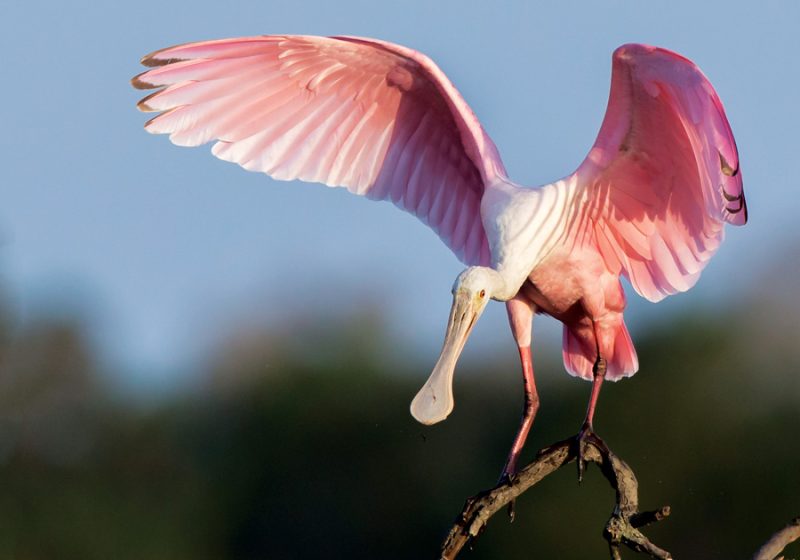
Florida’s wetlands are full of remarkable wildlife, but few birds capture attention quite like the Roseate Spoonbill. With their vibrant pink feathers, long spoon-shaped bills, graceful wading posture, and elegant flight, they often draw instant admiration. Many people recognize spoonbills for their striking beauty, but what most people don’t know is that behind their colorful appearance lies a world of fascinating behavior, survival intelligence, and ecological importance.
Watch a Florida spoonbill for a while and you’ll realize they’re not just “pretty birds.” They are strategic feeders, skilled communicators, surprisingly social, deeply connected to water cycles, and more intelligent than they appear. Every movement, every slow step through shallow water, every bill sweep, every flock formation, and every nesting choice reveals a behavioral story shaped by evolution, habitat challenges, predators, and Florida’s unique ecosystem.
This in-depth guide reveals the hidden behaviors of Florida spoonbills that will truly surprise you, from how they hunt and communicate to why they choose certain waters, how they raise chicks, how seasons change their lives, and how human activity silently influences everything they do.
Table of Contents
- 1 Why Florida Spoonbills Are More Than Just Beautiful Birds
- 2 The Fascinating Feeding Behavior You Didn’t Know About
- 3 Social Behavior: They Aren’t As Solitary As People Think
- 4 Hidden Communication Behaviors
- 5 Nesting Secrets Most People Never Hear About
- 6 Seasonal Behaviors: Life Changes With Water Levels
- 7 Flight Behavior: Grace With Purpose
- 8 Behavior Around Predators and Threats
- 9 Human Influence on Spoonbill Behavior
- 10 Hidden Emotional and Social Depth
- 11 FAQs About Florida Spoonbill Behaviors
- 11.1 Why do Florida spoonbills have spoon-shaped bills?
- 11.2 Why are spoonbills pink?
- 11.3 Are spoonbills social birds?
- 11.4 Do spoonbills communicate with each other?
- 11.5 Why do they stay in shallow water?
- 11.6 Are spoonbills endangered?
- 11.7 Where can you see spoonbills in Florida?
- 11.8 Do spoonbills care for their young?
- 12 Final Thoughts
Why Florida Spoonbills Are More Than Just Beautiful Birds

Many people admire spoonbills simply for their appearance, but understanding them requires going far beyond color and feathers.
Built Perfectly for Wetland Survival
Everything about a Florida spoonbill’s body is designed for shallow water life. Their long legs keep them dry while wading. Their spoon-shaped bill is not just unusual—it’s a precise feeding tool. Their wings are wide and powerful, allowing graceful flight above marshes and estuaries. Their feathers are not naturally pink — their diet creates the color, which already hints at a deeper biological story tied to behavior and habitat.
Their design is proof that beauty and utility can coexist perfectly in nature.
Color That Comes From What They Eat
That famous pink shade comes from pigments called carotenoids, found in the shrimp, crustaceans, and aquatic invertebrates spoonbills consume. Birds with brighter coloration are often healthier, better fed, and sometimes more attractive to mates. This means their color is not decoration — it’s a reflection of health, access to good feeding grounds, and environmental quality.
Their color tells a silent behavioral story about diet, competition, and survival capability.
The Fascinating Feeding Behavior You Didn’t Know About
One of the most surprising spoonbill behaviors is how they feed. At first glance, they look calm and elegant, but beneath the surface of that grace is remarkable strategy.
The Bill Sweep Technique
Instead of pecking like herons or stabbing like egrets, spoonbills use their flat spoon-shaped bills to sweep side to side through shallow water. While doing this, they walk slowly and rhythmically. Their bills remain slightly open and packed with thousands of sensitive nerve endings.
When anything edible touches the inside of the bill—fish, shrimp, insects, tadpoles—the bill snaps shut instantly. This “tactile feeding” allows them to hunt even in murky water where vision is limited. Their feeding style is incredibly efficient and uniquely adapted to Florida’s marshes and coastal wetlands.
This is not guesswork feeding. It is a highly evolved hunting system.
Stirring the Water on Purpose
Sometimes spoonbills purposely disturb the water while feeding. They may shuffle their feet or make controlled movements to stir small animals hiding at the bottom. These actions force prey into movement, making them easier to feel and capture.
This small but intentional behavior shows intelligence and feeding awareness. Spoonbills are not passive feeders; they manipulate their environment.
Why They Prefer Shallow Water
Most spoonbill feeding happens in water that barely covers their legs. Shallow areas concentrate prey, making feeding more energy efficient. Deeper water means slower movement, greater energy loss, and harder hunting. Shallow wetlands are their dining tables, and their entire feeding behavior is structured around that reality.
Social Behavior: They Aren’t As Solitary As People Think
People often imagine large wading birds as lonely hunters, but spoonbills are surprisingly social creatures.
Feeding in Groups
Spoonbills frequently feed together in groups. Large feeding flocks may move like synchronized dancers across shallow marshes, all sweeping bills, all stepping slowly, and all taking advantage of stirred prey created by collective movement. Feeding in groups also increases protection — more eyes watching means greater predator awareness.
Their group feeding behavior is a perfect blend of efficiency and safety.
Living and Nesting in Colonies
Florida spoonbills rarely nest alone. They choose to nest in colonies, often alongside ibises, egrets, and herons. Colonies create collective defense. When danger appears, dozens of birds react together, increasing protection for vulnerable chicks.
Social structure, even in birds, means strength.
Hidden Communication Behaviors
Spoonbills may look quiet and composed, but they communicate far more than many people expect.
Subtle Body Language
Their communication is often silent but clear. Head movements, posture adjustments, wing positioning, and spacing behavior speak loudly in bird language. These signals can indicate dominance, bonding, discomfort, or alertness.
Even the way they stand can reflect emotional and environmental awareness.
Vocal Communication
Though quieter than some birds, spoonbills use grunts, soft calls, and low-pitched sounds, especially during nesting season. Parents communicate with chicks, mates communicate with each other, and colony birds react vocally during danger.
Communication helps survival — and spoonbills do it with intention.
Nesting Secrets Most People Never Hear About
Spoonbill parenting and nesting behavior reveal some of their most surprising traits.
Choosing Water-Protected Nesting Sites
Spoonbills often nest in places surrounded by water such as mangrove islands, marsh shrubs, and trees standing in wetlands. Water creates a natural barrier against land predators. Nesting above water also gives quick access to food sources, reducing travel time while raising young.
They do not build randomly. Every nest location is a strategic survival decision.
Teamwork in Parenting
Both parents usually help raise chicks. They share responsibilities including incubating eggs, protecting the nest, and feeding young birds. Chicks grow fast and require frequent feeding, meaning parents must work efficiently and cooperatively.
This family teamwork is a deeply fascinating behavior in itself.
Seasonal Behaviors: Life Changes With Water Levels
Florida spoonbills live in ecosystems shaped by rainfall, tides, and seasons. Their behavior shifts naturally with environmental change.
During the Wet Season
Water spreads more widely across habitats. Food becomes more scattered, so spoonbills may travel farther. Their movement patterns expand, and feeding strategies adjust.
During the Dry Season
Water sources shrink, concentrating prey in isolated pools. This often creates some of the best feeding opportunities. Spoonbills gather in greater numbers, and their feeding behaviors become bolder and more active.
Seasonal awareness isn’t choice — it’s survival intelligence.
Flight Behavior: Grace With Purpose
Watching a spoonbill in flight is breathtaking, but even their flight behavior has hidden meaning.
Flying in Small and Loose Groups
They often travel in groups rather than individually, reflecting their social nature. This may also improve navigation and protection.
Straight, Strong Flight
Unlike soaring raptors, spoonbills usually fly in strong, steady strokes. Their flights conserve energy and allow efficient travel between feeding and nesting grounds. Every wingbeat is calculated, not wasted.
Behavior Around Predators and Threats
Life in Florida wetlands includes risk, and spoonbills respond with instinctive intelligence.
Awareness and Alertness
Even while feeding calmly, spoonbills remain vigilant. A sudden head lift, a flock reaction, or synchronized movement often signals danger response behavior. Awareness is constant because their survival depends on it.
Colony Protection Advantage
In colonies, a single alarm creates instant mass awareness. Many eyes spot danger faster than one pair. Behavior built around community is one of their greatest defenses.
Human Influence on Spoonbill Behavior
Human presence deeply affects spoonbill behavior — sometimes for better, sometimes for worse.
Habitat Loss Changes Everything
Wetland destruction, development, and pollution reduce feeding grounds and nesting options. Spoonbills may alter traditional behaviors, travel farther, and face more competition. Their behavior reflects environmental stress when habitats decline.
Adaptability Shows Intelligence
Despite challenges, spoonbills show resilience. They adjust locations, explore new wetlands, and adapt to changing ecosystems when possible. Their ability to modify behavior reveals impressive survival intelligence.
Conservation Helps Preserve Natural Behavior
Protected wetlands, wildlife refuges, and conservation programs allow spoonbills to live their natural behavioral lives without constant human disruption. Where water is healthy, spoonbills thrive. Where water suffers, so do they.
Hidden Emotional and Social Depth
Though science avoids labeling emotion too easily, spoonbills display clear behavioral depth.
They defend mates.
They nurture chicks.
They react strongly to stress.
They form social presence in colonies.
Behavior is more than instinct — it is interaction, awareness, and adaptation.
FAQs About Florida Spoonbill Behaviors
Why do Florida spoonbills have spoon-shaped bills?
Their spoon-shaped bills help them sweep water and detect prey through touch, making feeding efficient in shallow wetlands.
Why are spoonbills pink?
Their pink color comes from carotenoid pigments in crustaceans and shrimp they eat, meaning their color reflects diet and environmental quality.
Yes. They commonly feed in groups and nest in colonies, gaining protection, efficiency, and social cooperation.
Do spoonbills communicate with each other?
They communicate through subtle body language, spacing behavior, and low vocal calls, especially during nesting.
Why do they stay in shallow water?
Shallow water concentrates prey, reduces energy use, and matches their tactile feeding style.
Are spoonbills endangered?
Their status fluctuates depending on region and environmental conditions, but habitat loss and pollution remain ongoing concerns.
Where can you see spoonbills in Florida?
They are commonly found in marshes, estuaries, mangrove areas, coastal wetlands, and wildlife refuges across the state.
Do spoonbills care for their young?
Yes. Both parents participate in raising chicks, feeding them and protecting nests.
Final Thoughts
Florida spoonbills are far more than colorful marsh decorations. Their hidden behaviors reveal intelligence, adaptability, emotional depth, strategic survival, social structure, and extraordinary connection to wetlands. Every sweeping bill movement, every coordinated feeding group, every carefully chosen nest site, and every seasonal shift tells a deeper story of survival in one of Florida’s most delicate ecosystems.
They move with beauty.
They act with purpose.
They survive with intelligence.
The next time you see a spoonbill glowing pink against Florida sunlight, pause for a moment. You’re not just watching a beautiful bird — you’re witnessing a complex thinker, a skilled hunter, a devoted parent, and an essential part of the wetland world.