

In Florida, few wildlife encounters trigger as much fear and certainty as a meeting with a water moccasin. Also called the cottonmouth, this venomous snake carries a reputation that feels unquestionable to many residents. Ask around lakes, canals, swamps, or fishing docks and you will hear the same claim repeated with confidence. Water moccasins chase people.
The stories are vivid. A snake comes out of the water. A person backs away. The snake moves forward. Panic sets in. The memory hardens into a conclusion. It was chasing me.
But behavior that feels intentional is not always what it appears to be. To understand why this belief is so common in Florida, it is necessary to look closely at cottonmouth biology, Florida’s landscape, and how human perception works in high stress moments.
Table of Contents
- 1 Florida Sits at the Center of Cottonmouth Range
- 2 What a Water Moccasin Is Designed to Do
- 3 Why Cottonmouth Behavior Feels Different From Other Snakes
- 4 Stillness Is Misread as Confidence
- 5 Why Cottonmouths Often Move Toward People
- 6 Florida’s Flat Landscape Amplifies the Illusion
- 7 Water Creates Directional Confusion
- 8 Swimming Feels Especially Threatening
- 9 Short Defensive Advances Are Misremembered
- 10 Misidentification Plays a Major Role in Florida
- 11 Color and Size Differences Add Confusion
- 12 Fear Alters Perception and Memory
- 13 Why Florida Stories Spread So Easily
- 14 Cottonmouths Gain Nothing From Chasing Humans
- 15 What Scientific Observation Shows
- 16 Why the Myth Persists Despite Evidence
- 17 Media and Online Reinforcement
- 18 Understanding Real Cottonmouth Behavior Improves Safety
- 19 How to Reduce Risk in Florida
- 20 Why This Misunderstanding Matters
- 21 Cottonmouths Are Not Villains
- 22 FAQs About Water Moccasins Chasing People in Florida
- 22.1 Do water moccasins really chase people
- 22.2 Why does it feel like a cottonmouth is chasing me
- 22.3 Are cottonmouths more aggressive than other snakes
- 22.4 Can cottonmouths swim toward people
- 22.5 Do cottonmouths strike without warning
- 22.6 Are nonvenomous water snakes often mistaken for cottonmouths
- 22.7 Why do cottonmouth encounters feel more common in Florida
- 22.8 Does fear affect how people remember snake encounters
- 22.9 What should I do if I see a water moccasin
- 22.10 Are cottonmouths protected wildlife in Florida
- 23 Final Thoughts
Florida Sits at the Center of Cottonmouth Range
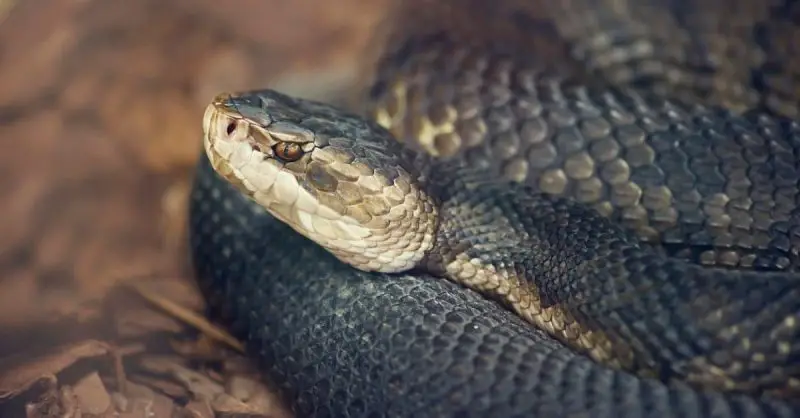
Florida is prime cottonmouth habitat.
The eastern cottonmouth (Agkistrodon piscivorus) thrives in warm climates with abundant water. Florida offers ideal conditions. Swamps, marshes, rivers, retention ponds, canals, floodplains, and slow moving creeks cover much of the state.
Human activity overlaps heavily with these habitats. Fishing, boating, hiking, yard maintenance, and shoreline access all place people near cottonmouths regularly.
When encounters are frequent, stories multiply. Repetition builds belief.
What a Water Moccasin Is Designed to Do
Water moccasins are pit vipers closely related to copperheads. They are heavy bodied ambush predators.
Their bodies are built for short bursts of movement, not endurance. They rely on camouflage, stillness, and sudden strikes to capture prey like fish, frogs, small mammals, and birds.
They do not pursue prey across open ground. Chasing offers no advantage. It wastes energy and increases risk.
This biological design matters when evaluating claims of pursuit.
Why Cottonmouth Behavior Feels Different From Other Snakes
Many nonvenomous snakes flee immediately when encountered. Cottonmouths often do not.
When threatened, cottonmouths may hold their ground. They may coil. They may gape their mouth to display the white interior that gives them their name. They may vibrate their tail.
These behaviors are defensive warnings. They are meant to stop an approach without requiring a bite.
To humans, a snake that does not retreat feels aggressive. Stillness feels deliberate. Deliberate feels threatening.
This is the first major source of misinterpretation.
Stillness Is Misread as Confidence
A cottonmouth that remains in place appears confident.
Confidence is often interpreted as intent. If the snake is not fleeing, people assume it is choosing confrontation.
In reality, stillness conserves energy and reduces risk. Venom production is costly. Biting is dangerous. Cottonmouths prefer avoidance whenever possible.
But human perception fills the gap between behavior and meaning.
Why Cottonmouths Often Move Toward People
Many reported chasing incidents follow a similar pattern.
A person approaches water. A cottonmouth is nearby. The snake begins moving in the same general direction as the person.
This movement is interpreted as pursuit. But direction alone does not indicate intent. Destination matters more.
Cottonmouths instinctively move toward water when threatened. Water is safety. Water is escape. Water is where they are most agile.
If a person stands between the snake and the water, the snake may move toward the person to reach that escape route.
From the human perspective, the snake came at me. From the snake’s perspective, it fled toward water.
Florida’s Flat Landscape Amplifies the Illusion
Florida’s terrain plays a major role in perception.
Much of the state is flat. There are few hills, rocks, or visual barriers. In flat environments, avoidance is not visually obvious.
A snake moving across open ground appears to move straight. There is no downhill escape or obvious curve away.
Without visual cues of avoidance, humans perceive approach.
Water Creates Directional Confusion
Water intensifies misinterpretation.
Cottonmouths are strong swimmers. When they swim, their bodies create ripples that exaggerate speed and direction.
Humans naturally track movement relative to themselves. If a person is wading, swimming, or moving toward shore, and a snake swims toward the same shoreline, it feels like pursuit.
In reality, both are heading to the same destination.
This scenario accounts for many Florida chase stories.
Swimming Feels Especially Threatening
In water, humans feel vulnerable.
Movement feels slower. Escape feels uncertain. A snake moving smoothly through water appears fast and controlled.
Fear amplifies perception. Distance feels shorter. Speed feels faster.
Memory compresses the experience into a simple narrative. The snake chased me.
Short Defensive Advances Are Misremembered
Cottonmouths may occasionally move forward a short distance when threatened.
This is a defensive bluff. It creates space. It communicates readiness. It discourages further approach.
These movements are brief. They stop once distance is created.
Humans often remember the forward motion but forget the stop. Memory simplifies complex events under stress.
The snake moved toward me becomes the snake chased me.
Misidentification Plays a Major Role in Florida
Not every snake near water in Florida is a cottonmouth.
Florida is home to several nonvenomous water snakes, including banded water snakes, brown water snakes, and green water snakes. These species are frequently mistaken for cottonmouths.
Nonvenomous water snakes may flee erratically. They may double back. They may move unpredictably along shorelines.
Once a snake is labeled a cottonmouth, all movement is interpreted as aggression.
Color and Size Differences Add Confusion
Cottonmouth appearance varies.
Some are dark and thick. Others are lighter with visible banding. Juveniles look dramatically different from adults.
Water snakes can appear similar at a glance, especially in muddy water or low light.
Expectation fills in missing details.
Fear Alters Perception and Memory
Fear changes how the brain processes information.
Adrenaline narrows focus. Peripheral vision drops. Movement appears faster. Distance appears shorter.
Afterward, memory reconstructs events using emotion rather than measurement. The brain prioritizes meaning over accuracy.
This does not mean people lie. It means fear shapes memory.
Why Florida Stories Spread So Easily
Florida has a strong outdoor culture.
Fishing. Boating. Swimming. Yard work. Wetland access. Encounters are common.
Stories serve social purposes. They warn. They entertain. They bond.
Dangerous stories spread faster than calm explanations. Social media accelerates this process.
Dramatic snake stories gain attention. Biological explanations do not.
Cottonmouths Gain Nothing From Chasing Humans
From a biological standpoint, chasing humans offers no benefit.
Humans are too large to eat. Too dangerous to engage. Too unpredictable to risk.
Energy conservation is critical. Venom is valuable. Bites are defensive tools, not hunting strategies.
There is no evolutionary pressure for pursuit behavior.
What Scientific Observation Shows
Herpetologists have studied cottonmouth behavior extensively.
Observations consistently describe defensive responses rather than aggression. Cottonmouths rely on warning displays. They retreat when given space. They strike only when contact feels unavoidable.
There is no evidence of intentional pursuit of humans.
Field data does not support the chasing narrative.
Why the Myth Persists Despite Evidence
Facts struggle against emotion.
A person who felt chased trusts that experience more than expert explanation. Fear imprints deeply. Correction feels dismissive.
Because encounters are common in Florida, the volume of stories overwhelms scientific voices.
The myth persists because it feels true.
Media and Online Reinforcement
Videos of snakes moving toward cameras circulate widely.
Context is missing. Viewers do not see escape routes or human movement. Comments reinforce fear.
Algorithms reward engagement, not accuracy.
Each video becomes confirmation for believers.
Understanding Real Cottonmouth Behavior Improves Safety
Understanding behavior does not mean dismissing risk.
Cottonmouths are venomous. Caution is justified. Distance matters.
But understanding intent leads to better decisions. Stop moving. Back away slowly. Do not block the path to water.
When people understand what cottonmouths are actually doing, many past encounters make sense.
How to Reduce Risk in Florida
Most negative encounters are avoidable.
Watch footing near water. Use lights at night. Avoid stepping over logs or vegetation without checking. Keep distance if a snake is seen.
Never attempt to move or provoke a snake. Give it an escape route.
Distance is the most effective response.
Why This Misunderstanding Matters
Belief in chasing snakes increases panic.
Panic leads to poor decisions. Running blindly. Falling into water. Attempting to kill snakes unnecessarily.
Fear driven behavior puts people at greater risk than the snake itself.
Accurate understanding improves safety.
Cottonmouths Are Not Villains
Cottonmouths play an important ecological role.
They help control fish, amphibian, and rodent populations. They are part of Florida’s wetland ecosystems.
They are not monsters. They are animals responding to perceived threat.
FAQs About Water Moccasins Chasing People in Florida
Do water moccasins really chase people
No. There is no scientific evidence that water moccasins intentionally chase humans. Most encounters involve defensive movement or escape behavior.
Why does it feel like a cottonmouth is chasing me
Cottonmouths often move toward water when threatened. If you are between the snake and the water, its escape route can look like pursuit.
Are cottonmouths more aggressive than other snakes
They appear more aggressive because they often hold their ground and display warning behaviors instead of fleeing immediately.
Can cottonmouths swim toward people
Yes. They are strong swimmers, but swimming toward a person usually means the snake and human are heading to the same shoreline.
Do cottonmouths strike without warning
Cottonmouths typically display warnings before striking and bite only when they feel trapped or stepped on.
Are nonvenomous water snakes often mistaken for cottonmouths
Yes. Many Florida water snakes are misidentified as cottonmouths, which adds to fear and confusion.
Why do cottonmouth encounters feel more common in Florida
Florida’s abundant water, flat terrain, and outdoor lifestyle create frequent overlap between people and snakes.
Does fear affect how people remember snake encounters
Yes. Fear alters perception of speed, distance, and intent, shaping memories of the encounter.
What should I do if I see a water moccasin
Stop, keep distance, and slowly back away without blocking its path to water.
Are cottonmouths protected wildlife in Florida
Yes. They are native wildlife and play an important role in wetland ecosystems.
Final Thoughts
Water moccasins in Florida do not chase people.
What feels like pursuit is usually escape behavior, defensive bluffing, misidentification, or misread movement shaped by fear and landscape.
Florida’s flat terrain, abundant water, and frequent human overlap create convincing experiences. Stories spread. Belief hardens.
But biology tells a different story.
Cottonmouths defend themselves. They seek safety. They move toward water.
Understanding this replaces fear with clarity, and clarity keeps both people and snakes safer in Florida.