
Questions about wildlife hybrids often surface wherever wild predators and pets share landscapes. In Wisconsin, bobcats have expanded their range over recent decades, appearing not only in northern forests but increasingly near farmland edges, river corridors, and some suburban greenbelts. At the same time, domestic cats remain one of the most widespread companion animals in the state.
That overlap naturally raises curiosity. People occasionally report seeing unusually large cats, animals with short tails, or feral cats behaving differently than expected. Some assume these sightings might represent bobcat–domestic cat hybrids. The idea is fascinating, but scientific reality tells a much more nuanced story.
Understanding whether bobcats and domestic cats can breed requires looking at biology, behavior, habitat overlap, and actual wildlife research. When all those factors come together, the answer becomes clearer than many expect.
Table of Contents
- 1 Bobcats in Wisconsin: Distribution and Habitat
- 2 Domestic Cats Across Wisconsin Landscapes
- 3 Biological Compatibility Between Bobcats and Domestic Cats
- 4 Behavioral Barriers That Limit Hybridization
- 5 Scientific Evidence About Hybridization
- 6 Why Hybrid Myths Persist in Wisconsin
- 7 Predation Versus Hybridization
- 8 Identifying Bobcats Versus Domestic Cats
- 9 Ecological Importance of Bobcats in Wisconsin
- 10 Human Expansion and Wildlife Interaction
- 11 Protecting Domestic Cats in Bobcat Areas
- 12 Conservation and Public Education
- 13 Long-Term Outlook for Bobcats in Wisconsin
- 14 FAQs About Bobcats and Domestic Cats in Wisconsin
- 15 Final Thoughts
Bobcats in Wisconsin: Distribution and Habitat
Statewide presence and recovery
Bobcats once declined significantly in Wisconsin due to habitat loss and hunting pressure. Conservation efforts, forest regrowth, and regulated wildlife management have allowed populations to rebound steadily. Today, bobcats occur throughout much of the state, especially in northern forests but increasingly in central and southern transitional habitats.
They favor areas that provide cover for stalking prey and safe denning locations. Dense woodlands, brushy wetlands, rocky outcrops, and forest edges all serve as ideal habitat. River corridors and agricultural edges also attract prey species, indirectly drawing bobcats into these areas.
Despite broader distribution, bobcats remain elusive. Most activity occurs at dawn, dusk, or nighttime hours. Their cryptic coloration and cautious behavior allow them to live surprisingly close to people without frequent detection.
Adaptability near human development
Suburban expansion has created fragmented landscapes where wooded patches, drainage corridors, and greenbelts intersect with residential neighborhoods. Bobcats adapt well to these environments if prey remains abundant.
Small mammals such as rabbits, rodents, and birds thrive in these mixed habitats. That prey base supports occasional bobcat presence even near populated areas. These sightings often spark speculation about interactions with domestic pets.
Yet proximity does not automatically translate into breeding opportunities. Behavioral and biological barriers still dominate.
Domestic Cats Across Wisconsin Landscapes
Outdoor pets, barn cats, and feral colonies
Domestic cats exist in several contexts across Wisconsin. Many households keep indoor–outdoor pets. Farms frequently maintain barn cats for rodent control. Urban areas sometimes support feral colonies managed by community groups.
These cats occupy a wide range of environments. Wooded edges, agricultural buildings, suburban yards, and abandoned structures all provide shelter. Their prey overlaps with bobcat prey, including rodents, birds, reptiles, and insects.
Ecological overlap increases chances of encounters. But shared habitat does not imply reproductive compatibility.
Wide variation in appearance
Domestic cats display enormous diversity in coat color, size, and body shape. Some feral cats grow larger and more muscular due to outdoor survival conditions. Thick winter fur can exaggerate size further.
This variation often leads to mistaken identity. A robust feral cat with a shorter tail or mottled coat may resemble a small wildcat. Conversely, a juvenile bobcat glimpsed briefly may appear smaller and less distinctive.
Visual observation alone rarely provides reliable conclusions.
Biological Compatibility Between Bobcats and Domestic Cats
Different genera within the cat family
Bobcats belong to the species Lynx rufus within the genus Lynx. Domestic cats belong to Felis catus within the genus Felis. Although both are members of the broader Felidae family, they diverged evolutionarily millions of years ago.
This genetic distance matters. Hybridization occurs most readily between species within the same genus. For example, lions and tigers can produce hybrids in captivity because they share the genus Panthera. Bobcats and domestic cats lack that close relationship.
Differences extend beyond genetics. Reproductive physiology, mating behavior, pheromone communication, and embryonic development all play roles.
Chromosome counts are not enough
Some discussions note that both species have similar chromosome numbers. While technically true, chromosome number alone does not ensure compatibility.
Gene arrangement, regulatory sequences, and reproductive timing strongly influence whether fertilization and embryo development succeed. Even small mismatches can prevent viable offspring.
Scientific research has not documented stable wild populations of bobcat–domestic cat hybrids. This absence strongly suggests biological barriers dominate.
Behavioral Barriers That Limit Hybridization
Territorial instincts
Bobcats maintain defined territories marked by scent, scratches, and visual cues. These territories discourage intrusion by unfamiliar animals, especially other predators.
Domestic cats also establish territories, though usually much smaller. When a bobcat encounters a domestic cat, it is more likely perceived as prey or competition rather than a potential mate.
Territorial defense reduces the likelihood of courtship interactions.
Differences in breeding cycles
Bobcats typically breed once annually, usually during late winter. Domestic cats can breed multiple times per year depending on environmental conditions and human management.
This mismatch in reproductive timing further limits opportunities for cross-species mating. Even when animals share habitat, synchronized breeding windows are uncommon.
Communication differences
Feline courtship involves subtle scent marking, vocalizations, and behavioral signals. Bobcats and domestic cats use related but distinct cues.
These differences create additional barriers. Without compatible signals, courtship rarely progresses.
Scientific Evidence About Hybridization
Lack of verified wild hybrids
Wildlife biologists generally agree that confirmed bobcat–domestic cat hybrids in the wild are extraordinarily rare or unsupported by consistent genetic evidence. Many animals initially suspected to be hybrids later prove otherwise.
Common explanations include large feral cats, juvenile bobcats, unusual domestic cat coloration, or brief misidentification in poor lighting.
DNA testing remains the only reliable method for confirming hybrid ancestry. To date, widespread hybrid populations have not been documented.
Captive breeding attempts
Historical captive breeding attempts have occasionally been reported. Results were inconsistent and rarely produced viable offspring. Stable hybrid lines were not established.
These outcomes reinforce the conclusion that natural hybridization faces strong biological constraints.
Why Hybrid Myths Persist in Wisconsin
Misidentification in natural settings
Wildlife sightings often occur at dusk, dawn, or nighttime. Distance, vegetation, and motion blur perception. Human memory tends to emphasize unusual details.
A feral domestic cat seen briefly may appear wild. A bobcat glimpsed in partial light may look smaller or less distinctive.
These conditions easily fuel hybrid speculation.
Social media amplification
Photos of unusual animals spread rapidly online. Once labeled as hybrids, images often circulate without verification. Repetition makes rare or unsupported claims seem common.
Digital storytelling accelerates wildlife myths faster than scientific clarification.
Fascination with hybrids
Hybrid animals capture public imagination. The concept of wild and domestic species interbreeding feels dramatic and intriguing. That curiosity sometimes outweighs biological evidence.
Myths persist partly because they are interesting.
Predation Versus Hybridization
Natural predator-prey dynamics
Bobcats primarily hunt rabbits, rodents, birds, and other small mammals. Occasionally, very small domestic cats left outdoors unsupervised may be vulnerable, particularly at night.
This interaction represents predation, not breeding behavior. Understanding that distinction helps reduce confusion.
Supervising pets significantly lowers risk.
Territorial encounters more common
Adult domestic cats sometimes encounter bobcats near shared hunting grounds. Most bobcats avoid confrontation unless cornered or protecting offspring.
These encounters rarely involve mating attempts. Avoidance remains the dominant response.
Identifying Bobcats Versus Domestic Cats
Physical characteristics
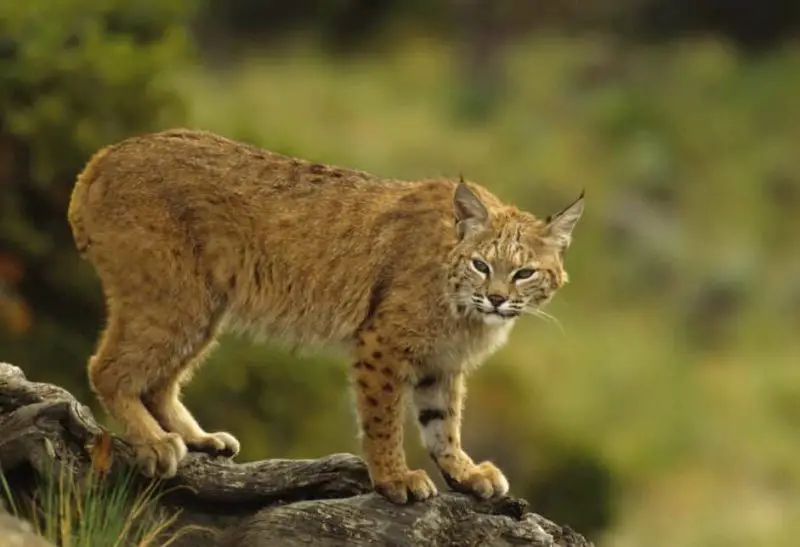
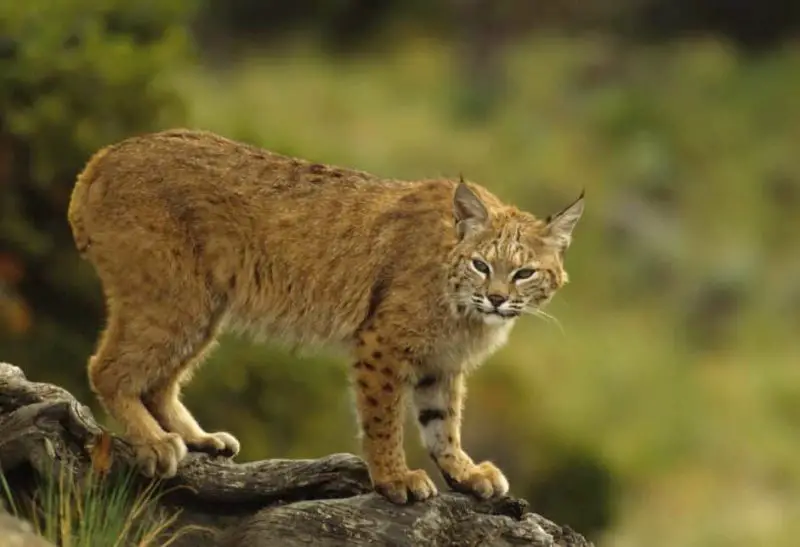
Typical bobcat features include a short bobbed tail with a dark tip, tufted ears, spotted or mottled coat patterns, longer hind legs relative to the body, and distinct facial ruffs.
Domestic cats may share individual traits but rarely all simultaneously.
Behavioral indicators
Bobcats move cautiously, often hugging cover and avoiding prolonged exposure. Domestic cats usually appear more relaxed around human environments.
Movement style often provides clearer identification than coloration alone.
Ecological Importance of Bobcats in Wisconsin
Predator balance
Bobcats regulate populations of rodents, rabbits, and other small mammals. This supports agricultural productivity, forest regeneration, and disease control among prey species.
Balanced predator populations contribute to ecosystem stability.
Biodiversity influence
As mid-sized predators, bobcats affect prey distribution and behavior. These indirect effects shape vegetation patterns and overall ecosystem health.
Their presence often signals functioning natural habitats.
Human Expansion and Wildlife Interaction
Development near natural habitat
Wisconsin continues to experience suburban growth into wooded areas, wetlands, and agricultural landscapes. Increased wildlife sightings often reflect habitat overlap rather than population surges.
Bobcats are not necessarily moving closer to people. People are often moving closer to established wildlife areas.
Attractants around homes
Outdoor pet food, unsecured garbage, rodent infestations, dense landscaping, and water features can attract prey species. Predators may follow indirectly.
Managing attractants reduces wildlife encounters effectively.
Protecting Domestic Cats in Bobcat Areas
Benefits of indoor living
Indoor cats typically live longer and face fewer hazards, including predators, vehicles, disease exposure, and harsh weather. Indoor housing also protects native wildlife.
This approach benefits both pets and ecosystems.
Supervised outdoor access
For owners who prefer outdoor time, supervised yard access, enclosed patios, or secure fencing reduce risk. Nighttime supervision is especially important.
Responsible pet management supports coexistence.
Conservation and Public Education
Importance of accurate information
Misunderstanding wildlife behavior can lead to unnecessary fear or harmful management decisions. Accurate information promotes coexistence while supporting conservation goals.
Education bridges curiosity and ecological responsibility.
Role of community reporting
Public wildlife sightings provide valuable data when reported responsibly. Agencies combine these reports with camera traps, field surveys, and genetic studies.
Reliable information improves wildlife management strategies.
Long-Term Outlook for Bobcats in Wisconsin
Bobcat populations appear stable or gradually expanding in suitable habitats. Continued forest connectivity, prey availability, and responsible land management will influence future trends.
Hybridization with domestic cats is unlikely to become a major ecological factor based on current scientific evidence.
Coexistence remains achievable through awareness, education, and responsible pet ownership.
FAQs About Bobcats and Domestic Cats in Wisconsin
Can bobcats breed with domestic cats naturally?
Current scientific evidence suggests natural hybridization is extremely rare or unsupported due to genetic and behavioral barriers.
Why do some cats look like bobcat hybrids?
Large feral domestic cats, unusual coat patterns, or brief sightings in poor lighting often explain perceived hybrids.
Are bobcats dangerous to house cats?
Very small outdoor cats may occasionally be vulnerable to predation, especially at night. Supervision reduces risk.
How can I tell a bobcat from a domestic cat?
Look for a short bobbed tail, ear tufts, spotted coat, cautious movement, and preference for cover.
Are bobcat populations increasing in Wisconsin?
They have recovered from past declines and appear stable or slowly expanding in suitable habitats.
Should I report bobcat sightings?
Yes. Reporting sightings to wildlife agencies helps improve population monitoring and management.
Final Thoughts
The idea of bobcats breeding with domestic cats captures imagination, especially as wildlife and human environments increasingly overlap. Yet scientific evidence consistently shows strong genetic and behavioral barriers that make such hybrids extremely unlikely.
Most unusual cat sightings in Wisconsin reflect natural variation, misidentification, or brief glimpses of elusive wildlife rather than true hybrid animals. Understanding this helps replace speculation with informed awareness.
Bobcats remain an important part of Wisconsin’s ecosystems. Responsible pet ownership, habitat awareness, and balanced education allow people and wildlife to share landscapes safely. When knowledge replaces myth, coexistence becomes far easier than many expect.