
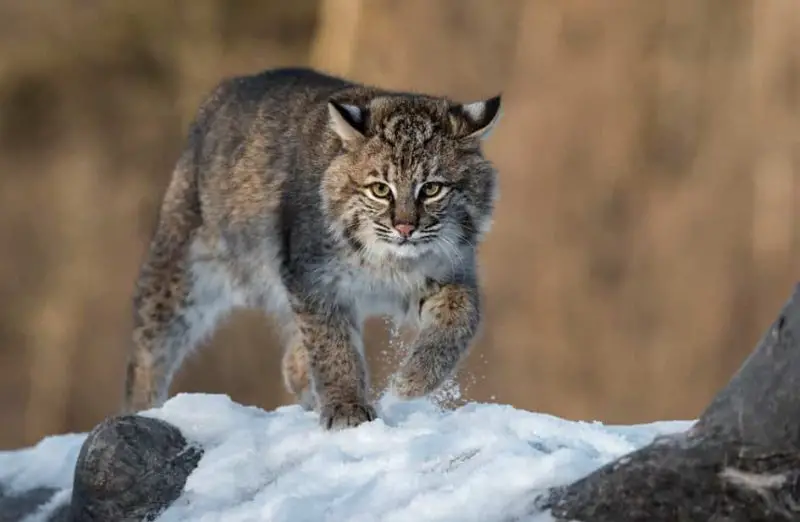
Across parts of Washington State, occasional sightings of bobcats near residential areas spark curiosity and sometimes concern. When people notice a wild cat moving through wooded neighborhoods or rural properties, questions quickly follow. One of the most common is whether bobcats can breed with domestic cats. Some observers report unusually large feral cats or animals with mixed features and wonder if hybridization might be happening.
This topic blends wildlife biology, genetics, behavior, and human perception. While both bobcats and domestic cats belong to the broader cat family, their evolutionary paths, ecological roles, and reproductive biology differ significantly. Understanding these differences helps separate myth from scientific reality.
Washington’s varied landscapes — forests, agricultural valleys, coastal zones, and expanding suburban areas — increase encounters between people, pets, and wildlife. That overlap naturally leads to speculation. However, scientific evidence paints a clearer picture about whether bobcats and domestic cats actually interbreed.
Table of Contents
- 1 Bobcats in Washington State
- 2 Domestic Cats in Washington Landscapes
- 3 Taxonomic Differences Between Bobcats and Domestic Cats
- 4 Behavioral Barriers to Hybridization
- 5 Scientific Evidence About Hybridization
- 6 Why Hybrid Myths Persist in Washington
- 7 Predation Versus Hybridization
- 8 Identifying Bobcats Versus Domestic Cats
- 9 Ecological Importance of Bobcats in Washington
- 10 Human Development and Wildlife Interaction
- 11 Protecting Domestic Cats in Bobcat Areas
- 12 Conservation and Public Education
- 13 FAQs About Bobcats and Domestic Cats in Washington
- 13.1 Can bobcats and domestic cats actually mate in Washington?
- 13.2 Have any bobcat–domestic cat hybrids been confirmed?
- 13.3 Why do people think hybrids exist?
- 13.4 Are bobcats dangerous to house cats?
- 13.5 How can I protect my cat near bobcat habitat?
- 13.6 Do bobcats actively approach neighborhoods?
- 13.7 Should I report a bobcat sighting?
- 14 Final Thoughts
Bobcats in Washington State
Distribution and Habitat
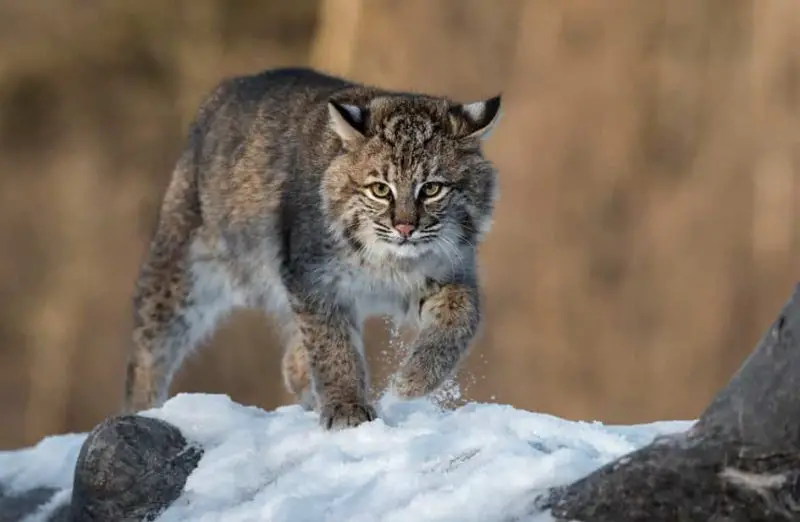
Bobcats are widely distributed throughout Washington State, occupying an impressive range of habitats from dense evergreen forests in the Cascades to shrublands, river corridors, foothills, and agricultural edges. Their adaptability allows them to persist in environments that include both remote wilderness and semi developed suburban landscapes. Greenbelts, wooded parks, and rural neighborhoods sometimes provide enough cover and prey to support resident bobcats without most people ever realizing they are nearby.
These cats strongly prefer areas that offer both concealment and reliable hunting opportunities. Brushy terrain, rocky outcrops, forest edges, riparian vegetation, and thick undergrowth provide ideal conditions for stalking prey and establishing dens. Natural cover allows them to move largely unseen, which explains why even healthy populations can remain unnoticed for long periods. As human development expands outward, these adaptable predators often continue using the same landscapes, quietly adjusting their movement patterns.
Despite their broad distribution, bobcats remain elusive animals. They are primarily crepuscular and nocturnal, meaning activity peaks at dawn, dusk, and nighttime hours. This behavior helps them avoid humans while maximizing hunting success. Even in areas where they are common, direct sightings tend to be brief and infrequent, which contributes to ongoing curiosity about their habits.
Diet and Ecological Role
Bobcats function as mid sized predators within Washington ecosystems. Their diet usually includes rabbits, rodents, birds, reptiles, and occasionally small deer or livestock under particular circumstances. Their flexible hunting behavior allows them to adjust to seasonal prey availability and regional differences in habitat.
By regulating prey populations, bobcats help maintain ecological balance. Rodent control benefits agriculture and forest regeneration, while predation on smaller mammals and birds supports natural biodiversity patterns. Healthy bobcat populations often signal intact ecosystems with sufficient prey diversity and habitat quality.
When bobcats appear near residential areas, the reason is almost always prey availability rather than attraction to people. Rodents around homes, green spaces, or agricultural edges can draw predators without any direct interest in human activity.
Domestic Cats in Washington Landscapes
Outdoor Cats and Feral Populations
Domestic cats are widespread across Washington State. Many households allow outdoor access, and feral cat colonies exist in urban, suburban, and rural environments. Barn cats, neighborhood pets, and unmanaged feral populations frequently occupy habitats similar to those used by native wildlife.
These domestic cats function as small predators, hunting rodents, birds, insects, and reptiles. Because their prey overlaps with that of bobcats, both species sometimes occupy the same general areas. This ecological overlap increases the likelihood of encounters, but it does not imply reproductive interaction. Shared habitat simply creates more observation opportunities.
Feral cat populations in particular can show behaviors closer to wild animals. They may become more cautious, nocturnal, and physically leaner over time. These adaptations sometimes lead observers to suspect hybrid ancestry when none exists.
Visual Diversity Among Domestic Cats
Domestic cats display extraordinary variation in coat color, body size, tail length, ear shape, and facial structure. Some individuals naturally appear large or unusually patterned. Environmental adaptation can further alter appearance, especially in feral populations exposed to harsh weather or limited food.
This diversity frequently fuels speculation about hybrids. A muscular feral cat with a thick coat or shortened tail may resemble a small wildcat at a distance. In reality, domestic cat variation alone explains most unusual sightings.
Recognizing this variability helps reduce misidentification and unnecessary concern.
Taxonomic Differences Between Bobcats and Domestic Cats
Different Genera Within the Cat Family
Bobcats belong to the species Lynx rufus within the genus Lynx, while domestic cats belong to Felis catus within the genus Felis. Although both are members of the Felidae family, their evolutionary lineages separated millions of years ago. This long divergence created substantial genetic and biological differences.
Hybridization typically occurs more readily between species within the same genus. Certain wild cat hybrids produced in captivity involve closely related species sharing similar reproductive biology. Bobcats and domestic cats do not share that close genetic relationship.
Differences in reproductive physiology, courtship behavior, scent communication, and embryonic development all reduce compatibility. These factors collectively make successful hybrid offspring extremely unlikely.
Chromosome Considerations
Both bobcats and domestic cats have similar chromosome counts, which sometimes leads to assumptions that hybridization should be feasible. However, chromosome number alone does not determine reproductive compatibility.
Gene arrangement, regulatory sequences, reproductive timing, and behavioral cues play critical roles. Even species with matching chromosome numbers may fail to produce viable offspring due to subtle genetic incompatibilities.
Current scientific research has not confirmed stable bobcat domestic cat hybrid populations in the wild. Genetic testing remains the only reliable method for verification.
Behavioral Barriers to Hybridization
Territorial Behavior
Bobcats maintain clearly defined territories marked by scent glands, scratches, and visual cues. These territories reduce conflict and ensure access to resources. Intrusions by unfamiliar animals typically trigger avoidance or defensive responses rather than social interaction.
Domestic cats also establish territories, but usually on a smaller scale. When a bobcat encounters a domestic cat, it is more likely to interpret the animal as prey or competitor rather than a potential mate. This instinct strongly discourages breeding interaction.
Territorial separation remains one of the most powerful behavioral barriers preventing hybridization.
Differences in Mating Patterns
Bobcats typically breed once annually, usually during late winter. Domestic cats, particularly in milder climates, can breed multiple times per year. This mismatch reduces opportunities for reproductive encounters.
Courtship communication also differs. Wild felines rely on specific scent markings, vocalizations, and behavioral cues that domestic cats may not interpret correctly. Even when animals occupy the same habitat, these differences limit successful mating attempts.
Scientific Evidence About Hybridization
Lack of Verified Wild Hybrids
Wildlife biologists generally agree that confirmed bobcat domestic cat hybrids in the wild are extraordinarily rare or nonexistent. Many suspected hybrids ultimately prove to be normal bobcats, feral domestic cats, or other species misidentified during brief sightings.
Examples of mistaken identification often include large feral cats, juvenile bobcats lacking prominent ear tufts, or domestic cats with unusual coat patterns. DNA analysis remains essential for accurate identification.
Without genetic confirmation, visual assessment alone cannot reliably determine hybrid status.
Captive Breeding Attempts
Some historical captive breeding experiments have attempted to cross bobcats with domestic cats. Results were inconsistent, often unsuccessful, and rarely produced viable offspring. Stable hybrid lines were not established.
These outcomes reinforce the conclusion that strong biological barriers exist even under controlled conditions. Natural hybridization in the wild therefore remains highly unlikely.
Why Hybrid Myths Persist in Washington
Misidentification in Natural Settings
Wildlife sightings frequently occur under challenging conditions. Poor lighting, dense vegetation, distance, and brief observation windows can distort perception. A bobcat glimpsed at dusk may appear smaller than expected, while a feral domestic cat may appear unusually wild.
Human memory often emphasizes unusual details, especially when an encounter feels surprising. Over time, these recollections can evolve into hybrid speculation.
Understanding observational limitations helps explain why hybrid myths persist.
Influence of Social Media and Storytelling
Digital communication allows wildlife photos and anecdotes to spread quickly. Once labeled as hybrids, images often circulate widely without expert verification.
Repeated exposure creates familiarity, making hybrid explanations seem plausible. Cultural storytelling traditions have long included hybrid animal myths, and modern media continues that pattern.
Balanced scientific information helps counter these narratives.
Predation Versus Hybridization
Bobcats May Prey on Small Domestic Cats
Bobcats primarily hunt natural prey, but very small domestic cats left unsupervised outdoors may occasionally be vulnerable. This interaction reflects predator prey dynamics rather than reproductive behavior.
Pet supervision, particularly at night, significantly reduces risk. Understanding natural predator behavior helps pet owners make informed decisions.
Territorial Encounters
Adult domestic cats sometimes encounter bobcats near shared hunting areas. Most bobcats avoid conflict unless cornered or protecting offspring. Territorial avoidance remains the dominant response, and mating attempts are extremely rare.
Recognizing this distinction clarifies common misconceptions.
Identifying Bobcats Versus Domestic Cats
Physical Identification Clues
Bobcats usually show several consistent characteristics including a short bobbed tail with a dark tip, tufted ears, spotted or mottled coats, longer hind legs relative to body size, and distinctive facial ruffs.
Domestic cats exhibit wide variation but rarely display this full combination. Observing body structure, tail length, and facial features improves identification accuracy.
Behavioral Indicators
Bobcats typically move cautiously, staying near cover and avoiding prolonged exposure. Domestic cats often appear more relaxed around human structures. Behavioral observation often clarifies species identification better than coat color alone.
Ecological Importance of Bobcats in Washington
Predator Balance
Bobcats help regulate populations of rodents, rabbits, and other small mammals. This ecological function supports agriculture, forest health, and disease control among prey species. Predator diversity strengthens ecosystem stability.
Indicator of Healthy Habitat
Because bobcats require adequate prey, cover, and relatively intact ecosystems, their presence often signals environmental health rather than ecological disruption. Understanding this role promotes coexistence rather than fear.
Human Development and Wildlife Interaction
Expansion Into Wildlife Habitat
Residential development increasingly borders forests, wetlands, and agricultural land in Washington. As human presence expands into these areas, wildlife sightings naturally increase. Bobcats are not necessarily moving closer to people; people are often building closer to bobcat habitat.
Recognizing this dynamic helps contextualize encounters realistically.
Attractants That Increase Encounters
Unsecured garbage, outdoor pet food, rodent infestations, and dense landscaping can attract prey species, which in turn attract predators. Managing these attractants effectively reduces wildlife encounters without harming animals.
Protecting Domestic Cats in Bobcat Areas
Benefits of Indoor Living
Indoor cats generally live longer and face fewer risks from predators, vehicles, and disease. Indoor living also reduces wildlife predation by domestic cats themselves. This approach benefits both pets and ecosystems.
Supervised Outdoor Access
If outdoor access is desired, enclosed patios, supervised yard time, and secure fencing reduce risk. Nighttime supervision is particularly important. Responsible pet ownership supports safe coexistence.
Conservation and Public Education
Importance of Accurate Information
Misunderstanding wildlife behavior can lead to unnecessary fear or inappropriate management actions. Accurate education helps communities respond rationally to wildlife presence while supporting conservation goals.
Community Awareness
Responsible wildlife reporting helps agencies monitor population trends. Avoiding sensational claims encourages balanced understanding. Education bridges curiosity and conservation.
FAQs About Bobcats and Domestic Cats in Washington
Can bobcats and domestic cats actually mate in Washington?
Current scientific evidence suggests this is extremely unlikely. Bobcats and domestic cats belong to different genera, creating strong biological and behavioral barriers to hybridization.
Have any bobcat–domestic cat hybrids been confirmed?
Verified cases in the wild are essentially nonexistent. Most suspected hybrids turn out to be feral domestic cats, young bobcats, or simple misidentifications.
Why do people think hybrids exist?
Unusual looking cats, brief sightings, poor lighting, and social media speculation often lead people to assume hybrid ancestry without genetic proof.
Are bobcats dangerous to house cats?
Very small outdoor cats may occasionally be vulnerable as prey, especially at night. This is predation behavior, not mating interaction.
How can I protect my cat near bobcat habitat?
Keeping cats indoors, supervising outdoor time, and removing food attractants greatly reduce risks and unwanted encounters.
Do bobcats actively approach neighborhoods?
Usually not. Most sightings happen because development expands into natural habitat or because prey species attract bobcats nearby.
Should I report a bobcat sighting?
Yes. Reporting sightings to wildlife agencies helps monitor populations and supports conservation planning.
Final Thoughts
The idea that bobcats in Washington State commonly mate with domestic cats is not supported by scientific evidence. Genetic distance, behavioral differences, territorial instincts, and reproductive timing all act as barriers to hybridization. Most reported hybrids turn out to be misidentified domestic cats or normal bobcats.
As Washington landscapes continue evolving, encounters between wildlife and human communities will likely increase. Understanding the biology behind these interactions reduces fear and encourages coexistence. Bobcats remain important native predators that contribute to ecological balance, and domestic cats remain beloved companions whose safety benefits from informed management.
Ultimately, separating myth from science helps people appreciate wildlife realistically. Curiosity about unusual animals is natural, but evidence based understanding ensures that curiosity leads to knowledge rather than misconception.