
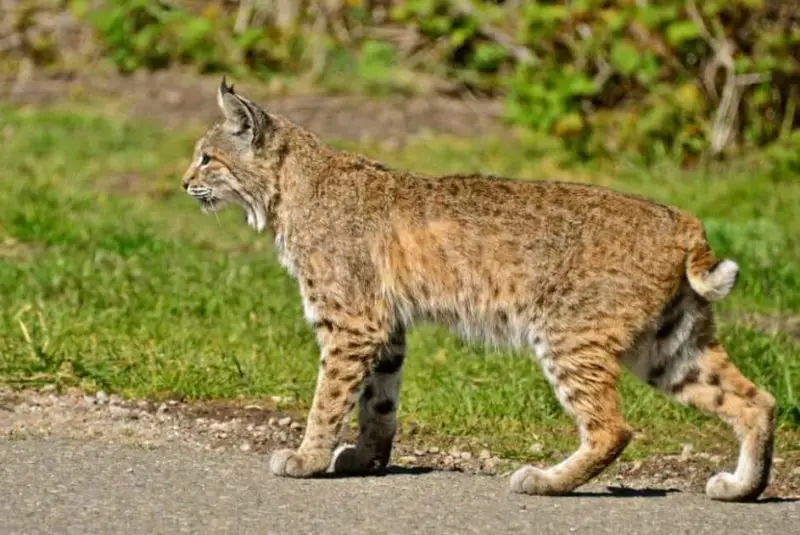
Throughout large parts of North America, including South Dakota, bobcats remain one of the most recognizable native predators. Their secretive behavior, adaptability, and increasing visibility in some regions have sparked curiosity about how they interact with human environments. One common question that arises is whether bobcats ever mate with domestic cats. The idea captures attention because both animals are felines, sometimes share overlapping habitats, and occasionally cross paths near rural homes or suburban edges.
Despite these occasional encounters, scientific evidence strongly suggests that successful mating between bobcats and domestic cats is extremely unlikely. Biological, behavioral, genetic, and ecological barriers all make hybridization difficult. Most reports of supposed “bobcat-cat hybrids” turn out to be misidentified domestic cats, unusual bobcats, or simple misunderstandings.
Understanding how bobcats live in South Dakota, how domestic cats behave outdoors, and why hybridization rarely occurs helps clarify the situation while promoting responsible wildlife coexistence.
Table of Contents
- 1 Bobcats Across South Dakota Landscapes
- 2 Understanding Domestic Cat Behavior Outdoors
- 3 Genetic Differences Between Bobcats and Domestic Cats
- 4 Behavioral Barriers to Hybridization
- 5 Breeding Cycles and Seasonal Timing
- 6 Habitat Separation in South Dakota
- 7 Public Perception Versus Scientific Evidence
- 8 Risks to Domestic Cats From Bobcats
- 9 Ecological Role of Bobcats in South Dakota
- 10 How Bobcats Avoid Human Interaction
- 11 Responsible Pet Ownership in Bobcat Territory
- 12 Myths About Wild-Domestic Cat Hybrids
- 13 Wildlife Management Perspective in South Dakota
- 14 Future Research and Changing Landscapes
- 15 Living Alongside Wildlife in South Dakota
- 16 FAQs About Bobcats and Domestic Cats in South Dakota
- 16.1 Do bobcats ever mate with domestic cats?
- 16.2 Are there confirmed bobcat-cat hybrids?
- 16.3 Are bobcats dangerous to pets?
- 16.4 Where are bobcats most common in South Dakota?
- 16.5 Why do people think hybrids exist?
- 16.6 Should I worry about bobcats near my home?
- 16.7 How can I protect my cat?
- 16.8 Are bobcats aggressive toward humans?
- 16.9 Do bobcats benefit ecosystems?
- 16.10 Will bobcats move closer to towns over time?
- 17 Final Thoughts
Bobcats Across South Dakota Landscapes
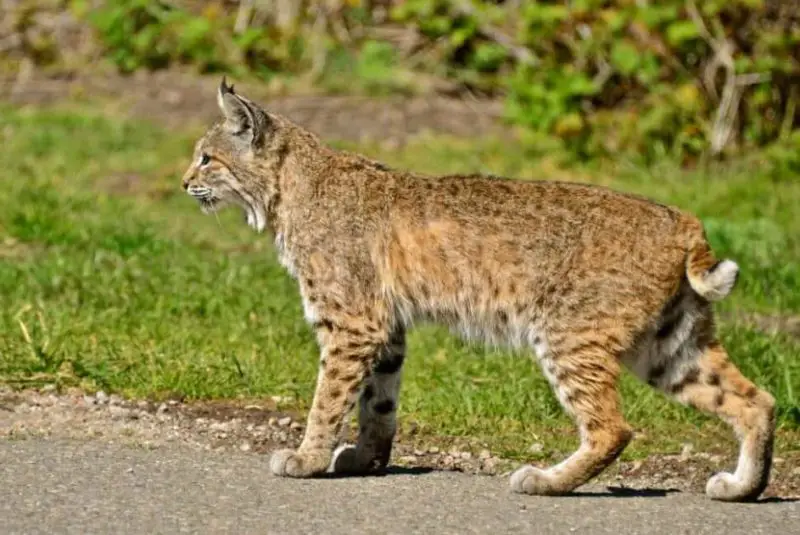
Bobcats are well established throughout South Dakota. They thrive in a wide range of habitats, from forested hills and river valleys to prairie edges, agricultural landscapes, and rugged badlands terrain. Their adaptability allows them to survive both in relatively remote wilderness and in transitional areas where human development meets natural habitat.
These wildcats prefer locations that offer dense cover, rocky outcrops, brushy fields, or wooded corridors. Such environments provide hunting opportunities, shelter from harsh weather, and protection from larger predators or human disturbance.
Bobcats are solitary animals. Adult individuals maintain territories that overlap minimally except during breeding season. This territorial lifestyle reduces competition and supports their stealth-based hunting strategy. Most people in South Dakota who live near bobcat habitat may never actually see one, even though the animals are present.
Their elusive nature plays an important role in limiting contact with domestic animals.
Understanding Domestic Cat Behavior Outdoors
Domestic cats vary widely in behavior depending on whether they live indoors, outdoors, or in semi-feral conditions. Indoor cats typically have little interaction with wildlife. Outdoor or feral cats, however, may roam widely in search of food, mates, or shelter.
Even so, domestic cats tend to remain near predictable food sources such as homes, barns, or feeding areas. They often rely on human-provided shelter, regular feeding, or accessible water sources. Their hunting habits focus mostly on small prey like rodents, birds, or insects.
Wild bobcats, in contrast, depend entirely on natural hunting skills. Their diet includes rabbits, rodents, birds, and occasionally larger prey depending on availability. They also possess stronger territorial instincts and survival behaviors shaped by wild ecosystems.
These differences in lifestyle and behavior reduce opportunities for meaningful interaction between the two species.
Genetic Differences Between Bobcats and Domestic Cats
One of the strongest barriers to interbreeding involves genetics. Bobcats belong to the genus Lynx, while domestic cats belong to the genus Felis. Although both are members of the broader cat family, this evolutionary separation occurred millions of years ago.
Hybridization generally occurs more easily between closely related species within the same genus. Because bobcats and domestic cats fall into separate genera, viable offspring are extremely unlikely. Even if mating were attempted, successful fertilization and healthy offspring development would be biologically improbable.
Occasional anecdotal claims about hybrids have surfaced over the years, but scientific verification has not confirmed stable bobcat-domestic cat hybrids. Most suspected cases are explained by visual similarities or genetic testing showing pure domestic cat ancestry.
Genetic incompatibility remains a major factor limiting hybridization.
Behavioral Barriers to Hybridization
Even if genetics allowed hybridization, behavioral differences would still make mating unlikely. Bobcats rely on specific scent marking, vocal communication, territorial displays, and seasonal breeding cues.
Domestic cats may not recognize or respond appropriately to these signals. Their social behaviors are shaped partly by human interaction and domestic breeding practices, which differ significantly from wild feline courtship rituals.
Bobcats are also naturally cautious and territorial. They typically avoid unfamiliar animals unless hunting or defending territory. Domestic cats entering bobcat territory are more likely to be viewed as competitors or prey rather than potential mates.
These behavioral differences strongly reduce hybridization probability.
Breeding Cycles and Seasonal Timing
Reproductive timing creates another barrier. Bobcats usually breed seasonally, often in late winter or early spring across South Dakota. This timing ensures kittens are born when prey becomes abundant during warmer months.
Domestic cats, by contrast, can breed multiple times per year, particularly in stable environments where food and shelter are consistent. This mismatch in reproductive cycles reduces the chance that both species would be fertile simultaneously.
Seasonal ecological alignment further separates the species reproductively.
Timing matters as much as compatibility.
Habitat Separation in South Dakota
Habitat preferences also reduce interaction opportunities. Bobcats generally favor natural landscapes with dense vegetation, rocky cover, or rugged terrain. These environments support their hunting style and provide concealment.
Domestic cats tend to remain near human settlements where food, warmth, and shelter are accessible. Even feral cats usually stay close to barns, neighborhoods, or rural residences rather than venturing deep into wild habitat.
While overlap sometimes occurs at rural edges or farmland boundaries, sustained interaction sufficient for mating remains uncommon.
Habitat separation supports reproductive isolation.
Public Perception Versus Scientific Evidence
Stories about bobcat-domestic cat hybrids circulate frequently in rural communities. Large feral cats, unusual coat patterns, or fleeting wildlife sightings can spark speculation.
Scientific research, however, consistently finds no confirmed evidence of viable hybrids between bobcats and domestic cats. Misidentification accounts for most reports.
Education helps replace speculation with evidence-based understanding.
Accurate information supports both wildlife conservation and responsible pet ownership.
Risks to Domestic Cats From Bobcats
While mating is unlikely, predation risk is more realistic. Bobcats are opportunistic predators capable of hunting animals similar in size to domestic cats, especially in rural or forest-edge environments.
Risk varies depending on prey availability. When natural prey populations are strong, bobcats may ignore domestic animals entirely. During periods of food scarcity, opportunistic hunting may increase.
Keeping cats indoors or supervising outdoor activity significantly reduces risk. Nighttime and dawn hours present the highest likelihood of predator activity.
Pet safety remains the primary concern rather than hybridization.
Ecological Role of Bobcats in South Dakota
Bobcats play an important ecological role as mid-sized predators. They help regulate populations of rabbits, rodents, and other small mammals. This predatory function contributes to ecosystem balance and biodiversity.
Healthy predator populations often indicate stable ecosystems. Removing predators entirely can lead to prey overpopulation, crop damage, or ecological imbalance.
Understanding this ecological context helps frame coexistence discussions more constructively.
Bobcats are not simply threats. They are integral ecosystem participants.
How Bobcats Avoid Human Interaction
Bobcats typically avoid humans whenever possible. Their camouflage, stealth movement, and nocturnal habits reduce visibility.
Most encounters occur accidentally, such as during hiking, hunting, or rural outdoor work. Bobcats rarely seek direct interaction with humans or domestic animals unless attracted by food sources.
Maintaining natural habitat buffers and avoiding wildlife attractants helps preserve this separation.
Coexistence depends largely on awareness.
Responsible Pet Ownership in Bobcat Territory
Responsible pet management reduces wildlife conflict significantly. Keeping cats indoors remains the safest option for both pets and native wildlife.
If outdoor access is allowed, supervision, secure enclosures, or limited daytime access reduce encounter risk. Avoid leaving pet food outdoors overnight, as this can attract predators.
Maintaining secure fencing and minimizing attractants helps discourage wildlife presence near homes.
Responsible ownership benefits ecosystems and pets alike.
Myths About Wild-Domestic Cat Hybrids
Several myths persist about bobcat-domestic cat hybrids. Some people believe such hybrids are common or produce unusually aggressive animals. Others assume they represent emerging new species.
Scientific evidence does not support these claims. Biological and behavioral barriers make hybridization extremely rare or nonexistent.
Most unusual feline sightings involve normal variation within domestic cats or bobcats.
Education helps dispel misconceptions.
Accurate information promotes balanced understanding.
Wildlife Management Perspective in South Dakota
Wildlife agencies focus on habitat conservation, population monitoring, and reducing human-wildlife conflict. Hybridization between bobcats and domestic cats is not considered a significant management concern due to lack of evidence.
Efforts typically emphasize public education, livestock protection strategies, and habitat stewardship.
Scientific monitoring continues to track population trends and ecosystem health.
Management priorities reflect ecological balance rather than fear.
Future Research and Changing Landscapes
Advances in genetic analysis continue improving wildlife research. If hybridization were occurring regularly, DNA evidence would likely reveal it.
Environmental changes, urban expansion, and climate variability may influence wildlife interaction patterns over time. Continued research helps track these shifts and guide conservation strategies.
Current data consistently support reproductive separation between bobcats and domestic cats.
Science continues refining understanding.
Living Alongside Wildlife in South Dakota
South Dakota’s diverse landscapes support rich wildlife populations. Living alongside native predators requires awareness rather than alarm.
Simple precautions such as supervising pets, securing food sources, and respecting wildlife habitat help reduce conflict.
Most wildlife encounters remain peaceful when humans practice basic awareness.
Balanced coexistence benefits both communities and ecosystems.
FAQs About Bobcats and Domestic Cats in South Dakota
Do bobcats ever mate with domestic cats?
Scientific evidence suggests successful mating is extremely unlikely due to genetic and behavioral barriers.
Are there confirmed bobcat-cat hybrids?
No verified stable hybrids have been scientifically confirmed.
Are bobcats dangerous to pets?
They can prey on small animals, including cats, especially in rural areas.
Where are bobcats most common in South Dakota?
Forested regions, badlands, river valleys, and rural edges.
Why do people think hybrids exist?
Misidentification and unusual sightings often spark speculation.
Should I worry about bobcats near my home?
Usually not. Basic precautions typically prevent problems.
How can I protect my cat?
Keep cats indoors or supervise outdoor activity.
Are bobcats aggressive toward humans?
They usually avoid humans and attacks are extremely rare.
Do bobcats benefit ecosystems?
Yes. They help control rodent and rabbit populations.
Will bobcats move closer to towns over time?
Adaptability may increase sightings, but avoidance behavior remains strong.
Final Thoughts
The idea that bobcats in South Dakota might mate with domestic cats is intriguing, but scientific evidence strongly indicates it rarely, if ever, happens. Genetic incompatibility, behavioral differences, breeding cycle mismatches, and habitat separation all serve as powerful barriers to hybridization.
While occasional encounters between wild bobcats and domestic cats can occur, the more realistic concern involves pet safety rather than interbreeding. Responsible pet ownership, awareness of wildlife habits, and simple preventive measures usually ensure safe coexistence.
Bobcats remain an important part of South Dakota’s ecosystems, contributing to natural balance and biodiversity. Understanding their behavior helps replace myth with knowledge, allowing people to appreciate these elusive wildcats while living comfortably alongside them.