
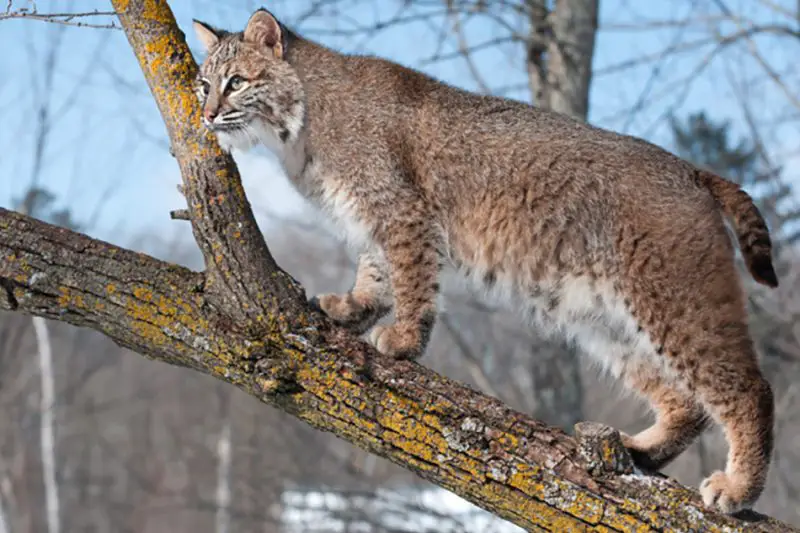
Bobcats are one of Colorado’s most widespread wild predators, yet they remain surprisingly elusive. People who hike foothill trails, live near wooded suburbs, or manage rural property sometimes catch brief glimpses of these quiet cats. At the same time, domestic cats are everywhere — from indoor pets to barn cats to feral colonies.
That overlap naturally raises questions. If bobcats and house cats share territory, could they ever breed? Some residents swear they have seen hybrids. Others worry about outdoor pets encountering wildlife. The idea sounds plausible at first glance because both animals belong to the cat family.
The reality, however, is far more complex. Genetics, behavior, ecology, and even timing all play roles in whether hybridization could occur. Understanding those factors helps separate fact from folklore while also improving coexistence with wildlife across Colorado.
Table of Contents
- 1 Bobcats in Colorado: Distribution and Habitat
- 2 Domestic Cats Across Colorado Landscapes
- 3 Taxonomic Differences Between Bobcats and Domestic Cats
- 4 Behavioral Barriers That Limit Hybridization
- 5 Are There Confirmed Bobcat–Domestic Cat Hybrids?
- 6 Why Hybrid Myths Persist in Colorado
- 7 Predation Versus Hybridization
- 8 Identifying Bobcats Versus Domestic Cats
- 9 Ecological Role of Bobcats in Colorado
- 10 Human Expansion and Wildlife Interaction
- 11 Protecting Domestic Cats in Bobcat Areas
- 12 Conservation and Public Education
- 13 FAQs About Bobcats and Domestic Cats in Colorado
- 13.1 Can bobcats and domestic cats produce offspring?
- 13.2 Are bobcats dangerous to house cats?
- 13.3 How can I tell a bobcat from a large feral cat?
- 13.4 Do bobcats come into cities?
- 13.5 Are hybrids more aggressive?
- 13.6 Should I report sightings?
- 13.7 Do bobcats attack humans?
- 13.8 Why do hybrid rumors persist?
- 14 Final Thoughts
Bobcats in Colorado: Distribution and Habitat
Statewide Presence Across Diverse Landscapes
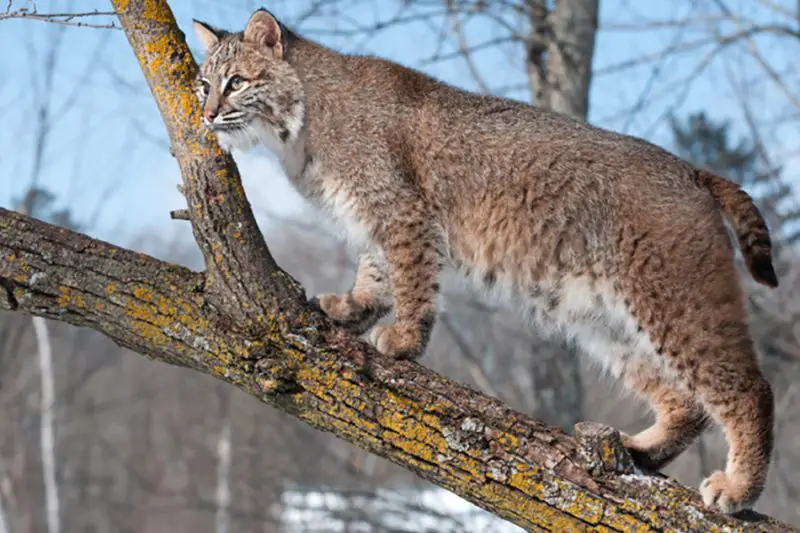
Bobcats occur throughout most of Colorado. They inhabit foothill forests, high desert shrublands, canyon systems, agricultural edges, riparian corridors, and increasingly suburban greenbelts. From the Front Range near Denver to western plateau ecosystems, suitable habitat exists wherever prey and cover coincide.
Unlike larger predators such as mountain lions, bobcats tolerate fragmented landscapes well. Patchy woodland, brushy ravines, irrigation corridors, and undeveloped suburban edges can all support them. Their moderate size allows flexibility that larger carnivores often lack.
Because of this adaptability, encounters with domestic cats occasionally occur, particularly in neighborhoods bordering open space.
Why They Remain Hard to See
Despite widespread distribution, bobcats are seldom observed clearly. They are primarily crepuscular and nocturnal, meaning activity peaks at dawn, dusk, and nighttime. Dense vegetation, rocky cover, and cautious behavior further reduce visibility.
Many sightings last only seconds. Poor lighting, distance, and quick movement often make identification uncertain. That uncertainty sometimes fuels hybrid rumors when observers notice unusual coat patterns or body shapes.
Brief encounters rarely provide enough detail for accurate conclusions.
Domestic Cats Across Colorado Landscapes
Outdoor Pets, Barn Cats, and Feral Colonies
Domestic cats occupy nearly every human environment in Colorado. Some live indoors exclusively. Others roam freely outdoors, especially in rural areas. Farms frequently maintain barn cats for rodent control. Urban feral colonies persist near food sources.
These cats often use the same transitional habitats as bobcats: creek corridors, wooded edges, abandoned structures, and landscaped greenbelts. Shared prey species increase indirect interaction potential.
Habitat overlap, however, does not automatically imply breeding compatibility.
Natural Variation in Domestic Cats
Domestic cats exhibit enormous diversity in appearance. Coat color, tail length, body size, ear shape, and facial structure vary widely even within a single neighborhood. Feral cats sometimes appear leaner or more rugged than pets due to environmental pressures.
These variations often lead people to suspect hybrid ancestry when none exists. Visual differences alone rarely indicate genetic mixing.
Proper identification usually requires genetic analysis rather than observation.
Taxonomic Differences Between Bobcats and Domestic Cats
Different Genera Within the Cat Family
Bobcats belong to the species Lynx rufus within the genus Lynx. Domestic cats belong to Felis catus within the genus Felis. Although both fall under the Felidae family, they diverged evolutionarily millions of years ago.
This genetic distance affects reproductive physiology, mating communication, and embryonic development. Hybridization typically occurs between species within the same genus rather than across genera.
That taxonomic separation forms a major biological barrier.
Chromosome Similarity Is Not Enough
Bobcats and domestic cats possess similar chromosome counts, which sometimes leads people to assume hybridization should be possible. However, chromosome number alone does not guarantee compatibility.
Gene arrangement, reproductive hormones, mating signals, and developmental factors all influence whether viable offspring can occur. Even subtle differences can prevent fertilization or successful gestation.
Scientific research has not established stable wild populations of bobcat–domestic cat hybrids.
Behavioral Barriers That Limit Hybridization
Territorial Instincts
Bobcats maintain defined territories marked through scent, scratching, and visual cues. Domestic cats also maintain territories, though usually much smaller.
When a bobcat encounters a domestic cat, it typically interprets it as prey, competition, or intrusion rather than a potential mate. Territorial defense discourages close interaction.
Courtship behavior under those circumstances is unlikely.
Differences in Breeding Cycles
Bobcats usually breed once annually, typically in late winter. Domestic cats can breed multiple times per year depending on environment and human management.
This mismatch in reproductive timing reduces opportunities for mating encounters. Even where animals share habitat, synchronized breeding periods are uncommon.
Timing alone significantly lowers hybridization likelihood.
Communication Differences
Wild felines rely on subtle scent cues, vocalizations, and behavioral displays during courtship. Domestic cats exhibit related but not identical signals.
These differences further reduce successful mating attempts even when individuals encounter one another.
Behavior matters as much as genetics.
Are There Confirmed Bobcat–Domestic Cat Hybrids?
Scientific Evidence Remains Limited
Wildlife biologists generally agree confirmed hybrids in natural settings are extraordinarily rare or unsupported. Many reported cases ultimately prove to be:
-
Large feral domestic cats
-
Juvenile bobcats misidentified
-
Domestic cats with unusual coat patterns
-
Brief wildlife sightings lacking verification
Genetic testing remains the only reliable confirmation method.
So far, widespread hybrid populations have not been documented.
Captive Breeding Attempts
Some historical captive attempts have been reported, but results were inconsistent and rarely produced viable offspring. Even controlled environments did not demonstrate reliable compatibility.
If hybridization struggles under controlled conditions, it becomes even less likely in the wild.
Why Hybrid Myths Persist in Colorado
Visual Misidentification
Colorado landscapes often involve variable lighting, dense vegetation, and quick wildlife movement. A large feral cat glimpsed briefly may resemble a bobcat. A juvenile bobcat lacking prominent ear tufts may resemble a domestic cat.
Human perception fills gaps with speculation.
Stories often evolve over time.
Social Media Amplification
Photos of unusual animals circulate quickly online. Once labeled as hybrids, images may spread without verification. Repetition increases perceived credibility.
Digital storytelling can unintentionally reinforce myths.
Curiosity drives engagement.
Predation Versus Hybridization
Bobcats May Prey on Small Cats
Bobcats primarily hunt rabbits, rodents, birds, and other small mammals. Very small domestic cats left unsupervised outdoors may occasionally be vulnerable, particularly at night.
This represents predator–prey interaction rather than reproductive behavior.
Understanding this distinction reduces confusion.
Territorial Encounters Are More Common
Adult domestic cats sometimes encounter bobcats near shared hunting areas. Most bobcats avoid conflict unless cornered or protecting offspring.
Avoidance remains the dominant response.
Breeding interaction is far less common.
Identifying Bobcats Versus Domestic Cats
Physical Characteristics
Bobcats typically show several consistent features:
-
Short bobbed tail with dark tip
-
Tufted ears
-
Spotted or mottled coat pattern
-
Long hind legs relative to body
-
Prominent facial ruffs
Domestic cats may share individual traits but rarely all simultaneously.
Observation of multiple features improves accuracy.
Behavioral Indicators
Bobcats move cautiously and prefer cover. Domestic cats often display relaxed behavior around human structures.
Movement style often clarifies identification better than coloration alone.
Patience helps.
Ecological Role of Bobcats in Colorado
Predator Balance
Bobcats regulate populations of rodents, rabbits, and other small mammals. This ecological role supports agriculture, vegetation health, and biodiversity.
Predator presence contributes to ecosystem stability.
Balanced systems benefit everyone.
Indicator of Healthy Habitat
Bobcats require adequate prey and cover. Their presence often signals functional habitat rather than ecological disruption.
Conservation awareness supports coexistence.
Education reduces fear.
Human Expansion and Wildlife Interaction
Development Near Natural Habitat
Colorado continues to experience suburban expansion into foothills, prairie edges, and river corridors. Wildlife sightings increase naturally under these conditions.
Often wildlife is not moving closer.
People are moving closer to wildlife.
Understanding this shift helps contextualize encounters.
Attractants Around Homes
Factors increasing encounters include:
-
Outdoor pet food
-
Unsecured garbage
-
Rodent populations
-
Dense landscaping providing cover
-
Water features attracting prey
Managing attractants reduces interaction likelihood significantly.
Simple steps matter.
Protecting Domestic Cats in Bobcat Areas
Indoor Living Advantages
Indoor cats generally live longer and face fewer risks including predators, vehicles, disease, and harsh weather.
Indoor housing benefits both pets and wildlife.
Reduced predation improves biodiversity.
Supervised Outdoor Access
If outdoor access is desired:
-
Supervise yard time
-
Use enclosed patios or catios
-
Bring pets indoors at night
-
Avoid leaving food outside
These measures reduce risk substantially.
Responsible ownership supports coexistence.
Conservation and Public Education
Accurate Information Reduces Conflict
Misunderstanding wildlife behavior can lead to unnecessary fear or inappropriate management decisions. Education promotes balanced responses.
Knowledge encourages coexistence rather than panic.
Communities benefit.
Research and Monitoring Efforts
Wildlife agencies track bobcat populations through:
-
Camera trap surveys
-
Field observations
-
Habitat monitoring
-
Public sighting reports
Genetic research continues evaluating hybridization claims. Current evidence consistently indicates minimal or nonexistent bobcat–domestic cat hybridization.
Science provides clarity.
FAQs About Bobcats and Domestic Cats in Colorado
Can bobcats and domestic cats produce offspring?
Scientific evidence suggests this is extremely unlikely. Genetic and behavioral barriers strongly limit hybridization.
Are bobcats dangerous to house cats?
Very small outdoor cats may occasionally be vulnerable to predation, especially at night. Supervision greatly reduces risk.
How can I tell a bobcat from a large feral cat?
Look for the short bobbed tail, ear tufts, spotted coat, and cautious movement typical of bobcats.
Do bobcats come into cities?
Yes. Suburban greenbelts, parks, and foothill communities often provide suitable habitat.
Are hybrids more aggressive?
No reliable evidence supports this. Behavior depends more on environment than hybrid status.
Should I report sightings?
Yes. Wildlife agencies often track sightings to monitor populations.
Do bobcats attack humans?
Attacks are extremely rare. Bobcats generally avoid people.
Why do hybrid rumors persist?
Brief sightings, unusual domestic cats, and social media amplification contribute to ongoing speculation.
Final Thoughts
Bobcats and domestic cats may share Colorado landscapes, but meaningful hybridization between them remains highly unlikely. Genetic distance, behavioral differences, and ecological factors all limit the possibility. Most suspected hybrids turn out to be misidentified animals rather than true crossbreeds.
Understanding this helps shift the conversation from fear to coexistence. Bobcats play an important ecological role by regulating prey populations and maintaining ecosystem balance. Domestic cats, meanwhile, benefit from responsible ownership practices that reduce risks to both pets and wildlife.
When communities combine awareness, conservation, and practical precautions, coexistence becomes far easier. And once the myths fade, bobcats become what they truly are — quiet, adaptable neighbors in Colorado’s diverse natural landscape.