
Deer populations across Nevada include two closely related species that often share overlapping habitats: the white-tailed deer and the mule deer. Because they sometimes occupy similar landscapes and even cross paths during seasonal movements, a common question arises among wildlife observers, hunters, and homeowners alike. Can these two species actually breed with each other?
The short answer is yes, hybridization between white-tailed deer and mule deer is biologically possible. However, it is relatively uncommon in Nevada compared with some other parts of North America. Environmental conditions, habitat preferences, breeding behaviors, and subtle genetic differences all influence how often these hybrids occur.
Understanding this topic requires looking beyond simple yes-or-no answers. The biology of both species, their ecological interactions in Nevada, and how wildlife management addresses hybridization all help explain the full picture.
Table of Contents
- 1 White-Tailed Deer and Mule Deer in Nevada
- 2 Can They Actually Breed?
- 3 Why Hybridization Happens
- 4 Identifying Hybrid Deer
- 5 Ecological Implications of Hybridization
- 6 Wildlife Management Perspective in Nevada
- 7 Environmental Factors Affecting Hybridization
- 8 Behavioral Barriers That Limit Breeding
- 9 Long-Term Evolutionary Outlook
- 10 Human Interest and Public Curiosity
- 11 FAQs About Deer Hybridization in Nevada
- 11.1 Can white-tailed deer and mule deer produce fertile offspring?
- 11.2 How common are hybrids in Nevada?
- 11.3 How can you tell if a deer is a hybrid?
- 11.4 Do hybrids behave differently from other deer?
- 11.5 Does hybridization harm deer populations?
- 11.6 Are hybrids protected differently under wildlife laws?
- 11.7 Can climate change increase hybridization?
- 11.8 Where in Nevada are hybrids most likely found?
- 11.9 Do hybrids live as long as other deer?
- 11.10 Why don’t the species merge completely if they can breed?
- 12 Conclusion
White-Tailed Deer and Mule Deer in Nevada
Where Each Species Lives
Mule deer are the dominant deer species across most of Nevada. They are highly adapted to arid and semi-arid environments, which characterize much of the state’s landscape. You’ll commonly find them in sagebrush basins, desert foothills, mountain slopes, piñon-juniper woodlands, and transitional forest zones. Their ability to survive on sparse vegetation and travel long distances between seasonal ranges allows them to thrive where water is limited. Seasonal migration is especially important for mule deer, with many populations moving from higher summer ranges to lower winter habitats.
White-tailed deer, on the other hand, are much less widespread in Nevada. They tend to favor riparian corridors, agricultural valleys, wooded river systems, and areas with thicker vegetation cover. Access to consistent water sources plays a major role in their distribution. In Nevada, white-tails are often found near rivers, irrigated farmland, wetlands, and forested stream zones where food and shelter are more abundant. These habitats provide the lush vegetation they prefer compared with the drier terrain favored by mule deer.
Because both species sometimes use similar migration routes, feeding grounds, or wintering areas, overlap does occur in certain regions. These transitional zones, where desert meets river valley or foothills meet farmland, create opportunities for occasional interaction. While such overlap is limited, it forms the ecological setting where hybridization can potentially happen.
Physical Differences Between the Species
Although mule deer and white-tailed deer are closely related, their physical characteristics are noticeably different when observed carefully. Mule deer typically have large, mule-like ears that help dissipate heat in dry environments. Their tails are relatively short with a black tip, and they display a distinctive white rump patch. Antlers usually fork repeatedly rather than growing from a single main beam. When startled, mule deer often exhibit a bounding gait known as “stotting,” where all four legs leave the ground simultaneously.
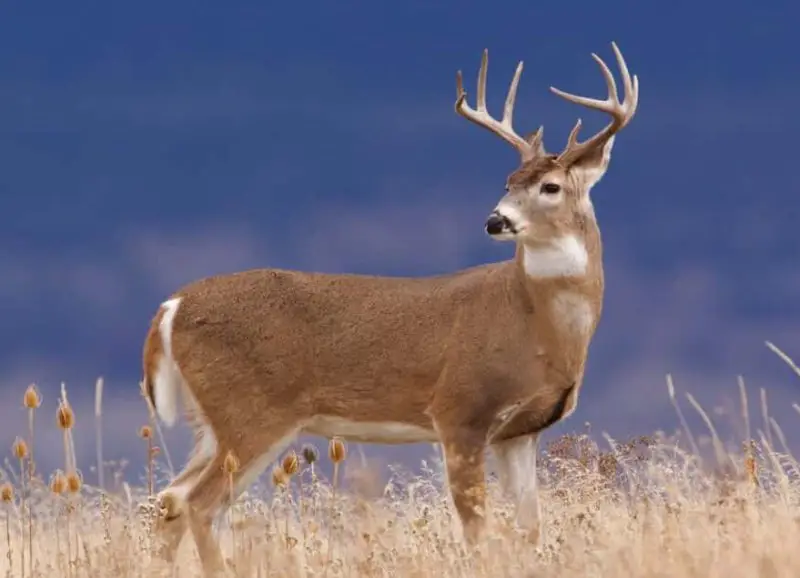
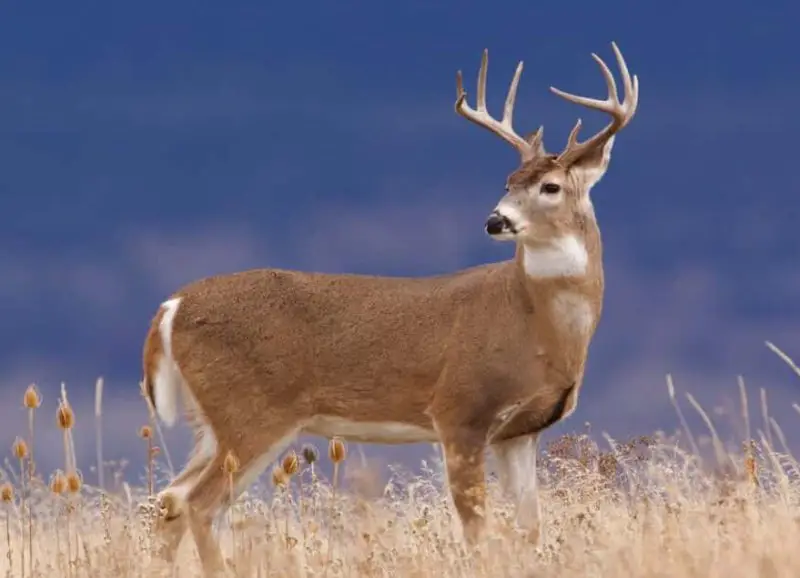
White-tailed deer show a different appearance shaped by their preferred habitat. Their ears are smaller relative to head size, and their tail is longer with a brown upper side and bright white underside. When alarmed, they raise this tail as a visual warning signal. Their antlers grow from a central beam with tines branching upward. Their running gait tends to be smoother and more fluid compared with the stiff bounding motion of mule deer.
These physical differences reflect evolutionary adaptation to distinct environments. Mule deer evolved in more open, rugged terrain, while white-tails adapted to wooded landscapes with denser cover. Because these adaptations influence behavior, habitat choice, and mating preferences, they also help explain why hybridization between the species remains limited.
Can They Actually Breed?
Biological Compatibility
White-tailed deer (Odocoileus virginianus) and mule deer (Odocoileus hemionus) belong to the same genus, meaning they share a relatively recent evolutionary ancestor. This genetic closeness allows crossbreeding under certain conditions. When individuals from the two species meet during breeding season and behavioral barriers are reduced, mating can occur.
Hybrid offspring have been documented through both field observation and genetic testing. These deer may exhibit a mixture of physical traits, making them especially interesting to wildlife biologists. Informal names such as “mule-tail deer” or “white-mule deer” are sometimes used, though they are not scientific classifications.
Fertility among hybrids varies. Some hybrids are capable of reproduction and can contribute genetically to future generations, while others may have reduced reproductive success. This partial fertility acts as a natural barrier that prevents the two species from fully merging over time.
Frequency of Hybridization in Nevada
Hybridization between these deer species is possible but generally uncommon in Nevada. Compared with regions like the Midwest or Canadian prairie provinces, Nevada’s environmental conditions naturally limit contact between the two species. Mule deer dominate drier upland terrain, while white-tails remain concentrated near water sources and wooded areas.
Several factors help explain the lower frequency:
-
Distinct habitat preferences reduce regular interaction
-
Population densities can be low in remote desert areas
-
Seasonal migration patterns may separate breeding groups
-
Behavioral differences during the rut limit cross-species pairing
Even in areas where ranges overlap, mating interactions appear sporadic rather than routine. This keeps hybrid numbers relatively low across most of the state.
Why Hybridization Happens
Habitat Overlap
Hybridization most often occurs where habitats intersect. River valleys crossing desert terrain, agricultural fields bordering foothills, or woodland transition zones may bring both species into close proximity. As climate patterns shift and land use changes, these transitional habitats sometimes expand.
Water availability is particularly influential. In arid regions like Nevada, shared water sources naturally attract wildlife. When both deer species rely on the same water or forage areas, encounters become more likely.
Population Pressures
Changes in local population balance can also increase hybridization potential. If one species becomes abundant while the other is relatively scarce, individuals may have fewer opportunities to find mates of their own species. Under these conditions, crossbreeding may occur more frequently.
Environmental stressors such as drought, severe winters, or habitat disruption can contribute to this imbalance. Reduced habitat quality may push animals into overlapping territories, increasing interaction rates.
Dispersal of Young Deer
Young deer often leave their birthplace in search of new territory. This dispersal process reduces competition within family groups but also increases chances of encountering different species.
During these exploratory movements, a young deer may enter unfamiliar habitats where the other species is present. If dispersal coincides with breeding season, hybridization becomes more likely. The extent of this effect varies depending on local geography, population density, and seasonal conditions.
Identifying Hybrid Deer
Physical Characteristics
Hybrid deer may show a blend of traits from both parent species. Ear size might appear intermediate, neither as large as mule deer nor as small as white-tails. Tail characteristics can also vary, sometimes showing partial white underside combined with mule deer coloration.
Antler structure often provides another clue. Hybrids may display both branching beams and partial forking patterns. Coat coloration can blend typical tones from each species, though this varies widely.
Visual identification alone is not always reliable. Some hybrids strongly resemble one parent species, making field identification difficult even for experienced observers.
Behavioral Traits
Behavior can also reflect mixed ancestry. For example, hybrid deer sometimes exhibit an intermediate escape response, combining elements of mule deer bounding and white-tail running. Feeding preferences may also vary, allowing hybrids to exploit a broader range of habitats.
These behavioral variations are subtle and often require extended observation to notice.
Genetic Testing Confirmation
Wildlife biologists typically rely on genetic testing to confirm hybrid status. DNA analysis allows accurate identification even when physical traits are ambiguous. Tissue samples collected through research programs or hunting harvests provide valuable data.
This information helps wildlife agencies monitor population trends, assess ecological impacts, and guide conservation strategies.
Ecological Implications of Hybridization
Genetic Diversity Considerations
Hybridization can introduce new genetic variation into populations. Increased diversity sometimes enhances resilience to environmental change, disease, or habitat shifts. In certain contexts, hybrid vigor may improve adaptability.
However, excessive hybridization could potentially dilute unique species traits. Maintaining genetic integrity remains an important consideration for wildlife managers.
Habitat Adaptation Effects
Hybrid deer sometimes show flexible habitat use, combining traits from both species. This adaptability may allow them to occupy environments that neither parent species uses extensively.
Researchers continue studying how these adaptations influence long-term population dynamics.
Competition Dynamics
Hybrid individuals may compete with both mule deer and white-tailed deer for food, water, and shelter. This competition can influence population distribution and local ecosystem balance.
Wildlife managers monitor these interactions carefully to ensure sustainable population health.
Wildlife Management Perspective in Nevada
Monitoring Deer Populations
Nevada wildlife agencies regularly conduct aerial surveys, tagging programs, habitat assessments, and genetic studies. These efforts help track population trends, migration patterns, and hybridization levels.
Accurate data supports informed management decisions that balance conservation, hunting opportunities, and ecosystem health.
Conservation Goals
Management strategies typically aim to maintain healthy populations of both mule deer and white-tailed deer while acknowledging that occasional hybridization is a natural biological process. Eliminating hybridization entirely is neither feasible nor necessarily beneficial.
Instead, wildlife agencies focus on habitat preservation, migration corridor protection, and sustainable population levels.
Hunting Regulations
Hunting regulations generally classify deer by species or management unit rather than hybrid status. In many cases, hybrids are treated similarly to the predominant species in the area.
Hunters play an important role by reporting unusual deer sightings, contributing to ongoing research.
Environmental Factors Affecting Hybridization
Climate Change Influence
Changing temperature patterns, precipitation levels, and vegetation distribution may shift deer ranges. Expanded overlap zones could increase hybrid encounters over time.
Researchers continue studying how climate trends affect wildlife distribution across the western United States.
Urban Expansion
Human development creates new edge habitats where forests, agricultural land, and residential areas meet. These environments sometimes attract both species simultaneously.
Such habitat changes can indirectly influence hybridization frequency.
Water Availability
In Nevada’s arid landscape, water sources strongly influence wildlife movement. Shared watering areas often become meeting points for multiple species, including deer.
During drought periods, these shared resources become even more critical.
Behavioral Barriers That Limit Breeding
Breeding Season Timing
Although rutting seasons overlap generally, slight differences in peak breeding times reduce crossbreeding frequency. Timing mismatches naturally limit hybridization opportunities.
Social Structure Differences
Mule deer and white-tailed deer maintain different social behaviors and group structures. These differences sometimes discourage interspecies mating.
Behavioral isolation acts as a natural reproductive barrier.
Mate Selection Preferences
Deer rely heavily on scent, visual cues, and behavioral signals when selecting mates. These species-specific cues reduce the likelihood of crossbreeding.
Natural selection reinforces these preferences over generations.
Long-Term Evolutionary Outlook
Potential for Increased Hybrid Zones
Some scientists believe hybrid zones may expand as habitats change. Others argue strong behavioral barriers will continue limiting hybridization.
Ongoing research will clarify future trends.
Species Integrity Preservation
Despite occasional hybridization, both mule deer and white-tailed deer remain clearly distinct species across most of their ranges. Evolutionary mechanisms maintain this separation.
Importance of Monitoring
Continued observation allows wildlife agencies to detect changes early. Adaptive management strategies help maintain ecological balance.
Human Interest and Public Curiosity
Hunters and Wildlife Watchers
Hybrid deer often attract attention due to unusual physical traits. Hunters and wildlife observers frequently report sightings, providing valuable field data.
These observations contribute significantly to scientific understanding.
Educational Value
Learning about deer hybridization helps people appreciate ecological complexity. It demonstrates how species interact dynamically within shared habitats.
Greater awareness encourages responsible wildlife stewardship and conservation support.
FAQs About Deer Hybridization in Nevada
Can white-tailed deer and mule deer produce fertile offspring?
Yes, some hybrids are fertile, though fertility levels vary. This factor limits widespread blending of the species.
How common are hybrids in Nevada?
They are relatively uncommon compared with regions where both species overlap more extensively.
How can you tell if a deer is a hybrid?
Physical traits may appear mixed, but genetic testing provides the most reliable confirmation.
Do hybrids behave differently from other deer?
Some show intermediate behaviors, especially in movement patterns and habitat use.
Does hybridization harm deer populations?
Occasional hybridization is natural and generally not harmful. Excessive hybridization could pose concerns but is rare.
Are hybrids protected differently under wildlife laws?
Usually not. Regulations typically depend on location and general species classification.
Can climate change increase hybridization?
Possibly. Changing habitats may bring species into closer contact.
Where in Nevada are hybrids most likely found?
Transitional habitats, riparian corridors, and agricultural edges where ranges overlap.
Do hybrids live as long as other deer?
Generally yes, though survival depends on environmental conditions.
Why don’t the species merge completely if they can breed?
Behavioral preferences, habitat differences, and partial fertility barriers maintain separation.
Conclusion
White-tailed deer and mule deer in Nevada can breed under certain circumstances, producing hybrid offspring that display mixed traits from both species. However, such occurrences remain relatively rare due to differences in habitat preference, behavior, and breeding patterns. Nevada’s landscape, climate conditions, and wildlife management practices all help limit widespread hybridization.
Understanding these dynamics offers insight into how closely related species interact within shared ecosystems. Hybridization reflects natural biological processes rather than environmental imbalance. Continued research and monitoring ensure that both species remain healthy and ecologically stable.
For wildlife observers, hunters, and residents alike, awareness of this phenomenon adds another layer of appreciation for Nevada’s diverse and evolving natural environment.