
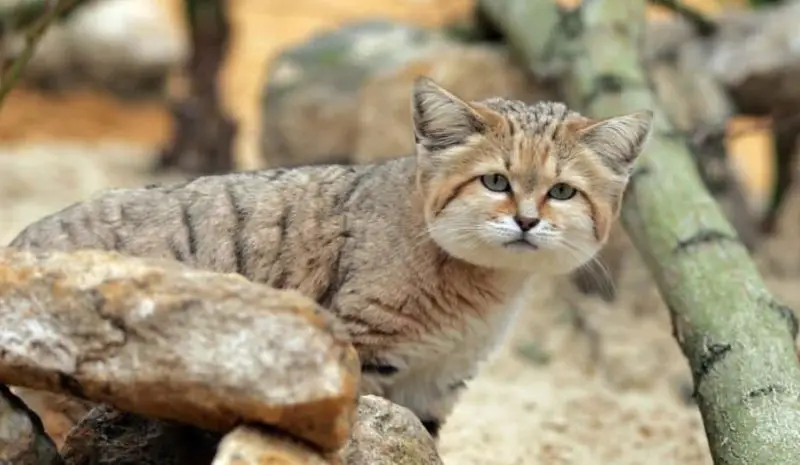
Arizona’s deserts are vast, open, and often misunderstood. With miles of rugged terrain, limited visibility, and wildlife that moves mostly at night, the state has become fertile ground for unusual animal stories. Among the most persistent is the belief that hybrid wild cats are living quietly in Arizona’s deserts.
Reports describe cats larger than bobcats but smaller than mountain lions. Animals with long tails and spotted coats. Creatures seen briefly crossing desert roads at night that do not match any familiar species. Trail camera images circulate online. Social media speculation fills the gaps. The word “hybrid” becomes the explanation.
To understand whether hybrid wild cats actually live in Arizona’s deserts, it is necessary to separate perception from biology and rumor from evidence.
Table of Contents
- 1 Arizona Has More Wild Cat Diversity Than Most States
- 2 Bobcats Are the Most Frequently Misidentified Desert Cats
- 3 Mountain Lions Often Appear Smaller Than Expected
- 4 Rare Border Species Increase Speculation
- 5 What Most People Mean by “Hybrid Wild Cat”
- 6 Bobcats and Mountain Lions Cannot Interbreed
- 7 Bobcats and Domestic Cats Cannot Interbreed
- 8 Mountain Lions Cannot Breed With Domestic Cats
- 9 Jaguars and Mountain Lions Do Not Hybridize
- 10 Hybridization Among Wild Cats Is Extremely Rare
- 11 Arizona’s Desert Environment Distorts Perception
- 12 Trail Cameras Create Optical Illusions
- 13 Coat Color Variation Is Normal
- 14 Juvenile Animals Are Frequently Misidentified
- 15 Genetic Studies Do Not Support Hybrid Populations
- 16 Why Hybrid Myths Spread So Easily
- 17 Domestic Hybrid Cats Add Confusion
- 18 Why Stable Hybrid Populations Do Not Form
- 19 Arizona Wildlife Agencies Are Clear
- 20 What To Do If You See an Unusual Cat
- 21 Why This Matters
- 22 FAQs About Hybrid Wild Cats in Arizona
- 22.1 Are hybrid wild cats living in Arizona deserts
- 22.2 Can bobcats breed with mountain lions
- 22.3 Can bobcats breed with domestic cats
- 22.4 Are jaguar hybrids living in Arizona
- 22.5 Why do some cats look unusual
- 22.6 Do trail cameras exaggerate size
- 22.7 Has DNA testing been done
- 22.8 Should unusual sightings be reported
- 23 Final Thoughts
Arizona Has More Wild Cat Diversity Than Most States

Arizona supports a wider range of native wild cats than many people realize, especially for a state dominated by desert landscapes. While deserts are often imagined as biologically sparse, Arizona’s varied elevations, mountain ranges, riparian corridors, and border position create conditions where multiple cat species can exist within the same state.
The most common wild cat is the bobcat, which occupies nearly every habitat type from low deserts to forested plateaus. Mountain lions are also well established and range from arid valleys to high mountain forests. Along the southern border, jaguars have been confirmed as rare visitors dispersing north from Mexico, drawing national attention despite their extreme rarity. Historically, ocelots and jaguarundis occurred in southern Arizona as well, though today they are either absent or present only as occasional border-crossing individuals.
This mix of common species, rare visitors, and historical presence creates overlap in expectations. When people know that unusual cats exist somewhere nearby, unfamiliar animals are more likely to be labeled as hybrids rather than identified as natural variation within known species.
Overlap in range or sightings does not mean overlap in genetics.
Bobcats Are the Most Frequently Misidentified Desert Cats
Bobcats (Lynx rufus) are among the most adaptable predators in North America, and Arizona’s deserts are no exception. They use rocky outcrops, dry washes, mesquite thickets, cactus cover, and desert vegetation as shelter and hunting grounds. Their ability to exploit small prey allows them to survive where larger predators struggle.
Desert bobcats feed on rabbits, rodents, birds, reptiles, and occasionally insects. They are most active at dawn and dusk, when light conditions are poor and shadows stretch across open terrain. In these moments, size and shape are easily misjudged.
Bobcats also show enormous variation in appearance. Some individuals are compact and lightly built. Others are large, muscular, and broad-chested. Coat color ranges from pale gray to sandy tan to reddish brown. Spot patterns differ widely from one animal to the next.
This normal variation explains a large percentage of animals reported as “hybrids.” Most are simply bobcats that do not match a single mental image.
Mountain Lions Often Appear Smaller Than Expected
Mountain lions (Puma concolor) are Arizona’s largest native wild cats, but many sightings involve juveniles rather than adults. Young mountain lions disperse from their mother’s territory and travel long distances through unfamiliar landscapes, including deserts and developed corridors.
These juveniles are slimmer, lighter in color, and smaller than mature adults. Their proportions look different. Their heads appear small relative to body length. Their tails may be partly hidden by terrain or angle.
A juvenile mountain lion crossing a desert road at night can easily be mistaken for an unknown species, especially if observed briefly or from a moving vehicle. Misjudging tail length or body size is common in low light.
Many supposed hybrid sightings are simply young mountain lions passing through.
Rare Border Species Increase Speculation
Arizona’s proximity to Mexico plays a powerful role in fueling hybrid myths. Confirmed jaguar sightings, even though extremely rare, receive widespread attention. These events create the impression that Arizona is a place where unexpected species quietly exist.
When people know that jaguars appear occasionally, they are more likely to interpret unfamiliar animals as mixed or exotic. The presence of rarity changes perception.
Rarity magnifies imagination far more than frequency.
What Most People Mean by “Hybrid Wild Cat”
When people claim hybrid wild cats live in Arizona, they are usually referring to one of a few specific ideas. Most believe bobcats are crossing with mountain lions. Others think bobcats are breeding with domestic cats. Some imagine mountain lions mixing with jaguars or ocelots.
Each scenario sounds plausible to the public because it involves animals that already exist in the region. However, plausibility based on appearance does not translate into biological reality.
None of these scenarios hold up under genetic or behavioral scrutiny.
Bobcats and Mountain Lions Cannot Interbreed
Bobcats and mountain lions are genetically incompatible. Bobcats belong to the genus Lynx. Mountain lions belong to the genus Puma. Their evolutionary separation is deep enough to prevent viable reproduction.
Their chromosome structures, reproductive biology, and mating behaviors do not align. There are no scientifically confirmed bobcat–mountain lion hybrids anywhere in the world.
This hybrid is not rare. It is impossible.
Bobcats and Domestic Cats Cannot Interbreed
Another persistent belief is that bobcats breed with house cats. This claim appears frequently in desert regions where bobcats live near human settlements.
Bobcats and domestic cats belong to different genera and are genetically incompatible. Although both species have the same number of chromosomes, chromosome structure and pairing mechanisms differ enough to prevent reproduction.
Every investigated case of a supposed bobcat–house cat hybrid has been explained by misidentification or domestic cats with unusual size or coat patterns.
Mountain Lions Cannot Breed With Domestic Cats
Mountain lions are even more genetically distant from domestic cats than bobcats are. Their reproductive systems are incompatible, and the size difference alone creates an insurmountable barrier.
There are no confirmed mountain lion–house cat hybrids in captivity or the wild.
Jaguars and Mountain Lions Do Not Hybridize
Even among large wild cats, hybridization requires extremely close genetic compatibility. Jaguars and mountain lions diverged millions of years ago and belong to different evolutionary branches.
There is no scientific evidence of jaguar–mountain lion hybrids occurring naturally or under human control.
Hybridization Among Wild Cats Is Extremely Rare
Hybridization among wild cats is rare even when genetics allow it. Wild cats are solitary animals. They defend territories. They avoid unnecessary encounters.
Mating requires repeated interaction, compatible courtship signals, and tolerance. These conditions rarely occur between different species.
Behavior acts as a stronger barrier than genetics.
Arizona’s Desert Environment Distorts Perception
Arizona’s deserts dramatically alter how animals appear. Open terrain removes visual scale. Heat shimmer bends outlines. Distance compresses depth. Low light exaggerates motion.
A bobcat seen across a wash may look enormous. A mountain lion glimpsed briefly may appear smaller than expected. The brain fills in missing details with assumption.
Perception becomes unreliable.
Trail Cameras Create Optical Illusions
Trail cameras contribute heavily to hybrid myths. Wide-angle lenses distort proportions. Night mode exaggerates eyes and body length. Without nearby objects for scale, size estimation fails.
Animals photographed in isolation appear unfamiliar, even when they are not.
Technology unintentionally creates mystery.
Coat Color Variation Is Normal
Desert cats often appear lighter than forest-dwelling individuals. Sun exposure, dust, seasonal shedding, and genetics influence coat color.
Bobcats in Arizona may look pale, reddish, or washed out compared to those in wooded regions. These differences are environmental, not genetic mixing.
Color does not indicate hybrid ancestry.
Juvenile Animals Are Frequently Misidentified
Young animals account for many hybrid reports. Juvenile mountain lions lack adult mass. Juvenile bobcats appear lanky and long-legged.
Their proportions look unusual, especially to observers unfamiliar with growth stages. Age-related changes are mistaken for genetic mixing.
Genetic Studies Do Not Support Hybrid Populations
Genetic testing conducted by wildlife agencies consistently shows clear species separation. Bobcats test as bobcats. Mountain lions test as mountain lions.
No hybrid ancestry has been detected in wild Arizona populations. If hybrids existed, modern genetic tools would reveal them.
They have not.
Why Hybrid Myths Spread So Easily
Hybrid stories are compelling. They explain unfamiliar sightings. They add danger and intrigue. They spread rapidly online.
Scientific explanations are quieter and less dramatic. Emotion travels faster than data.
Domestic Hybrid Cats Add Confusion
Some domestic cats resemble wild species. Bengal and Savannah cats, along with large feral cats, can look wild at a glance. Escaped or roaming domestic hybrids are sometimes mistaken for wild animals.
These cats are not wild populations surviving independently in the desert.
Why Stable Hybrid Populations Do Not Form
Even when hybridization occurs in other species, stable populations rarely develop. Hybrids often lack behavioral traits needed for survival.
Hunting efficiency, territorial behavior, and social cues may be compromised. Natural selection removes poorly adapted combinations.
Arizona Wildlife Agencies Are Clear
Arizona wildlife officials do not recognize any hybrid wild cat populations. Unusual sightings are investigated and consistently attributed to known species.
Management focuses on coexistence and conservation, not hybrids.
What To Do If You See an Unusual Cat
Observe calmly and safely. Note size, tail length, behavior, habitat, and time of day. Photograph if possible. Avoid approaching.
Report sightings without assuming hybrid status. Let professionals evaluate the evidence.
Why This Matters
Belief in hybrids can lead to fear and unnecessary killing of wildlife. It distracts from real conservation challenges such as habitat loss, development pressure, and coexistence.
Accurate understanding protects both people and animals.
FAQs About Hybrid Wild Cats in Arizona
Are hybrid wild cats living in Arizona deserts
No. There is no scientific evidence of hybrid wild cat populations in Arizona.
Can bobcats breed with mountain lions
No. They are genetically incompatible.
Can bobcats breed with domestic cats
No. This hybrid is biologically impossible.
Are jaguar hybrids living in Arizona
No. Jaguars appear only as rare visitors and do not form hybrids in the wild.
Why do some cats look unusual
Natural variation, juvenile stages, lighting, and distance.
Do trail cameras exaggerate size
Yes. Lens distortion and lack of scale cause misinterpretation.
Has DNA testing been done
Yes. Genetic studies show clear species separation.
Should unusual sightings be reported
Yes, without assuming hybrid ancestry.
Final Thoughts
There is no evidence that hybrid wild cats live in Arizona’s deserts. What people are seeing are bobcats, mountain lions, rare dispersers, juveniles, and domestic lookalikes filtered through harsh light, distance, and expectation.
Arizona’s deserts are wild enough without secret hybrids.
Nature draws clearer lines than rumor suggests.
Related posts:
- Porcupines in Ohio: Everything You Need to Know
- What Do Toads Eat? 20 Foods Toads Consume in the Wild
- What Do Woodpeckers Like to Eat Most?
- What Do Turkeys Eat? 20 Natural Foods That Help Them Thrive
- What Do Crickets Eat? 18 Foods That Keep Them Alive and Active
- Symbiosis in the Shadows: The Beetle, the Fungus, and the Seed
- Growing Up Wet: The Life Stages of the Aquatic Warbler
- Cormorants: The Fishers of American Waters
- American Coots: Masters of Marshes and Quiet Lakes
- How Tree Squirrels Navigate Forests: Agility, Leaps, and Arboreal Mastery