
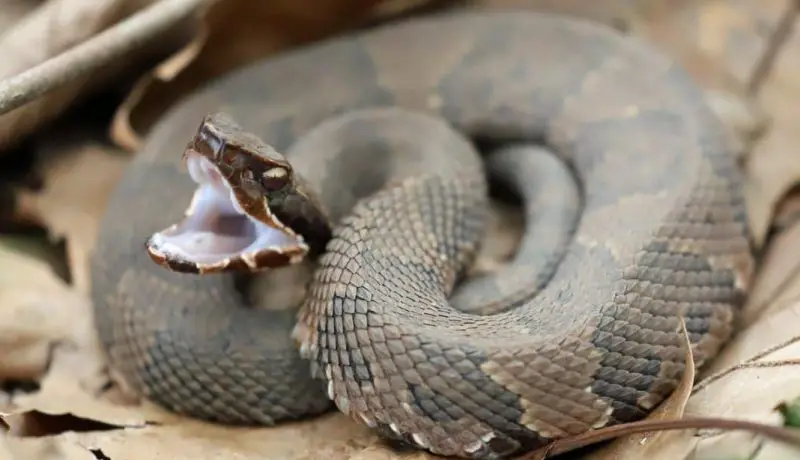
Stories about water moccasins chasing people have circulated for years, often shared with confidence and vivid detail. In Nebraska, these stories sometimes surface near rivers, ponds, or marshy areas, creating a sense of unease for anyone spending time outdoors. The idea of a snake actively pursuing a person feels alarming, and once repeated often enough, it begins to sound like established fact. Yet the reality behind these encounters is far more nuanced and grounded in behavior that follows clear biological rules.
Water moccasins, also known as cottonmouths, are commonly associated with the southeastern United States. Their presence in Nebraska is far less typical, and this alone already shapes how these stories should be understood. Reports of aggressive pursuit are often influenced by misidentification, heightened awareness, and the natural instinct to interpret sudden movement as intentional behavior.
A closer examination of snake behavior, regional distribution, and environmental conditions reveals a clearer picture. What appears to be chasing is often a misunderstanding of defensive movement, escape patterns, or coincidental direction. Understanding these details transforms fear into awareness and helps separate myth from observable behavior.
Table of Contents
- 1 Where Water Moccasins Are Actually Found
- 2 Why People Believe Snakes Chase Them
- 3 The Defensive Behavior That Looks Like Aggression
- 4 Why Movement Direction Creates Confusion
- 5 The Role of Habitat in Snake Encounters
- 6 Misidentification of Common Nebraska Snakes
- 7 Why Snakes Do Not Benefit From Chasing Humans
- 8 The Influence of Fear on Memory
- 9 Seasonal Activity and Encounter Frequency
- 10 The Importance of Observation Distance
- 11 Why Snakes Often Move Toward Water
- 12 Common Misconceptions About Snake Behavior
- 13 How to Interpret a Snake Encounter Correctly
- 14 FAQs About Water Moccasins and Snake Encounters in Nebraska
- 14.1 Are water moccasins common in Nebraska?
- 14.2 Do snakes chase people intentionally?
- 14.3 Why do snakes move quickly toward people sometimes?
- 14.4 What should you do if you see a snake?
- 14.5 How can you tell if a snake is defensive?
- 14.6 Why are snake encounters more common in summer?
- 14.7 Are all water snakes dangerous?
- 14.8 Why do people believe snakes chase them?
- 14.9 Do snakes recognize humans as threats?
- 14.10 How can encounters be reduced?
- 15 Final Thoughts
Where Water Moccasins Are Actually Found
Water moccasins are native to regions with warm climates, abundant wetlands, and stable aquatic ecosystems. Their primary range includes southeastern states where temperatures remain suitable for their activity throughout much of the year. Nebraska, by contrast, experiences colder winters and different ecological conditions.
Because of this, established populations of water moccasins are not typical in Nebraska. Reports of sightings often involve other species that share similar habitats, such as nonvenomous water snakes. These snakes may display defensive behaviors that resemble what people expect from a cottonmouth.
Understanding geographic range is essential. When a species is not naturally common in an area, claims about its behavior require careful evaluation. This context helps explain why many encounters in Nebraska involve misinterpretation rather than direct interaction with water moccasins.
Why People Believe Snakes Chase Them
The belief that snakes chase people often comes from how movement is perceived in a stressful moment. When a person suddenly notices a snake, both react at the same time. If the snake moves in the same direction as the person, it can appear as though it is pursuing.
In reality, snakes move toward safety. Water sources, vegetation, or burrows provide protection. If a person happens to be between the snake and its escape route, the snake may move in that direction. This creates the impression of intentional pursuit.
Human perception plays a major role. Fear heightens awareness and alters how events are remembered. A brief encounter can feel longer and more deliberate than it actually was, reinforcing the belief that the snake was chasing.
The Defensive Behavior That Looks Like Aggression
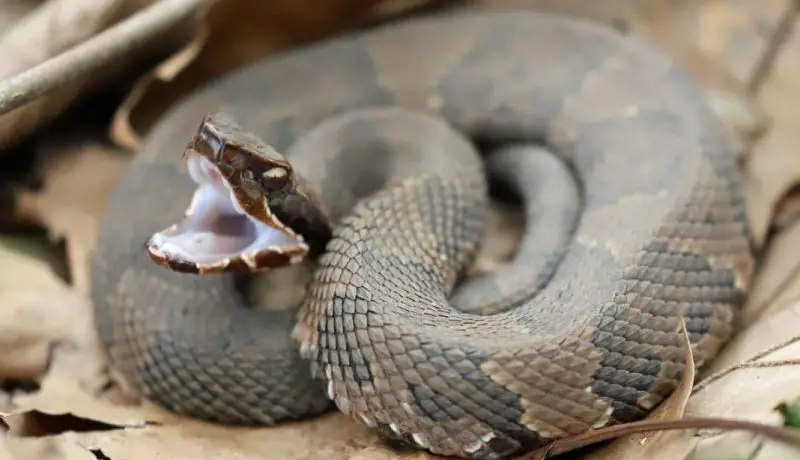
Snakes rely on defensive behavior when they feel threatened. This may include raising the head, opening the mouth, or holding position rather than retreating immediately. These actions are meant to deter potential threats.
Water moccasins are known for displaying a white interior of the mouth when threatened, which serves as a warning signal. This behavior is not an invitation to attack but a way to avoid conflict by making the threat aware of their presence.
If the perceived threat continues, the snake may move quickly to escape. This sudden movement can be misinterpreted as aggression. Understanding these signals helps clarify that the behavior is defensive rather than offensive.
Why Movement Direction Creates Confusion
Direction plays a key role in how encounters are interpreted. When a snake moves toward water, shade, or cover, its path may align with a person’s movement. This alignment creates the illusion of pursuit.
Snakes do not track humans as prey. Their movement is guided by instinct and environmental cues rather than intentional targeting. The overlap of paths is coincidental, even though it may feel purposeful in the moment.
Recognizing this pattern changes how encounters are understood. Instead of viewing the snake as chasing, it becomes clear that both are simply moving within the same space.
The Role of Habitat in Snake Encounters
Snake encounters are more likely in areas that provide food, shelter, and suitable conditions. In Nebraska, this includes wetlands, riverbanks, and areas with dense vegetation. These environments support a variety of snake species.
Human activity often overlaps with these habitats. Fishing, hiking, and exploring near water increase the chance of encountering snakes. The more time spent in these areas, the greater the likelihood of observation.
Habitat also influences behavior. Snakes in open areas may move quickly to find cover, while those in dense vegetation may remain hidden. These differences shape how encounters are perceived.
Misidentification of Common Nebraska Snakes
Many snakes in Nebraska resemble water moccasins in color or pattern. Species such as northern water snakes can appear similar, especially to someone unfamiliar with identification details.
These snakes may display defensive behaviors when approached. Rapid movement, coiling, and posturing can all be interpreted as aggression. Without clear identification, these actions may be attributed to water moccasins.
Understanding local species helps reduce confusion. Recognizing the characteristics of native snakes provides context and prevents misinterpretation of behavior.
Why Snakes Do Not Benefit From Chasing Humans
From a biological perspective, chasing humans offers no advantage to a snake. Humans are not prey, and the energy required to pursue a large animal would not support survival.
Snakes rely on efficiency. They conserve energy for feeding, reproduction, and avoiding predators. Engaging in unnecessary movement increases risk without providing benefit.
This principle reinforces the idea that what appears to be chasing is actually a misinterpretation. The snake’s goal is to avoid danger, not create it.
The Influence of Fear on Memory
Fear affects how events are remembered. In a moment of surprise, the brain prioritizes safety and may exaggerate certain details. Movement may seem faster, closer, or more directed than it actually was.
After the encounter, retelling the story can further shape memory. Each retelling may emphasize the most dramatic aspects, gradually reinforcing the idea of pursuit.
Understanding this process helps explain why stories of snakes chasing people persist. They are based on real experiences but shaped by perception and memory.
Seasonal Activity and Encounter Frequency
Snake activity in Nebraska changes with the seasons. Warmer months bring increased movement as snakes search for food and mates. During this time, encounters are more likely.
In cooler months, activity decreases as snakes enter periods of reduced movement. This seasonal pattern influences when stories and sightings are most common.
Environmental conditions such as temperature and rainfall also affect behavior. These factors determine how often snakes are visible and how they respond to their surroundings.
The Importance of Observation Distance
Maintaining distance is one of the most effective ways to reduce misunderstanding. Observing from a safe distance allows behavior to be seen without triggering defensive responses.
Close proximity increases the likelihood of rapid movement. When a snake feels threatened, it reacts quickly, which can be interpreted as aggression.
Distance provides clarity. It allows the observer to see the direction and purpose of movement without the influence of immediate fear.
Why Snakes Often Move Toward Water
Water serves as a primary escape route for many snake species. It provides both protection and access to food. When threatened, snakes may move directly toward water regardless of what lies in between.
If a person is positioned between the snake and the water, the snake’s movement may appear directed at the person. In reality, the goal is the water itself.
Understanding this behavior helps explain many encounters. The apparent pursuit is simply a path to safety.
Common Misconceptions About Snake Behavior
Several misconceptions contribute to the belief that snakes chase people. One is the idea that snakes are naturally aggressive. In reality, most snakes avoid confrontation whenever possible.
Another misconception is that snakes recognize humans as threats to be confronted. Their behavior is based on immediate stimuli rather than long term recognition.
These misunderstandings shape how encounters are interpreted. Clarifying them provides a more accurate view of snake behavior.
How to Interpret a Snake Encounter Correctly
Interpreting an encounter begins with recognizing the context. Location, movement, and environmental conditions all provide clues about what is happening.
Observing without reacting immediately allows patterns to emerge. A snake moving toward cover or water is following instinct rather than engaging in pursuit.
Understanding these signals transforms the encounter. What initially feels threatening becomes a predictable response to environmental conditions.
FAQs About Water Moccasins and Snake Encounters in Nebraska
Are water moccasins common in Nebraska?
They are not typically found in Nebraska. Most sightings involve other species.
Do snakes chase people intentionally?
No, snakes do not chase humans. Movement in the same direction is usually coincidental.
Why do snakes move quickly toward people sometimes?
They may be heading toward an escape route that happens to align with a person’s position.
What should you do if you see a snake?
Remain calm and give it space. Avoid sudden movements that could trigger a defensive response.
How can you tell if a snake is defensive?
Posturing, staying in place, or displaying warning signals indicate defensive behavior.
Why are snake encounters more common in summer?
Warmer temperatures increase activity and movement, leading to more frequent encounters.
Are all water snakes dangerous?
Many water snakes are nonvenomous and play an important role in the ecosystem.
Why do people believe snakes chase them?
Perception, fear, and memory influence how encounters are interpreted.
Do snakes recognize humans as threats?
They respond to immediate stimuli rather than identifying humans specifically.
How can encounters be reduced?
Avoiding dense vegetation, staying aware of surroundings, and maintaining distance can reduce the likelihood of close encounters.
Final Thoughts
Stories about water moccasins chasing people in Nebraska reflect a combination of misunderstanding, perception, and natural behavior. While encounters with snakes can feel intense, they follow patterns that become clearer with closer observation.
Snakes move with purpose, guided by survival instincts rather than aggression. Their actions are shaped by environment, habitat, and the need to avoid danger. What appears to be pursuit is often a coincidence of direction and timing.
Understanding these patterns changes how encounters are experienced. Instead of fear driven interpretations, a more balanced perspective emerges. This awareness allows residents to navigate outdoor spaces with confidence, recognizing that snakes are part of the environment rather than a threat actively seeking interaction.