
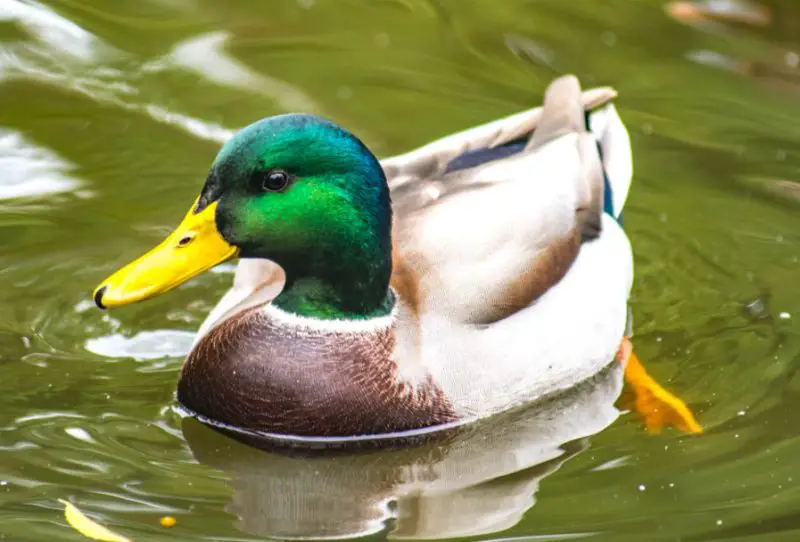
Minnesota is defined by water. Lakes, rivers, wetlands, marshes, prairie potholes, and forested sloughs cover much of the state, creating one of the richest waterfowl landscapes in North America. Every spring and fall, millions of ducks move through Minnesota along major migratory flyways. Some stop briefly. Others stay to breed. Many remain through summer and into early winter.
With so many duck species sharing the same waters, hunters, birders, and lakeshore residents often notice birds that look unusual. A mallard with strange markings. A duck with the body of one species and the head of another. Plumage that does not quite match any field guide.
That observation leads to a common question.
Can ducks in Minnesota interbreed across species?
Unlike many wildlife hybrid myths, this question does not have a simple yes or no answer. Duck biology is unusually flexible, and Minnesota sits at the center of that complexity.
Table of Contents
- 1 Minnesota Is a Crossroads for North American Ducks
- 2 Ducks Are Different From Most Birds
- 3 What Hybridization Means in Ducks
- 4 Mallards Are Central to the Hybrid Question
- 5 Species That Commonly Hybridize in Minnesota
- 6 Why Mallards Hybridize More Than Others
- 7 Minnesota’s Landscape Encourages Mixed Pairings
- 8 Human Influence Increases Hybridization Opportunities
- 9 Not All Duck Species Can Hybridize
- 10 Most Duck Hybrids Are Uncommon
- 11 Why Duck Hybrids Are Seen More Often Than Other Wildlife Hybrids
- 12 Male Hybrids Are More Common Than Female Hybrids
- 13 Fertility of Duck Hybrids
- 14 Genetic Introgression Is a Real Concern
- 15 Why American Black Ducks Matter in This Discussion
- 16 Most Minnesota Duck Hybrids Are Evolutionary Dead Ends
- 17 Why Some Ducks Look “Strange” Without Being Hybrids
- 18 Domestic Ducks Add Confusion
- 19 Why Minnesota Hunters Encounter Hybrids
- 20 Wildlife Agencies Monitor Duck Hybridization
- 21 Hybridization Is a Natural Process in Ducks
- 22 Climate Change May Affect Future Hybridization
- 23 Why Duck Hybridization Feels Unsettling
- 24 What To Do If You See a Suspected Hybrid Duck
- 25 The Big Picture in Minnesota
- 26 FAQs About Duck Hybridization in Minnesota
- 26.1 Can ducks in Minnesota interbreed across species
- 26.2 Which duck species hybridize most often
- 26.3 Are duck hybrids common in Minnesota
- 26.4 Are duck hybrids fertile
- 26.5 Can all duck species hybridize
- 26.6 Why do some ducks look unusual but are not hybrids
- 26.7 Do domestic ducks contribute to hybrid sightings
- 26.8 Is duck hybridization harmful
- 26.9 Do wildlife agencies monitor duck hybrids
- 26.10 Should unusual ducks be reported
- 27 Final Thoughts
Minnesota Is a Crossroads for North American Ducks

Minnesota lies at the intersection of major migratory routes.
The Mississippi Flyway passes directly through the state. Prairie pothole breeding grounds connect Minnesota to the Dakotas and Canada. Boreal forest wetlands link northern Minnesota to subarctic regions.
As a result, Minnesota hosts an extraordinary diversity of ducks, including mallards, blue-winged teal, green-winged teal, northern pintails, American wigeon, gadwall, northern shovelers, wood ducks, canvasbacks, redheads, scaup, ring-necked ducks, goldeneyes, and mergansers.
Many of these species breed in Minnesota. Others pass through in large numbers during migration.
This overlap creates opportunity for interaction.
Ducks Are Different From Most Birds
Ducks occupy a unique place in avian biology.
Compared to many bird groups, ducks show relatively weak reproductive barriers between closely related species. Their evolutionary history includes frequent range shifts driven by glaciation, climate change, and wetland dynamics.
When habitats change quickly, flexibility becomes advantageous.
That flexibility includes the ability to hybridize under certain conditions.
What Hybridization Means in Ducks
Hybridization occurs when two different species mate and produce offspring.
In ducks, this usually happens between species within the same genus or closely related genera. These hybrids can sometimes be fertile, especially males.
This is very different from mammals like cats or foxes, where hybridization is rare or impossible.
In ducks, hybridization is biologically possible in many cases.
Mallards Are Central to the Hybrid Question
Mallards (Anas platyrhynchos) play an outsized role in duck hybridization.
They are abundant, adaptable, and behaviorally flexible. Mallards breed readily in a wide range of habitats and are less selective than many other ducks when choosing mates.
Because of this, mallards are involved in a large percentage of documented duck hybrids.
In Minnesota, where mallards are widespread, this effect is magnified.
Species That Commonly Hybridize in Minnesota
Several duck species in Minnesota are known to hybridize occasionally.
Mallard × American black duck
Mallard × northern pintail
Mallard × American wigeon
Mallard × northern shoveler
Mallard × gadwall
Mallard × blue-winged teal
Other combinations occur less frequently but are still documented.
These hybrids are usually rare relative to the overall population, but they are real.
Why Mallards Hybridize More Than Others
Mallards are less picky.
They have broad mating preferences and strong mating drives, especially males. In situations where females of their own species are scarce, male mallards may attempt to mate with females of other species.
This behavior increases hybridization rates.
It is not aggression or confusion. It is reproductive opportunism.
Minnesota’s Landscape Encourages Mixed Pairings
Minnesota wetlands often host mixed-species flocks.
During migration, breeding, and molting, multiple duck species congregate in the same marshes, lakes, and river backwaters. Courtship displays happen in close proximity.
This proximity increases the chance of cross-species pairing, especially when population ratios are uneven.
Human-altered landscapes intensify this effect.
Human Influence Increases Hybridization Opportunities
Agriculture, urban ponds, reservoirs, and managed wetlands alter natural duck behavior.
Artificial water bodies concentrate ducks in smaller areas. Supplemental feeding in parks reduces natural spacing. Delayed migration due to warmer winters keeps species together longer.
These factors increase interaction rates.
Hybridization becomes more likely not because ducks are changing, but because environments are.
Not All Duck Species Can Hybridize
Despite flexibility, hybridization is not universal.
Ducks from very different lineages rarely hybridize. For example, dabbling ducks and diving ducks almost never produce viable hybrids.
Mallards do not hybridize with mergansers. Teal do not hybridize with scaup.
Genetic compatibility still matters.
Most Duck Hybrids Are Uncommon
Even in Minnesota, where conditions are ideal, hybrids remain a small fraction of the population.
Most ducks still breed with their own species. Courtship displays, timing, and mate recognition usually work as intended.
Hybrids stand out precisely because they are unusual.
Why Duck Hybrids Are Seen More Often Than Other Wildlife Hybrids
Duck hybrids are more visible.
They often survive to adulthood. Many males display distinctive plumage that catches the eye. Hunters encounter them during legal seasons. Birders photograph them.
Visibility creates the impression of frequency.
In reality, hybrids are still rare.
Male Hybrids Are More Common Than Female Hybrids
In ducks, male hybrids are reported more often than females.
This is partly because male ducks display bright plumage that reveals mixed ancestry. Female ducks are often cryptically colored, making hybrids harder to identify.
It is also because female hybrids may have lower survival or reproductive success.
Fertility of Duck Hybrids
Fertility varies.
Some duck hybrids, especially males, are fertile and capable of breeding back into parent populations. Females are more often sterile, though this is not universal.
This partial fertility is one reason duck hybridization has evolutionary consequences.
Genetic Introgression Is a Real Concern
Introgression occurs when hybrid offspring breed back into a parent species, spreading genes across species boundaries.
In some regions, extensive introgression has affected species integrity. The best-known example involves mallards and American black ducks in eastern North America.
Minnesota lies near the western edge of this issue.
Why American Black Ducks Matter in This Discussion
American black ducks historically occupied eastern forests and wetlands. Mallards expanded eastward due to habitat change and human introduction.
Hybridization followed.
In areas where black ducks are rare, mallard genes can dominate through repeated hybridization.
Minnesota sits near the overlap zone, making this an important conservation topic.
Most Minnesota Duck Hybrids Are Evolutionary Dead Ends
Despite some introgression, most hybrid ducks do not establish new lineages.
They may survive, but they rarely produce offspring that persist across generations. Natural selection often favors pure species in stable environments.
Hybridization creates variation, not replacement.
Why Some Ducks Look “Strange” Without Being Hybrids
Not every unusual duck is a hybrid.
Age, molt stage, eclipse plumage, lighting, and individual variation can all create unfamiliar appearances.
Juveniles often look unlike adults. Molting males temporarily resemble females. Partial leucism alters feather color.
These factors explain many sightings.
Domestic Ducks Add Confusion
Domestic ducks complicate identification.
Domestic mallards, released or escaped, can breed with wild mallards and produce offspring with unusual traits.
These birds are not wild species hybrids, but domestic-wild crosses.
They are especially common near urban ponds.
Why Minnesota Hunters Encounter Hybrids
Minnesota’s strong hunting culture increases hybrid encounters.
Hunters spend long hours observing ducks up close. Harvest provides clear views of plumage patterns that might be missed otherwise.
This leads to more reports, even if hybrid rates are unchanged.
Wildlife Agencies Monitor Duck Hybridization
Duck hybridization is not ignored.
Wildlife biologists track population genetics through banding, harvest data, and DNA analysis. Hybridization is studied where it threatens species integrity.
In Minnesota, it is monitored but not considered a crisis.
Hybridization Is a Natural Process in Ducks
Importantly, duck hybridization is not always negative.
It has occurred throughout duck evolutionary history. It can introduce useful genetic variation and aid adaptation to changing environments.
Problems arise only when human influence overwhelms natural balance.
Climate Change May Affect Future Hybridization
Changing climate patterns may increase hybridization.
Altered migration timing, range shifts, and habitat compression could increase mixed-species breeding in the future.
Minnesota’s position makes it sensitive to these changes.
Why Duck Hybridization Feels Unsettling
People often associate hybrids with instability.
They challenge neat categories. They blur lines. They feel unnatural.
But in ducks, hybridization is part of the natural system.
Understanding that reduces fear and replaces it with context.
What To Do If You See a Suspected Hybrid Duck
Observation matters.
Note size, bill shape, wing pattern, behavior, and companions. Photographs help. Compare with known hybrid combinations.
Avoid assuming every unusual bird is a hybrid.
The Big Picture in Minnesota
Minnesota’s ducks remain diverse, abundant, and resilient.
Hybridization occurs, but it does not define populations. It is one thread in a complex ecological tapestry shaped by water, weather, and movement.
FAQs About Duck Hybridization in Minnesota
Can ducks in Minnesota interbreed across species
Yes. Some closely related duck species can and do hybridize, especially dabbling ducks.
Which duck species hybridize most often
Mallards are involved in most documented hybrids due to their abundance and flexible mating behavior.
Are duck hybrids common in Minnesota
No. They are real but remain a small percentage of the overall duck population.
Are duck hybrids fertile
Some male hybrids can be fertile, while many female hybrids are sterile or less fertile.
Can all duck species hybridize
No. Only closely related species can hybridize. Distant groups such as mergansers and dabbling ducks do not.
Why do some ducks look unusual but are not hybrids
Molt stage, age, lighting, or genetic color variation can change appearance.
Do domestic ducks contribute to hybrid sightings
Yes. Escaped or released domestic mallards can mix with wild mallards and create unusual-looking offspring.
Is duck hybridization harmful
Usually no. It becomes a concern only when it threatens rare species through genetic swamping.
Do wildlife agencies monitor duck hybrids
Yes. Hybridization is tracked through banding, genetic studies, and harvest data.
Should unusual ducks be reported
Only if the species is rare or protected. Most hybrids do not require reporting.
Final Thoughts
Yes, some ducks in Minnesota can interbreed across species.
This is a well-documented, biologically real phenomenon, especially among closely related dabbling ducks. Mallards play a central role, and human-altered landscapes increase opportunities for mixing.
At the same time, hybridization remains limited, monitored, and largely contained. Most ducks continue to breed within their own species, maintaining the rich diversity that makes Minnesota one of North America’s great waterfowl states.
What people are seeing are not signs of collapse or confusion in nature.
They are glimpses into a flexible, dynamic system that has always adapted to change.