
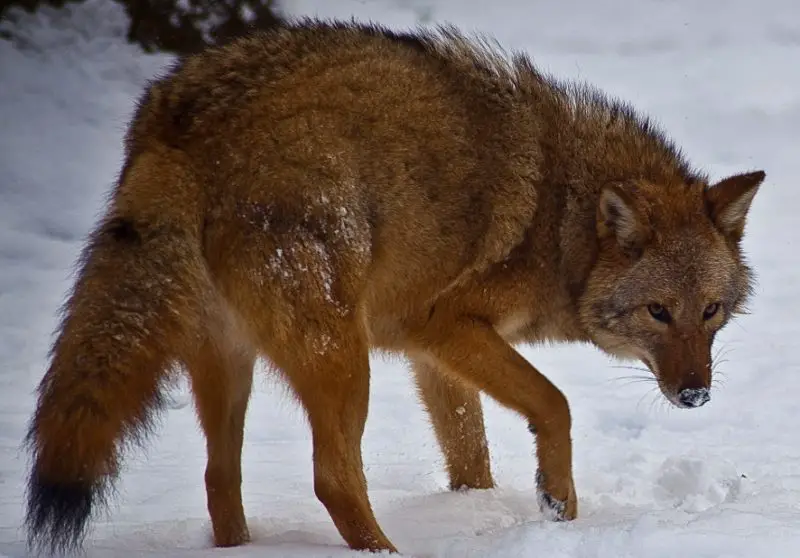
Few wildlife topics in the northeastern United States generate as much fascination and confusion as the idea of the “coywolf.” In New Jersey, sightings of large, wolf-like canids regularly spark claims that coywolves are roaming forests, suburbs, and even backyards.
Some people describe animals that look too big to be coyotes but too small to be wolves. Others report unusual behavior, boldness, or pack activity that seems different from what they expect from coyotes. Over time, these experiences feed a persistent question.
Are coywolves actually living in New Jersey, or are people misidentifying what they see?
The answer requires understanding what a coywolf actually is, where they exist, and how New Jersey’s landscape shapes perception.
Table of Contents
- 1 What People Mean When They Say “Coywolf”
- 2 How Coywolves Formed in the Northeast
- 3 Where Coywolves Are Most Common
- 4 New Jersey Sits at the Edge of This Range
- 5 Wolves Do Not Live in New Jersey
- 6 What Coyotes in New Jersey Actually Are
- 7 Why New Jersey Coyotes Look Larger Than Expected
- 8 Size Alone Is a Poor Indicator of Hybridization
- 9 Behavior Fuels the Coywolf Narrative
- 10 Packs Do Not Mean Wolves
- 11 Dogs Are a Major Source of Confusion
- 12 Trail Cameras Distort Appearance
- 13 What Genetic Studies Show in New Jersey
- 14 Coywolf Does Not Mean Half Wolf
- 15 Why the Term “Coywolf” Persists Anyway
- 16 Are Coywolves Breeding in New Jersey Today?
- 17 Why This Matters for Public Understanding
- 18 What To Do If You See a Large Canid in New Jersey
- 19 New Jersey’s Canids Are Not Becoming Something Else
- 20 FAQs About Coywolves in New Jersey
- 20.1 Are coywolves actually living in New Jersey?
- 20.2 Do New Jersey coyotes have wolf DNA?
- 20.3 Are there any wolves currently living in New Jersey?
- 20.4 Can coyotes and wolves interbreed today in New Jersey?
- 20.5 Why do some coyotes in New Jersey look so large?
- 20.6 Are coywolves half wolf and half coyote?
- 20.7 Do coyotes in New Jersey hunt in packs like wolves?
- 20.8 Are dogs often mistaken for coywolves?
- 20.9 What do genetic studies show in New Jersey?
- 20.10 Should people be concerned about coywolves?
- 21 Final Perspective
What People Mean When They Say “Coywolf”
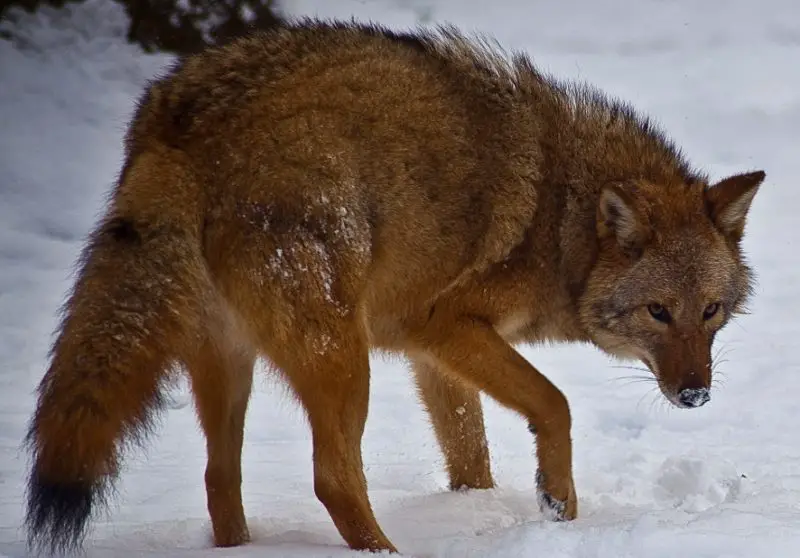
The term coywolf does not describe a single species.
It refers to eastern canids that carry a mix of coyote, wolf, and sometimes domestic dog ancestry. These animals emerged through hybridization events that occurred primarily in eastern Canada during the 20th century.
Coywolves are not mythical creatures. They are real animals.
However, their true range, genetic makeup, and appearance are often misunderstood.
How Coywolves Formed in the Northeast
Coywolves originated when western coyotes expanded eastward into areas where wolves had declined due to human persecution.
In parts of Ontario, Quebec, and the northeastern United States, coyotes encountered:
-
Small remnant wolf populations
-
Eastern wolves or wolf-like canids
-
Occasionally domestic dogs
This created limited hybridization events.
Over generations, these mixed-ancestry canids became established in parts of New England and eastern Canada, where they adapted to forests, deer prey, and human-altered landscapes.
This history matters because coywolves did not arise everywhere coyotes live.
Where Coywolves Are Most Common
Genetic studies consistently show that coywolves are most prevalent in:
-
Southern Ontario
-
Quebec
-
Maine
-
Vermont
-
New Hampshire
-
Parts of Massachusetts and upstate New York
In these regions, eastern coyotes often carry small but measurable amounts of wolf DNA, contributing to slightly larger body size and altered behavior compared to western coyotes.
But genetic influence fades with distance.
New Jersey Sits at the Edge of This Range
New Jersey is not a core coywolf region.
Coyotes in New Jersey arrived primarily by moving south and east from:
-
Pennsylvania
-
New York
By the time coyotes reached New Jersey, most wolf populations in the region were already gone, and opportunities for wolf hybridization were extremely limited.
As a result, New Jersey coyotes are overwhelmingly coyote, not wolf.
Some individuals may carry trace wolf ancestry, but they are not distinct coywolves in the way the term is often used.
Wolves Do Not Live in New Jersey
This point cannot be overstated.
There are no wild wolves in New Jersey.
Gray wolves were eliminated from the region centuries ago. There are no breeding populations, no transient packs, and no evidence of recolonization.
Without wolves present, ongoing hybridization cannot occur.
Any wolf ancestry found in New Jersey coyotes comes from historical mixing elsewhere, not current breeding.
What Coyotes in New Jersey Actually Are
Coyotes in New Jersey are best described as eastern coyotes.
Compared to western coyotes, eastern coyotes are:
-
Slightly larger on average
-
More adaptable to forested environments
-
Better at hunting deer as scavengers or opportunistic predators
These traits often get mislabeled as “wolf-like,” even though they fall well within normal coyote variation.
Why New Jersey Coyotes Look Larger Than Expected
Many New Jersey residents grew up believing coyotes were small, desert-dwelling animals.
That image does not match reality.
Eastern coyotes benefit from:
-
Abundant deer populations
-
Agricultural food sources
-
Suburban edge habitats
Good nutrition increases body size.
Winter fur also makes coyotes look bulkier, longer-legged, and more imposing.
A well-fed eastern coyote can easily be mistaken for something larger.
Size Alone Is a Poor Indicator of Hybridization
Adult eastern coyotes can weigh 35 to 55 pounds, and occasionally more.
That size range overlaps visually with:
-
Small wolves
-
Large dogs
-
Wolf-dog hybrids
When seen briefly, at night, or at a distance, size is often overestimated.
The brain fills in missing details.
Hybridization becomes an easy explanation.
Behavior Fuels the Coywolf Narrative
Another reason coywolf myths persist is behavior.
Coyotes in New Jersey:
-
Use green corridors through suburbs
-
Travel along railroad lines and power cuts
-
Appear comfortable near human development
This boldness is often mistaken for wolf-like confidence.
In reality, it reflects habituation, not hybrid ancestry.
Animals that learn humans are not a threat behave differently over time.
Packs Do Not Mean Wolves
People often associate packs with wolves.
Coyotes also form family groups.
In eastern environments with abundant food, coyotes may hunt cooperatively or travel together, especially during:
-
Breeding season
-
Pup rearing
-
Winter months
Seeing multiple coyotes together does not indicate wolves or coywolves.
It indicates successful reproduction.
Dogs Are a Major Source of Confusion
Many “coywolf” sightings involve domestic dogs.
Large shepherd mixes, huskies, malamutes, and wolf-lookalike breeds are common in the Northeast. Free-roaming or escaped dogs often move through woods and fields.
Without a clear size reference, these animals are easily misidentified.
Dog posture, tail carriage, and movement vary widely.
Coyotes are blamed for animals that are not coyotes at all.
Trail Cameras Distort Appearance
Trail cameras contribute heavily to misidentification.
They:
-
Stretch proportions
-
Exaggerate eye shine
-
Remove scale reference
An ordinary coyote photographed at close range can appear enormous.
Night images are especially misleading.
Without context, speculation fills the gap.
What Genetic Studies Show in New Jersey
When New Jersey coyotes have been genetically tested, results show:
-
Predominantly coyote ancestry
-
Occasionally trace wolf DNA
-
Minimal or no domestic dog influence
This genetic makeup is typical of eastern coyotes across the Mid-Atlantic.
There is no evidence of a distinct, stable coywolf population in the state.
Coywolf Does Not Mean Half Wolf
Another common misunderstanding is proportions.
Coywolves are not 50 percent wolf.
Most carry:
-
Primarily coyote DNA
-
Small percentages of wolf ancestry
-
Sometimes trace dog DNA
They behave like coyotes because they are coyotes.
Wolf genes do not override coyote biology.
Why the Term “Coywolf” Persists Anyway
The term persists because it is:
-
Catchy
-
Dramatic
-
Easy to remember
Media headlines favor it.
Social media amplifies it.
Stories spread faster than nuance.
Over time, the label becomes detached from its scientific meaning.
Are Coywolves Breeding in New Jersey Today?
No.
There are no wolves in New Jersey to breed with coyotes.
Coyotes are breeding with coyotes.
Any wolf ancestry present comes from past events far from the state.
Why This Matters for Public Understanding
Mislabeling coyotes as coywolves can:
-
Increase fear
-
Justify unnecessary killing
-
Distract from real coexistence strategies
Coyotes play important ecological roles by controlling rodents and scavenging carrion.
Understanding what they actually are helps reduce conflict.
What To Do If You See a Large Canid in New Jersey
If you see an animal that looks unusual:
-
Observe behavior calmly
-
Note tail position, gait, and posture
-
Consider lighting and distance
Avoid assuming hybrid ancestry.
Report concerns only if there is an immediate safety issue.
New Jersey’s Canids Are Not Becoming Something Else
New Jersey does not have wolves.
It does not have a distinct coywolf population.
It has adaptable eastern coyotes thriving in a human-dominated landscape.
What people are seeing is not a new species.
It is a familiar one, viewed through uncertainty, distance, and expectation.
FAQs About Coywolves in New Jersey
Are coywolves actually living in New Jersey?
No distinct coywolf population is established in New Jersey. Most animals seen are eastern coyotes.
Do New Jersey coyotes have wolf DNA?
Some may carry trace wolf ancestry from historical mixing farther north, but they are still coyotes.
Are there any wolves currently living in New Jersey?
No. Wolves were eliminated from the state centuries ago and have not returned.
Can coyotes and wolves interbreed today in New Jersey?
No. Without wolves present, ongoing hybridization cannot occur.
Why do some coyotes in New Jersey look so large?
Good nutrition, abundant prey, and thick winter coats make eastern coyotes appear larger.
Are coywolves half wolf and half coyote?
No. Even where coywolves exist, they are mostly coyote with small amounts of wolf DNA.
Do coyotes in New Jersey hunt in packs like wolves?
Coyotes form family groups, especially during breeding season, which can resemble pack behavior.
Are dogs often mistaken for coywolves?
Yes. Large dog breeds and mixes are a major source of misidentification.
What do genetic studies show in New Jersey?
They show predominantly coyote genetics with no evidence of a stable coywolf population.
Should people be concerned about coywolves?
No. Understanding coyote behavior is more important than worrying about hybrids.
Final Perspective
Coywolves are real animals in parts of the Northeast.
But New Jersey is not one of their strongholds.
In most cases, sightings attributed to coywolves are:
-
Large eastern coyotes
-
Domestic dogs
-
Visual distortion
-
Brief encounters filled in by imagination
The animals themselves have not changed.
Only our interpretation has.