
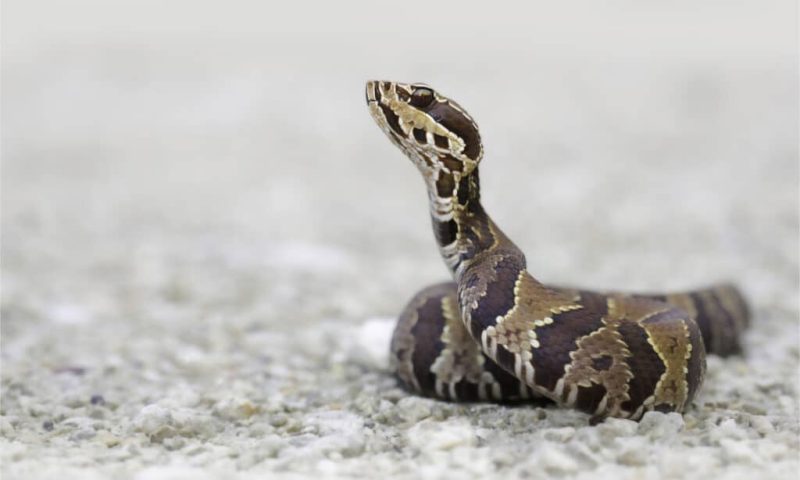
Across much of Georgia, few animals inspire the same level of fear and instant reaction as the water moccasin. Known scientifically as the cottonmouth, this heavy-bodied, semi-aquatic snake has become deeply embedded in Southern folklore, outdoor warnings, and generational cautionary tales.
People fear water moccasins not only because they are venomous, but because of where they live, how they behave, and how often they are misunderstood. In Georgia’s wetlands, rivers, ponds, and slow-moving creeks, encounters with these snakes feel personal and unpredictable. Fear grows not just from danger, but from uncertainty.
To understand why water moccasins are among the most feared snakes in Georgia, it helps to look at biology, behavior, environment, and human psychology together.
Table of Contents
- 1 What Exactly Is a Water Moccasin?
- 2 Why Georgia Is Ideal Cottonmouth Habitat
- 3 Fear Begins With Where Encounters Happen
- 4 The Famous Defensive Display
- 5 Venom and Medical Risk
- 6 Aggression Myths vs Reality
- 7 Mistaken Identity Makes Fear Worse
- 8 Cultural Stories and Generational Warnings
- 9 Why Swimming Encounters Are Especially Frightening
- 10 Seasonal Activity in Georgia
- 11 Why Killing Cottonmouths Often Makes Things Worse
- 12 The Role of Media and Internet Videos
- 13 Why Water Moccasins Feel More Dangerous Than Other Snakes
- 14 Ecological Importance in Georgia’s Wetlands
- 15 How to Reduce Risk Without Feeding Fear
- 16 When Fear Is Rational and When It Is Not
- 17 FAQs About Water Moccasins in Georgia
- 17.1 Are water moccasins actually dangerous to humans?
- 17.2 Are water moccasins aggressive snakes?
- 17.3 Do water moccasins chase people?
- 17.4 How can I tell a water moccasin from a harmless water snake?
- 17.5 Are water moccasins common throughout Georgia?
- 17.6 Can water moccasins swim toward boats or people?
- 17.7 What should I do if I encounter a water moccasin?
- 17.8 Are most dark snakes near water in Georgia water moccasins?
- 17.9 Is it legal to kill water moccasins in Georgia?
- 17.10 When are water moccasins most active?
- 18 Final Thoughts
What Exactly Is a Water Moccasin?
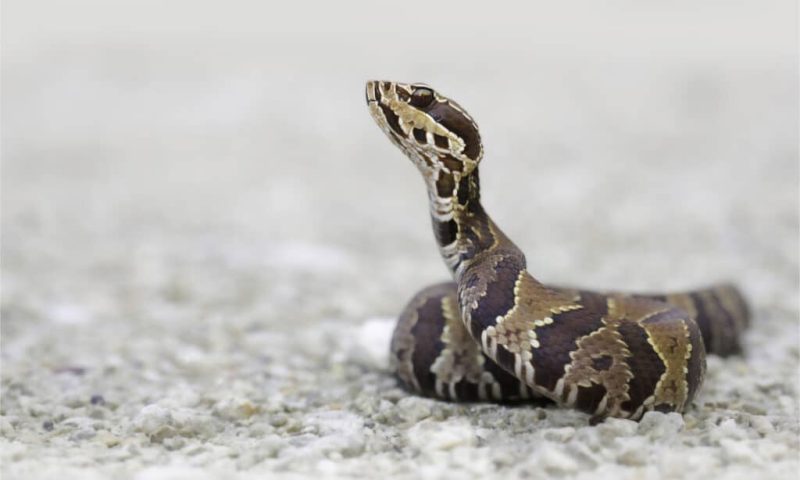
The water moccasin, or cottonmouth, is a venomous pit viper native to the southeastern United States. It belongs to the same family as copperheads and rattlesnakes, but it is the only venomous snake in North America that is strongly associated with aquatic habitats.
Adult cottonmouths are thick-bodied, muscular snakes that can exceed four feet in length. Their heads are broad and triangular, with vertical pupils and heat-sensing pits between the eyes and nostrils. Juveniles often display brighter coloration and yellow tail tips used to lure prey, while adults darken with age, sometimes appearing nearly black.
Despite frequent claims to the contrary, water moccasins are real, native snakes in Georgia, not misidentified harmless species.
Why Georgia Is Ideal Cottonmouth Habitat
Georgia’s landscape is nearly perfect for water moccasins. The state contains extensive wetlands, bottomland hardwood forests, floodplains, cypress swamps, ponds, reservoirs, and slow-moving rivers. Warm temperatures and long summers allow snakes to remain active for much of the year.
Cottonmouths thrive in environments where land and water overlap. They hunt fish, frogs, small mammals, birds, and even other snakes. Georgia’s abundance of amphibians and fish provides a steady food supply.
Human development has not pushed cottonmouths away. In many areas, it has brought people closer to their habitat.
Fear Begins With Where Encounters Happen
One reason water moccasins are so feared in Georgia is that encounters often occur in places where people feel vulnerable.
Fishing from muddy banks, wading through shallow creeks, kayaking narrow waterways, checking crab traps, or walking along pond edges all place people directly in cottonmouth habitat. Visibility is often poor, and the snake may be partially submerged or hidden among vegetation.
Unlike snakes encountered on dry trails, water moccasins are often noticed only at close range, which intensifies fear.
The Famous Defensive Display
Few snakes have a defensive behavior as visually striking as the cottonmouth.
When threatened, a water moccasin may coil its body, vibrate its tail, flatten its head, and open its mouth wide to display the bright white interior that gives it the name “cottonmouth.” This posture is not an attack stance, but a warning.
The display is designed to stop threats before a bite occurs. However, to someone unfamiliar with snake behavior, it looks aggressive and imminent, reinforcing the belief that the snake is about to strike.
Venom and Medical Risk
Water moccasins are venomous, and that fact alone fuels fear. Their venom is hemotoxic, affecting blood and tissue. Bites can cause severe pain, swelling, tissue damage, and in rare cases, serious complications.
That said, fatalities from cottonmouth bites are extremely rare. Modern medical treatment and antivenom are highly effective when care is sought promptly.
The real danger comes from delayed treatment, alcohol involvement, or attempts to handle or kill the snake.
Fear often exaggerates the actual medical risk, but the venom remains a serious concern.
Aggression Myths vs Reality
One of the strongest reasons water moccasins are feared is the widespread belief that they are aggressive snakes that chase people.
In reality, cottonmouths are defensive, not predatory toward humans. Most bites occur when someone steps on, tries to pick up, or attempts to kill the snake. Many so-called “chasing” incidents are misinterpretations of snakes trying to reach water for escape.
However, cottonmouths are less likely to flee quickly compared to non-venomous snakes. Their tendency to hold ground and display warnings instead of immediately retreating makes them seem bolder and more threatening.
Mistaken Identity Makes Fear Worse
Georgia is home to several harmless water snakes, especially species in the genus Nerodia. These snakes are often mistaken for water moccasins due to similar coloration and aquatic habits.
Harmless water snakes are far more common than cottonmouths, but many people assume every dark snake near water is venomous. This misidentification leads to unnecessary fear and snake killings.
The belief that water moccasins are “everywhere” is largely driven by this confusion.
Cultural Stories and Generational Warnings
In Georgia, fear of water moccasins is passed down through stories. Parents warn children never to swim in certain creeks. Fishermen trade stories of snakes dropping from trees or swimming toward boats. These stories are powerful, even when exaggerated.
While cottonmouths can climb and swim, many dramatic tales stretch reality. Still, repeated storytelling shapes perception more strongly than biology.
Fear becomes cultural memory.
Why Swimming Encounters Are Especially Frightening
The idea of a venomous snake swimming nearby taps into a primal fear. Cottonmouths are strong swimmers and often cross bodies of water to reach new habitat or basking sites.
Seeing a snake’s head cutting through the water creates panic, even though most swimming snakes are simply moving from one place to another and not interested in people.
Water removes the sense of control. On land, people can step back. In water, fear escalates.
Seasonal Activity in Georgia
Water moccasins are most active from spring through fall, with peak activity during warm months. In summer, they may be encountered at night on roads, near docks, or basking during early morning and late afternoon.
During cooler months, activity slows, but snakes may still be encountered during warm spells. This long active season increases the chance of human encounters.
Why Killing Cottonmouths Often Makes Things Worse
Many bites happen when people try to kill water moccasins. Striking a venomous snake brings hands and feet within striking range, increasing danger.
Additionally, killing snakes disrupts local ecosystems. Cottonmouths help control rodent populations and remove sick fish and amphibians.
Fear-driven reactions often increase risk rather than reduce it.
The Role of Media and Internet Videos
Videos showing cottonmouths standing their ground or displaying defensive behavior often circulate online without context. These clips reinforce the idea that the snakes are aggressive and fearless.
Missing from these videos is the human behavior that caused the defensive response in the first place.
Selective exposure amplifies fear.
Why Water Moccasins Feel More Dangerous Than Other Snakes
Georgia is also home to rattlesnakes and copperheads, yet water moccasins often top the fear list. This is because cottonmouths live in places people use for recreation and daily activity.
You can avoid rocky hillsides. You cannot always avoid water.
The overlap between human space and snake habitat is much higher with cottonmouths than with many other venomous snakes.
Ecological Importance in Georgia’s Wetlands
Despite fear, water moccasins play a crucial role in wetland ecosystems. They are both predators and scavengers, helping maintain balance in aquatic environments.
Their presence often indicates a healthy wetland system.
Removing them out of fear harms ecosystems without improving safety.
How to Reduce Risk Without Feeding Fear
Awareness is more effective than panic. Wearing protective footwear near water, watching where you step, using a flashlight at night, and giving snakes space dramatically reduces bite risk.
Learning to identify cottonmouths accurately also reduces unnecessary fear and harm.
When Fear Is Rational and When It Is Not
Respect for venomous snakes is reasonable. Panic is not.
Water moccasins deserve caution, not hatred. Most encounters end without incident when people remain calm and back away slowly.
Fear becomes dangerous when it overrides judgment.
FAQs About Water Moccasins in Georgia
Are water moccasins actually dangerous to humans?
Yes, water moccasins are venomous and their bites can be serious, but fatalities are extremely rare with prompt medical treatment.
Are water moccasins aggressive snakes?
No. They are defensive, not aggressive. Most bites happen when people step on them, try to handle them, or attempt to kill them.
Do water moccasins chase people?
No. Stories about cottonmouths chasing people are usually misunderstandings of snakes trying to escape toward water.
How can I tell a water moccasin from a harmless water snake?
Water moccasins have thick bodies, blocky heads, and often display a white mouth when threatened. Harmless water snakes are more slender and flee quickly.
Are water moccasins common throughout Georgia?
They are common in wetlands, swamps, slow-moving rivers, ponds, and floodplains, especially in southern and central Georgia.
Can water moccasins swim toward boats or people?
They can swim well, but they are not targeting people. Most swimming snakes are simply crossing water to reach another area.
What should I do if I encounter a water moccasin?
Stop, back away slowly, and give the snake space. Most cottonmouths will not pursue once they feel unthreatened.
Are most dark snakes near water in Georgia water moccasins?
No. Many sightings involve non-venomous water snakes, which are far more common than cottonmouths.
Is it legal to kill water moccasins in Georgia?
Laws vary by location, but killing snakes often increases bite risk and harms ecosystems. Avoiding and leaving them alone is safer.
When are water moccasins most active?
They are most active from spring through fall, especially during warm weather and near dawn, dusk, or nighttime.
Final Thoughts
Water moccasins are one of the most feared snakes in Georgia because they combine venom, visibility, cultural storytelling, and close proximity to human activity. Their defensive behavior looks aggressive, their habitat overlaps with recreation, and myths magnify real risk.
Yet behind the fear is an animal doing exactly what evolution designed it to do.
Understanding water moccasins does not remove danger, but it replaces blind fear with informed respect. In Georgia’s wetlands, that difference matters—for people and snakes alike.