
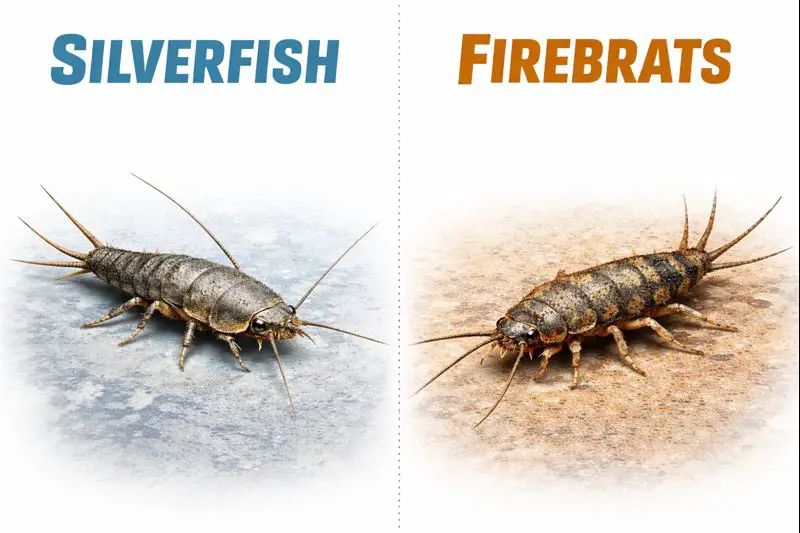
When a fast, silvery insect darts across the floor, many Washington residents think they know exactly what it is. The word silverfish comes quickly, almost automatically. The shape looks right. The movement feels familiar. The location—bathrooms, kitchens, basements—seems to confirm it.
But in many Washington homes, that assumption is wrong.
A large number of insects commonly called silverfish in Washington are actually firebrats, a closely related but ecologically different species. The confusion is understandable. Firebrats and silverfish look similar, behave similarly, and often appear in the same types of homes. Yet the reasons they show up, where they prefer to live, and what their presence says about your home can be very different.
Understanding the difference matters. Misidentification often leads to ineffective control, repeated sightings, and ongoing frustration. This article breaks down why so many “silverfish” in Washington turn out to be firebrats, how to tell them apart, and what their presence really means.
Table of Contents
- 1 Silverfish and Firebrats Are Close Relatives, Not the Same Insect
- 2 Why Washington Homes Are Especially Prone to Confusion
- 3 The Key Difference: Heat Tolerance
- 4 Why Firebrats Are Often Misidentified as Silverfish
- 5 Appearance Differences People Often Miss
- 6 Firebrats Love What Silverfish Avoid
- 7 Why Firebrats Thrive in Modern Homes
- 8 Firebrats Are Not a Sign of Poor Hygiene
- 9 Why Firebrats Are Often Seen at Night
- 10 Firebrats Can Survive Longer Than People Expect
- 11 Why Firebrats Often Appear After Renovations
- 12 Firebrats and Moisture: A Misleading Overlap
- 13 Why Pest Treatments Sometimes Fail
- 14 Firebrats Are Older Than Most Insects
- 15 Structural Clues That Point to Firebrats
- 16 Why Washington Sees More Firebrats Than Expected
- 17 Firebrats Are Not Dangerous, But They Are Disruptive
- 18 Why Proper Identification Matters
- 19 Firebrats Rarely Travel Far From Shelter
- 20 The Psychological Effect of Mislabeling
- 21 Why Firebrats Are Becoming More Noticeable
- 22 What Seeing Firebrats Really Means
- 23 FAQs about Silverfish vs Firebrats in Washington
- 23.1 Are firebrats actually common in Washington homes?
- 23.2 How can I tell if I have silverfish or firebrats?
- 23.3 Why are firebrats often mistaken for silverfish?
- 23.4 Do firebrats indicate poor cleanliness?
- 23.5 Why do “silverfish” problems persist even after treatment?
- 23.6 Are firebrats harmful to people?
- 23.7 Why do firebrats show up more often at night?
- 23.8 Can renovations trigger firebrat sightings?
- 23.9 Why do firebrats often appear near kitchens and utility rooms?
- 23.10 Does correct identification really matter?
- 24 Final Thoughts
Silverfish and Firebrats Are Close Relatives, Not the Same Insect
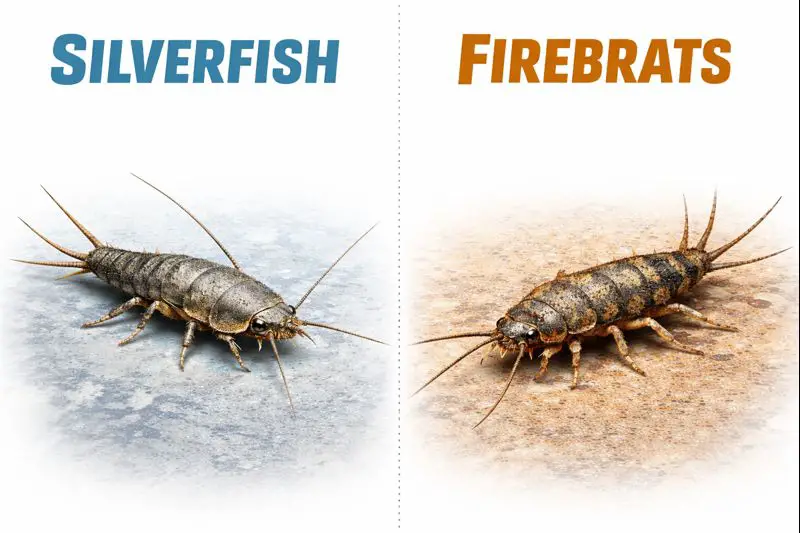
Silverfish and firebrats belong to the same primitive insect order. They share elongated bodies, antennae, and the distinctive three tail-like appendages that make them instantly recognizable.
This close relationship is exactly why confusion is so common.
To the untrained eye, a firebrat looks like a darker, dirtier silverfish. To someone dealing with pests in their home, that difference feels unimportant. But biologically and environmentally, it matters a great deal.
Silverfish and firebrats evolved to exploit different conditions. When one shows up instead of the other, it’s a clue about temperature, moisture, and hidden structural issues inside the home.
Why Washington Homes Are Especially Prone to Confusion
Washington’s climate creates a perfect storm for misidentification.
The state experiences long periods of moisture, mild temperatures, and heavy indoor heating during colder months. Homes often retain humidity, especially in bathrooms, laundry rooms, and basements.
At the same time, modern appliances, radiant heat, water heaters, and poorly ventilated spaces create localized hot zones inside otherwise cool homes.
Silverfish and firebrats respond differently to these conditions. But because they often appear in the same rooms, homeowners rarely suspect there could be two different insects involved.
The Key Difference: Heat Tolerance
The most important distinction between silverfish and firebrats is temperature preference.
Silverfish prefer cooler, damp environments. They thrive in basements, crawl spaces, bathrooms, and areas with steady moisture but moderate temperatures.
Firebrats, by contrast, prefer heat. They are drawn to warm, dry-to-humid areas and are often found near furnaces, water heaters, boilers, ovens, and hot water pipes.
In Washington homes, especially during winter, these warm zones become refuges for firebrats, even while the rest of the house remains cool.
If insects are consistently appearing near heat sources, they are far more likely to be firebrats than silverfish.
Why Firebrats Are Often Misidentified as Silverfish
Firebrats are less well known.
Most people have heard of silverfish. Few have heard of firebrats. When an insect resembles a known pest, the familiar name sticks—even if it’s wrong.
Firebrats are also slightly darker and more mottled than silverfish, but that detail is hard to notice during a quick nighttime encounter.
Because both insects move quickly, hide well, and avoid light, homeowners rarely get a clear look. The assumption becomes permanent after the first sighting.
Appearance Differences People Often Miss
At a glance, silverfish and firebrats seem identical. But there are subtle differences.
Silverfish are typically smooth, silvery-gray, and reflective. Firebrats tend to be darker, with mottled gray or brown patterns that resemble ash or soot.
Firebrats also tolerate higher temperatures, which slightly alters their behavior and habitat choices.
These differences are easy to miss without side-by-side comparison, especially in low light.
Firebrats Love What Silverfish Avoid
Silverfish avoid excessive heat. Firebrats seek it.
This distinction explains many persistent “silverfish problems” in Washington homes that never fully resolve. Homeowners treat moisture issues, clean bathrooms, and seal basements, yet insects continue to appear near kitchens or utility rooms.
In these cases, the pest was never a silverfish.
Firebrats feed on similar materials but choose different microclimates. Treating the wrong conditions leads to repeated failure.
Why Firebrats Thrive in Modern Homes
Modern homes unintentionally favor firebrats.
Insulation traps heat. Appliances run constantly. Water heaters and HVAC systems create warm voids behind walls and under floors.
In Washington, where homes are often sealed tightly to retain heat during wet winters, these warm pockets become stable habitats for firebrats.
Even a single poorly ventilated area can sustain a population for years without detection.
Firebrats Are Not a Sign of Poor Hygiene
Like silverfish, firebrats are not attracted to filth.
They feed on starches, carbohydrates, paper, glue, fabrics, and even soap residue. These materials exist in clean homes just as easily as messy ones.
Their presence indicates environmental suitability, not neglect.
This misunderstanding often causes unnecessary embarrassment or frustration for homeowners.
Why Firebrats Are Often Seen at Night
Firebrats are nocturnal.
They emerge when lights are off and activity drops. Warm appliances cool slightly at night but still retain enough heat to remain attractive.
This timing creates the illusion that firebrats “appear suddenly” when, in reality, they were hidden nearby all along.
Turning on a light interrupts their movement, making sightings feel dramatic and unexpected.
Firebrats Can Survive Longer Than People Expect
Firebrats are resilient.
They can survive long periods without food and tolerate temperature fluctuations better than silverfish. This makes them harder to eliminate once established.
In Washington homes, especially older ones with layered renovations, firebrats may persist in wall voids that are never directly accessed.
This longevity contributes to repeated sightings over months or years.
Why Firebrats Often Appear After Renovations
Renovations disrupt hidden spaces.
Opening walls, moving appliances, or changing insulation exposes firebrat habitats and forces them into visible areas.
Because homeowners already associate similar insects with silverfish, the misidentification continues.
In reality, renovations often reveal firebrats that were previously undetected.
Firebrats and Moisture: A Misleading Overlap
Firebrats prefer heat, but they still require some moisture.
This overlap causes confusion. Bathrooms and kitchens provide both warmth and humidity, making them attractive to both species.
However, firebrats are more likely to appear near heat-producing fixtures within those rooms, while silverfish remain closer to consistently damp areas.
Observing exact location patterns over time can reveal the difference.
Why Pest Treatments Sometimes Fail
Misidentification leads to mistreatment.
Silverfish control focuses heavily on moisture reduction. Firebrat control requires addressing heat sources and insulation gaps.
When the wrong strategy is applied, populations persist.
This is why some Washington homeowners report “silverfish that won’t go away,” despite repeated efforts.
Firebrats Are Older Than Most Insects
Firebrats are ancient insects, largely unchanged for millions of years.
Their survival strategy relies on patience, concealment, and tolerance for extreme conditions. They do not reproduce explosively, but they persist.
This evolutionary strategy makes them difficult to eliminate without targeted environmental changes.
Structural Clues That Point to Firebrats
Certain home features strongly suggest firebrats rather than silverfish.
Consistent sightings near water heaters, boilers, furnaces, ovens, or hot pipes are major indicators. So are sightings in otherwise dry rooms that still contain heat sources.
If insects disappear in summer but return in winter when heating systems run constantly, firebrats are likely involved.
Why Washington Sees More Firebrats Than Expected
Firebrats are often associated with hot climates, but Washington’s indoor environments tell a different story.
Long heating seasons, layered insulation, and limited ventilation create warm indoor ecosystems even in cool regions.
Firebrats adapt easily to these conditions, making them more common than most residents realize.
Firebrats Are Not Dangerous, But They Are Disruptive
Firebrats do not bite or transmit disease.
However, they can damage paper, books, wallpaper, and stored items over time. Their presence also indicates hidden heat and moisture imbalances that may lead to other problems.
In this sense, firebrats act as warning signs rather than direct threats.
Why Proper Identification Matters
Correct identification saves time and frustration.
Knowing whether you’re dealing with silverfish or firebrats determines which environmental factors need to change. Treating symptoms without understanding cause leads to recurrence.
Washington homes often require nuanced solutions rather than one-size-fits-all pest control.
Firebrats Rarely Travel Far From Shelter
Firebrats do not roam widely.
They stay close to heat sources and established shelter. This means that repeated sightings in the same area point directly to a hidden habitat nearby.
This behavior can actually make targeted control easier once the correct species is identified.
The Psychological Effect of Mislabeling
Calling every small, fast insect a silverfish simplifies fear but complicates solutions.
Once a label sticks, people stop questioning it. Firebrats benefit from this confusion by remaining undetected longer.
Correcting the label is often the first step toward resolving the issue.
Why Firebrats Are Becoming More Noticeable
Changes in home design, energy efficiency standards, and heating technology have increased suitable firebrat habitat.
As Washington homes become more tightly sealed, interior microclimates become more pronounced.
Firebrats are simply taking advantage of conditions humans created.
What Seeing Firebrats Really Means
Seeing firebrats doesn’t mean your home is unsafe or unsanitary.
It means there is a combination of warmth, shelter, and food that supports their survival. Addressing those conditions—not just the insects themselves—is what leads to long-term resolution.
FAQs about Silverfish vs Firebrats in Washington
Are firebrats actually common in Washington homes?
Yes. Firebrats are more common than many people realize, especially in heated, insulated Washington homes.
How can I tell if I have silverfish or firebrats?
Firebrats prefer warm areas near heaters, water heaters, and appliances, while silverfish prefer cooler, damp spaces.
Why are firebrats often mistaken for silverfish?
They look very similar and move quickly, making it hard to notice differences during brief sightings.
Do firebrats indicate poor cleanliness?
No. Firebrats are attracted to heat, shelter, and starch-based materials, not dirt.
Why do “silverfish” problems persist even after treatment?
Many treatments focus on moisture control, which works for silverfish but not for heat-loving firebrats.
Are firebrats harmful to people?
No. They do not bite or spread disease, but they can damage paper and stored items.
Why do firebrats show up more often at night?
They are nocturnal and become active when homes are quiet and warm.
Can renovations trigger firebrat sightings?
Yes. Renovations disturb hidden warm spaces, forcing firebrats into visible areas.
Why do firebrats often appear near kitchens and utility rooms?
These areas provide consistent heat, shelter, and access to food sources.
Does correct identification really matter?
Yes. Knowing whether you have firebrats or silverfish determines which environmental factors must be addressed.
Final Thoughts
If you think you have silverfish in your Washington home, there’s a strong chance you’re actually dealing with firebrats.
Their similar appearance masks important differences in behavior and habitat. Firebrats prefer heat over cool dampness, thrive near appliances and utility systems, and persist where warmth remains stable.
Misidentification keeps the problem alive. Understanding the difference brings clarity—and control.
In Washington homes shaped by moisture, insulation, and long heating seasons, firebrats are far more common than most people realize.