
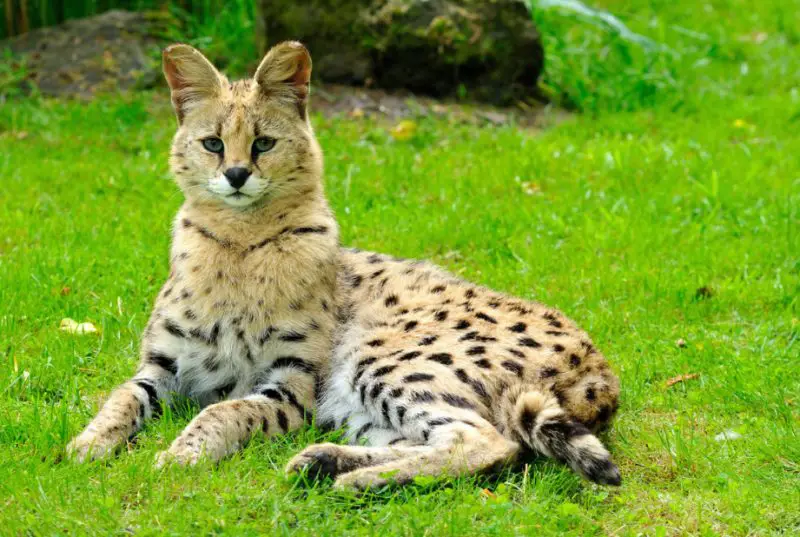
Georgia often sees rumors about exotic animals surface from time to time. Someone claims to have seen a “cheetah-like cat” near farmland. Another person swears a neighbor owns a wild cat that looks half house cat, half something else. When servals enter the conversation, the question quickly follows.
Can house cats interbreed with wild servals in Georgia, or is that idea mostly myth?
At first glance, the question seems reasonable. Servals are cats. Domestic cats are cats. Some hybrid cats exist, like Bengals or Savannah cats. Stories circulate online. Social media images blur the line between reality and assumption.
But when science, genetics, behavior, and ecology are examined closely, the answer becomes far clearer—and far less sensational—than the rumors suggest.
Table of Contents
- 1 Understanding What a Serval Actually Is
- 2 Domestic Cats and Servals Are Not Closely Related
- 3 Why the Savannah Cat Causes Confusion
- 4 Natural Mating Behavior Creates a Strong Barrier
- 5 Servals Are Not Native to Georgia
- 6 Escaped Servals Are Extremely Rare
- 7 Reproductive Timing Does Not Align
- 8 Hybrids Do Not Thrive Without Human Support
- 9 Why People Think They See Serval Hybrids
- 10 Social Media Amplifies the Myth
- 11 Wildlife Agencies Do Not Support the Idea
- 12 Legal Restrictions Also Matter
- 13 Comparing This to Other Hybrid Myths
- 14 What Would Have to Happen for It to Be Real?
- 15 Why This Question Keeps Coming Back
- 16 Why Clarity Matters
- 17 The Scientific Bottom Line
- 18 FAQs about Wild Servals and House Cats in Georgia
- 18.1 Can house cats and servals biologically interbreed?
- 18.2 Do serval–cat hybrids occur naturally in Georgia?
- 18.3 Are servals native to Georgia?
- 18.4 Why do people think serval–cat hybrids exist in Georgia?
- 18.5 What is a Savannah cat?
- 18.6 Could an escaped serval mate with a house cat?
- 18.7 Are spotted domestic cats serval hybrids?
- 18.8 Do wildlife agencies document serval–cat hybrids?
- 18.9 Are servals legal to own in Georgia?
- 18.10 Why does this myth keep resurfacing?
- 19 Final Thoughts
Understanding What a Serval Actually Is
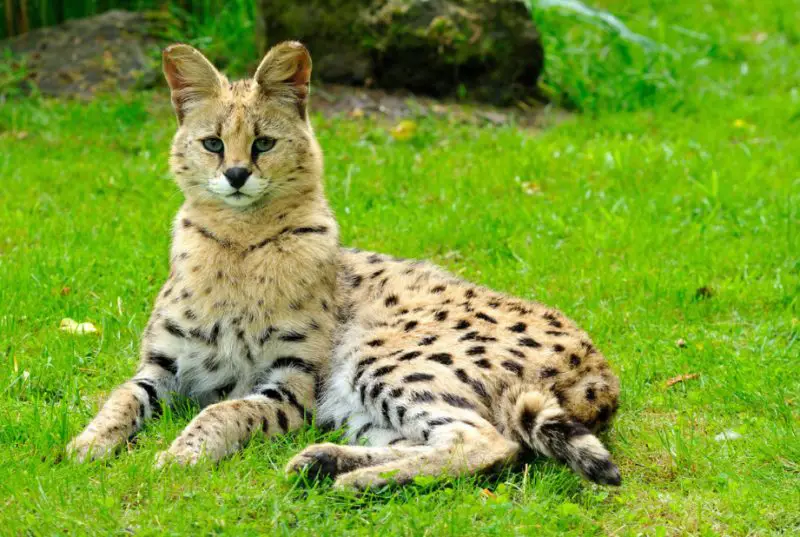
Servals are medium-sized wild cats native to sub-Saharan Africa. They evolved to hunt in tall grasslands, wetlands, and savannas, using long legs, oversized ears, and explosive vertical leaps to catch birds and small mammals.
They are not small wildcats. Adult servals can weigh three to four times more than a typical house cat. Their skull shape, limb proportions, hunting strategy, and social behavior are dramatically different from those of domestic cats.
Most importantly, servals did not evolve alongside domestic cats.
They evolved on a different continent, under different ecological pressures, and with different reproductive traits.
Domestic Cats and Servals Are Not Closely Related
While all cats belong to the family Felidae, that category includes a wide range of species with very different genetics.
Domestic cats belong to the species Felis catus. Servals belong to Leptailurus serval, a separate genus entirely.
That genetic distance matters.
Unlike some closely related wildcats, servals and domestic cats are not naturally inclined to interbreed. Their chromosome structures, reproductive cycles, and developmental patterns differ significantly.
Hybridization across such a gap does not happen naturally in the wild.
Why the Savannah Cat Causes Confusion
Much of the confusion surrounding serval hybrids comes from the existence of the Savannah cat.
Savannah cats are hybrids produced by breeding a serval with a domestic cat—but this process does not occur naturally.
Savannah cats are created through intensive human intervention, controlled breeding programs, selective pairing, and often artificial insemination. Early-generation Savannah cats require specialized handling, veterinary oversight, and careful management.
Even under controlled conditions, breeding servals and domestic cats is difficult, unpredictable, and often unsuccessful.
This context is crucial.
If hybridization requires labs, breeders, contracts, and regulation, it does not happen spontaneously outdoors in Georgia.
Natural Mating Behavior Creates a Strong Barrier
Cats do not mate casually across species lines.
Mating behavior relies on size compatibility, timing, vocal cues, scent recognition, and physical mechanics. Servals and domestic cats differ drastically in all of these areas.
A serval does not recognize a domestic cat as a potential mate. A domestic cat is unlikely to survive close contact with a serval during mating attempts.
The size difference alone makes natural mating extremely unlikely and dangerous.
In the wild, mating only occurs when behavior aligns perfectly. Between servals and house cats, it does not.
Servals Are Not Native to Georgia
Another key factor is geography.
Servals are not native to North America, including Georgia. They do not exist in the wild population.
Any serval in Georgia would have to be:
-
An escaped exotic pet
-
Illegally imported or privately owned
-
Part of a licensed facility
There is no wild serval population roaming Georgia’s forests or fields.
Without a wild population, there is no ecological context for natural interbreeding to occur.
Escaped Servals Are Extremely Rare
Occasionally, reports surface about exotic animals escaping captivity. These events are rare and usually short-lived.
Servals require specific diets, environments, and veterinary care. Escaped individuals are typically recaptured quickly or do not survive long outside controlled conditions.
Even in the unlikely event that a serval escaped in Georgia, the odds of it encountering a receptive domestic cat, aligning breeding cycles, and successfully mating are astronomically low.
Reproductive Timing Does Not Align
Domestic cats may cycle multiple times per year. Servals have different reproductive rhythms influenced by environment, nutrition, and daylight patterns.
Successful mating requires precise timing.
In captivity, breeders manipulate conditions to synchronize cycles. In the wild, especially across species, this alignment does not happen.
Timing alone prevents most hypothetical encounters from progressing beyond brief contact.
Hybrids Do Not Thrive Without Human Support
Even when hybrids are produced intentionally, early-generation serval hybrids face challenges.
They often have:
-
Fertility issues
-
Behavioral instability
-
High stress responses
-
Specialized dietary needs
Without constant human care, survival rates drop sharply.
This is another reason natural populations of such hybrids do not exist.
Evolution does not favor animals that require human systems to survive.
Why People Think They See Serval Hybrids
Visual misidentification plays a major role.
Certain domestic cats have spotted coats, long legs, or unusual coloration. Some breeds and mixed cats resemble wild patterns when seen briefly or at a distance.
Lighting, motion, fear, and expectation distort perception. Once someone hears about servals, they begin to see servals everywhere.
But appearance is not genetics.
A spotted cat is still a domestic cat unless proven otherwise.
Social Media Amplifies the Myth
Images of exotic cats circulate widely online, often without context.
Photos of Savannah cats, African servals, or unrelated wildcats are shared with misleading captions. Over time, these images create the illusion that such animals are common or naturally occurring.
Georgia becomes part of the story simply because people live there and share sightings.
The internet does not distinguish between captivity, legality, or biology.
Wildlife Agencies Do Not Support the Idea
There is no credible wildlife data supporting natural serval–cat hybridization in Georgia.
State wildlife agencies, veterinarians, and biologists do not document such cases because they do not occur.
If hybrids were appearing in the wild, they would attract immediate scientific and regulatory attention.
They have not.
Legal Restrictions Also Matter
Servals are heavily regulated or restricted in many states.
Ownership often requires permits, specialized enclosures, and compliance with wildlife laws. Unregulated breeding is discouraged or prohibited.
These legal barriers further reduce the likelihood of free-roaming servals interacting with domestic cats.
Law, in this case, reinforces biology.
Comparing This to Other Hybrid Myths
Some hybrid myths persist because they are partially true in other contexts.
Coyotes and wolves interbreed under certain conditions. Domestic cats hybridize with closely related wildcats in some regions.
Servals do not fall into that category.
They are simply too distant, too specialized, and too geographically removed.
What Would Have to Happen for It to Be Real?
For house cats to interbreed naturally with servals in Georgia, all of the following would need to occur simultaneously:
-
A stable wild serval population
-
Regular overlap with free-roaming domestic cats
-
Compatible mating behavior
-
Aligned reproductive timing
-
Successful birth and survival
-
Repeated generations
None of these conditions exist.
Without them, the idea remains hypothetical—not real.
Why This Question Keeps Coming Back
Humans are fascinated by hybrids.
They challenge categories. They feel mysterious. They blend the familiar with the exotic.
When wildlife feels close to home, curiosity intensifies. Georgia’s mix of forests, suburbs, and rural land fuels imagination.
But fascination does not equal fact.
Why Clarity Matters
Belief in impossible hybrids can cause real problems.
It can fuel fear, encourage illegal pet ownership, and distract from real wildlife issues. It can also lead to unnecessary harm toward animals mistaken for something they are not.
Understanding biology helps ground curiosity in reality.
The Scientific Bottom Line
House cats and servals can be hybridized under extreme, artificial conditions created by humans.
They do not naturally interbreed in the wild.
In Georgia, there is no ecological, biological, or scientific evidence supporting natural serval–cat hybridization.
The idea exists because it feels plausible—not because it happens.
FAQs about Wild Servals and House Cats in Georgia
Can house cats and servals biologically interbreed?
Yes, but only under highly controlled, artificial conditions created by humans, not naturally in the wild.
Do serval–cat hybrids occur naturally in Georgia?
No. There is no scientific evidence of natural serval–cat hybridization in Georgia.
Are servals native to Georgia?
No. Servals are native to Africa and do not have wild populations in Georgia or anywhere in North America.
Why do people think serval–cat hybrids exist in Georgia?
Misidentification, social media images, and confusion with Savannah cats fuel the belief.
What is a Savannah cat?
A Savannah cat is a human-created hybrid produced through controlled breeding between a serval and a domestic cat.
Could an escaped serval mate with a house cat?
The odds are extremely low due to size differences, behavior, and mismatched breeding cycles.
Are spotted domestic cats serval hybrids?
No. Many domestic cats naturally have spotted or wild-looking coats without any serval ancestry.
Do wildlife agencies document serval–cat hybrids?
No. State agencies and biologists have no records of natural serval–cat hybrids in Georgia.
Are servals legal to own in Georgia?
Serval ownership is regulated and often restricted, requiring permits and strict compliance.
Why does this myth keep resurfacing?
Hybrids fascinate people, and rare exotic animals spark curiosity that often outpaces biological reality.
Final Thoughts
So, can house cats interbreed with wild servals in Georgia?
No—not naturally, not in the wild, and not under real-world conditions.
Servals are not native to Georgia. They do not roam freely. They do not seek domestic cats as mates. And without heavy human intervention, hybridization does not occur.
What people believe they are seeing are domestic cats, exotic pets, or internet myths crossing into everyday conversation.
The story is intriguing. The reality is far simpler.
In Georgia, house cats remain house cats. Servals remain rare, regulated, and separate. And the boundary between them—set by evolution, geography, and behavior—remains firmly intact.