
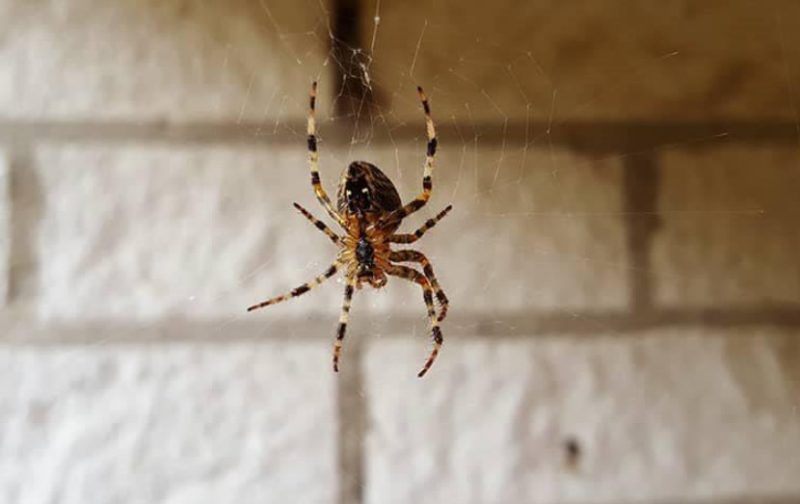
In Illinois, spiders tend to occupy homes discreetly, rarely making their presence obvious. They sit motionless in corners, beneath furniture, along basement walls, or inside webs stretched across window frames. Yet the moment a footstep passes nearby or an insect brushes a strand of silk, the spider reacts instantly. To many homeowners, this raises an unsettling question.
How do spiders detect vibration indoors so precisely, even when they seem completely still?
The answer lies in one of the most advanced sensory systems in the animal world. Spiders do not rely on hearing the way humans do. They do not “see” vibrations. Instead, they feel the world through microscopic sensors that turn walls, floors, air, and silk into a living information network. Inside Illinois homes, these systems work exceptionally well, often better than they do outdoors.
Understanding how spiders detect vibration explains why they appear suddenly, why they retreat before being seen, and why they seem to know you are nearby long before you notice them.
Table of Contents
- 1 Spiders Do Not Hear Sound the Way Humans Do
- 2 Illinois Homes Are Ideal Vibration Environments
- 3 The Role of Spider Legs as Sensory Antennas
- 4 Specialized Sensors Detect Ground Vibration
- 5 Webs Act as Vibration Amplifiers
- 6 Different Web Shapes Convey Different Information
- 7 Hunting Spiders Detect Vibration Without Webs
- 8 Air Vibrations Matter Indoors
- 9 Spiders Can Distinguish Threat From Prey
- 10 Why Spiders Seem to “Disappear” Instantly
- 11 Vertical Surfaces Transmit Vibration Too
- 12 Basements Are Vibration Highways
- 13 Temperature Influences Vibration Sensitivity
- 14 Why Spiders Rarely Make “Mistakes”
- 15 Spiders Use Vibration to Navigate Indoors
- 16 Human Activity Shapes Spider Behavior
- 17 Why Spiders Are More Noticeable at Night
- 18 Illinois Housing Styles Influence Spider Detection
- 19 Why Killing One Spider Doesn’t Stop Others
- 20 Spiders Are Not Aware of Humans Emotionally
- 21 Why Vibration Detection Makes Spiders Effective Survivors
- 22 What This Means for Illinois Homeowners
- 23 FAQs about How Spiders Detect Vibration Indoors in Illinois
- 23.1 Do spiders hear people walking inside homes?
- 23.2 How can spiders react before I see them?
- 23.3 Do spider webs help them sense vibration?
- 23.4 Can spiders feel vibration through walls and ceilings?
- 23.5 Are indoor spiders better at sensing vibration than outdoor spiders?
- 23.6 Do spiders sense air movement too?
- 23.7 Why do spiders disappear so fast?
- 23.8 Are basement spiders more sensitive to vibration?
- 23.9 Does temperature affect spider vibration detection?
- 23.10 Are spiders reacting to people specifically?
- 24 Final Thoughts
Spiders Do Not Hear Sound the Way Humans Do
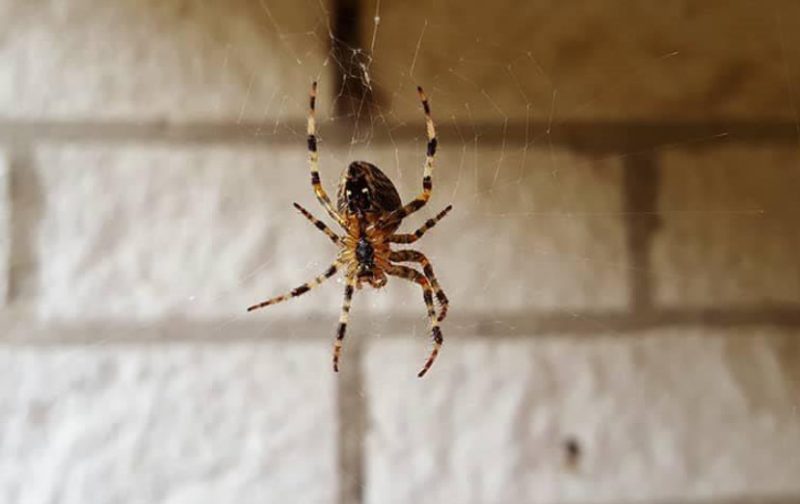
A common misconception is that spiders “hear” noises.
They do not have ears, and they do not process sound waves in the way mammals do. Instead, spiders detect mechanical vibrations—physical movements traveling through solid surfaces, air, or silk.
Every step you take sends vibrations through floors. Every door closing sends tremors through walls. Even airflow from heating vents creates subtle oscillations.
To spiders, a home is constantly humming with information.
What humans experience as silence is, to a spider, a detailed vibration map of its surroundings.
Illinois Homes Are Ideal Vibration Environments
Indoor environments amplify spider sensory abilities.
Illinois homes are built with rigid materials like wood framing, drywall, concrete, and metal piping. These materials transmit vibrations efficiently. Floors act like drums. Walls act like soundboards. Ceilings carry subtle resonance from footsteps above.
Compared to outdoor environments where wind, soil, and vegetation absorb vibration, homes provide cleaner, more predictable signals.
This is one reason spiders thrive indoors. Their sensory systems perform better in structured environments.
The Role of Spider Legs as Sensory Antennas
A spider’s legs are not just for walking.
Each leg is covered in thousands of microscopic sensory hairs called trichobothria. These hairs are so sensitive they can detect air movement caused by a flying insect or a human passing nearby.
When vibrations travel through a surface, these hairs bend slightly. That movement sends signals directly to the spider’s nervous system.
The spider does not need to move to sense activity. Simply resting with legs extended allows it to monitor the environment continuously.
In Illinois homes, where air movement and surface vibration are constant, this sensory input never stops.
Specialized Sensors Detect Ground Vibration
Beyond surface hairs, spiders possess internal vibration sensors located in their leg joints.
These organs, known as slit sensilla, detect stretching and compression in the exoskeleton caused by vibration. They allow spiders to sense vibrations traveling through floors, walls, and furniture.
Even faint vibrations—far below human perception—can be detected.
This explains why spiders often retreat before a person reaches them. They sensed your approach several steps ago.
Webs Act as Vibration Amplifiers
For web-building spiders, silk is not just a trap. It is a communication system.
Spider silk transmits vibration with extraordinary efficiency. When an insect touches any part of the web, vibrations travel instantly along the strands.
The spider can determine:
-
Size of the insect
-
Direction of movement
-
Struggle intensity
-
Whether the vibration is prey, debris, or danger
Indoors, where air is still and debris minimal, web vibrations are clearer than in outdoor settings.
This clarity allows spiders to respond with remarkable precision.
Different Web Shapes Convey Different Information
Not all webs work the same way.
Orb webs transmit radial vibrations toward the center, allowing spiders to pinpoint location quickly. Cobwebs create chaotic vibration patterns that trap multiple signals, alerting spiders to any disturbance in their space.
In Illinois homes, cellar spiders and house spiders often build irregular webs in corners. These webs act like early-warning systems rather than precise hunting tools.
Any vibration means something has entered their territory.
Hunting Spiders Detect Vibration Without Webs
Not all spiders use webs.
Jumping spiders, wolf spiders, and other hunters rely entirely on vibration sensing through surfaces and air. They feel footsteps, insect movement, and even human breathing through floorboards and furniture.
Indoors, smooth surfaces like tile and hardwood transmit vibration exceptionally well. This allows hunting spiders to detect movement from surprising distances.
They don’t need to see you. They already felt you.
Air Vibrations Matter Indoors
Spiders are also sensitive to air movement.
Even subtle airflow changes caused by walking, opening doors, or HVAC systems register on their sensory hairs. These air vibrations help spiders distinguish between:
-
Approaching predators
-
Passing humans
-
Insects flying nearby
Illinois homes with forced-air heating and cooling produce constant low-level air currents. Spiders learn these patterns and respond only to unusual changes.
This is why sudden movements trigger spider reactions while constant airflow does not.
Spiders Can Distinguish Threat From Prey
Spiders do not react blindly to vibration.
They analyze vibration patterns. Heavy, rhythmic vibrations suggest large animals. Erratic, light vibrations suggest insects. Slow, steady vibrations may indicate structural noise.
This ability allows spiders to remain still during harmless vibrations and flee during threatening ones.
Inside homes, this discrimination becomes highly refined due to repeated exposure to predictable human activity.
Why Spiders Seem to “Disappear” Instantly
Many homeowners report spiders vanishing the moment they look away.
This happens because spiders already sensed danger and prepared an escape route.
When vibration patterns change suddenly, spiders react in milliseconds. They drop, run, or retreat into crevices before humans register movement.
The spider didn’t teleport. It anticipated.
Vertical Surfaces Transmit Vibration Too
Walls and ceilings are not vibration-free.
Studs, pipes, wiring, and drywall transmit vibration throughout a home. Spiders resting on walls feel activity from adjacent rooms or floors.
In multi-story Illinois homes, spiders can sense movement from above or below through structural connections.
This three-dimensional vibration awareness makes them difficult to surprise.
Basements Are Vibration Highways
Basements are especially rich in vibration information.
Concrete floors transmit low-frequency vibrations extremely well. Plumbing and HVAC systems create continuous micro-vibrations.
Spiders in basements experience a constant stream of sensory data, allowing them to respond quickly to changes.
This explains why basement spiders often retreat long before being approached.
Temperature Influences Vibration Sensitivity
Spider sensory systems are temperature-dependent.
In warmer conditions, nerve signals travel faster, increasing sensitivity. Illinois summers enhance spider responsiveness indoors, while winter temperatures may slow reactions slightly.
However, heated indoor environments reduce seasonal impact, allowing spiders to remain active year-round.
Temperature stability indoors supports consistent vibration detection.
Why Spiders Rarely Make “Mistakes”
Spiders conserve energy by reacting only when necessary.
Their sensory systems are tuned to avoid false alarms. Constant vibration from appliances or daily routines becomes background noise.
Only novel or escalating vibrations trigger responses.
This selective attention makes spiders seem intelligent, even though it is instinctive behavior refined by evolution.
Vibration helps spiders orient themselves.
They remember vibration patterns associated with safe areas, prey-rich zones, and escape routes. Over time, they build an internal map of the home.
This is why spiders often retreat along the same paths repeatedly.
Your house becomes their vibration landscape.
Human Activity Shapes Spider Behavior
Spiders adapt to human routines.
Regular foot traffic patterns, appliance usage, and daily schedules become predictable. Spiders time movement for quiet periods, usually at night.
This adaptation makes encounters feel sudden and surprising.
The spider waited for the right vibration window.
Why Spiders Are More Noticeable at Night
At night, background vibrations decrease.
When humans settle down, vibration noise drops, making spider movement easier and safer. This is when spiders reposition, rebuild webs, or hunt.
A sudden light turning on introduces new vibrations, alerting spiders instantly.
This timing reinforces the belief that spiders “come out at night.”
Illinois Housing Styles Influence Spider Detection
Older homes with wood floors transmit vibration differently than newer homes with concrete slabs.
Spiders adjust accordingly. In wood-frame homes, vibrations travel farther. In concrete structures, low-frequency vibrations dominate.
Spiders adapt their sensitivity to match these environments.
Their success depends on flexibility.
Why Killing One Spider Doesn’t Stop Others
Spiders respond individually, not collectively.
Each spider reads vibration independently. Removing one does not change the vibration landscape.
As long as the environment remains suitable, other spiders will occupy it.
The sensory system ensures survival, not loyalty.
Spiders Are Not Aware of Humans Emotionally
Spiders do not “know” humans as threats in a conscious sense.
They respond to vibration patterns that indicate size, speed, and unpredictability. Humans produce large, irregular vibrations that signal danger.
This response is mechanical, not emotional.
Understanding this reduces fear.
Why Vibration Detection Makes Spiders Effective Survivors
Spiders have survived for hundreds of millions of years because their sensory systems work in nearly any environment.
Indoors, these systems become even more effective.
Homes provide stable temperatures, predictable vibration patterns, and abundant shelter. Spiders exploit these conditions quietly and efficiently.
Their success is not aggression. It is perception.
What This Means for Illinois Homeowners
Spiders are not watching you.
They are listening to the house itself.
Understanding how spiders detect vibration explains why encounters feel eerie but are actually predictable. The spider reacted to information long before you noticed it.
Once you understand this, spiders stop feeling mysterious—and start making sense.
FAQs about How Spiders Detect Vibration Indoors in Illinois
Do spiders hear people walking inside homes?
No. Spiders do not hear sound. They sense physical vibrations moving through floors, walls, air, and webs.
How can spiders react before I see them?
They detect vibrations from footsteps or movement seconds earlier through sensitive leg sensors.
Do spider webs help them sense vibration?
Yes. Webs act like vibration amplifiers, instantly transmitting movement to the spider.
Can spiders feel vibration through walls and ceilings?
Yes. Structural materials like drywall, wood, and pipes transmit vibrations very effectively.
Are indoor spiders better at sensing vibration than outdoor spiders?
Often yes. Indoor environments provide cleaner, more predictable vibration signals.
Do spiders sense air movement too?
Yes. Tiny sensory hairs detect air shifts from walking, doors opening, or HVAC systems.
Why do spiders disappear so fast?
They sense danger early and retreat before humans register movement.
Are basement spiders more sensitive to vibration?
Basements transmit low-frequency vibrations well, making detection easier for spiders.
Does temperature affect spider vibration detection?
Warmer indoor temperatures speed nerve signals, increasing sensitivity.
Are spiders reacting to people specifically?
No. They respond to vibration patterns, not to humans as individuals.
Final Thoughts
Spiders in Illinois homes detect vibration through an intricate network of sensory hairs, joint receptors, silk strands, and structural resonance. Floors, walls, air, and webs become extensions of their nervous system.
They do not hear. They feel.
This ability allows spiders to anticipate danger, locate prey, and navigate indoor spaces with astonishing precision. It explains their sudden movements, their elusive nature, and their long-term success indoors.
In the quiet hum of an Illinois home, spiders are not hiding.
They are listening.