
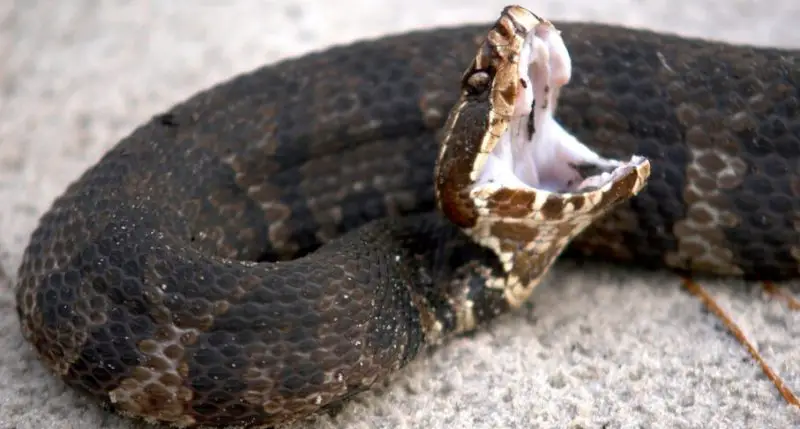
Texas wetlands support remarkable biodiversity, from wading birds and amphibians to reptiles adapted to aquatic life. Among the most discussed residents is the water moccasin, also known as the cottonmouth. Stories often circulate about these snakes aggressively chasing people along shorelines, docks, or marsh trails. While such encounters feel dramatic, wildlife biology tells a more nuanced story.
Understanding how cottonmouths behave, where they live, and why encounters happen can help separate myth from reality. With clear information, outdoor enthusiasts can explore Texas wetlands safely while appreciating one of the region’s most misunderstood reptiles.
Table of Contents
- 1 What Water Moccasins Actually Are
- 2 Do Water Moccasins Really Chase People
- 3 Texas Wetlands Provide Ideal Habitat
- 4 Why Encounters Sometimes Feel Sudden
- 5 Behavioral Traits That Shape Public Perception
- 6 Comparing Cottonmouths With Harmless Water Snakes
- 7 Ecological Importance of Cottonmouths
- 8 Human Expansion Into Wetland Areas
- 9 Are Water Moccasins Aggressive Toward Humans
- 10 Typical Encounter Scenarios in Texas Wetlands
- 11 Practical Safety Tips for Wetland Visitors
- 12 What To Do If You Encounter One
- 13 Understanding Venom Risk
- 14 Seasonal Patterns Across Texas
- 15 Why the Chasing Myth Persists
- 16 Climate Influence on Cottonmouth Visibility
- 17 Identifying True Risk Versus Perceived Risk
- 18 FAQs About Water Moccasins in Texas Wetlands
- 19 Final Thoughts
What Water Moccasins Actually Are
Venomous Semi Aquatic Pit Vipers
Water moccasins, commonly called cottonmouths, belong to the pit viper family, which also includes rattlesnakes and copperheads. Their scientific name is Agkistrodon piscivorus, and they are one of the few venomous snake species in North America strongly associated with aquatic habitats. A heat-sensing pit located between the eye and nostril helps them detect warm-blooded prey even in low light conditions. Their muscular bodies, keeled scales, and strong swimming ability make them highly adapted to life around water.
Unlike many land-focused snakes, cottonmouths regularly use both terrestrial and aquatic environments. They may bask along muddy banks, float partially submerged among vegetation, or move quietly between marsh channels searching for prey. Their diet is diverse and opportunistic, including fish, frogs, salamanders, rodents, small birds, carrion, and occasionally other reptiles. This dietary flexibility helps maintain ecological balance by regulating multiple prey populations.
Because Texas wetlands offer stable water, abundant prey, and dense cover, cottonmouths thrive there throughout much of the year. Their presence usually reflects healthy wetland ecosystems rather than environmental disturbance. In many cases, they function as mid-level predators that connect aquatic and terrestrial food webs.
The Famous Cottonmouth Display
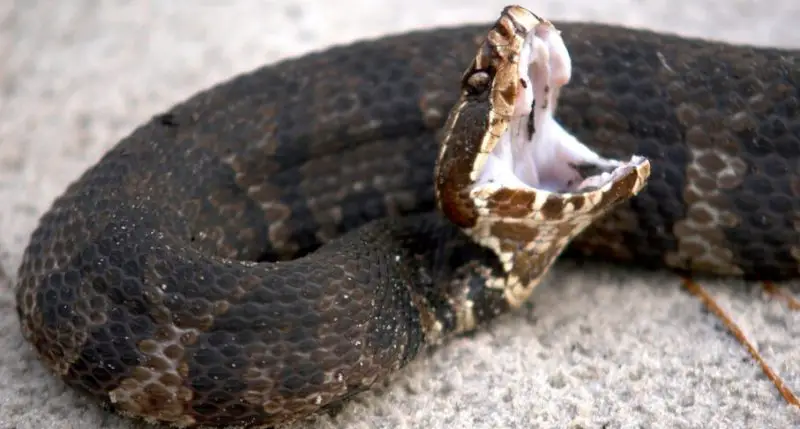
The nickname cottonmouth comes from the snake’s striking defensive display. When threatened, it may open its mouth wide, revealing the bright white interior lining that contrasts sharply with its darker body. This visual signal functions as a warning rather than an invitation to attack. It communicates discomfort and encourages potential threats to maintain distance.
Predators in the wild often recognize this display instinctively. Birds, mammals, and even other reptiles may interpret it as a sign that the snake is capable of defending itself. This reduces the likelihood of physical confrontation, which benefits both predator and snake.
Understanding this defensive posture helps dispel the idea that cottonmouths are inherently aggressive. In most cases, the display appears only when the snake feels cornered or surprised. When given space, they usually retreat quietly rather than escalate conflict.
Do Water Moccasins Really Chase People
Defensive Movement Often Misread
Stories about cottonmouths chasing people are common in parts of Texas, especially in wetland communities. However, wildlife research consistently suggests these incidents usually result from misinterpreting escape behavior. When startled, the snake instinctively moves toward what it perceives as safety. That safe direction is often water, thick vegetation, or shaded shelter.
If a person happens to stand between the snake and its escape route, the snake may move toward them briefly before veering away. From the human perspective, the motion can feel deliberate. In reality, the snake is attempting to flee from perceived danger rather than approach it.
Such misunderstandings often become exaggerated through storytelling. A short defensive movement may later be remembered as a prolonged chase. Education about natural behavior helps clarify these experiences.
Energy Conservation Matters
Snakes operate on limited energy budgets. Hunting, digestion, thermoregulation, and reproduction all require careful energy use. Pursuing large animals such as humans would offer no food benefit while increasing risk of injury or predation. Evolution favors avoidance rather than confrontation.
Field observations consistently show cottonmouths preferring retreat when escape options exist. Even venomous snakes rely on concealment, camouflage, and stillness as primary survival strategies. Aggressive pursuit without provocation does not align with typical snake ecology.
Recognizing these energy dynamics helps explain why most encounters end quickly once the snake has a clear escape path.
Texas Wetlands Provide Ideal Habitat
Abundant Water Systems
Texas contains extensive wetland environments that create ideal conditions for cottonmouths. Marshes, bayous, slow rivers, oxbow lakes, reservoirs, and coastal estuaries all provide stable water access. These habitats support amphibians, fish, rodents, and aquatic insects, which form the snake’s primary food sources.
Wetland vegetation also offers concealment from predators and suitable basking areas for thermoregulation. Sun exposure is essential because snakes rely on external heat to regulate body temperature. Shorelines, logs, and floating vegetation provide ideal basking platforms.
Because these resources remain available through much of the year, cottonmouth populations can persist consistently in many Texas regions. Frequent sightings often reflect suitable habitat rather than unusual population increases.
Regional Hotspots
Cottonmouths occur most commonly in eastern and southeastern Texas where wetlands are abundant. Piney woods ecosystems, Gulf Coast marshes, river floodplains, and coastal prairie waterways support particularly stable populations. Slow moving rivers and forested wetlands provide both prey and shelter.
In contrast, western Texas regions with arid climates support far fewer cottonmouths. Limited water availability reduces suitable habitat. Understanding this geographic variation helps explain why sightings cluster in certain areas.
Regional awareness allows residents and visitors to anticipate potential encounters realistically rather than assuming statewide uniform distribution.
Why Encounters Sometimes Feel Sudden
Seasonal Activity Peaks
Snake activity often follows seasonal temperature changes. In spring, warming conditions stimulate increased movement after cooler winter months. Snakes bask more frequently to regulate body temperature and resume feeding activity. This seasonal emergence often coincides with increased human outdoor activity.
During summer, extreme heat may push snakes toward cooler shaded areas, including docks, residential shorelines, or vegetated marsh edges. Autumn dispersal before cooler periods can also increase visibility as snakes move between feeding and shelter locations.
These natural seasonal cycles can create the impression of sudden population surges even when overall numbers remain stable.
Human Recreation Patterns
Human recreation peaks during warm months when snakes are most active. Fishing, kayaking, hiking, birdwatching, and photography often occur in the same habitats cottonmouths prefer. Increased human presence naturally leads to more sightings.
Social media and digital photography amplify this effect. A single sighting can quickly reach thousands of people, reinforcing the perception that snake encounters are increasing dramatically.
Visibility often changes faster than actual wildlife populations.
Behavioral Traits That Shape Public Perception
Freeze Before Flight Response
Cottonmouths frequently rely on camouflage as their first defense. When initially disturbed, they often remain motionless, blending into muddy banks, leaf litter, or aquatic vegetation. This stillness reduces detection by predators.
If a perceived threat approaches too closely, the snake may suddenly move away. That abrupt motion can startle observers and create the impression of aggression or pursuit.
Understanding this freeze-then-flight sequence helps reduce surprise and anxiety during encounters.
Warning Signals Precede Biting
Before resorting to biting, cottonmouths typically display warning behaviors. These may include coiling, elevating the head, opening the mouth, vibrating the tail, or slowly repositioning the body. Each signal communicates discomfort and encourages distance.
Bites usually occur only when escape options disappear or direct contact happens. Recognizing warning signals allows people to step back safely before escalation occurs.
Education about these behaviors greatly reduces risk.
Comparing Cottonmouths With Harmless Water Snakes
Frequent Misidentification
Texas wetlands host numerous non venomous water snakes that resemble cottonmouths in coloration and habitat preference. These species often swim quickly toward water when disturbed, which can appear aggressive from a distance.
Harmless water snakes may flatten their heads defensively, further mimicking venomous species. Without clear identification, observers sometimes assume they encountered cottonmouths.
Accurate identification reduces unnecessary fear and prevents harm to non venomous wildlife.
Key Identification Differences
Cottonmouths generally display heavier bodies, broader triangular heads, vertical pupils, and more muted banding patterns. Their defensive mouth display is also distinctive. Non venomous water snakes usually appear slimmer, with round pupils and more pronounced pattern contrast.
Observation from a safe distance, rather than close inspection, remains the safest approach. When uncertain, treating any unidentified snake with caution is wise.
Ecological Importance of Cottonmouths
Predator Balance
Cottonmouths function as mid-level predators that help regulate amphibian, rodent, fish, and insect populations. This ecological balance supports vegetation stability, disease control among prey species, and overall wetland biodiversity.
Predator diversity strengthens ecosystem resilience. Removing predators can lead to prey population imbalances that affect plant communities and water quality.
Their presence often indicates functioning wetlands rather than ecological problems.
Scavenging Role
Cottonmouths also consume carrion, contributing to nutrient recycling. By removing decaying animal matter, they help reduce disease risk and support natural decomposition cycles.
Scavenging roles often receive less attention but remain essential components of ecosystem health.
Wetland ecosystems rely on interconnected feeding relationships.
Human Expansion Into Wetland Areas
Residential Development Trends
Texas population growth has increased residential development near lakes, rivers, and marshlands. These areas offer scenic views, recreational access, and desirable climates. However, building near wetlands naturally increases wildlife encounters.
Snakes are not necessarily expanding into human spaces. Instead, human development increasingly overlaps established wildlife habitat.
Understanding this perspective helps reduce perceptions of invasion.
Artificial Water Features
Stormwater retention ponds, irrigation canals, landscaped lakes, and golf course water hazards provide additional aquatic habitat. These features attract prey species such as frogs, insects, and rodents, which in turn attract cottonmouths.
Human infrastructure can unintentionally expand suitable habitat. Managing vegetation, lighting, and waste near water features helps reduce wildlife attraction.
Environmental planning influences encounter frequency.
Are Water Moccasins Aggressive Toward Humans
Scientific Observations
Research consistently shows cottonmouths favor avoidance. Most bites occur when a snake is stepped on, handled, cornered, or intentionally provoked. Unprovoked attacks remain extremely rare.
Providing a clear escape path usually resolves encounters quickly. Respectful distance remains the most effective safety measure.
Knowledge reduces unnecessary fear.
Defensive Biology
Venom primarily functions for capturing prey. Defensive use occurs only when escape is impossible. Producing venom requires metabolic resources, so snakes use it judiciously.
Understanding venom’s ecological purpose helps frame realistic risk perception.
Preparedness supports confidence in outdoor environments.
Typical Encounter Scenarios in Texas Wetlands
Fishing Locations
Fishing shorelines attract both anglers and cottonmouths because prey availability concentrates there. Snakes often bask near water edges or vegetation where fish activity occurs.
Remaining observant while walking along banks reduces surprise encounters. Most snakes slip quietly into water when approached.
Calm reactions prevent escalation.
Boating and Kayaking
Floating vegetation, logs, and shoreline debris provide basking platforms. Snakes may enter water when boats pass. This sudden movement can startle paddlers but usually represents retreat behavior.
Maintaining composure and allowing space resolves encounters safely.
Outdoor recreation and wildlife coexist regularly.
Residential Wetland Edges
Homes near wetlands sometimes experience transient snake activity. Movements usually reflect seasonal dispersal or prey tracking rather than permanent residence.
Reducing rodent attractants, securing garbage, and managing landscaping can lower encounter likelihood.
Environmental awareness supports coexistence.
Practical Safety Tips for Wetland Visitors
Stay on visible paths near water.
Wear sturdy footwear.
Use flashlights at night.
Avoid placing hands in concealed spaces.
Supervise pets near wetlands.
These precautions significantly reduce risk while allowing continued outdoor enjoyment.
What To Do If You Encounter One
Remain calm and avoid sudden movement. Slowly step back to provide the snake an escape route. Do not attempt to handle, capture, or kill the snake.
Most encounters resolve peacefully within seconds once distance increases.
Observation from a safe distance remains safest.
Understanding Venom Risk
Cottonmouth venom can cause localized pain, swelling, and tissue effects. Serious outcomes are uncommon with prompt medical treatment. Any suspected bite warrants professional medical evaluation.
Prevention through awareness remains the most effective strategy.
Preparedness reduces anxiety.
Seasonal Patterns Across Texas
Spring often brings increased basking. Summer supports peak feeding activity. Autumn may involve dispersal before cooler conditions. Mild southern winters allow occasional year round activity.
Seasonal awareness helps anticipate encounters.
Understanding patterns improves safety.
Why the Chasing Myth Persists
Human memory tends to emphasize dramatic experiences. Unexpected wildlife encounters become vivid stories that spread quickly. Social media accelerates this process, sometimes overshadowing scientific evidence.
Folklore and storytelling traditions also reinforce perceived aggression.
Balanced education helps correct misconceptions.
Climate Influence on Cottonmouth Visibility
Weather patterns influence prey abundance, vegetation cover, and water levels. These factors affect snake movement and visibility. Extended warm seasons may lengthen active periods.
Environmental context shapes encounter frequency over time.
Ongoing research continues to examine these trends.
Identifying True Risk Versus Perceived Risk
Statistically, venomous snake bites remain rare compared with other outdoor hazards such as heat exposure, insect stings, or water accidents. Maintaining perspective helps balance caution with confidence.
Preparedness, education, and respectful distance allow safe enjoyment of Texas wetlands while appreciating one of their most fascinating native reptiles.
FAQs About Water Moccasins in Texas Wetlands
Do cottonmouths actively chase humans
No. Most apparent chasing involves escape behavior where the snake moves toward water or cover.
Are they common throughout Texas
They are common in eastern and coastal wetlands but less common in arid western regions.
How can I reduce encounter risk
Stay observant near water, wear proper footwear, avoid handling wildlife, and maintain distance.
Are bites usually dangerous
Most bites are treatable with prompt medical care. Serious outcomes are uncommon but require evaluation.
Can they climb or enter yards
They can climb low structures and occasionally enter yards near wetlands, usually following prey.
Should I kill one if I see it
Avoid killing wildlife. Most snakes leave quickly when undisturbed.
Do they always show warning signs
Often yes, including mouth gaping or defensive posture, but avoidance remains primary.
Are they beneficial to ecosystems
Yes. They regulate prey populations and contribute to wetland ecological balance.
Final Thoughts
Water moccasins are an integral part of Texas wetland ecosystems. Their reputation for chasing people largely reflects misunderstanding of defensive escape behavior rather than true aggression. With informed awareness, encounters become manageable and rarely dangerous.
Respectful coexistence benefits both people and wildlife. Understanding their ecological role transforms fear into appreciation, allowing Texans to enjoy wetland landscapes while maintaining safe, informed outdoor habits.