
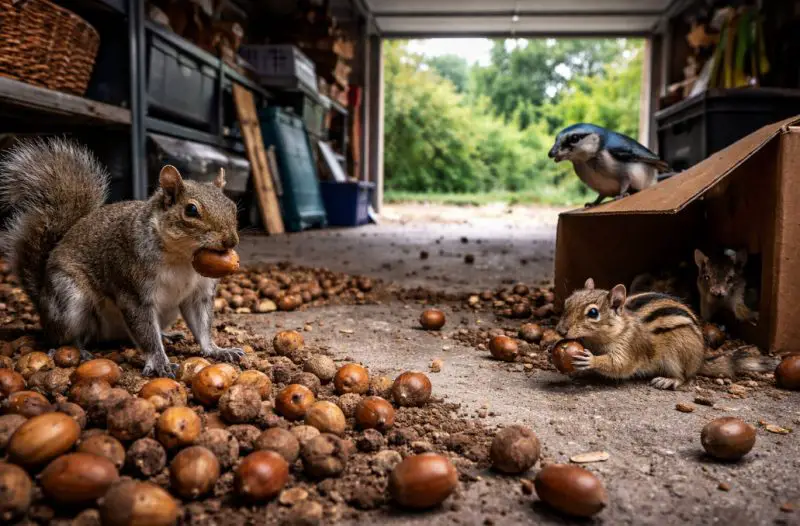
You open your garage door in the morning and notice something odd. A few acorns on the floor. Maybe one near a wall. Another under a shelf. At first it seems harmless or accidental. Then it keeps happening. More acorns appear. Sometimes dozens. Occasionally even small piles show up in corners, boxes, or storage bins.
Many Pennsylvania homeowners experience this, especially during fall, but sometimes year-round. The explanation usually involves wildlife behavior rather than human activity. Rodents, birds, squirrels, and other animals commonly collect, store, or accidentally drop acorns while preparing for colder months or searching for food.
Understanding why acorns end up in garages helps you identify the culprit, prevent future occurrences, and protect your home without unnecessary worry.
Table of Contents
- 1 The Most Common Culprit: Squirrels
- 2 Chipmunks Also Store Acorns Indoors
- 3 Mice and Rats Collect Acorns Too
- 4 Birds Can Also Drop Acorns
- 5 Seasonal Factors in Pennsylvania
- 6 Why It Feels Mysterious
- 7 Are Acorns in the Garage Dangerous?
- 8 Identifying the Exact Culprit
- 9 Preventing Acorn Intrusion
- 10 Humane Wildlife Deterrence
- 11 Living With Pennsylvania Wildlife
- 12 FAQs About Acorns Appearing in Garages
- 12.1 Are squirrels usually responsible?
- 12.2 Could birds drop them?
- 12.3 Are chipmunks common culprits?
- 12.4 Should I worry about rodents?
- 12.5 Is this seasonal?
- 12.6 Will it stop naturally?
- 12.7 Do garages attract wildlife?
- 12.8 Can pets deter animals?
- 12.9 Should I remove acorns quickly?
- 12.10 Is professional help necessary?
- 13 Conclusion
The Most Common Culprit: Squirrels
Natural hoarding behavior
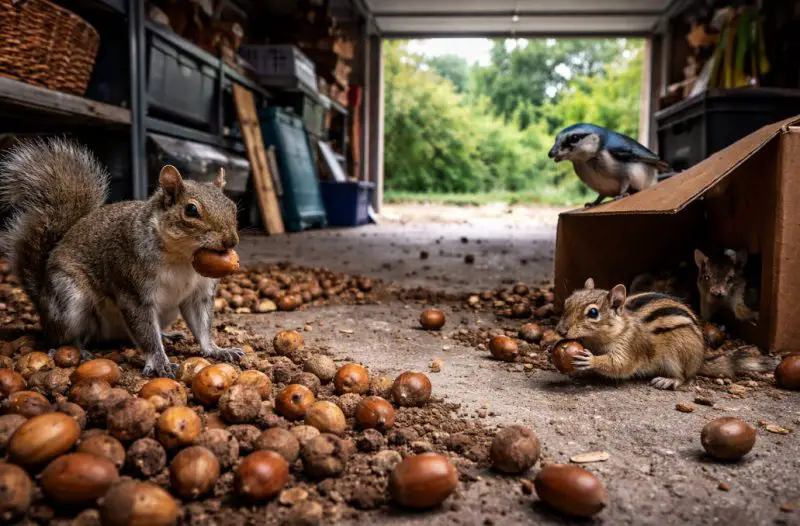
In Pennsylvania, one of the most common explanations for acorns appearing inside garages is squirrel food-storage behavior. Squirrels naturally collect and hide nuts to prepare for times when food becomes scarce. This survival strategy allows them to access stored nutrition during colder months or periods when natural food sources decline.
Squirrels do not always remember every location where they hide food. Instead, they scatter caches across multiple areas to increase survival chances. A garage offers conditions that many squirrels find appealing. It provides shelter from rain, stable temperatures, and relative safety from predators. These factors make it an attractive storage location compared with exposed outdoor ground.
Once a squirrel identifies a secure indoor space, it often returns repeatedly. Over days or weeks, the accumulation becomes noticeable. What seems sudden to a homeowner is usually the result of gradual activity occurring unnoticed.
How squirrels get inside garages
Garages often contain small openings that are easy for wildlife to exploit. Even well-maintained homes can develop gaps over time due to weathering, structural settling, or normal wear. Squirrels are persistent climbers capable of squeezing through surprisingly small spaces.
Typical access points include small gaps along garage door seals, roofline openings, ventilation gaps, or loose siding panels. Squirrels also use overhanging tree branches as bridges to reach roofs or upper walls. Once inside, they quickly identify quiet storage areas such as shelving units, boxes, insulation pockets, or rarely used corners.
Because squirrels are mostly active during daylight hours, homeowners sometimes hear faint scratching, movement, or brief scurrying sounds. These subtle noises often go unnoticed until food items like acorns begin appearing regularly.
Why acorns specifically
Acorns serve as one of the most valuable natural food sources for squirrels in Pennsylvania. Oak trees are widespread throughout the state, producing abundant nuts each autumn. Acorns offer several advantages for wildlife survival. They store well, resist rapid spoilage, and contain fats, carbohydrates, and proteins essential for energy.
Their durability makes them ideal for long-term storage compared with softer fruits or seeds. Wildlife instinctively prioritizes such foods when preparing for colder seasons. Garages located near oak trees naturally experience higher chances of acorn storage simply because the food source is nearby.
Even when winter conditions are mild, squirrels continue caching behavior due to instinct rather than immediate necessity. This explains why acorns may appear outside traditional fall months.
Chipmunks Also Store Acorns Indoors
Ground-dwelling hoarders
Chipmunks represent another frequent but less obvious source of indoor acorn accumulation. These smaller rodents share the same survival instinct of gathering and storing food, but their storage style differs from squirrels. Instead of scattering individual caches widely, chipmunks often create centralized food chambers within burrows or sheltered spaces.
Garages provide dry, protected conditions ideal for such storage. Chipmunks may exploit foundation gaps, wall voids, stacked materials, or quiet corners to create hidden food caches. Their smaller size allows them to enter through openings that might exclude larger animals.
Because chipmunks tend to move quickly and quietly, homeowners may not notice their activity until substantial food accumulation occurs.
Signs chipmunks are responsible
Several clues may indicate chipmunk involvement. Acorns often appear in tidy piles rather than scattered randomly. Small burrow openings near garage foundations may also be visible. Rapid darting movements when the garage door opens sometimes reveal their presence.
Their scratching sounds are typically softer and less sustained than those produced by squirrels. Observing these subtle differences can help identify the responsible species more accurately.
Mice and Rats Collect Acorns Too
Rodent survival strategies
Mice and rats also gather nuts and seeds opportunistically. While they typically focus on grains, human food scraps, or smaller seeds, acorns provide concentrated nutrition that supports survival in colder conditions. Garages offer protection from predators and weather extremes, encouraging rodents to store food there.
Unlike squirrels or chipmunks, rodents may transport smaller quantities at a time. This results in gradual accumulation rather than sudden piles. Over weeks, scattered acorns may appear in multiple locations.
Rodents are particularly attracted to cluttered storage areas where hiding spaces are plentiful. Boxes, insulation materials, and stored equipment provide both shelter and protection for food caches.
Additional warning signs
Rodent activity often produces additional evidence beyond acorns. Droppings, gnawed materials, chewed packaging, or disturbed insulation may accompany food storage behavior. Electrical wiring damage is another potential concern because rodents chew continuously to maintain their teeth.
If such signs appear alongside acorns, addressing rodent access promptly becomes important for both property protection and sanitation.
Birds Can Also Drop Acorns
Jays and crows
Certain bird species in Pennsylvania, especially blue jays and crows, actively collect acorns. These birds store nuts in multiple locations to support winter survival. Their aerial movement allows them to transport acorns considerable distances.
Sometimes birds accidentally drop acorns while flying, landing, or adjusting grip. Open garage doors or nearby roof structures may become unintended drop zones. Although less common than mammal storage, bird involvement explains some scattered acorn appearances.
Birds occasionally drop nuts intentionally onto hard surfaces to crack them open. Roof edges, nearby branches, or even garage rafters may serve as drop points. If the shell does not break successfully, the bird may abandon it.
This behavior typically produces scattered acorns rather than organized piles. Observing rooflines or nearby perching spots may clarify whether birds are involved.
Seasonal Factors in Pennsylvania
Fall acorn abundance
Autumn represents peak acorn production season. Oak trees produce large quantities, triggering intense gathering activity among wildlife. Garages near wooded areas often experience increased food storage attempts during this period.
Wildlife behavior during fall is strongly driven by preparation for winter. Even suburban environments become part of natural food storage networks.
Winter preparation instinct
Animals respond to decreasing daylight and cooler temperatures by increasing food storage efforts. This instinct persists regardless of whether winter proves severe or mild. Garages provide consistent shelter that enhances survival prospects.
This instinctual preparation explains why caching sometimes begins earlier than expected or continues beyond fall months.
Spring rediscovery
Stored acorns occasionally reappear when animals revisit caches or when homeowners move stored items during cleaning. What seems like a new intrusion may actually be food stored months earlier. Seasonal cleaning often reveals hidden caches.
Why It Feels Mysterious
Hidden activity patterns
Many wildlife species operate quietly and often during nighttime or low-activity periods. Homeowners rarely witness the actual storage events. The sudden discovery of acorns creates confusion because the cause was never observed directly.
Understanding wildlife habits helps demystify the situation.
Gradual accumulation
Food storage typically occurs incrementally. A few acorns each day may go unnoticed until the total becomes significant. Once noticed, it appears sudden even though the process developed gradually.
Are Acorns in the Garage Dangerous?
Mostly harmless but inconvenient
Acorns themselves pose little direct risk. However, wildlife presence associated with them can lead to property concerns such as insulation disturbance, structural gnawing, or sanitation issues.
Addressing access points prevents escalation.
Mold or insect issues
Large acorn accumulations in humid environments may attract insects or develop mold. Routine cleaning and proper ventilation reduce these risks effectively.
Identifying the Exact Culprit
Motion cameras
Installing a motion-activated camera often provides definitive identification. Both daytime and nighttime monitoring can reveal patterns of activity and responsible species.
Observation reduces unnecessary guesswork.
Track and sign analysis
Footprints, droppings, nesting materials, and chew marks provide valuable clues. Each species leaves distinctive evidence that helps narrow identification. Careful inspection often clarifies the source.
Preventing Acorn Intrusion
Seal entry points
Closing small gaps around garage doors, vents, and structural seams prevents wildlife access. Weather stripping, sealing compounds, and structural maintenance are effective long-term solutions.
Manage nearby oak trees
Regular removal of fallen acorns reduces attractants. Trimming branches away from roofs limits wildlife access pathways. Yard maintenance plays an important preventive role.
Store items securely
Organized storage reduces hiding spots for wildlife. Using sealed containers rather than open boxes discourages caching behavior inside garages.
Humane Wildlife Deterrence
Non-lethal methods
Motion lighting, noise deterrents, scent repellents, and physical barriers can reduce wildlife visits without causing harm. These approaches support responsible coexistence.
Professional wildlife services
Persistent problems sometimes require expert evaluation. Wildlife professionals can implement humane exclusion strategies that protect both property and animals.
Living With Pennsylvania Wildlife
Natural coexistence
Pennsylvania’s mix of forests, suburbs, and rural landscapes supports diverse wildlife populations. Occasional interaction with homes is normal. Understanding animal behavior promotes peaceful coexistence.
Education reduces frustration
Knowing why acorns appear inside garages transforms a puzzling situation into a manageable one. Simple preventive steps usually resolve the issue without major intervention.
Wildlife behavior rarely indicates aggression. It typically reflects basic survival instincts responding to available food and shelter.
FAQs About Acorns Appearing in Garages
Are squirrels usually responsible?
Yes, most commonly.
Could birds drop them?
Occasionally.
Are chipmunks common culprits?
Yes, especially near foundations.
Should I worry about rodents?
Only if other signs appear.
Is this seasonal?
Often strongest in fall.
Will it stop naturally?
Usually after food sources decline.
Do garages attract wildlife?
Yes, due to shelter and safety.
Can pets deter animals?
Sometimes, but not reliably.
Should I remove acorns quickly?
Yes, to reduce attractants.
Is professional help necessary?
Only for persistent infestations.
Conclusion
Acorns appearing inside Pennsylvania garages usually result from natural wildlife hoarding behavior rather than anything unusual or threatening. Squirrels, chipmunks, rodents, and occasionally birds transport nuts to sheltered locations for storage or feeding.
By sealing entry points, managing nearby food sources, and maintaining organized storage spaces, homeowners can significantly reduce the likelihood of recurring acorn deposits. Understanding wildlife habits turns a puzzling situation into a predictable and manageable part of living in a region rich with natural biodiversity.