
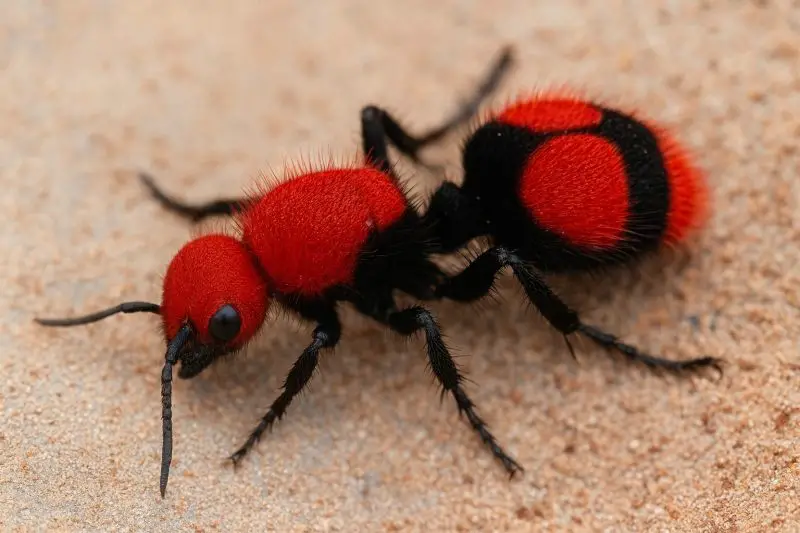
Velvet ants are one of those insects that instantly grab attention. Their bright colors, fuzzy bodies, and quick movements make them stand out in yards, parks, and natural areas across Alabama. Despite the name, they are not ants at all. They are solitary wasps with a famously painful sting.
People often first notice them during warm months when outdoor activity increases. A sudden encounter can be startling, especially when the insect looks unfamiliar or unusually bold. Stories about their sting spread quickly, sometimes exaggerating the danger while overlooking the fascinating biology behind it.
Understanding what velvet ants are, why their sting feels so intense, and how they behave helps reduce unnecessary fear. Knowledge also makes outdoor activities safer and encourages respectful coexistence with local wildlife.
Table of Contents
- 1 What Exactly Is a Velvet Ant
- 2 Velvet Ant Presence in Alabama
- 3 Why Their Sting Hurts So Much
- 4 Defensive Behavior Rather Than Aggression
- 5 Why Encounters Seem Sudden
- 6 Habitat Conditions That Support Velvet Ants
- 7 Ecological Role of Velvet Ants
- 8 Are Velvet Ant Stings Dangerous
- 9 Comparing Velvet Ant Stings With Other Insects
- 10 Common Misconceptions About Velvet Ants
- 11 Safety Tips for Avoiding Stings
- 12 What To Do If Stung
- 13 Seasonal Activity Patterns in Alabama
- 14 Why Education Reduces Fear
- 15 Wildlife Awareness in Alabama Landscapes
- 16 Long-Term Coexistence With Velvet Ants
- 17 FAQs About Velvet Ant Stings in Alabama
- 17.1 Are velvet ants really ants?
- 17.2 Why does a velvet ant sting hurt so much?
- 17.3 Are velvet ant stings dangerous to humans?
- 17.4 Do velvet ants attack people intentionally?
- 17.5 Where are velvet ants commonly found in Alabama?
- 17.6 Can velvet ants infest homes?
- 17.7 What should I do if I get stung?
- 17.8 How can I avoid velvet ant stings?
- 18 Final Thoughts
What Exactly Is a Velvet Ant
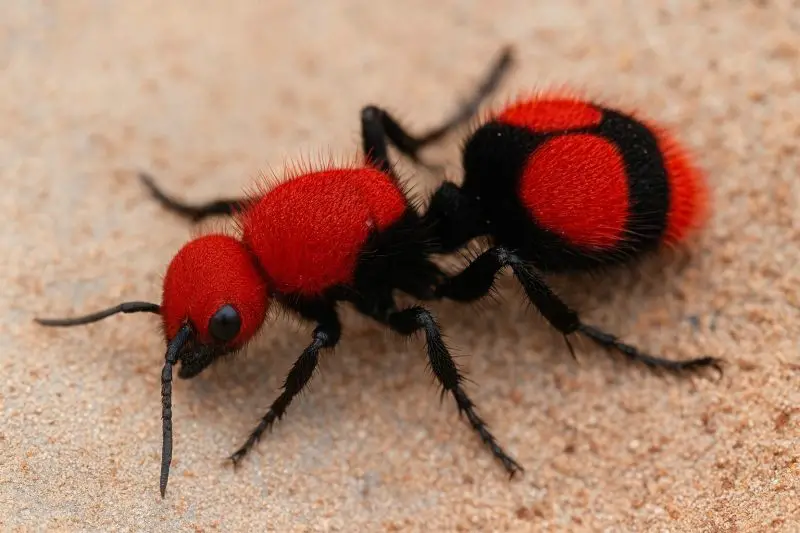
Velvet ants belong to the wasp family Mutillidae. The females are wingless and covered with dense, velvety hair that gives them their common name. Their appearance closely resembles large ants, but their biology is entirely different. Males usually have wings and look more like traditional wasps, though they cannot sting.
These insects live solitary lives rather than forming colonies. Each female operates independently, searching for nests of other ground-nesting insects where she lays her eggs. The developing larvae use the host nest resources for growth. This parasitic lifestyle helps regulate other insect populations naturally.
Their bright coloration serves as a warning signal to predators. Reds, oranges, whites, and blacks often appear in striking patterns. This coloration, combined with chemical defenses and a tough outer body, discourages predators from attempting to eat them.
Velvet Ant Presence in Alabama
Alabama’s warm climate and varied ecosystems provide suitable conditions for velvet ants. They are most often found in open sunny habitats with sandy or loose soil where ground-nesting bees and wasps thrive.
Typical environments include rural fields, woodland edges, coastal plain habitats, gardens, and lightly developed suburban areas. They are primarily outdoor insects and rarely establish indoor populations. Encounters usually involve a single wandering female rather than any sort of infestation.
Sightings tend to peak during late spring through early fall when temperatures rise and host insects are most active. Even then, many residents never encounter one, which contributes to the surprise factor when they do appear.
Why Their Sting Hurts So Much
The velvet ant sting is widely considered one of the more painful insect stings in North America. Several biological factors explain this intense sensation.
First, the female’s stinger is relatively long compared with her body size. This allows effective venom delivery if she feels threatened. Second, the venom composition triggers strong nerve responses, creating immediate sharp pain. Third, velvet ants sting strictly for defense, so when they do sting, the response tends to be forceful.
People commonly describe the sensation as burning, electric, or shock-like. Pain usually peaks quickly and gradually fades over time. While uncomfortable, serious medical complications are uncommon unless someone has venom allergies.
Defensive Behavior Rather Than Aggression
Velvet ants do not actively seek out people. Most stings occur when someone accidentally touches one, steps on it, or attempts to handle it. Their natural instinct is avoidance rather than confrontation.
Before stinging, they often rely on warning strategies. Bright coloration signals danger visually. Some species produce faint squeaking sounds when disturbed. Rapid movement away from threats is common. Stinging generally happens only when escape options disappear.
Because females cannot fly, they depend heavily on these defensive adaptations. The sting compensates for their lack of wings, helping them survive encounters with predators.
Why Encounters Seem Sudden
Many Alabama residents report seeing velvet ants “out of nowhere.” Several factors contribute to this perception.
Seasonal warmth increases insect activity overall. More outdoor recreation, gardening, and landscaping also raise the likelihood of noticing them. A single insect wandering through a yard can create the impression of a sudden appearance even if only one individual is present.
Habitat disturbance plays a role as well. Soil digging, construction, or landscaping may temporarily expose insects that were previously unnoticed. These brief appearances do not necessarily indicate population growth.
Habitat Conditions That Support Velvet Ants
Velvet ants prefer environments that support ground-nesting bees and wasps. Without those host species, their reproductive cycle cannot continue.
Loose sandy soil, warm temperatures, abundant flowering plants, and minimal soil disturbance create favorable conditions. Alabama’s coastal plains, grasslands, and woodland edges provide many such habitats.
Natural landscapes tend to support these insects more than highly urbanized areas. However, suburban gardens that mimic natural conditions may occasionally attract them.
Ecological Role of Velvet Ants
Despite their intimidating reputation, velvet ants contribute positively to ecosystems. Their parasitic relationship with certain bees and wasps helps maintain balance among insect populations.
Adult velvet ants feed mainly on nectar. During this stage they may contribute modestly to pollination. While not primary pollinators, they still participate in ecological cycles that support plant diversity.
Their presence usually indicates healthy natural environments rather than pest outbreaks. Balanced ecosystems include a variety of insect species, each playing a small but meaningful role.
Are Velvet Ant Stings Dangerous
For most people, velvet ant stings are painful but not medically dangerous. Typical reactions include localized pain, redness, swelling, and temporary discomfort.
Severe allergic reactions remain possible but rare. Individuals with known insect venom allergies should take precautions when outdoors, especially in warm months. Symptoms such as difficulty breathing, extensive swelling, or dizziness warrant immediate medical attention.
In the vast majority of cases, the pain subsides without lasting effects. The intensity often sounds more alarming than the actual medical risk.
Comparing Velvet Ant Stings With Other Insects
Pain perception varies widely, but many compare velvet ant stings to those from wasps, hornets, or fire ants. Some entomologists rank them high on insect sting pain scales due to immediate intensity.
Unlike social wasps, velvet ants are solitary. This means multiple stings from the same insect are unlikely unless repeated handling occurs. Avoiding contact virtually eliminates risk.
Understanding this distinction helps reduce exaggerated fears about widespread danger.
Common Misconceptions About Velvet Ants
One persistent myth claims velvet ants can kill cows. The nickname “cow killer” refers only to sting intensity, not actual lethality. There is no evidence they harm livestock significantly.
Another misconception suggests they infest homes. Velvet ants are outdoor insects and rarely establish indoor populations. Occasional indoor sightings usually involve accidental entry.
Some people assume they are aggressive. Scientific observation consistently shows defensive behavior rather than proactive attack.
Safety Tips for Avoiding Stings
Simple precautions significantly reduce sting risk. Wearing closed-toe shoes outdoors, especially in sandy areas, helps prevent accidental stepping. Gloves during gardening add protection.
Avoid picking up unfamiliar insects. Teach children to observe wildlife without touching. Checking outdoor seating or equipment before use can prevent accidental contact.
Awareness rather than fear is the most effective prevention strategy.
What To Do If Stung
If a sting occurs, staying calm helps. Cleaning the area with soap and water reduces irritation. Applying a cold compress can ease swelling. Over-the-counter pain relief may help manage discomfort.
Avoid scratching the area to prevent further irritation. Monitoring for allergic symptoms is important, though serious reactions are uncommon. Most stings resolve naturally with minimal intervention.
Knowing basic first aid reduces anxiety following an encounter.
Seasonal Activity Patterns in Alabama
Velvet ants become more visible during warm months when insect activity peaks. Late spring through early fall tends to produce the most sightings.
Summer heat encourages movement as insects search for host nests and nectar sources. Dry sandy soils common in parts of Alabama provide ideal conditions for both velvet ants and their hosts.
Winter sightings are rare because cooler temperatures reduce insect activity significantly.
Why Education Reduces Fear
Unfamiliar insects often trigger stronger emotional reactions than actual risk warrants. Understanding velvet ant biology helps replace fear with informed awareness.
Education also promotes conservation. Many insects serve ecological functions that benefit agriculture, plant diversity, and overall environmental stability. Recognizing their role encourages balanced coexistence.
Knowledge transforms surprise into curiosity rather than anxiety.
Wildlife Awareness in Alabama Landscapes
Alabama’s climate supports rich biodiversity. Insects, reptiles, birds, and mammals all interact within complex ecosystems. Occasional encounters with unfamiliar species are part of living in such environments.
Outdoor awareness helps residents enjoy nature safely. Observing wildlife respectfully allows appreciation without unnecessary risk. Most species prefer avoidance over confrontation.
This perspective supports both personal safety and ecological health.
Long-Term Coexistence With Velvet Ants
Velvet ants rarely require control measures. Because they are solitary and beneficial, eradication efforts are usually unnecessary. Maintaining awareness, minimizing accidental contact, and preserving natural habitats support coexistence.
Balanced ecosystems benefit from diverse insect populations. Even species with defensive stings contribute to ecological stability. Understanding their place in nature helps maintain perspective.
Respect, awareness, and education remain the most effective tools for living comfortably alongside Alabama’s wildlife.
FAQs About Velvet Ant Stings in Alabama
Are velvet ants really ants?
No. Velvet ants are actually solitary wasps in the Mutillidae family. Females lack wings and resemble ants, which causes the common name.
Why does a velvet ant sting hurt so much?
Their venom strongly stimulates nerve endings, and females deliver a firm defensive sting when threatened. This combination creates intense but usually short-lived pain.
Are velvet ant stings dangerous to humans?
For most people, the sting is painful but not medically dangerous. Severe allergic reactions are rare but possible, so medical attention is recommended if symptoms escalate.
Do velvet ants attack people intentionally?
No. They sting only in defense, typically when stepped on, touched, or accidentally handled.
Where are velvet ants commonly found in Alabama?
They often appear in sandy soils, gardens, woodland edges, rural landscapes, and open sunny areas where ground-nesting insects live.
Can velvet ants infest homes?
They rarely live indoors. Most sightings involve a single wandering insect rather than an infestation.
What should I do if I get stung?
Clean the area, apply a cold compress, and monitor symptoms. Seek medical help if allergic reactions such as breathing difficulty or severe swelling occur.
How can I avoid velvet ant stings?
Wear shoes outdoors, avoid handling unfamiliar insects, use gloves while gardening, and stay aware in sandy or natural areas.
Final Thoughts
Velvet ants in Alabama may look intimidating, and their sting certainly commands respect. Yet they are not aggressive pests or widespread threats. They are solitary wasps playing a modest ecological role while relying on defensive adaptations for survival.
Learning why their sting hurts so much, where they live, and how they behave helps replace exaggerated fears with realistic understanding. Most encounters can be avoided easily with simple awareness.
Outdoor life in Alabama brings occasional surprises. When those surprises include velvet ants, knowledge allows safe coexistence while appreciating the remarkable diversity of the natural world.