
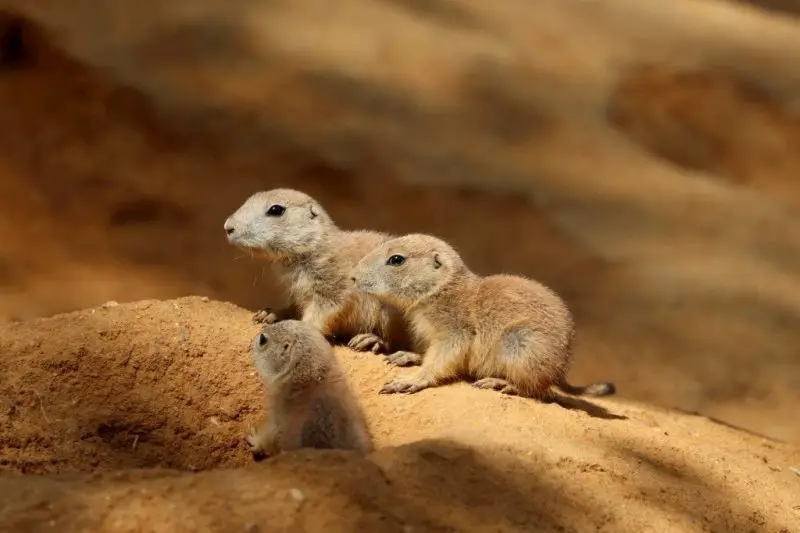
While Utah is home to a wide range of remarkable animals, prairie dogs remain uniquely impressive for their intelligence, social complexity, and sophisticated communication. At first glance, they may look like simple burrowing rodents popping in and out of holes, but if you watch closely, you’ll quickly realize there’s a lot more happening below the surface. Utah prairie dogs live in tight-knit communities, rely on complex cooperation, and most impressively, use an incredibly advanced communication system that scientists continue to study and admire.
Communication isn’t just helpful for them — it is the foundation of their survival. From warning calls and body language to group interactions, emotional expressions, and even what could be described as “conversation,” prairie dogs constantly talk to one another in ways that feel surprisingly sophisticated. Their voices help protect their families, organize daily life, build social structure, and strengthen bonds throughout their colonies.
This detailed, reader-friendly guide explores interesting things Utah prairie dogs do to communicate, revealing how they send messages, warn of danger, maintain close relationships, and function as one of North America’s most extraordinary talking animals.
Table of Contents
- 1 Utah Prairie Dogs Live in Social Worlds Built on Communication
- 2 Their Famous “Bark” Is Actually a Highly Detailed Warning System
- 3 Body Language Plays a Huge Role in Communication
- 4 Prairie Dogs Have “Conversation-Like” Interactions
- 5 Social Greetings Are Surprisingly Affectionate
- 6 Young Prairie Dogs Learn Communication From Their Families
- 7 Prairie Dogs Use Communication to Organize Their Towns
- 8 Alarm Calls Don’t Just Warn — They Help Teach
- 9 Prairie Dogs Even Communicate During Play
- 10 Communication Helps Utah Prairie Dogs Balance Fear and Confidence
- 11 Prairie Dogs Detect Human Behavior and React Differently
- 12 Communication Strengthens Emotional Bonds Within the Colony
- 13 Prairie Dogs Play a Huge Role in Utah Ecosystems — And Communication Helps Them Do It
- 14 Frequently Asked Questions About Utah Prairie Dog Communication
- 15 Final Thoughts
Utah Prairie Dogs Live in Social Worlds Built on Communication
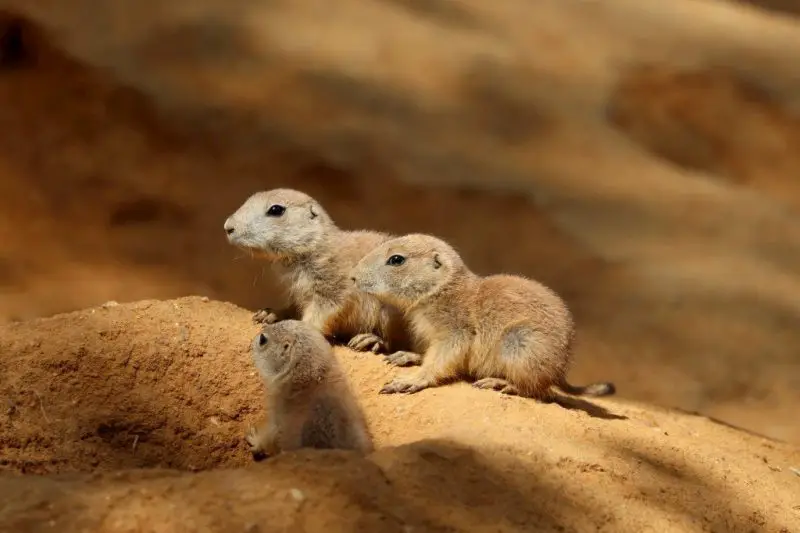
Prairie dogs don’t live solitary lives. They live in communities — often called towns — made up of multiple family groups. Within those groups, everything depends on communication.
They communicate to:
-
Warn each other of danger
-
Maintain social relationships
-
Coordinate behavior
-
Claim territory
-
Raise young
-
Prevent chaos
Without constant communication, prairie dog society would collapse. Instead, these animals thrive because they are always talking, always listening, and always responding.
Their Famous “Bark” Is Actually a Highly Detailed Warning System
Most people expect prairie dogs to make simple squeaks. In reality, their vocal language is much more advanced. Utah prairie dogs use a series of barking calls, chirps, and rapid sounds to alert others about danger. These alarm calls aren’t vague — they can be incredibly specific.
Their calls can indicate details like:
-
Type of predator (hawk, dog, coyote, human)
-
Direction of threat
-
Level of urgency
-
How quickly others should react
Researchers studying prairie dogs have found strong evidence that their alarm system contains descriptive information. In simple terms, prairie dogs don’t just say “danger.” They may be saying something closer to “big, fast predator approaching from the north — hide now.”
This detailed alert system gives other prairie dogs precious seconds to escape into burrows, saving countless lives.
Body Language Plays a Huge Role in Communication
Prairie dogs communicate not only with sound but also through expressive body language. Their posture, tail movement, and physical gestures help convey emotional states, warnings, and intentions.
Examples include:
-
Standing tall to signal attention
-
Tail flicking as a sign of alertness
-
Sudden freezing to indicate danger
-
Relaxed posture when the area feels safe
Their ability to combine sound and movement creates a layered communication system, similar to how humans use both speech and gestures.
Prairie Dogs Have “Conversation-Like” Interactions
If you’ve ever watched Utah prairie dogs up close, you may notice they don’t just bark once and move on. They often respond to each other, exchange sounds back and forth, and engage in vocal sequences that resemble conversations.
These exchanges may:
-
Reinforce social bonds
-
Clarify warning calls
-
Coordinate group decisions
-
Maintain emotional connection
Scientists studying prairie dogs believe they may have one of the most complex communication systems ever documented in a non-primate mammal. Their “conversations” suggest intelligence, awareness, and social sophistication.
Social Greetings Are Surprisingly Affectionate
Utah prairie dogs don’t just communicate for survival — they communicate for connection. One of the cutest and most interesting forms of prairie dog communication is their greeting behavior. Sometimes called “prairie dog kisses,” these moments involve two prairie dogs touching noses or even teeth gently.
These greetings serve multiple purposes:
-
Confirm identity
-
Build trust
-
Reinforce bonds
-
Reduce tension
-
Strengthen family ties
It’s not simply affection; it’s social maintenance. Greetings ensure harmony inside the colony and help keep relationships stable.
Young Prairie Dogs Learn Communication From Their Families
Communication in prairie dogs isn’t completely instinctive. Much of it is learned through experience and social interaction. Young prairie dogs grow up surrounded by constant vocalizations, warnings, greetings, and calls. Over time, they learn:
-
What different alarm calls mean
-
How to respond correctly
-
When to warn others
-
How to greet appropriately
-
Where they fit socially
This kind of learned communication closely mirrors how human children learn language through repeated exposure and interaction with their families.
Prairie Dogs Use Communication to Organize Their Towns
Prairie dog colonies aren’t random clusters of animals. They are organized neighborhoods made up of smaller family units. Communication helps maintain order across these groups.
They use sound and movement to:
-
Claim burrow spaces
-
Avoid territorial conflicts
-
Coordinate group movement
-
Establish boundaries
Without communication, large prairie dog towns would turn chaotic. Instead, communication allows them to live peacefully in structured, functioning communities.
Alarm Calls Don’t Just Warn — They Help Teach
When a prairie dog gives an alarm call, it’s not only protecting others in the moment. It’s also teaching younger individuals what danger looks and sounds like.
Over time:
-
Young prairie dogs learn predator recognition
-
Develop faster responses
-
Gain survival instincts
-
Understand colony expectations
This passing of knowledge through communication ensures each new generation remains alert and prepared for life in the wild.
Prairie Dogs Even Communicate During Play
Watch a group of young Utah prairie dogs and you’ll notice constant chattering, squeaking, and body gestures during playtime. Play isn’t meaningless; it’s practice.
During play, they:
-
Learn social rules
-
Practice communication sounds
-
Build relationships
-
Develop coordination
Play communication strengthens group bonds and prepares prairie dogs for adult social life.
Communication Helps Utah Prairie Dogs Balance Fear and Confidence
Living above ground in open landscapes is dangerous, but prairie dogs survive because their communication system allows them to be alert without constant panic.
Their vocal and visual systems help them:
-
Detect danger early
-
Return to normal quickly after threats
-
Maintain social calm
-
Prevent unnecessary stress
If every rustle of wind caused blind panic, prairie dogs wouldn’t survive. Communication helps them judge risk accurately and respond appropriately.
Prairie Dogs Detect Human Behavior and React Differently
Another fascinating communication trait is how prairie dogs respond differently depending on the type of human nearby.
They may react one way to hikers, another way to bikers, and a different way to someone approaching slowly. Their alarm calls and reactions shift based on perceived risk. This suggests environmental awareness and flexible communication — both signs of impressive intelligence.
Communication Strengthens Emotional Bonds Within the Colony
Prairie dogs don’t live mechanical lives. Their communication shows emotional depth.
Through sound and interaction, they:
-
Comfort each other
-
Express excitement
-
Reduce fear
-
Maintain group unity
Their social worlds are full of emotion and connection. Communication isn’t simply noise — it’s the core of their community.
Prairie Dogs Play a Huge Role in Utah Ecosystems — And Communication Helps Them Do It
By communicating effectively, prairie dogs maintain stable colonies that support many other species. Their burrows provide homes for insects, reptiles, birds, and mammals. Their foraging patterns affect plant growth. Their alert systems even indirectly warn other animals of predators.
Communication allows prairie dogs to survive — and in doing so, they help entire ecosystems thrive.
Frequently Asked Questions About Utah Prairie Dog Communication
Do prairie dogs really “talk” to each other?
Yes, prairie dogs use complex vocalizations and body language that scientists compare to advanced communication systems.
Can prairie dogs describe predators?
Research suggests their alarm calls can indicate predator type, direction, and urgency.
Do prairie dogs only chirp when scared?
No. They also communicate for social bonding, greetings, and daily interaction.
Why do prairie dogs kiss?
It’s a greeting behavior that strengthens bonds and confirms identity.
Do young prairie dogs learn communication?
Yes, much of their communication skill develops through observation and social experience.
Are prairie dogs intelligent?
Absolutely. Their communication abilities demonstrate strong cognitive and social intelligence.
Final Thoughts
The interesting things Utah prairie dogs do to communicate reveal a world that is far richer and more complex than most people ever imagine. These small animals live in tight-knit societies built on trust, learning, teamwork, and constant conversation. Their communication keeps them safe, binds their families together, builds emotional connection, and shapes entire prairie dog towns.
Next time you see a prairie dog pop out of its burrow or hear a chorus of chirps across a Utah field, remember — you’re not just witnessing noise or random behavior. You’re hearing conversations, warnings, greetings, lessons, emotions, and community life unfolding in one of North America’s most extraordinary animal societies.
Their voices tell the story of survival, intelligence, and connection — proving that even the smallest desert residents have a lot to say.