
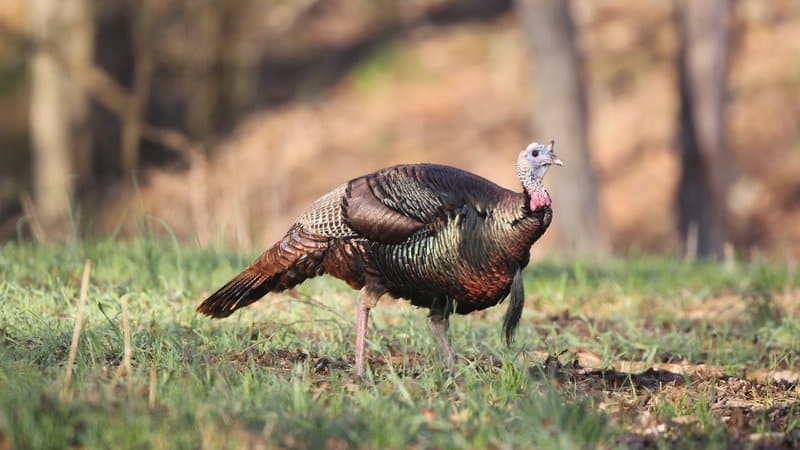
Wild turkeys are well known across the United States, but the birds roaming Florida’s subtropical landscapes are uniquely adapted, surprisingly intelligent, and far more complex than most people realize. Florida is one of only a few places where two wild turkey subspecies coexist—the Eastern turkey in the Panhandle and the Osceola turkey throughout the peninsula. These birds thrive in ecosystems ranging from pine flatwoods and wet prairies to cypress swamps, oak hammocks, and the Everglades themselves.
Their bold posture, iridescent feathers, and thunderous gobbles make them unmistakable icons of the Sunshine State, yet their biology reveals extraordinary traits hidden beneath the familiar image. From navigating wetlands to detecting predators with stunning accuracy, wild turkeys in Florida display adaptations shaped by humid summers, tropical storms, waterlogged soils, and diverse predators.
Here are nine astonishing facts about wild turkeys in Florida that showcase their intelligence, resilience, and ecological importance.
Table of Contents
- 1 1. Florida Turkeys Navigate Swamps and Wetlands With Expert Precision
- 2 2. Florida Is Home to the Rare and Highly Unique Osceola Turkey
- 3 3. Turkeys in Florida See Nearly 360 Degrees With Superior Detection Skills
- 4 4. Turkeys Thrive in Florida by Eating One of the Widest Diets of Any Bird
- 5 5. Turkeys Use Florida’s Tall Pines, Oaks, and Cypress Trees as Essential Roosts
- 6 6. Florida Turkeys Depend on Complex Social Structures
- 7 7. Florida Turkeys Face Unique Predators Not Found Elsewhere
- 8 8. Turkeys Adjust Their Daily Behavior to Florida’s Heat and Storm Seasons
- 9 9. Turkeys in Florida Play a Key Role in Maintaining Healthy Ecosystems
- 10 FAQs About Wild Turkeys in Florida
- 10.1 Are Osceola turkeys only found in Florida?
- 10.2 Where can I see wild turkeys in Florida?
- 10.3 Do wild turkeys migrate in Florida?
- 10.4 Are turkeys dangerous?
- 10.5 What do turkey poults eat in Florida?
- 10.6 Can turkeys swim?
- 10.7 What predators hunt turkeys in Florida?
- 10.8 Do turkeys roost in cypress trees?
- 11 Conclusion
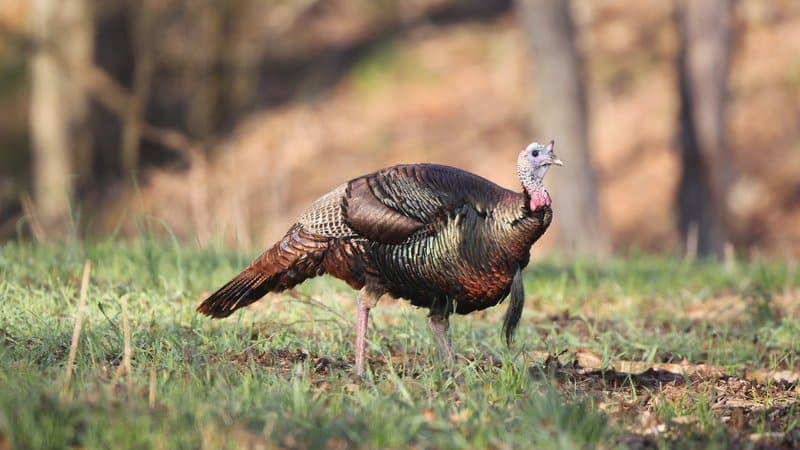
Their Foot Structure Helps Them Move Through Mud and Water
Unlike turkeys in drier states, Florida turkeys regularly travel through marsh edges, cypress knees, sawgrass plains, and palmetto thickets. Their long, widely spaced toes help distribute weight, reducing the chance of sinking into wet soils.
In the Everglades or Big Cypress region, turkeys often wade through shallow water to access food patches or escape predators.
This capability sets them apart from many upland bird species.
These adaptations allow them to thrive across Florida’s complex hydrological landscapes.
They Use Elevated Ridges and Hammocks as Travel Corridors
Wild turkeys learn the locations of dry ground—hammocks, pine islands, and slight rises invisible to casual observers. These “islands” become essential feeding and roosting sites.
Generations of turkeys follow these routes, passing down knowledge through familial groups.
This fine-scale terrain memory supports survival in a landscape shaped by seasonal flooding.
Seasonal Floods Shape Their Movement Patterns
Florida’s wet season restricts movement, forcing turkeys to concentrate on high ground. In the dry season, movement expands into grassy prairies and savannas.
Their internal map of water levels helps them adjust daily routes and roosting decisions.
This wet–dry adaptation distinguishes Florida turkeys from populations elsewhere in the country.
2. Florida Is Home to the Rare and Highly Unique Osceola Turkey
Osceola Turkeys Exist Only in Florida
The Osceola, or Florida turkey, is found nowhere else on Earth. Its range covers the peninsula south of the Suwannee River, including Orlando, Tampa Bay, Ocala, and South Florida’s wilderness areas.
Its isolation makes it a prized subspecies among wildlife biologists.
This exclusivity contributes to Florida’s reputation as one of the most biologically unique states.
They Are Slimmer and Darker Than Eastern Turkeys
Osceolas have darker wings, longer legs, and glossy bronze plumage with a greenish sheen. Their wing feathers carry narrower white bars compared with the Eastern subspecies.
These physical distinctions reflect adaptations to humid forests and dense understory vegetation.
The Osceola is considered one of the most visually striking turkey subspecies.
They Are Known for Exceptional Wariness
Florida hunters often describe Osceolas as the most challenging turkeys to pursue. Dense vegetation, unpredictable movement routes, and heightened alertness make them incredibly wary.
This reputation comes from centuries of adapting to predators like panthers, bobcats, and coyotes.
Their wariness is one reason they remain genetically distinct and ecologically resilient.
3. Turkeys in Florida See Nearly 360 Degrees With Superior Detection Skills
Their Monocular Vision Covers Most of Their Surroundings
Turkeys possess one of the widest visual fields of any bird. In Florida’s dense woods, this panoramic vision is essential to detect predators moving silently through palmetto thickets or cypress stands.
They can recognize subtle color contrast and motion with astounding accuracy.
This visual acuity explains why they seem nearly impossible to approach.
They Use Their Vision to Spot Snakes and Ground Predators
Florida is home to numerous snake species—cottonmouths, rattlesnakes, indigo snakes—and turkeys frequently scan the forest floor for movement or shape patterns.
They can distinguish serpentine motion within seconds.
This snake awareness is vital in flooded or low-visibility habitats.
UV Vision Helps Them Interpret Their Environment
Turkeys perceive UV light, allowing them to detect feather signals from other turkeys, track predator movement, and navigate changes in sunlight filtering through Spanish moss and canopy gaps.
This sensory advantage supports communication and survival.
Florida’s bright sun enhances the effectiveness of this visual adaptation.
4. Turkeys Thrive in Florida by Eating One of the Widest Diets of Any Bird
They Are Opportunistic Foragers
Florida ecosystems offer a vast array of foods—white oak acorns, cabbage palm seeds, berries, grass seeds, crabs, snails, spiders, and even small amphibians.
Turkeys adapt their diet to whatever the season provides.
This flexibility ensures survival through hurricanes, droughts, or flooding events.
Poults Depend on Insects for Rapid Growth
During their first weeks, turkey poults feed heavily on insects—grasshoppers, beetles, ants, and small crustaceans—found abundantly in Florida’s moist vegetation.
Protein-rich diets fuel fast development.
This early dietary shift helps poults survive against Florida’s abundant predators.
Seasonal Diets Shift With Water Levels
When summer rains arrive, turkeys move to uplands for seeds and fruits. In the dry season, they return to open prairies to feed on grasshoppers and ground-dwelling insects.
Their diet reflects constant adaptation to water fluctuations.
This seasonal adjustment supports year-round survival in Florida’s climate.
5. Turkeys Use Florida’s Tall Pines, Oaks, and Cypress Trees as Essential Roosts
They Roost in High Branches for Safety
Turkeys fly into tall trees—slash pines, live oaks, cypress, and even Australian pines—to avoid bobcats, coyotes, and panthers.
Roost trees must be strong enough to support multiple birds and positioned away from standing water.
Their roost selection reflects strategic wariness.
Roost Sites Change Based on Flood Depth
When seasonal flooding submerges low-lying forests, turkeys shift to elevated hammocks or pine ridges.
These roost changes reveal their ability to adapt quickly to environmental change.
This roosting behavior is essential in a state shaped heavily by rainfall.
They Return to Traditional Roosts for Generations
Some roost trees in Florida have hosted turkey flocks for decades. These traditional roosts form central hubs of flock territory.
Their stability strengthens flock cohesion.
Roost heritage is part of their long-term survival pattern.
6. Florida Turkeys Depend on Complex Social Structures
Hens Lead Family Groups With Strong Bonds
Family groups—composed of hens and their poults—coordinate movement through dense terrain using soft clucks, kee-kees, and purrs.
Poults learn foraging, predator avoidance, and navigation through these maternal behaviors.
The family unit is especially important where predators are numerous.
Gobblers Form Loose Bachelor Flocks
Outside breeding season, male turkeys group together. These flocks navigate pine flatwoods and prairies while establishing dominance hierarchies.
This flocking behavior reduces conflict during the nonbreeding months.
The dynamic reflects sophisticated social coordination.
Vocal Communication Maintains Cohesion
Turkeys use subtle sounds to remain in contact across palmetto thickets or sawgrass areas. Because visibility is often limited, sound becomes essential for group harmony.
These vocal signals enhance their survival in dense Florida habitats.
Their communication system is far more complex than many people realize.
7. Florida Turkeys Face Unique Predators Not Found Elsewhere
Florida Panthers and Bobcats Are Significant Threats
Few states contain apex predators capable of hunting adult turkeys. Florida hosts both panthers and bobcats—agile, stealthy mammals that can ambush turkeys on the ground.
Panthers occasionally take roosting turkeys that descend too early or too low.
Predator pressure influences turkey wariness and movement patterns.
Alligators Occasionally Prey on Turkeys
Along wetland edges, turkeys sometimes drink or feed near shallow water. Alligators have been documented lunging at unsuspecting birds.
This predator risk is unique to Florida.
Turkeys respond by approaching water cautiously or using elevated drinking sites.
Rattlesnakes and Other Reptiles Threaten Nests
Eastern diamondbacks, pygmy rattlesnakes, and cottonmouths may prey on turkey eggs or even poults.
Hens rely on camouflage and vigilance to protect nests hidden in palmetto clusters or pine straw.
Predation pressure shapes nesting strategies statewide.
8. Turkeys Adjust Their Daily Behavior to Florida’s Heat and Storm Seasons
They Feed Early and Late to Avoid Heat Stress
Florida’s midday temperatures can exceed safe levels for active foraging. Turkeys shift movement to dawn and dusk, feeding in shaded hammocks or near water sources.
Their heat-sensitive behavior reflects physiological limits.
This daily rhythm helps avoid overheating during humid summers.
Hurricanes and Storms Alter Their Habitat
Storms can flatten pine forests, scatter food supplies, and flood nesting grounds. Turkeys quickly adapt by relocating roosts and shifting diet resources.
Their resilience after storms demonstrates exceptional adaptability.
Florida’s weather extremes shape their long-term survival strategies.
Dry-Season Fires Create New Feeding Opportunities
Prescribed burns and natural fires open dense pine understories, creating fresh foraging patches rich in insects and new plant growth.
Turkeys exploit these post-fire habitats extensively.
Their link to fire cycles highlights deep ecological integration.
9. Turkeys in Florida Play a Key Role in Maintaining Healthy Ecosystems
They Disperse Seeds Across Large Distances
As turkeys forage on fruits and seeds, they transport plant material across prairies, swamps, and forests. This movement supports regeneration of native species.
Their wide-ranging routes expand plant genetic diversity.
Seed dispersal aids habitat stability after storms or fires.
They Regulate Insect Populations
Turkeys consume countless insects—ticks, beetles, grasshoppers—reducing pest pressure on native vegetation.
This insect control benefits forests and prairies alike.
They serve as natural regulators within Florida’s ecosystems.
They Provide Food for Multiple Predators
Healthy turkey populations support panthers, coyotes, bobcats, eagles, and owls. This predator–prey dynamic strengthens biodiversity.
Turkeys function as a keystone species in many Florida habitats.
Their ecological value extends far beyond their visual presence.
FAQs About Wild Turkeys in Florida
Are Osceola turkeys only found in Florida?
Yes. They are endemic to the Florida peninsula.
Where can I see wild turkeys in Florida?
Look in Ocala National Forest, Big Cypress, Apalachicola National Forest, and rural pine flatwoods statewide.
Do wild turkeys migrate in Florida?
They do not migrate long distances but make seasonal local movements based on water levels.
Are turkeys dangerous?
They avoid humans and only act defensively if threatened.
What do turkey poults eat in Florida?
Primarily insects for rapid growth.
Can turkeys swim?
Yes, they can swim short distances if needed.
What predators hunt turkeys in Florida?
Bobcats, coyotes, panthers, eagles, owls, snakes, and occasionally alligators.
Do turkeys roost in cypress trees?
Yes. They use cypress, pines, and hardwoods depending on habitat.
Conclusion
Wild turkeys in Florida are far more astonishing than their familiar appearance suggests. Their ability to navigate wetlands, survive predators like panthers and alligators, communicate across dense vegetation, exploit seasonal food changes, and adapt to storms and heat showcases extraordinary resilience. The unique presence of the Osceola turkey adds another layer of biological significance, making Florida one of the most remarkable regions for observing turkey behavior and ecology.
Understanding these nine surprising facts reveals how deeply wild turkeys are woven into Florida’s ecosystems—and highlights why protecting their habitats is essential for the long-term health of the state’s forests, prairies, and wetlands.