
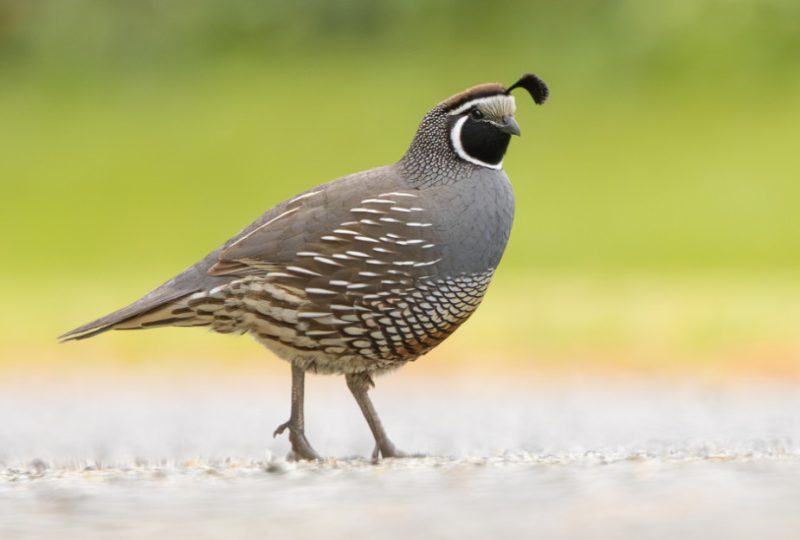
Oregon’s landscapes range from coastal forests and fertile valleys to high deserts and rugged mountain ranges. This dramatic diversity creates excellent habitat for several species of quail. These small, ground-dwelling birds are beloved by birdwatchers, hunters, and homeowners alike thanks to their distinctive calls, charming behaviors, and beautiful plumage. Although quail can be elusive due to their preference for dense cover, Oregon is one of the best states in the West for observing them in the wild.
There are four types of quail in Oregon, each with different ranges, behaviors, and identification features. Some prefer sagebrush deserts, others thrive in western forests, and a few are rare visitors with restricted populations. Understanding how to distinguish them helps you appreciate Oregon’s unique birdlife and spot quail more easily while hiking, driving, or exploring rural areas.
This full guide covers all four species, including their appearance, identification tips, habitat preferences, calls, and the best places in Oregon to find them.
Table of Contents
California Quail (Callipepla californica)
Appearance and Identification
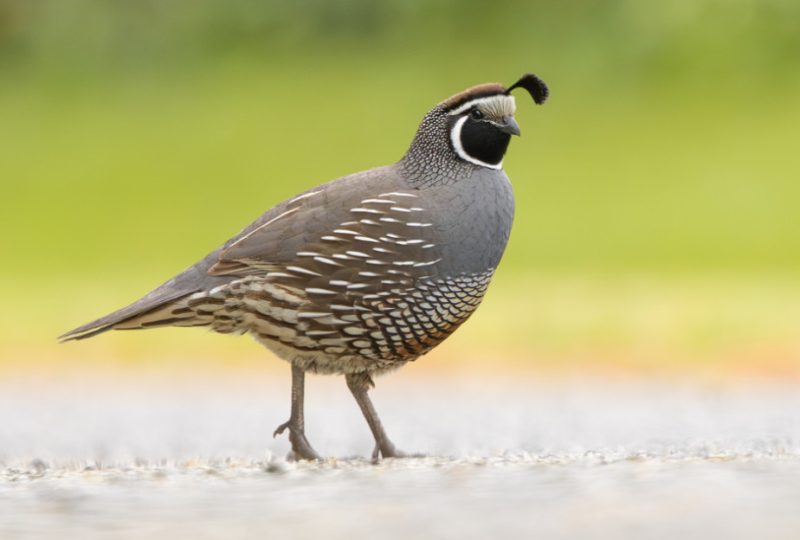
The California Quail is Oregon’s most abundant and widely recognized quail species. Adults have a unique teardrop-shaped plume, or topknot, that curves forward above the forehead. Males feature striking plumage with a blue-gray chest, scaled belly pattern, bold black facial mask, and chestnut crown. Females are browner and more subdued, but still display the trademark plume.
Their scalloped belly feathers create a layered appearance that is easy to recognize even at a distance. The birds travel in coveys, often moving quickly along the ground in tight groups. Juveniles resemble females but lack the full color contrast seen in males.
California Quail are plump, short-tailed birds with strong legs built for running rather than flying. Their rapid ground movement is one of the easiest ways to identify them, especially when they scatter into shrubs after being startled.
Habitat in Oregon
These quail inhabit a wide range of habitats across western, central, and southern Oregon. They thrive in:
-
Grasslands
-
Agricultural fields
-
Sagebrush flats
-
Suburban yards
-
Oak woodlands
-
Edges of conifer forests
The Willamette Valley, Rogue Valley, and eastern foothills are particularly rich with California Quail. They have adapted extremely well to human presence and are commonly seen near homes, orchards, farms, and parks.
Behavior and Ecology
California Quail are social birds that spend much of their time in coveys of 10 to 50 individuals. Their soft “chi-ca-go” call is commonly heard in the early morning or evening. These birds feed primarily on seeds, grass shoots, clover, berries, and insects during breeding season.
They nest on the ground, scraping shallow depressions lined with vegetation. Because of their reliance on low cover, tall grasses, brush piles, and hedgerows are critical for their survival. Their ability to reproduce rapidly helps populations rebound after harsh winters.
Mountain Quail (Oreortyx pictus)
Appearance and Identification
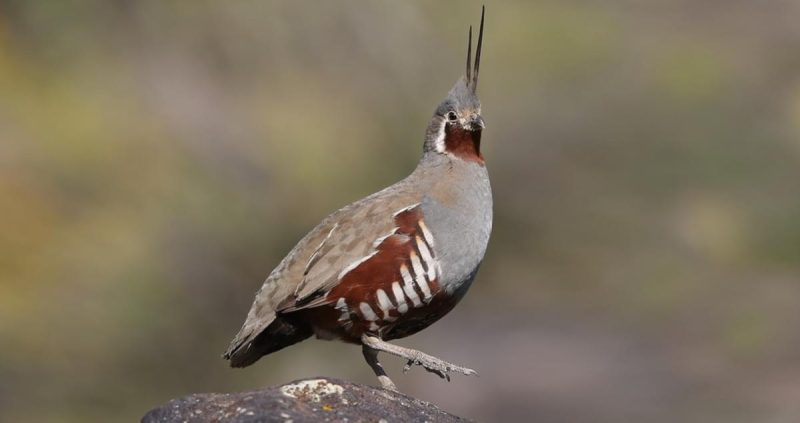
The Mountain Quail is the largest and most distinctive quail species in Oregon. It is easily recognized by its two long, straight crest plumes rising vertically from the head. These plumes differ from the curved topknot of California Quail. Their plumage is rich and colorful, featuring chestnut throat patches, gray heads, and bold chestnut flanks barred with white.
Their bodies are slimmer and more upright than California Quail, and they often appear taller due to their posture and crest. In dense cover, their movement is quick and silent, making them more difficult to spot.
When flushed, Mountain Quail explode into flight with loud wingbeats but rarely fly far. They prefer running uphill, using their strong legs to escape predators.
Habitat in Oregon
Mountain Quail inhabit the western and central mountains of Oregon, thriving in rugged terrain with thick vegetation. They prefer:
-
Brushy slopes
-
Regenerating clear-cuts
-
Chaparral hillsides
-
Forest edges
-
High-elevation shrublands
Their range includes the Coast Range, Cascade foothills, Klamath Mountains, and some areas of the Blue Mountains. They are far less common in open lowland environments compared to California Quail.
Behavior and Ecology
Mountain Quail are secretive and tend to avoid open spaces, making them challenging to observe. They often travel in small family groups and maintain a strong preference for steep, brushy hillsides. Their loud “quee-ark” vocalization is often heard long before the birds are ever seen.
Their diet includes seeds, berries, buds, acorns, and insects. They rely heavily on dense vegetation for protection, nesting, and foraging. During winter, they may migrate altitudinally, moving to lower elevations where snow cover is thinner.
Gambel’s Quail (Callipepla gambelii)
Appearance and Identification
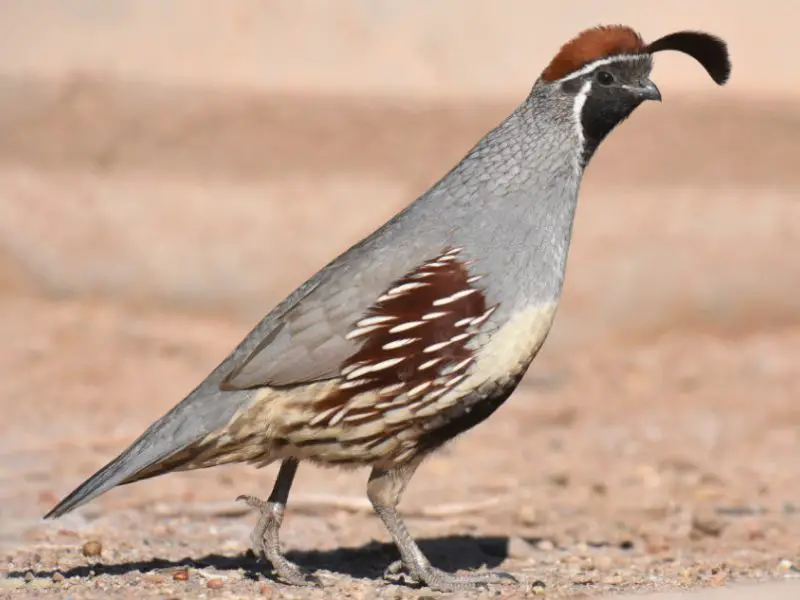
Gambel’s Quail are closely related to California Quail but with distinctive features that set them apart. They have a prominent forward-facing topknot like California Quail, but their body coloration is warmer and more desert-oriented. Males have chestnut sides, bold black belly patches, and gray bodies with crisp markings.
The black belly patch is one of the easiest identification features. Females, similar to other quail species, are muted in color and lack the facial contrast of males.
Gambel’s Quail are smaller and slightly more slender than California Quail, with a more desert-adapted appearance that suits their preferred habitats.
Habitat in Oregon
Gambel’s Quail occur only in limited areas of southeastern Oregon, near the Nevada border and portions of the Owyhee region. Their habitat preferences include:
-
Arid desert valleys
-
Mesquite thickets
-
Rocky canyons
-
Low shrubs and desert washes
They are strongly tied to desert ecosystems and rarely wander far from dry, open terrain with sparse vegetation.
Behavior and Ecology
Gambel’s Quail live in coveys and communicate using sharp, repeating calls. Their diet consists mainly of desert plants, seeds, cactus fruit, and insects. They breed earlier in the year than other quail species due to warmer temperatures in their environments.
Because their Oregon range is small, sightings are considered special for birders interested in tracking species diversity within the state’s desert regions.
Northern Bobwhite (Colinus virginianus)
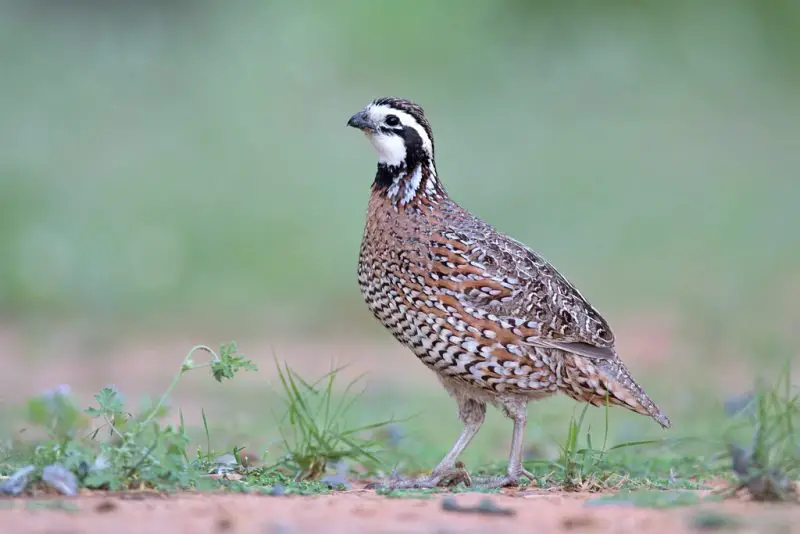
Appearance and Identification
The Northern Bobwhite is the only quail in Oregon with a distinctive whistled name-sake call, often described as “bob-WHITE!” Males have sharp facial markings featuring a bold white throat and eyebrow contrasted with a dark brown head. Females display tan facial markings instead of white.
Their bodies are rounded and compact, with mottled brown and cream plumage that blends well into grassy environments. Unlike the other quail species in Oregon, bobwhites lack a head plume or crest.
Habitat in Oregon
Northern Bobwhite populations in Oregon are small, scattered, and declining. They occur primarily in the southwest and the Willamette Valley but are rare throughout much of the state. Habitat preferences include:
-
Grasslands
-
Savannas
-
Shrubby edges
-
Agricultural fields
-
Oak prairies
Loss of these habitats has significantly reduced Oregon’s bobwhite populations.
Behavior and Ecology
Bobwhites are very social birds that live in coveys throughout the winter. Their unmistakable whistled call is often the first sign of their presence. They feed on seeds, grasses, and insects, especially during the breeding season when protein-rich food supports chick growth.
Northern Bobwhite require open ground vegetation, making them sensitive to changes in land use, invasive species expansion, and fire suppression.
How to Identify Oregon’s Quail Quickly
California Quail
California Quail are easiest to identify in the field by the way they move as a group. They often travel in tightly organized coveys, weaving between shrubs in coordinated bursts, with individuals pausing frequently to scan their surroundings. You will often notice them using low, soft contact calls to keep the flock together, especially at dawn when they emerge from roost sites.
Another quick clue is their preference for edges and transitional habitats—places where brushy cover meets open ground. If you’re near vineyards, orchards, quiet suburban yards, or grassy roadsides and you see small birds running rather than flying, they are likely California Quail. Their escape strategy is almost always to freeze first, then sprint low across the ground before taking a short, low flight.
Mountain Quail
Mountain Quail reveal themselves more by behavior and habitat than by appearance. They prefer steep, brush-choked hills where they use gravity and terrain to their advantage. When startled, they often run uphill with remarkable speed, using dense shrubs as cover rather than breaking into flight.
Their calls are one of the best field identifiers: a single, sharp, distant-sounding “quee-ark” note that carries through canyons and mountainsides. They tend to remain hidden deep in thickets and rarely venture into open spaces for long. If you’re in regenerating forest, chaparral slopes, or high brushy ridges and hear that sharp whistle, you are likely close to Mountain Quail—even if you never actually see them.
Gambel’s Quail
Gambel’s Quail can be identified quickly by their movement patterns and habitat loyalty. Unlike Oregon’s other quail species, they stay close to dry washes, rocky desert slopes, and sparse shrubs, often keeping near the same water sources or low shrubs year-round.
Their covey behavior is noticeably more compact and tightly knit. They communicate with quick, rolling calls that echo across open desert terrain, especially in early morning when temperatures are cool. A useful field clue is that Gambel’s Quail often stay visible for longer periods than Mountain Quail because desert landscapes offer fewer hiding places. If you’re in the Owyhee desert or near the Nevada border and see quail moving through low, sun-baked habitat, you’re almost certainly observing Gambel’s Quail.
Northern Bobwhite
Northern Bobwhites are easiest to identify not by sight but by their strong territorial whistled call, which is louder, clearer, and more repetitive than any other quail species in Oregon. The distinctive “bob-WHITE!” is frequently heard during early summer or later afternoons.
Their movement style also differs: bobwhites prefer to hold tight in grasses when disturbed, flushing only at the last moment with a sudden, explosive burst straight upward. This vertical flush is unlike the low, horizontal fleeing style of California Quail. If you’re walking through oak savannas or grassy fields and a bird rockets upward with surprising force, disappearing quickly, there’s a good chance it was a bobwhite.
Bobwhites also form dense, circular winter coveys, often leaving round impressions in snow or frost—another field clue that does not require visual plumage identification.
Best Places to See Quail in Oregon
Oregon offers excellent quail viewing depending on the species and region.
California Quail
-
Willamette Valley
-
Rogue Valley
-
Umpqua Valley
-
Eastern Oregon agricultural zones
-
Suburban parks and green spaces
They are the most visible quail species across the state.
Mountain Quail
-
Coast Range forests
-
Western Cascades
-
Klamath Mountains
-
Brushy regenerating forests
-
Steep mountain foothills
Expect to hear them before you see them.
Gambel’s Quail
-
Southeast Oregon near the Nevada border
-
Owyhee River Canyonlands
-
Dry, rocky desert slopes and washes
Sightings here are prized due to their limited range.
Northern Bobwhite
-
Scattered oak savannas in southwest Oregon
-
Historic grasslands of the Willamette Valley
-
Areas with active habitat restoration
Their rarity makes encounters special and valuable for conservation monitoring.
Best Viewing Times
Early morning and late afternoon provide the highest probability of hearing or seeing quail. During breeding season, vocal activity increases dramatically, helping observers locate coveys more easily.
FAQs About Quail in Oregon
What is the most common quail in Oregon?
The California Quail is by far the most common and widespread species.
Are Northern Bobwhite native to Oregon?
They are native but have declined significantly due to habitat loss.
Do quail migrate?
No. All quail in Oregon are year-round residents.
Where can I reliably see Mountain Quail?
Look in dense brushy areas of the Coast Range and Cascade foothills.
Are Gambel’s Quail increasing in Oregon?
No. Their range is stable but extremely limited to southeastern desert regions.
Do quail visit backyard feeders?
California Quail often do, especially where seeds or grain are available.
What do quail eat?
Seeds, grasses, berries, insects, buds, and occasionally leaves depending on the species.
Are quail beneficial to the ecosystem?
Yes. They help control insects, disperse plant seeds, and support predator food chains.
Final Thoughts
Oregon’s quail diversity reflects the state’s incredible range of habitats, from coastal woodlands and fertile valleys to rugged mountains and arid deserts. Whether you are spotting the iconic California Quail in a suburban neighborhood, listening for Mountain Quail on a forested hillside, or searching the desert edges for Gambel’s Quail, each species brings its own beauty and ecological value to Oregon’s landscape.
Although Northern Bobwhite are now rare, conservation efforts continue to support their recovery. By understanding how to identify these four quail species and where to find them, birdwatchers and nature lovers can deepen their appreciation of Oregon’s rich avian heritage.