

Wild rabbits are a familiar sight across New Hampshire, yet very few people realize that only two true rabbit species live in the state. Most sightings are quickly labeled as “cottontails” without further thought, while others are mistakenly identified as something else entirely. This confusion is understandable. Rabbits are fast, secretive, and most active when people are not.
What makes identification especially important in New Hampshire is that one rabbit species is common and thriving, while the other is native, rare, and a conservation priority. Telling them apart is not just an academic exercise. It directly affects habitat protection, wildlife reporting, and land management decisions.
This guide explains the two wild rabbit species found in New Hampshire, how to identify them accurately, where they live, and why their differences matter.
Table of Contents
- 1 Wild Rabbits in New Hampshire: What People Often Get Wrong
- 2 Eastern Cottontail (Sylvilagus floridanus)
- 3 New England Cottontail (Sylvilagus transitionalis)
- 4 Key Differences Between the Two Rabbit Species
- 5 Why Snowshoe Hares Are Not Included
- 6 Seasonal Behavior of Wild Rabbits in New Hampshire
- 7 Predators and Survival Pressures
- 8 Conservation Efforts in New Hampshire
- 9 How to Identify Rabbits Responsibly
- 10 FAQs About Wild Rabbits in New Hampshire
- 10.1 How many wild rabbit species live in New Hampshire?
- 10.2 Which rabbit is more common?
- 10.3 Is the New England cottontail endangered?
- 10.4 Can you tell the two rabbits apart by sight?
- 10.5 Do wild rabbits live in forests?
- 10.6 Are rabbits active in winter?
- 10.7 Are rabbits harmful to gardens?
- 10.8 Is it legal to protect rabbit habitat?
- 11 Final Thoughts
Wild Rabbits in New Hampshire: What People Often Get Wrong
Many New Hampshire residents believe the state has several kinds of rabbits. Others assume all wild rabbits are the same species. Some even include snowshoe hares in the conversation, unaware that hares and rabbits are biologically different animals.
In reality, New Hampshire has:
-
Two true rabbit species
-
One hare species that is often confused with rabbits
Understanding this distinction is the foundation of proper identification.
Eastern Cottontail (Sylvilagus floridanus)
Status in New Hampshire
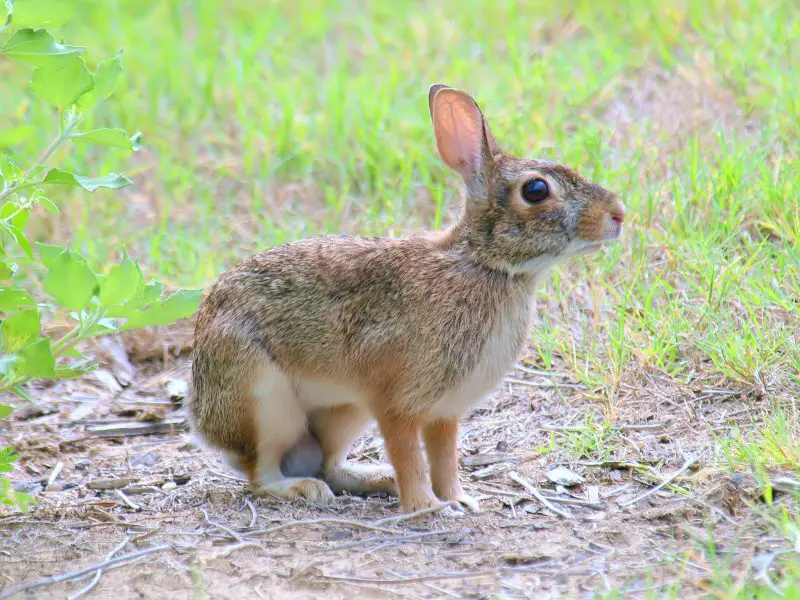
The Eastern cottontail is the most common and widespread wild rabbit in New Hampshire today. It is not native to the state but has become firmly established over the last century.
Despite its non-native status, it now dominates suburban, agricultural, and edge habitats throughout southern and central New Hampshire.
Origin and Expansion
Eastern cottontails expanded into New England through a combination of habitat change and human introduction. As forests were cleared for agriculture and development, edge habitat increased. These conditions favored cottontails over native species.
By the mid-1900s, Eastern cottontails had replaced native rabbits across much of their former range.
Physical Identification
Eastern cottontails are medium-sized rabbits with a compact, rounded body.
Their fur is typically gray-brown with a mix of black and buff hairs, creating a mottled appearance that blends well into grass and brush. The underside is lighter, often pale gray or white.
The most recognizable feature is the white, fluffy tail, which flashes when the rabbit runs. Ears are moderately long with dark edges near the tips. Eyes are large and dark, positioned high on the head.
Average adults weigh between 2 and 4 pounds.
Facial and Ear Features
The face appears short and rounded. Ears are upright but not especially long. In winter, ear tips may show darker edging, but the ears never appear oversized relative to the head.
Unlike hares, Eastern cottontails do not have long, narrow faces.
Tracks and Field Signs
Tracks show two large hind prints ahead of two smaller front prints. In snow, the pattern often looks like a stretched “Y” shape.
Droppings are small, round pellets clustered near feeding areas. Browsed vegetation appears clipped at a clean angle, usually less than a foot off the ground.
Behavior and Daily Activity
Eastern cottontails are crepuscular. They are most active at dawn and dusk.
During the day, they rest in shallow depressions called forms. These are often hidden in tall grass, under shrubs, or near fences.
When startled, they freeze briefly before sprinting away in a zigzag pattern.
Habitat Preferences
In New Hampshire, Eastern cottontails favor:
-
Suburban yards
-
Old fields
-
Agricultural edges
-
Brush piles
-
Hedgerows
-
Roadside vegetation
They thrive near people and adapt well to fragmented landscapes.
Diet
Their diet consists of grasses, clover, weeds, garden plants, bark, and twigs. In winter, they rely more heavily on woody vegetation.
They are generalists and feed opportunistically, which contributes to their success.
New England Cottontail (Sylvilagus transitionalis)
Status in New Hampshire
The New England cottontail is native to the state and much rarer. It is considered a species of conservation concern and has disappeared from much of its historic range.
In New Hampshire, remaining populations are small and isolated.
Why This Species Matters
The decline of the New England cottontail reflects broader habitat loss. This species depends on dense, early-successional shrubland, a habitat type that has become increasingly scarce.
Protecting this rabbit means protecting an entire ecosystem.
Physical Identification
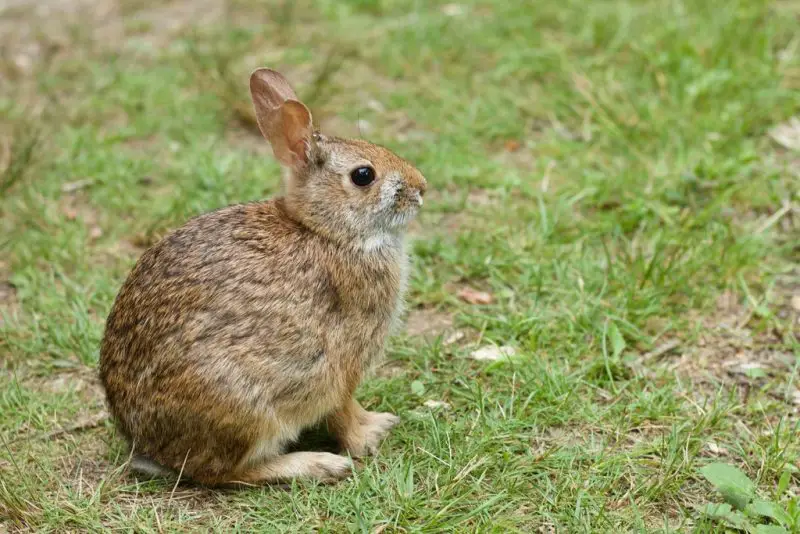
New England cottontails are slightly smaller and darker than Eastern cottontails.
Their fur tends to be rich brown rather than gray-brown. The body appears more compact, and the tail is less conspicuously white, often appearing dingy or buff-colored rather than bright white.
Ears are shorter and rounder, lacking bold dark edging.
Adults typically weigh between 1.5 and 3 pounds.
Facial Structure
The face is shorter and rounder than that of the Eastern cottontail. The eyes appear slightly closer together, giving the rabbit a softer expression.
These differences are subtle and often impossible to confirm without close observation.
The Identification Challenge
Visually distinguishing New England cottontails from Eastern cottontails in the field is extremely difficult.
Biologists often rely on:
-
DNA analysis from pellets
-
Habitat context
-
Geographic location
For most observers, habitat is the most reliable clue.
Habitat Preferences
New England cottontails require dense shrub thickets. They avoid open lawns and manicured landscapes.
Preferred habitats include:
-
Young regenerating forests
-
Thick brush
-
Blackberry and raspberry tangles
-
Shrubby wetlands
-
Powerline corridors with dense growth
They rarely venture into open areas.
Behavior and Movement
This species is secretive and rarely seen. It relies on cover rather than speed for protection.
Movement is limited. Individuals often spend their entire lives within a small patch of suitable habitat.
This lack of mobility makes them vulnerable to habitat fragmentation.
Diet
The diet is similar to that of Eastern cottontails but more selective due to habitat constraints.
They feed heavily on native shrubs, woody stems, buds, and seasonal greens.
Key Differences Between the Two Rabbit Species
While the two species look similar, their differences become clearer when habitat and behavior are considered.
Eastern cottontails tolerate open spaces and human presence. New England cottontails do not.
Eastern cottontails spread easily. New England cottontails remain isolated.
In New Hampshire, location and habitat tell more than appearance alone.
Why Snowshoe Hares Are Not Included
Snowshoe hares live in New Hampshire and are often mistaken for rabbits, but they are a different animal.
Hares are larger, have longer legs and ears, and change color in winter. They prefer forest interiors rather than edge habitats.
This article focuses only on true rabbits.
Seasonal Behavior of Wild Rabbits in New Hampshire
Wild rabbits in New Hampshire do not hibernate, even during long, cold winters. Instead of disappearing, they adjust their behavior, movement patterns, and feeding strategies to survive harsh seasonal conditions. Their presence often goes unnoticed simply because they become quieter and more efficient.
Winter Behavior
During winter, wild rabbits significantly reduce unnecessary movement. Energy conservation becomes critical once snow cover limits access to food and predators gain visual advantage. Rather than roaming widely, rabbits establish small core areas with reliable cover and nearby food sources.
They rely heavily on dense shrubs, brush piles, fallen trees, and thick understory vegetation. These areas provide insulation from wind, concealment from predators, and escape routes if threatened.
Tracks in fresh snow are often the first clear sign of rabbit activity. The distinctive bounding pattern reveals where rabbits move between feeding sites and cover. These tracks frequently follow hedgerows, brushy edges, and the base of shrubs rather than crossing open areas.
Winter diets shift toward woody material. Rabbits feed on twigs, buds, bark, and young stems, especially from shrubs and saplings. This seasonal browsing is why rabbits are often noticed near ornamental plants during colder months.
Spring Behavior
Spring marks the most active period of the year. As snow melts and vegetation begins to grow, rabbits expand their movements and increase feeding.
This season also begins the breeding cycle. Eastern cottontails, in particular, reproduce rapidly. Females can produce multiple litters between early spring and late summer, sometimes raising several generations in a single year.
Young rabbits are born fully furred but blind and helpless. They are placed in shallow nests, often hidden in grass or low vegetation. These nests are easily overlooked, which is why lawn mowing and yard maintenance during spring can unintentionally harm young rabbits.
New England cottontails follow a similar breeding pattern but at a slower pace due to habitat limitations and lower population density.
Summer and Fall Behavior
In summer, food is abundant and rabbits are most visible at dawn and dusk. They spend daytime hours resting in shaded forms to avoid heat and predators.
Fall behavior centers on preparation. Rabbits feed heavily to build fat reserves and refine escape routes through thick vegetation. Cover becomes increasingly important again as leaves fall and visibility increases for predators.
Predators and Survival Pressures
Wild rabbits are a foundational prey species in New Hampshire ecosystems. Their survival strategies shape not only their own behavior but also the behavior of many predators.
Natural Predators
Rabbits are hunted by a wide range of predators, including:
Coyotes
Foxes
Owls
Hawks
Bobcats
Aerial predators rely on sight and surprise, while ground predators depend on scent, tracking, and ambush. Because rabbits are small and defenseless, survival depends almost entirely on awareness, speed, and access to cover.
Human-Related Pressures
Domestic dogs and cats represent a significant threat, particularly in suburban areas. Free-ranging pets can disrupt rabbit populations even without direct predation by causing stress and nest abandonment.
Road traffic also contributes to mortality, especially where rabbit habitat intersects with residential development.
Importance of Cover
Dense cover is the single most important survival factor for wild rabbits, especially for New England cottontails. Without thick shrub layers, escape options disappear.
Open lawns, manicured landscapes, and cleared edges dramatically increase vulnerability. Even abundant food cannot compensate for the absence of safe cover.
Conservation Efforts in New Hampshire
New Hampshire places particular emphasis on conserving the New England cottontail, whose survival depends on targeted habitat management rather than population control.
Habitat Restoration
State agencies and conservation partners focus on restoring early-successional shrubland. This includes encouraging dense native shrubs and young forest growth that provide year-round cover.
Shrubland restoration benefits many other species as well, including birds, pollinators, and small mammals.
Controlled Mowing and Land Management
Controlled mowing practices prevent habitat from maturing into closed forest too quickly while avoiding the nesting season. This maintains the dense structure rabbits need without destroying active nests.
Timing and technique are critical. Poorly planned mowing can eliminate entire local populations.
Landowner Partnerships
Private land plays a major role in rabbit conservation. New Hampshire works with landowners to manage hedgerows, field edges, and unused land in ways that support native wildlife.
Small changes, such as leaving brush piles or allowing natural regrowth, can make a significant difference.
Public Awareness
Education reduces accidental habitat destruction. When people understand why certain areas look “messy,” tolerance for natural vegetation increases.
Awareness also helps prevent well-meaning but harmful actions like relocating rabbits or destroying nests.
How to Identify Rabbits Responsibly
Observing wild rabbits should always be done with minimal disturbance.
Avoid approaching rabbits, especially young individuals that appear alone. Many are not abandoned and are waiting for the mother to return.
Never attempt to capture or relocate rabbits. Relocation is illegal in many cases and often results in death due to stress or territorial conflicts.
Photography should be done from a distance using zoom rather than proximity. Flash photography near nests should be avoided.
If you believe you have seen a rare species, such as a New England cottontail, report the sighting through official wildlife agencies rather than on social media. Accurate reporting helps conservation efforts without drawing unwanted attention to sensitive habitats.
FAQs About Wild Rabbits in New Hampshire
How many wild rabbit species live in New Hampshire?
New Hampshire has two wild rabbit species: the Eastern cottontail and the New England cottontail.
Which rabbit is more common?
The Eastern cottontail is far more common and widespread.
Is the New England cottontail endangered?
It is considered a species of conservation concern but is not federally listed as endangered.
Can you tell the two rabbits apart by sight?
Usually not. Habitat and location are more reliable than appearance alone.
Do wild rabbits live in forests?
They prefer edges and dense shrubs rather than mature forest interiors.
Are rabbits active in winter?
Yes. They remain active year-round and leave tracks in snow.
Are rabbits harmful to gardens?
They can browse plants, especially in winter, but fencing is usually effective.
Is it legal to protect rabbit habitat?
Yes. Many conservation programs encourage landowners to maintain shrub cover.
Final Thoughts
New Hampshire supports only two types of wild rabbits, but their stories could not be more different. One thrives alongside people, adapting quickly to change. The other struggles quietly, dependent on shrinking habitats that few notice.
Understanding these differences changes how we see a simple backyard sighting. It turns a quick glimpse into insight.
In New Hampshire, every rabbit tells a story. Knowing which one you are seeing makes all the difference.