
Late summer carries a quiet density across wooded hills and creek valleys in Ohio. Wooded ravines hold heat beneath layered leaf litter. Creek edges shrink slightly under August sun. Tall grasses along field margins lean heavy and still in humid air. It is during this stretch, when moisture and warmth overlap, that copperhead activity becomes most noticeable.
What most Ohio residents don’t realize about copperhead activity is that sightings rarely represent sudden population growth. Instead, they reflect seasonal movement patterns tied to temperature thresholds, prey availability, and reproductive timing. The snake that appears beside a hiking trail or near stacked firewood did not arrive randomly. It has been part of that habitat for years, moving within a defined range that shifts subtly as environmental conditions change.
The encounter feels abrupt.
The ecology is gradual.
And understanding that ecology reshapes how Ohio communities interpret copperhead presence.
Table of Contents
- 1 The Species Found in Ohio
- 2 Why Late Summer Sightings Increase
- 3 Habitat Overlap in Southern Ohio
- 4 Why Copperheads Rarely Flee Immediately
- 5 Temperature Thresholds and Daily Movement
- 6 Juvenile Copperheads and Misidentification
- 7 Why Some Years Feel Worse
- 8 Hibernation Sites and Winter Dormancy
- 9 Urban Encounters in Central Ohio
- 10 Medical Reality of Copperhead Bites
- 11 Why Killing Snakes Often Backfires
- 12 Climate Trends and Future Outlook
- 13 Practical Safety Strategies
- 14 FAQs About Copperhead Activity in Ohio
- 15 Final Thoughts
The Species Found in Ohio
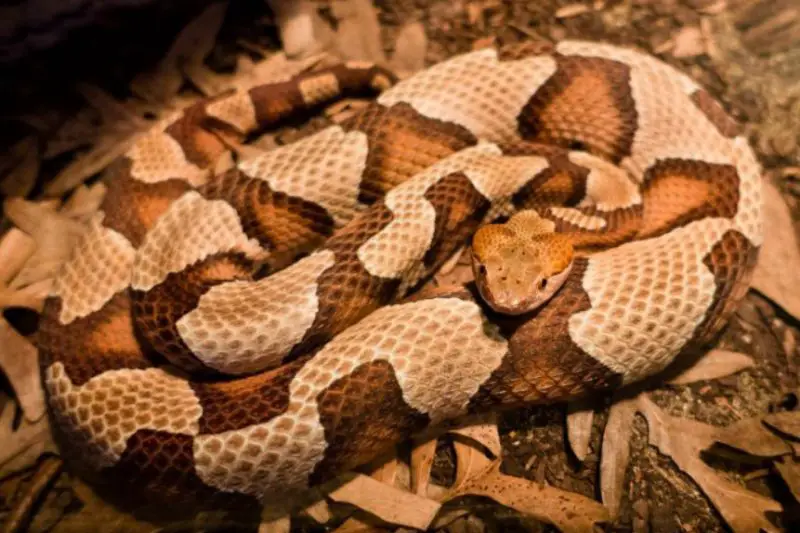
The venomous snake most commonly referred to in Ohio is the Eastern Copperhead, a subspecies of the broader Copperhead complex. In Ohio, copperheads are primarily distributed in the southern and eastern portions of the state, especially within forested hills, river valleys, and rocky outcrops.
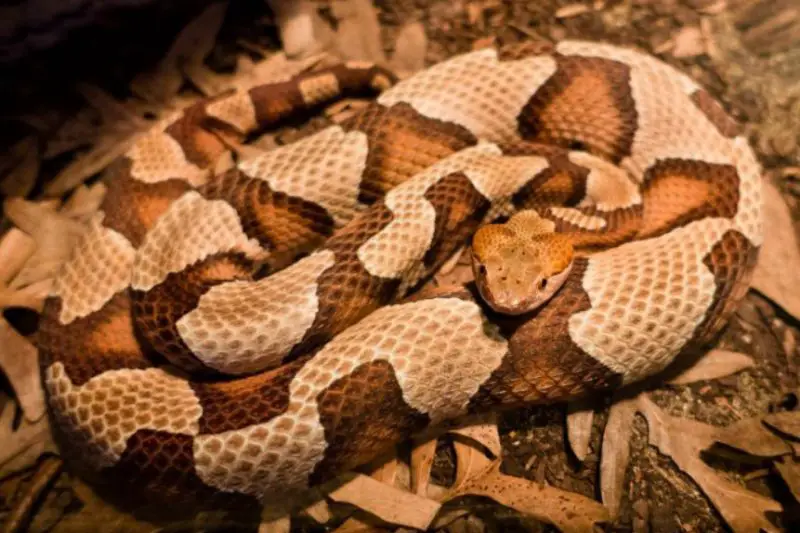
Eastern copperheads are medium-sized pit vipers, typically ranging from two to three feet in length. Their distinctive hourglass-shaped crossbands blend seamlessly into leaf litter, creating camouflage that makes them difficult to detect until they move. This camouflage is not aggressive concealment but evolutionary adaptation to forest-floor habitats.
Copperheads are ambush predators. They rely on stillness, patience, and temperature-regulated movement. Ohio’s mixed hardwood forests provide the structural complexity and prey density that sustain stable populations year after year.
Why Late Summer Sightings Increase
Copperhead activity in Ohio often appears to increase in late summer and early fall. This pattern reflects multiple overlapping biological processes rather than sudden migration into residential areas.
First, young copperheads are born in late summer. Unlike many snakes that lay eggs, copperheads give birth to live young. Neonates disperse short distances from maternal sites, increasing the likelihood of occasional encounters near trails, woodpiles, or yard edges adjacent to forest.
Second, adult copperheads shift movement patterns as temperatures begin to moderate. Midday heat in July and August limits surface activity, but warm evenings allow extended foraging. This increases visibility along walking paths and near water sources.
Third, prey species such as mice and small amphibians become more active in late summer harvest landscapes. Where prey moves, predators follow.
The appearance of more snakes often reflects more movement, not more snakes.
Habitat Overlap in Southern Ohio
Southern Ohio’s Appalachian foothills provide prime copperhead habitat. Rocky ledges, forested slopes, and brushy field margins create microhabitats where moisture and shade persist even during dry spells. Abandoned barns, woodpiles, and stone foundations add artificial shelter within human-modified landscapes.
As suburban development expands into previously forested areas, habitat overlap increases. Homes built near wooded corridors or ravines may encounter copperheads occasionally, especially where landscaping mimics natural cover with dense shrubs or decorative stonework.
The snake is not invading neighborhoods in the traditional sense. It is occupying the same terrain it has used for decades. Development brings human presence into existing ecological corridors.
Overlap increases perception.
Habitat remains continuous.
Movement follows structure.
Why Copperheads Rarely Flee Immediately
Unlike many nonvenomous snakes that flee rapidly when approached, copperheads often rely on camouflage rather than flight. Their strategy depends on remaining motionless, blending into leaf litter, and avoiding detection.
This behavior leads some residents to interpret stillness as aggression. In reality, remaining still reduces predation risk from hawks and mammals. Only when physically threatened or stepped on do copperheads typically strike defensively.
Most bites in Ohio occur when individuals accidentally step on or place a hand near a concealed snake. The snake’s response is defensive, not territorial.
Stillness is strategy.
Strike is last resort.
Understanding this reduces misinterpretation of behavior.
Temperature Thresholds and Daily Movement
Copperheads regulate body temperature through environmental positioning. In Ohio summers, midday surface temperatures may exceed comfortable limits. During these periods, copperheads retreat beneath logs, into rock crevices, or under dense vegetation.
As evening temperatures decline into the 70s Fahrenheit range, surface movement increases. This is when many hikers and dog walkers encounter them along shaded trails.
In early fall, cooler mornings may also produce brief basking behavior. Snakes position themselves on sunlit edges of paths or rock outcrops to absorb heat before retreating again.
Sightings correspond with thermal windows.
Temperature shapes timing.
Movement aligns with comfort range.
Juvenile Copperheads and Misidentification
Late summer births introduce smaller copperheads into the environment. Juveniles display bright yellow or green tail tips used as lures to attract small prey. This feature often draws attention when spotted near yard edges.
Juvenile copperheads are venomous from birth, though their venom yield is lower due to smaller body size. However, bites from juveniles remain medically significant and should be treated seriously.
Residents sometimes misidentify harmless juvenile water snakes or milk snakes as copperheads due to color similarity. Accurate identification depends on recognizing the hourglass crossband pattern that narrows along the spine rather than the belly.
Education reduces unnecessary killing of nonvenomous species and improves response accuracy.
Why Some Years Feel Worse
Copperhead visibility fluctuates annually based on environmental stacking. Mild winters increase overwinter survival. Wet springs boost rodent populations, which in turn support predator growth. Favorable summer prey abundance sustains healthy adult body condition leading into reproductive season.
When these factors align, late summer encounters may feel more frequent. Conversely, harsh winters or drought conditions may reduce survival and reproduction.
Ohio’s climate variability creates natural population cycles rather than steady upward trends.
Visibility reflects survival from the previous winter and prey abundance from the current summer.
The pattern is cyclical.
Not exponential.
Hibernation Sites and Winter Dormancy
In Ohio, copperheads enter brumation during colder months, typically retreating into rocky crevices, abandoned burrows, or root systems below frost lines. Communal denning may occur, with multiple individuals sharing overwintering sites.
These dens are often used repeatedly year after year. Development that disturbs rocky hillsides or excavates slopes may expose or disrupt long-established denning areas, occasionally increasing sightings during fall as snakes seek alternative shelter.
Winter dormancy suppresses activity significantly. However, unusually warm winter days may stimulate temporary surface movement.
Seasonal dormancy does not eliminate presence.
It reduces visibility.
The population persists beneath the frost line.
Urban Encounters in Central Ohio
While copperheads are more common in southern counties, occasional sightings occur in central Ohio, particularly near river corridors and forest preserves. Expansion of suburban housing near wooded greenways increases the probability of overlap.
Backyards with woodpiles, stacked stone retaining walls, or dense groundcover create microhabitats attractive to both rodents and snakes. Reducing excess brush and maintaining tidy wood storage decreases shelter opportunities near homes.
Coexistence requires awareness rather than eradication.
Landscape management shapes encounter frequency.
Habitat edges determine risk.
Medical Reality of Copperhead Bites
Copperhead venom is hemotoxic, affecting tissue and blood components. Most bites in Ohio are painful but rarely fatal when treated promptly. Swelling, bruising, and localized tissue damage are common symptoms.
Immediate medical evaluation is essential after any suspected venomous bite. However, panic-driven myths about extreme lethality often exaggerate risk. Fatalities are exceedingly rare with modern medical care.
Risk increases with accidental contact rather than deliberate interaction.
Avoidance remains the most effective prevention.
Education reduces unnecessary fear.
Why Killing Snakes Often Backfires
Indiscriminate killing of snakes can disrupt local ecological balance. Copperheads help regulate rodent populations, reducing crop damage and limiting disease vectors carried by small mammals.
Removing one individual from a stable habitat may create vacancy that another predator fills. Additionally, attempts to kill snakes increase risk of defensive bites.
Prevention focuses on reducing shelter and avoiding contact rather than pursuing elimination.
Respect maintains safety.
Distance preserves balance.
Ecology favors equilibrium.
Climate Trends and Future Outlook
Climate change may influence copperhead range distribution slightly northward over time. Warmer average temperatures could extend activity windows modestly in northern counties. However, winter severity will continue playing a major role in limiting expansion.
Habitat availability remains the primary constraint. Without suitable forested corridors and rocky denning sites, sustained population growth is unlikely.
Ohio’s mosaic of farmland, forest, and suburban development will continue shaping localized encounter patterns.
Long-term trends are gradual.
Seasonal cycles dominate short-term perception.
Practical Safety Strategies
Residents in copperhead-prone areas can reduce encounter risk through simple practices. Wearing closed-toe shoes while hiking, using flashlights at night, and avoiding reaching blindly into woodpiles decrease accidental contact.
Maintaining trimmed grass and removing excessive brush around homes reduces concealment zones. Supervising pets in wooded yards prevents surprise interactions.
Safety stems from awareness, not eradication.
Most bites are preventable.
Most encounters end without incident.
FAQs About Copperhead Activity in Ohio
Are copperheads common throughout Ohio?
They are most common in southern and eastern counties but can appear elsewhere near suitable habitat.
Do copperheads chase people?
No. They rely on camouflage and typically strike only when threatened.
Are juvenile copperheads more dangerous?
They are venomous from birth, but overall venom volume is lower due to size.
When are copperheads most active?
Late summer evenings and early fall days with moderate temperatures increase visibility.
Should I remove a copperhead from my yard?
Professional wildlife services can assist if removal is necessary. Avoid handling.
Final Thoughts
What most Ohio residents don’t realize about copperhead activity is that sightings reflect seasonal movement and habitat overlap rather than sudden invasion. Summer heat shapes timing. Prey abundance influences positioning. Cooling nights trigger dispersal. Development increases visibility.
The snake on a trail is not new. It has occupied that corridor quietly for years. Understanding copperhead ecology transforms alarm into awareness and replaces myth with measurable pattern.
Activity is seasonal.
Movement is temperature-driven.
Encounters are usually accidental.
In Ohio’s forests and field margins, copperheads remain part of a stable ecological rhythm that unfolds gradually, whether noticed or not.