

Winter in New York is not kind to wildlife. Streets freeze, snow buries food, and long nights stretch the limits of survival. Yet while many animals retreat, migrate, or struggle, one group of birds seems to thrive in the middle of it all. Crows remain active, vocal, and highly visible even during the coldest months.
Their success is not accidental. It is the result of intelligence, social cooperation, memory, and a remarkable ability to read and exploit urban environments. In New York’s cities and suburbs, crows do not merely endure winter. They outthink it.
Table of Contents
- 1 Crows Are Permanent Residents in New York
- 2 Urban Winter Is a Different Kind of Environment
- 3 Intelligence Is the Core Survival Tool
- 4 Memory Allows Crows to Track Reliable Food
- 5 Crows Understand Human Schedules
- 6 Social Learning Multiplies Intelligence
- 7 Roosting Behavior Conserves Energy
- 8 Cities Offer Thermal Advantages
- 9 Crows Exploit Snow Removal
- 10 Problem Solving Unlocks New Food Sources
- 11 Tool Use Appears in Urban Settings
- 12 Traffic Is Not Just a Threat
- 13 Facial Recognition Helps Avoid Danger
- 14 Crows Adjust Diet Seasonally
- 15 Weather Forecasting Through Experience
- 16 Young Crows Learn Fast or Fail
- 17 Cities Reduce Predator Pressure
- 18 Communication Is Constant and Purposeful
- 19 Crows Remember Past Winters
- 20 Why Crows Succeed Where Others Struggle
- 21 Why People Misjudge Urban Crows
- 22 Crows Are Indicators of Urban Intelligence
- 23 How Human Behavior Shapes Crow Success
- 24 Why This Matters for New York
- 25 FAQs About How Crows Survive Winter in New York Cities
- 25.1 Do crows stay in New York during winter
- 25.2 How do crows find food in winter cities
- 25.3 Are crows really intelligent compared to other birds
- 25.4 Do crows remember where food is located
- 25.5 Why do crows gather in large groups at night
- 25.6 Do crows cache food in winter
- 25.7 How do crows avoid predators in cities
- 25.8 Can crows recognize individual people
- 25.9 Does snow make it harder for crows to survive
- 25.10 Why do crows seem more common in winter
- 26 Final Thoughts
Crows Are Permanent Residents in New York
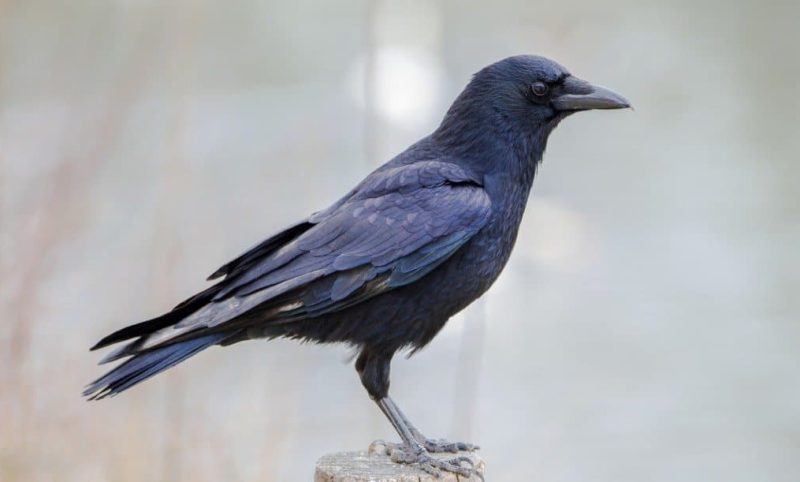
American crows (Corvus brachyrhynchos) are year-round residents across New York State. They inhabit cities, suburbs, farmland, and forests from Long Island to the Adirondacks.
Unlike many songbirds, most crows do not migrate long distances. Some northern populations shift slightly southward, but urban crows often stay put, even through harsh winters.
Staying through winter requires adaptability. Food sources change. Temperatures drop. Human activity patterns shift. Crows respond by adjusting behavior rather than location.
Urban Winter Is a Different Kind of Environment
Cities create their own climate.
Buildings retain heat. Roads are cleared. Waste accumulates. Artificial light extends usable hours. Human schedules remain consistent even in winter.
For animals able to interpret these patterns, cities offer stability that rural environments do not.
Crows are exceptionally good at recognizing patterns.
Intelligence Is the Core Survival Tool
Crows are among the most intelligent birds on Earth.
They can solve multi-step problems, recognize individual human faces, remember locations for years, and learn from observation. Their brain-to-body ratio rivals that of primates.
In winter cities, intelligence replaces instinct as the primary survival strategy.
Every decision matters.
Memory Allows Crows to Track Reliable Food
Winter food in New York is unpredictable, but not random.
Trash pickup schedules. Restaurant dumpsters. Schoolyards. Parking lots. Transit hubs. Fast-food areas. These places produce consistent waste patterns.
Crows remember where food appears and when.
They learn which streets are active in the morning, which parks host lunchtime crowds, and which alleys produce nightly scraps. Once learned, these patterns are revisited with precision.
Memory reduces wasted energy.
Crows Understand Human Schedules
Crows do not simply watch people. They study them.
In New York, crows quickly learn when trash is set out, when snowplows pass, and when pedestrian traffic peaks. They associate specific days with increased food availability.
Garbage day is not random. It is predictable.
This understanding allows crows to arrive at the right place at the right time without unnecessary searching.
Social Learning Multiplies Intelligence
Crows do not rely only on individual knowledge.
They share information.
When one crow finds a productive food source, others notice. Calls signal opportunity. Group movement reinforces success.
Young crows learn by watching older birds. New strategies spread through the flock without each bird needing to experiment independently.
In winter, this shared intelligence increases survival rates.
Roosting Behavior Conserves Energy
At night, New York crows gather in massive communal roosts.
These roosts can contain thousands or even tens of thousands of birds. They are often located in wooded areas near cities, river corridors, or protected urban parks.
Roosting together reduces heat loss, increases predator detection, and allows information exchange before morning foraging.
Winter roosts are strategic decisions, not random gatherings.
Cities Offer Thermal Advantages
Urban environments are warmer than surrounding rural areas.
Heat radiates from buildings, subways, vehicles, and infrastructure. Even a few degrees of difference can be life-saving in winter.
Crows choose perches that capture warmth. South-facing rooftops. Steam vents. Streetlight poles near traffic.
They understand microclimates instinctively and adjust positioning throughout the day.
Crows Exploit Snow Removal
Snow complicates food access.
Crows quickly learn to follow snowplows and road crews. Plowed streets expose food that was buried hours earlier. Salt and grit attract smaller animals, which become secondary food sources.
Parking lots and sidewalks cleared by humans become foraging zones.
Crows follow the work of people without ever needing to touch a shovel.
Problem Solving Unlocks New Food Sources
Crows are skilled problem solvers.
They open containers, tear packaging, and drop hard food onto roads to crack it using passing cars. They pull food from storm drains. They remove lids from trash bins.
In winter, these skills become essential.
When food is scarce, ingenuity fills the gap.
Tool Use Appears in Urban Settings
While not as common as in some corvid species, American crows do use simple tools in certain contexts.
In cities, they may use sticks to probe drains or snowbanks. They use objects to wedge open containers or manipulate food.
Tool use reflects cognitive flexibility rather than instinct.
Traffic Is Not Just a Threat
Crows in New York understand traffic patterns.
They recognize red lights. They drop nuts into crosswalks where cars stop. They retrieve cracked food when traffic pauses.
This behavior is learned through observation and trial, then refined through repetition.
Winter traffic patterns are more predictable than natural environments.
Crows take advantage of that predictability.
Facial Recognition Helps Avoid Danger
Crows can recognize and remember human faces.
In cities, this ability protects them. They remember people who harass them and avoid those individuals. They also remember neutral or predictable humans and tolerate proximity.
This reduces unnecessary flight and energy loss.
Remembering who is dangerous matters in winter.
Crows Adjust Diet Seasonally
In summer, crows eat insects, fruit, eggs, and small animals.
In winter, their diet shifts dramatically. They rely more on human food waste, carrion, roadkill, and stored items.
They also cache food.
While not as systematic as squirrels, crows hide food in snowbanks, tree crevices, gutters, and rooftop corners. They remember many of these locations.
Caching provides insurance against storms.
Weather Forecasting Through Experience
Crows appear to anticipate severe weather.
Before major storms, they increase food intake and caching. They reduce travel. They move closer to shelter.
This behavior reflects sensitivity to atmospheric changes and learned experience rather than conscious forecasting.
Surviving multiple winters builds this awareness.
Young Crows Learn Fast or Fail
Juvenile crows face steep learning curves.
Winter is the ultimate test. Those who fail to learn efficient routes, safe roosts, and reliable food sources are less likely to survive.
Urban environments favor intelligence and adaptability over brute strength.
Natural selection rewards problem-solvers.
Cities Reduce Predator Pressure
In rural areas, crows face owls, hawks, and mammalian predators.
In cities, predator diversity is lower. Artificial lighting disrupts nocturnal hunters. Human presence deters some threats.
This allows crows to remain active longer and forage more safely, even in winter darkness.
Urban living changes the risk equation.
Communication Is Constant and Purposeful
Crows communicate constantly.
Calls warn of danger, announce food, coordinate movement, and maintain social bonds. In winter flocks, communication keeps groups cohesive.
Silence would be costly.
Vocal intelligence allows rapid response to changing conditions.
Crows Remember Past Winters
Perhaps most importantly, crows remember.
They remember which winters were harsh. Which routes failed. Which roosts were safe. Which humans were threats.
Each winter adds data.
Survival becomes cumulative knowledge passed across generations.
Why Crows Succeed Where Others Struggle
Crows succeed in New York winters because they are not locked into rigid behavior.
They observe. They learn. They adapt. They cooperate.
They treat cities not as hostile environments, but as complex systems to be understood.
Few animals can do this at scale.
Why People Misjudge Urban Crows
To humans, crows may appear noisy, messy, or aggressive.
In reality, they are navigating a difficult environment using advanced cognitive skills.
What looks like nuisance behavior is often problem-solving in action.
Understanding this changes perspective.
Crows Are Indicators of Urban Intelligence
Crows reflect how intelligence shapes survival.
They show that cities are not just concrete obstacles. They are environments with patterns, rhythms, and opportunities.
Animals that can read those patterns thrive.
How Human Behavior Shapes Crow Success
Human waste habits, landscaping choices, and tolerance influence crow populations.
Secure trash reduces food access. Open spaces increase foraging. Aggressive harassment teaches avoidance.
Cities and crows coevolve behaviorally.
Why This Matters for New York
Crows are part of New York’s winter ecosystem.
They clean carrion. Control pests. Disperse seeds. Serve as sentinels of environmental change.
Understanding how they survive helps people coexist rather than conflict.
FAQs About How Crows Survive Winter in New York Cities
Do crows stay in New York during winter
Yes. Many American crows remain in New York year-round, especially in urban and suburban areas where food and shelter are available.
How do crows find food in winter cities
They use memory and observation to track predictable human food sources such as trash schedules, busy areas, and snow-cleared streets.
Are crows really intelligent compared to other birds
Yes. Crows are among the most intelligent birds, capable of problem-solving, facial recognition, and social learning.
Do crows remember where food is located
They remember specific locations and timing, including places where food appears regularly during winter.
Why do crows gather in large groups at night
Communal roosting helps conserve heat, improve safety, and share information about food sources.
Do crows cache food in winter
Yes. Crows hide food in snowbanks, crevices, and urban structures and remember many of these locations.
How do crows avoid predators in cities
Urban lighting, human activity, and reduced predator presence lower risk, and crows also use vigilance and communication.
Can crows recognize individual people
Yes. They can remember human faces and associate them with positive or negative experiences.
Does snow make it harder for crows to survive
Snow limits natural food, but plowing and human activity often expose new feeding opportunities.
Why do crows seem more common in winter
They are more visible due to leafless trees, large roosts, and predictable winter behavior.
Final Thoughts
Crows in New York survive winter cities not through toughness, but through intelligence.
They remember. They cooperate. They problem-solve. They learn from humans without becoming dependent.
In frozen streets and snow-filled parks, crows turn knowledge into survival.
In the heart of winter cities, intelligence matters more than feathers.