

The return of warm weather feels like relief in Michigan. Snow retreats from forest trails. Lake-effect winds soften. Campgrounds reopen. Backyard projects resume. Families head north toward cabins, inland lakes, and wooded properties that define the state’s outdoor culture.
And with that movement, ticks return to the conversation.
What most Michigan residents don’t realize about tick prevention is that it is not just about spraying yards or wearing repellent in May. Tick prevention in Michigan is shaped by lake moisture, forest fragmentation, deer density, rodent reservoirs, and increasingly mild shoulder seasons that stretch activity beyond traditional expectations.
The risk feels seasonal.
The ecology is layered.
Prevention works best when it matches that ecology rather than reacting to headlines.
Table of Contents
- 1 The Tick Species Driving Michigan Risk
- 2 Why Prevention Is Harder Than It Sounds
- 3 The Myth of “Tick Season”
- 4 Why Mild Winters Matter in Michigan
- 5 Why Nymphs Are the Real Problem
- 6 The Role of Yard Structure in Tick Risk
- 7 Pets as Early Warning Systems
- 8 The Upper Peninsula vs. Lower Peninsula
- 9 Why Repellent Alone Is Not Enough
- 10 Why Body Checks Still Matter Most
- 11 The Role of Rodents in Lyme Ecology
- 12 Why Some Years Feel Worse
- 13 Human Behavior and Risk Perception
- 14 When Professional Intervention Makes Sense
- 15 Misconceptions Michigan Residents Still Hold
- 16 Long-Term Outlook for Michigan
- 17 FAQs About Tick Prevention in Michigan
- 18 Final Thoughts
The Tick Species Driving Michigan Risk
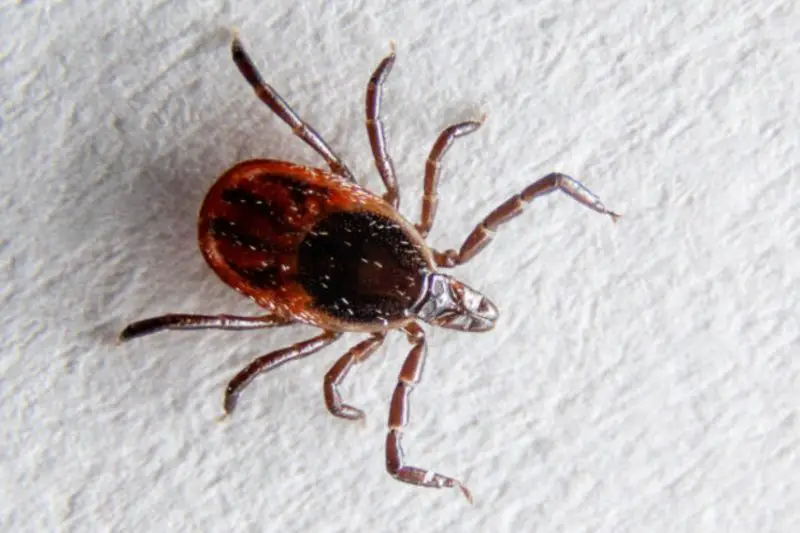
The primary species associated with Lyme disease transmission in Michigan is the Blacklegged Tick. Over the past two decades, this species has expanded steadily across much of the Lower Peninsula and into portions of the Upper Peninsula. Once concentrated in limited western counties, it is now established in large sections of southern and western Michigan, particularly in moist forested regions near Lake Michigan and inland hardwood corridors.
Blacklegged ticks thrive in shaded environments where leaf litter retains moisture. Michigan’s mixed hardwood forests, especially oak and maple stands, create stable microclimates ideal for questing. These habitats allow ticks to remain hydrated while waiting for hosts to pass through.
The American Dog Tick is also common across the state. While it is less frequently associated with Lyme disease, it contributes to overall tick encounters, especially in grassy fields and open recreational spaces. Because multiple species overlap geographically and seasonally, prevention strategies must account for more than one ecological pattern.
When residents think about tick prevention, they often imagine a single threat. In reality, multiple species respond differently to temperature, habitat, and host availability. Effective prevention begins with understanding this overlap.
Why Prevention Is Harder Than It Sounds
Tick prevention is often presented as a checklist: apply repellent, wear long sleeves, check for ticks afterward. These measures are important, but they address only part of the ecological picture.
Michigan’s landscape complicates prevention. Suburban development frequently borders fragmented forest patches. This fragmentation increases “edge habitat,” the transitional zone between forest and lawn. Edge environments are biologically rich and support high densities of white-tailed deer and small mammals.
Deer serve as reproductive hosts for adult ticks. White-footed mice and other rodents act as primary reservoirs for Lyme bacteria. Ticks feed on both during different life stages.
Ticks do not arise spontaneously in yards.
They follow host movement patterns.
If deer regularly travel through a property, adult ticks may be introduced annually. If rodent nesting areas exist near foundations, larval and nymphal ticks may persist close to human activity zones.
Prevention that ignores wildlife corridors often feels incomplete because it addresses symptoms rather than ecological drivers.
The Myth of “Tick Season”
Many Michigan residents still think of tick activity as confined to late spring and early summer. While this period often brings the most noticeable increase in nymph activity, tick behavior is more nuanced.
Blacklegged ticks can become active whenever temperatures rise above freezing. On mild winter days, especially in southern Michigan, adults may quest from leaf litter. Activity may be sporadic but not absent.
Spring brings the first major pulse as overwintered adults and nymphs resume feeding. Early summer marks peak nymph activity, the life stage most strongly associated with Lyme transmission due to small size and detection difficulty. Fall introduces a second adult surge when cooler temperatures and moist leaf litter restore favorable conditions.
Tick activity is cyclical.
It occurs in pulses across the year.
Prevention must extend beyond a single calendar window.
Why Mild Winters Matter in Michigan
Michigan’s proximity to the Great Lakes influences winter variability. Lake-effect weather can produce heavy snow in some regions while leaving others relatively mild.
Snow cover can insulate ground layers, protecting overwintering ticks from extreme cold. In years with fluctuating freeze-thaw cycles rather than sustained deep freezes, tick survival increases.
A mild winter does not generate new ticks. It increases the proportion that survive into spring. When spring warmth arrives, higher survival translates into denser early-season populations.
Residents often notice increased encounters and attribute them to sudden environmental change.
The change occurred months earlier.
Winter survival sets the stage.
Prevention strategies must account for carryover from previous seasons.
Why Nymphs Are the Real Problem
Adult ticks are larger and easier to spot crawling on clothing or attached to pets. Nymphs, active primarily in late spring and early summer, are significantly smaller and more difficult to detect.
Blacklegged tick nymphs may be no larger than a poppy seed. Their small size allows them to attach unnoticed in hidden areas such as behind knees, along waistbands, or under hair.
Because Lyme transmission generally requires prolonged attachment, delayed detection increases infection risk.
Many Michigan residents focus attention on visible adult ticks in grass.
Nymphs remain in leaf litter and shaded edges where they are rarely seen.
Prevention strategies must account for what cannot be easily observed.
Awareness of invisibility matters.
The Role of Yard Structure in Tick Risk
Michigan’s wooded character enhances both its beauty and its tick habitat potential. Mature tree canopies create shaded soil layers rich in leaf litter. These layers retain moisture even during warm weather.
Yards that blend directly into unmanaged forest create continuous corridors for deer and rodents. Deer trails crossing lawns introduce adult ticks each season. Rodent burrows near foundations support larval and nymphal feeding.
Structural prevention focuses on reducing habitat overlap. Clearing leaf litter from immediate yard margins reduces moisture retention. Creating wood chip or gravel buffer zones between forest edges and lawns decreases questing success. Maintaining trimmed grass lowers contact opportunities.
Tick prevention is not purely chemical.
It is environmental.
Landscape adjustments modify exposure probability more effectively than many homeowners realize.
Pets as Early Warning Systems
Dogs often reveal rising tick populations before humans notice them. After spring hikes or backyard activity, attached ticks signal environmental density.
Consistent veterinary preventive treatment reduces the chance of pets bringing viable ticks indoors. However, even treated animals may carry unattached ticks into the home briefly.
Households with active outdoor dogs experience tick cycles more visibly. Prevention must align for both pets and people. If pet protection lapses, environmental exposure increases.
Pets are not the cause of tick presence.
They are indicators.
The Upper Peninsula vs. Lower Peninsula
Geographic variation within Michigan shapes tick density. Historically, southern and western Lower Peninsula counties reported higher Lyme incidence due to established blacklegged tick populations.
In recent years, portions of the Upper Peninsula have experienced expanding tick presence. Warmer seasonal patterns, abundant deer populations, and suitable forest habitat contribute to this shift.
Residents in historically low-risk northern areas may underestimate exposure risk.
Geography evolves.
Ticks follow climate patterns and host migration corridors.
Prevention requires updated awareness rather than reliance on past assumptions.
Why Repellent Alone Is Not Enough
Repellent remains an essential preventive measure during outdoor activities. Products containing DEET or permethrin-treated clothing reduce attachment probability significantly.
However, repellent provides temporary protection. It does not alter yard structure, deer movement, or rodent reservoirs.
Michigan’s outdoor culture includes hiking, fishing, hunting, gardening, and cabin recreation. Exposure occurs across multiple environments.
Layered prevention is most effective. Protective clothing during high-risk seasons. Thorough body checks afterward. Yard habitat management. Pet treatment consistency.
No single tactic addresses an ecological network.
Prevention succeeds when multiple layers overlap.
Why Body Checks Still Matter Most
Despite advances in landscaping and chemical deterrents, body checks remain one of the most effective preventive strategies.
Lyme transmission typically requires extended tick attachment, often exceeding 24 hours. Early removal dramatically reduces infection probability.
Checking behind knees, under arms, along waistbands, and at the scalp line interrupts transmission before bacteria enter the bloodstream.
Prevention is behavioral as much as environmental.
Routine builds protection.
Awareness reduces risk.
The Role of Rodents in Lyme Ecology
White-footed mice function as primary reservoirs for Lyme bacteria. Larval ticks feeding on infected mice acquire the pathogen. When those ticks later reach the nymph stage, they can transmit it to humans.
Michigan’s fragmented suburban forests often support high rodent densities. Reduced predator presence and abundant food sources encourage nesting near homes.
Prevention does not require eliminating wildlife.
It requires reducing nesting opportunities close to human living spaces.
Sealing foundation cracks and removing brush piles discourages rodent activity near homes.
Ecology drives disease risk.
Habitat management influences ecology.
Why Some Years Feel Worse
Certain years produce noticeably higher tick encounters.
A mild winter increases overwinter survival. A wet spring enhances humidity and nymph survival. A strong mast year boosts rodent reproduction, feeding more larval ticks.
Stacked environmental advantages compound population density across seasons.
Residents perceive sudden invasion.
The buildup occurred gradually.
Prevention must adapt annually.
Weather patterns shape tick dynamics long before headlines appear.
Human Behavior and Risk Perception
Michigan’s outdoor culture increases exposure opportunities. Short sleeves in early May. Leaf clearing in October. Sitting in forest undergrowth during hunting season.
Many residents associate ticks with remote forests.
Backyards and neighborhood parks often carry equal risk.
Risk perception often lags ecological change.
Prevention begins with recognizing proximity.
Awareness aligns behavior with biology.
When Professional Intervention Makes Sense
In high-density areas or properties bordering unmanaged forest, professional yard treatment may reduce localized tick populations.
However, treatments work best when combined with structural changes. Repeated chemical application without habitat modification often yields limited long-term success.
Integrated approaches outperform isolated tactics.
Prevention is cumulative.
It requires consistency across seasons.
Misconceptions Michigan Residents Still Hold
Some believe removing deer eliminates ticks entirely. Deer are critical reproductive hosts but not primary Lyme reservoirs.
Others assume ticks drop from trees. Most blacklegged ticks quest from low vegetation and leaf litter.
Some believe winter eliminates risk completely. Activity may pause, but survival continues.
Fear simplifies complex ecology.
Understanding restores balance.
Long-Term Outlook for Michigan
Climate variability suggests continued tick presence and potential expansion in certain regions of Michigan. Warmer shoulder seasons extend activity windows. Suburban expansion increases edge habitat.
Tick prevention will require adaptation rather than reaction.
Michigan’s forests remain integral to its identity.
Ticks are part of that ecological system.
Understanding how they move within it allows residents to move safely alongside them rather than in surprise.
FAQs About Tick Prevention in Michigan
When does tick season start in Michigan?
Activity can begin on mild days above freezing, often in early spring.
Are ticks active in winter?
On warmer days, yes. Overwintering adults may quest when temperatures rise.
Do deer carry Lyme disease?
Deer support adult tick reproduction but are not the primary bacterial reservoir.
Is repellent enough?
Repellent reduces attachment risk but works best alongside yard management and body checks.
Are some regions safer than others?
Risk varies, but tick expansion has increased exposure across much of the state.
Final Thoughts
What most Michigan residents don’t realize about tick prevention is that it must mirror ecology rather than myth.
Ticks respond to temperature, humidity, host movement, and habitat fragmentation.
Mild winters preserve survival.
Spring activates emergence.
Summer nymphs drive infection risk.
Fall adults extend exposure.
Prevention succeeds when it matches timing, landscape, and behavior.
In a state defined by forests, lakes, and outdoor culture, tick risk will always intersect daily life.
The key is not avoidance of nature.
It is understanding how to move within it safely.