
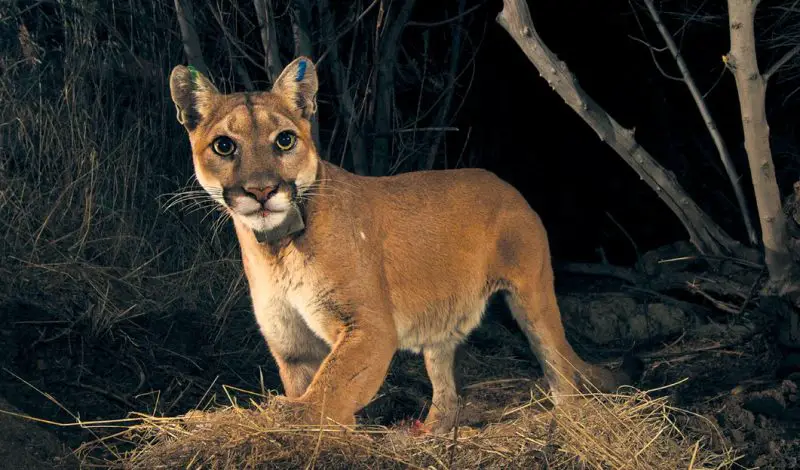
Across California, two iconic wild cats share the landscape. Mountain lions move silently through chaparral, forests, and desert ranges. Bobcats slip along fence lines, canyon edges, and suburban greenbelts. Both are secretive. Both are powerful predators. And because Californians occasionally glimpse each in the same regions, a persistent question continues to surface.
Can mountain lions in California interbreed with bobcats?
At first glance, the idea feels possible. They look related. They occupy overlapping habitats. They are both cats. When people encounter an animal that looks slightly “off,” hybridization becomes an easy explanation.
But nature is far more structured than appearances suggest. To answer this question honestly, we must look at genetics, evolution, behavior, and what decades of scientific observation in California actually show.
Table of Contents
- 1 California Is Home to Two Very Different Wild Cats
- 2 Mountain Lions and Bobcats Belong to Different Lineages
- 3 Genetic Incompatibility Makes Hybridization Impossible
- 4 Why Being “Both Cats” Is Not Enough
- 5 Chromosome Myths Add to the Confusion
- 6 No Scientific Evidence Exists Anywhere
- 7 Behavior Creates an Additional Barrier
- 8 Size Difference Makes Mating Unrealistic
- 9 Why the Myth Persists in California
- 10 Bobcats Vary Widely in Appearance
- 11 Mountain Lions Look Smaller Than Expected at Times
- 12 Distance and Lighting Distort Size Perception
- 13 Trail Cameras Create Optical Illusions
- 14 Domestic Hybrid Cats Add Another Layer of Confusion
- 15 Why Stable Hybrid Populations Do Not Form
- 16 What California Wildlife Agencies Say
- 17 Why This Misunderstanding Matters
- 18 What To Do If You See an Unusual Cat
- 19 Mountain Lions and Bobcats Have Different Ecological Roles
- 20 Why California’s Wild Cats Remain Separate
- 21 What Science Tells Us Clearly
- 22 FAQs About Mountain Lions and Bobcats in California
- 22.1 Can mountain lions and bobcats interbreed
- 22.2 Has a mountain lion–bobcat hybrid ever been confirmed
- 22.3 Why do people think mountain lions and bobcats can hybridize
- 22.4 Are mountain lions and bobcats closely related
- 22.5 Could hybridization occur in captivity
- 22.6 Do mountain lions and bobcats interact in the wild
- 22.7 Why do some bobcats look unusually large
- 22.8 Why do some mountain lions look small
- 22.9 Can appearance alone identify a hybrid
- 22.10 What should I do if I see an unusual wild cat
- 23 Final Thoughts
California Is Home to Two Very Different Wild Cats
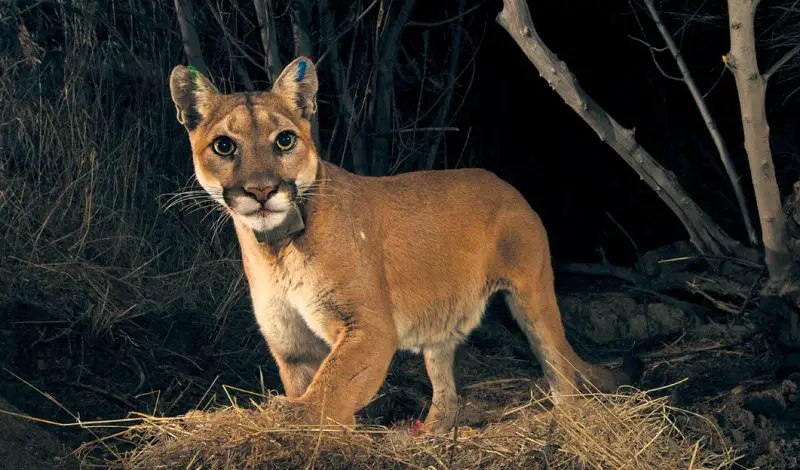
California supports one of the most diverse wild cat communities in North America.
Mountain lions (Puma concolor) are the state’s largest native felid. They occupy nearly every major habitat, from coastal ranges and Sierra Nevada forests to desert mountains and foothills.
Bobcats (Lynx rufus) are smaller but even more widespread. They thrive in forests, scrublands, wetlands, agricultural edges, and increasingly near suburban areas.
Because both species are adaptable and elusive, their ranges overlap extensively. Overlap, however, does not mean genetic mixing.
Mountain Lions and Bobcats Belong to Different Lineages
Although both animals are cats, they are not closely related in evolutionary terms.
Mountain lions belong to the genus Puma. Bobcats belong to the genus Lynx. These genera diverged millions of years ago, following very different evolutionary paths.
This separation matters. Hybridization requires extremely close genetic compatibility. Species must share not only chromosome numbers, but also chromosome structure, gene alignment, and reproductive mechanisms.
Mountain lions and bobcats do not meet these requirements.
Genetic Incompatibility Makes Hybridization Impossible
The most important fact is simple.
Mountain lions and bobcats cannot interbreed.
Their genetic structures are incompatible. Their reproductive systems do not align. Fertilization would fail, or embryos would not develop.
There are no scientifically verified mountain lion–bobcat hybrids anywhere in the world. Not in California. Not in captivity. Not historically.
If such hybrids were possible, modern genetic testing would have identified them long ago.
Why Being “Both Cats” Is Not Enough
People often assume that animals within the same family can interbreed.
This is not how biology works.
The cat family (Felidae) contains many species that cannot hybridize. Lions cannot breed with cougars. Tigers cannot breed with lynx. Bobcats cannot breed with mountain lions.
Evolutionary distance matters more than visual similarity.
Sharing whiskers, tails, and claws does not mean sharing compatible DNA.
Chromosome Myths Add to the Confusion
Some hybrid myths arise from misunderstandings about chromosomes.
People hear that cats have similar chromosome counts and assume compatibility. But chromosome number alone is meaningless without matching structure and gene arrangement.
Two books may have the same number of pages and still be written in completely different languages.
This is the case with mountain lions and bobcats.
No Scientific Evidence Exists Anywhere
Wildlife biologists have studied both species extensively.
Bobcats and mountain lions are routinely sampled for genetics, disease monitoring, and population studies. DNA analysis is precise and widespread.
Not a single confirmed mountain lion–bobcat hybrid has ever been documented.
Every investigated claim has been explained as misidentification, unusual appearance, or incomplete observation.
Behavior Creates an Additional Barrier
Even if genetics allowed hybridization, behavior would still prevent it.
Mountain lions and bobcats live very different lives.
Mountain lions are solitary apex predators with large territories. Bobcats are smaller, mid-sized predators that avoid larger carnivores whenever possible.
Bobcats are potential prey to mountain lions, not potential mates.
Encounters between the two species usually end with avoidance or predation risk, not courtship.
Size Difference Makes Mating Unrealistic
The size gap between these cats is enormous.
Adult mountain lions can weigh 100 to 160 pounds or more. Bobcats typically weigh between 15 and 35 pounds.
An attempted mating would pose extreme injury risk to a bobcat. Animals do not engage in behaviors that carry high physical risk without reproductive benefit.
From an evolutionary perspective, such interaction makes no sense.
Why the Myth Persists in California
California’s landscapes help keep the myth alive.
The state contains dense wildlands adjacent to human development. Trail cameras, hikers, and homeowners increasingly encounter wildlife.
When someone sees a large cat that does not perfectly match expectations, the mind searches for explanation. Hybridization feels exciting, rare, and dramatic.
Drama spreads faster than biology.
Bobcats Vary Widely in Appearance
Bobcats are not uniform animals.
Some are compact. Others are long-legged and muscular. Coat color ranges from pale gray to deep reddish brown. Spot patterns vary dramatically.
Seasonal changes also matter. Winter coats are thicker. Summer coats are sleek. Juveniles look lanky and odd-proportioned.
A large bobcat in winter can look surprisingly cougar-like at a distance.
Mountain Lions Look Smaller Than Expected at Times
Mountain lions also vary in appearance.
Young dispersing lions are slimmer and smaller than adults. Females are significantly smaller than large males. Poor lighting and brief sightings distort perception.
A juvenile mountain lion may look “too small” to be a cougar, leading observers to assume hybrid ancestry.
Distance and Lighting Distort Size Perception
Most sightings are brief.
Low light. Dense vegetation. Movement. Distance. These factors compress scale and exaggerate shape.
Without a reference point, size estimation becomes unreliable. The brain fills in missing details.
What looks unusual becomes something new.
Trail Cameras Create Optical Illusions
Trail cameras play a major role in hybrid myths.
Wide-angle lenses stretch bodies. Night images exaggerate eye shine and leg length. Lack of scale removes context.
Animals photographed alone often look unfamiliar.
Technology unintentionally fuels speculation.
Domestic Hybrid Cats Add Another Layer of Confusion
Some domestic cats resemble wild species.
Bengal cats, Savannah cats, and large feral cats can look strikingly wild. Escaped or roaming domestic hybrids occasionally appear in rural California.
These animals are not wild hybrids surviving in nature. They are domestic animals with exotic ancestry.
Their presence reinforces incorrect assumptions about wild hybridization.
Why Stable Hybrid Populations Do Not Form
Even when hybridization is possible in other species, stable populations rarely form.
Hybrids must survive, reproduce, and compete successfully. Most do not.
In the case of mountain lions and bobcats, hybrids cannot even be born. The barrier exists at the genetic level.
What California Wildlife Agencies Say
California wildlife officials do not recognize any mountain lion–bobcat hybrids.
Unusual sightings are consistently explained by known species after investigation. Genetic sampling supports clear species separation.
Management focuses on coexistence and conservation, not hybrid threats.
Why This Misunderstanding Matters
Belief in hybrids is not harmless.
It fuels fear. It encourages unnecessary killing of wildlife. It distracts from real conservation challenges like habitat fragmentation and human encroachment.
Accurate understanding protects both people and animals.
What To Do If You See an Unusual Cat
If you encounter a cat that looks unusual, observe calmly.
Note size, tail length, behavior, habitat, and time of day. Photographs help, but assumptions do not.
Report sightings to wildlife authorities if necessary and allow experts to identify the animal.
Mountain Lions and Bobcats Have Different Ecological Roles
Mountain lions regulate deer populations and shape ecosystem balance at a large scale.
Bobcats control rodents, rabbits, and small prey, influencing mid-level ecological processes.
Each species fills a distinct role. Blending them would disrupt that balance.
Nature preserves these roles carefully.
Why California’s Wild Cats Remain Separate
Despite sharing landscapes, mountain lions and bobcats remain biologically and behaviorally separate.
They do not merge. They do not blur. They do not hybridize.
They coexist by avoiding each other, not by combining.
What Science Tells Us Clearly
Science provides a definitive answer.
Mountain lions and bobcats cannot interbreed. There are no hybrids. There is no gray area.
This conclusion is supported by genetics, behavior, anatomy, and decades of observation.
FAQs About Mountain Lions and Bobcats in California
Can mountain lions and bobcats interbreed
No. Mountain lions and bobcats are genetically incompatible and cannot produce offspring.
Has a mountain lion–bobcat hybrid ever been confirmed
No. There are no scientifically verified cases of mountain lion–bobcat hybrids anywhere in the world.
Why do people think mountain lions and bobcats can hybridize
Because they share habitats, look related, and people often misidentify animals seen briefly or at a distance.
No. They belong to different genera and diverged evolutionarily millions of years ago.
Could hybridization occur in captivity
No. Genetic incompatibility prevents reproduction even under controlled conditions.
Do mountain lions and bobcats interact in the wild
They usually avoid each other. Bobcats may even be prey for mountain lions.
Why do some bobcats look unusually large
Seasonal coat changes, individual variation, and good nutrition can make bobcats appear larger than expected.
Why do some mountain lions look small
Juveniles and females are smaller, and lighting or distance can distort perceived size.
Can appearance alone identify a hybrid
No. Visual traits are unreliable and often misleading.
What should I do if I see an unusual wild cat
Observe from a distance, avoid assumptions, and report sightings to wildlife officials if needed.
Final Thoughts
The idea that mountain lions in California interbreed with bobcats is understandable, but it is not true.
The animals share territory, not DNA. They share landscapes, not lineages.
What people see are bobcats, mountain lions, domestic cats, or misidentified animals shaped by lighting, distance, and expectation.
Nature draws firm boundaries, and in this case, those boundaries remain intact.
Mountain lions remain mountain lions. Bobcats remain bobcats. California’s wild cats are not becoming something else.