
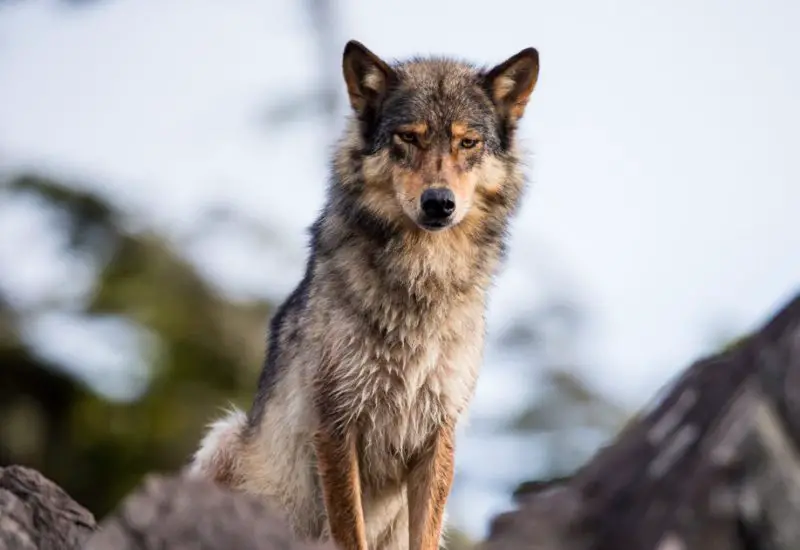
In Montana, wolves are not distant legends or abstract symbols of wilderness. They are real, living animals that roam forests, mountains, and river valleys. At the same time, rural Montana is also home to countless domestic dogs that live on ranches, farms, and properties bordering wild land. Where these two worlds overlap, a persistent question keeps resurfacing.
Do dogs and wolves still interbreed in the wild in Montana, or is that idea mostly a myth?
The question feels reasonable. Wolves and dogs are closely related. They can look similar. They share behaviors, vocalizations, and even body language. In theory, hybridization seems possible. In practice, however, the reality is far more complex—and far more misunderstood—than most people realize.
To answer this question honestly, we need to move beyond assumptions and examine genetics, behavior, ecology, and decades of wildlife research conducted across Montana and the broader northern Rockies.
Table of Contents
- 1 Wolves and Dogs Are Genetically Compatible — But That’s Only the Starting Point
- 2 Wolf Social Structure Acts as a Powerful Barrier
- 3 Breeding Timing Rarely Aligns
- 4 Behavior Differences Matter More Than Genetics
- 5 Montana’s Wolves Are Not Isolated or Desperate
- 6 What the Science Actually Shows
- 7 Why People Think Dog–Wolf Hybrids Are Common
- 8 The Role of Feral and Free-Ranging Dogs
- 9 Historical Context Adds to the Confusion
- 10 Wildlife Agencies Actively Monitor for Hybrids
- 11 Why Wolves Avoid Dogs Even Outside Pack Territory
- 12 Hybrid Survival Would Be Difficult Even If It Occurred
- 13 Why Coywolf Confusion Spills Over Into Montana
- 14 Media and Folklore Amplify the Myth
- 15 Legal and Conservation Implications Matter
- 16 Why the Myth Persists in Rural Communities
- 17 So, Does It Ever Happen at All?
- 18 Why Understanding This Matters
- 19 FAQs about Dogs and Wolves in Montana
- 19.1 Can dogs and wolves biologically interbreed?
- 19.2 Do dogs and wolves still interbreed in Montana today?
- 19.3 Why don’t wolves mate with dogs in the wild?
- 19.4 Have dog–wolf hybrids ever existed in North America?
- 19.5 Are wolf–dog hybrids common in rural Montana?
- 19.6 How do wildlife agencies check for hybrids?
- 19.7 What happens if a hybrid is found?
- 19.8 Why do people think hybrids are common?
- 19.9 Are coywolves the same as dog–wolf hybrids?
- 19.10 Does believing in hybrids affect wolf conservation?
- 20 Final Thoughts
Wolves and Dogs Are Genetically Compatible — But That’s Only the Starting Point
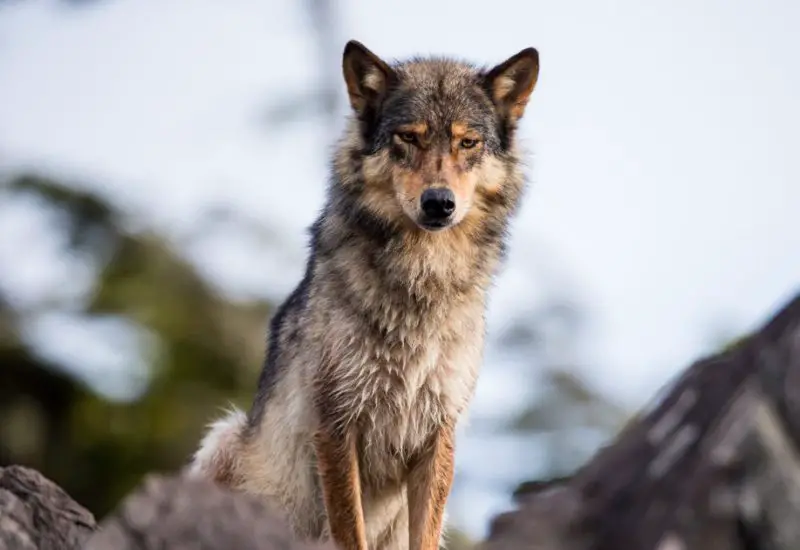
From a purely biological perspective, dogs and gray wolves are genetically compatible. Domestic dogs descend from ancient wolves, and they remain close enough genetically to produce offspring.
This fact often fuels the belief that dog–wolf hybrids should be common wherever wolves and dogs coexist. But genetic compatibility alone does not guarantee that hybridization occurs regularly—or at all—in natural settings.
In wildlife biology, possibility and probability are very different things.
For hybridization to happen in the wild, timing, behavior, social structure, and survival conditions all have to align. In Montana, those factors rarely do.
Wolf Social Structure Acts as a Powerful Barrier
Wolves are not solitary animals casually seeking mates.
They live in tightly structured packs built around a dominant breeding pair. These packs defend territory aggressively, exclude outsiders, and follow strict social rules. Breeding opportunities are limited almost entirely to the alpha male and alpha female.
A domestic dog wandering into wolf territory is not viewed as a potential mate. It is viewed as an intruder.
In most documented cases, wolves chase away, injure, or kill dogs that enter their territory, especially during breeding season. This social hostility alone prevents most opportunities for interbreeding.
Breeding Timing Rarely Aligns
Even when proximity exists, timing works against hybridization.
Wolves have a narrow breeding window, usually once per year in late winter. Female dogs, by contrast, may go into heat at different times depending on breed, health, and environment.
This mismatch dramatically reduces the chance that a receptive dog and a receptive wolf encounter each other at the right moment.
In controlled or artificial environments, timing can be manipulated. In the wild, it almost never is.
Behavior Differences Matter More Than Genetics
Dogs and wolves behave very differently, despite their shared ancestry.
Wolves rely on ritualized courtship behaviors that domestic dogs often do not recognize or respond to appropriately. Wolves also assess social rank, confidence, and pack affiliation before mating.
A dog lacks the signals wolves expect. Even if physical compatibility exists, behavioral incompatibility creates a barrier that biology alone cannot overcome.
In short, wolves don’t see dogs as suitable partners.
Montana’s Wolves Are Not Isolated or Desperate
Hybridization between species or subspecies is most common when populations are small, fragmented, or under extreme pressure.
That is not the case in Montana.
Montana’s wolf population is well established, genetically diverse, and connected to neighboring populations in Idaho, Wyoming, and Canada. Wolves here do not struggle to find mates of their own species.
When wolves have access to other wolves, they overwhelmingly choose them.
Hybridization becomes unnecessary.
What the Science Actually Shows
Decades of genetic testing across the northern Rocky Mountains provide clear answers.
Wildlife agencies routinely collect DNA samples from wolves through scat, hair, tissue, and blood. These samples are analyzed to monitor population health, lineage, and genetic diversity.
Results consistently show that Montana’s wolves are overwhelmingly pure gray wolves, with no meaningful evidence of ongoing dog hybridization in the wild.
When suspected hybrids are tested, they almost always turn out to be misidentified wolves or domestic dogs—not true hybrids.
Why People Think Dog–Wolf Hybrids Are Common
If hybrids are rare or nonexistent, why does the belief persist?
The answer lies in appearance and behavior.
Some wolves are large. Some dogs are wolf-like. Coat color, size, and posture can blur distinctions, especially at a distance or in poor lighting.
A large dog roaming freely can look like a wolf. A wolf with unusual coloring can look “dog-like.” Add in brief sightings, trail camera distortion, and secondhand stories, and hybrid myths grow easily.
Visual impression is not genetic evidence.
The Role of Feral and Free-Ranging Dogs
Rural Montana does have free-ranging dogs.
Some live semi-wild lives, traveling long distances, hunting small prey, and avoiding people. Over time, these dogs may develop leaner bodies and more cautious behavior.
Seen in the wild, these dogs are often mistaken for wolf hybrids.
In reality, they are dogs adapting to rural conditions—not genetic blends.
Historical Context Adds to the Confusion
Historically, there were isolated cases of dog–wolf hybrids in North America, mostly tied to extreme human interference.
These occurred during periods when wolf populations were severely reduced, fragmented, or persecuted. In such cases, lone wolves may have lacked access to other wolves.
Those conditions no longer apply in Montana today.
Modern conservation has restored stable wolf populations, removing the ecological pressures that once made hybridization more likely.
Wildlife Agencies Actively Monitor for Hybrids
Hybridization is not ignored by wildlife managers.
State and federal agencies actively monitor wolf genetics to ensure population integrity. Hybrid animals, if detected, are usually removed to prevent genetic dilution.
The absence of confirmed hybrids in monitoring data is not accidental. It reflects what is actually happening on the landscape.
If dog–wolf hybrids were forming regularly in Montana, genetic surveys would detect them.
They do not.
Why Wolves Avoid Dogs Even Outside Pack Territory
Even outside core pack zones, wolves avoid dogs.
Dogs carry unfamiliar scents, unpredictable behaviors, and human association. Wolves are risk-averse animals that survive by minimizing uncertainty.
Approaching a dog offers no advantage and significant danger.
Avoidance, not curiosity, defines most wolf–dog encounters.
Hybrid Survival Would Be Difficult Even If It Occurred
Even in the unlikely event that a hybrid were born, survival would be challenging.
A hybrid might not fit well into a wolf pack or a dog group. It could lack appropriate social signals, hunting skills, or behavioral cues needed to integrate.
Natural selection does not favor individuals that fall between two worlds.
This further reduces the chance that hybrids persist or reproduce in the wild.
Why Coywolf Confusion Spills Over Into Montana
Much confusion comes from mixing up different hybrid concepts.
Coywolves—hybrids of coyotes and wolves—are well documented in eastern North America. Their existence often leads people to assume dog–wolf hybrids must be equally common.
But coyotes and wolves overlap extensively and interact differently than dogs and wolves do. The ecological context is completely different.
Coywolf science does not translate to dog–wolf assumptions.
Media and Folklore Amplify the Myth
Stories about hybrids capture attention.
They blend fear, mystery, and novelty. Media headlines, social posts, and campfire stories reinforce the idea without evidence.
Once a narrative exists, every unusual sighting becomes “proof.”
Science moves slower than stories—but it moves more accurately.
Legal and Conservation Implications Matter
Hybridization concerns are not just academic.
If widespread dog–wolf hybridization were occurring, it would affect conservation policy, hunting regulations, and endangered species protections.
The fact that these policies remain focused on wolves—not hybrids—reflects the scientific consensus.
Montana manages wolves as wolves because that is what they are.
Why the Myth Persists in Rural Communities
In rural areas, people live closer to wildlife and experience more encounters.
Unexplained sightings feel personal. When answers are unclear, hybrid explanations fill the gap.
This is not ignorance. It is human pattern-making.
But proximity does not change biology.
So, Does It Ever Happen at All?
In theory, dog–wolf hybridization is possible.
In practice, in modern Montana, it is extraordinarily rare to the point of being biologically insignificant.
There is no evidence of ongoing, natural dog–wolf hybrid populations in the state.
The myth persists because it feels plausible—not because it is happening.
Why Understanding This Matters
Belief in widespread hybridization can fuel fear, misunderstanding, and unnecessary hostility toward wolves.
It can also lead to mismanagement decisions based on false assumptions.
Understanding reality supports coexistence rather than conflict.
FAQs about Dogs and Wolves in Montana
Can dogs and wolves biologically interbreed?
Yes. Dogs and gray wolves are genetically compatible, but that does not mean hybridization commonly occurs in the wild.
Do dogs and wolves still interbreed in Montana today?
No. There is no solid scientific evidence showing ongoing, natural dog–wolf hybridization in Montana.
Why don’t wolves mate with dogs in the wild?
Strong pack structure, territorial behavior, breeding timing, and behavioral differences prevent mating.
Have dog–wolf hybrids ever existed in North America?
Yes, but mostly in rare, historical situations when wolf populations were extremely low or heavily disrupted.
Are wolf–dog hybrids common in rural Montana?
No. Most reported “hybrids” are misidentified wolves or free-ranging domestic dogs.
How do wildlife agencies check for hybrids?
They use DNA testing from scat, tissue, and hair samples collected in the field.
What happens if a hybrid is found?
Wildlife agencies typically remove confirmed hybrids to protect wolf genetic integrity.
Why do people think hybrids are common?
Appearance differences, brief sightings, trail camera distortion, and folklore fuel the belief.
Are coywolves the same as dog–wolf hybrids?
No. Coywolves involve coyotes and wolves and occur mainly in eastern North America.
Does believing in hybrids affect wolf conservation?
Yes. Misconceptions can influence public opinion and management decisions based on fear rather than science.
Final Thoughts
So, do dogs and wolves still interbreed in Montana, or is it a myth?
For all practical purposes, it is a myth.
While dogs and wolves remain genetically compatible, powerful behavioral, social, ecological, and environmental barriers prevent hybridization in the wild. Montana’s wolves are stable, socially structured, and genetically monitored.
What people are seeing are wolves, dogs, or misidentified animals—not a hidden population of hybrids.
In Montana’s wild landscapes, wolves remain wolves. Dogs remain dogs. And the line between them, shaped by evolution and behavior, remains firmly intact.