
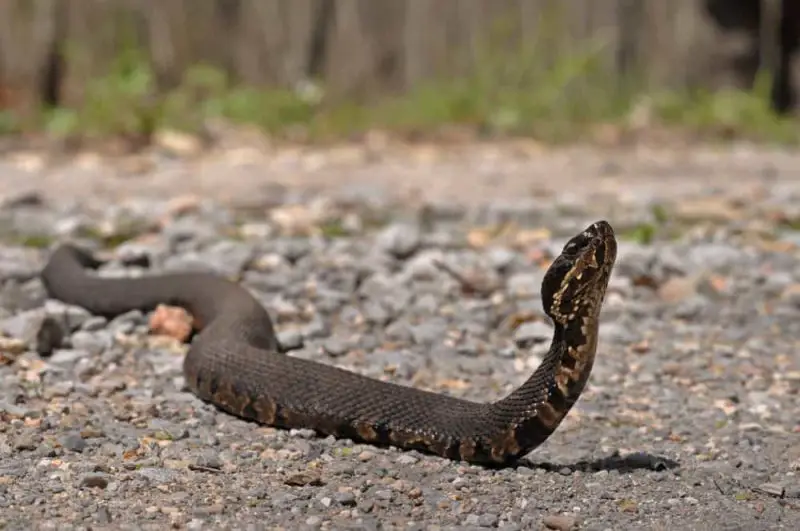
Stories about aggressive snakes spread quickly, especially when they involve water, hiking trails, or sudden encounters outdoors. One persistent rumor claims that water moccasins actively chase people, sometimes across shorelines, paths, or even through shallow water. This belief has circulated for decades across parts of the United States. But when it comes to Indiana specifically, the situation becomes more complicated.
The short answer is that true water moccasins, also called cottonmouths, are generally not native to most of Indiana, and they do not intentionally chase humans anywhere. Many reported sightings actually involve harmless native water snakes that behave defensively when startled. Understanding snake biology, habitat distribution, and defensive behavior helps separate fact from exaggeration.
Exploring this topic provides more than reassurance. It also highlights how wildlife myths develop, how fear influences perception, and how accurate knowledge improves both human safety and wildlife conservation.
Table of Contents
- 1 What Is a Water Moccasin?
- 2 Are Water Moccasins Found in Indiana?
- 3 Why People Think Snakes Chase Them
- 4 Defensive Behavior Versus Aggression
- 5 Common Indiana Snakes Mistaken for Cottonmouths
- 6 Habitat Preferences in Indiana
- 7 Seasonal Snake Activity
- 8 Water Snake Behavior Around Humans
- 9 How Climate Influences Snake Distribution
- 10 Safety Tips Around Water Habitats
- 11 What to Do If You Encounter a Snake
- 12 The Role of Snakes in Ecosystems
- 13 Why Snake Myths Persist
- 14 Venomous Snakes Actually Found in Indiana
- 15 Human-Wildlife Coexistence in Indiana
- 16 FAQs About Water Moccasins in Indiana
- 16.1 Are water moccasins native to Indiana?
- 16.2 Do cottonmouths chase people?
- 16.3 Why do snakes sometimes move toward people?
- 16.4 Are Indiana water snakes dangerous?
- 16.5 What should I do if bitten?
- 16.6 How can I identify a cottonmouth?
- 16.7 Do snakes attack unprovoked?
- 16.8 Are snakes beneficial?
- 16.9 Should snakes be killed if seen?
- 16.10 Is climate change affecting snake ranges?
- 17 Final Thoughts
What Is a Water Moccasin?
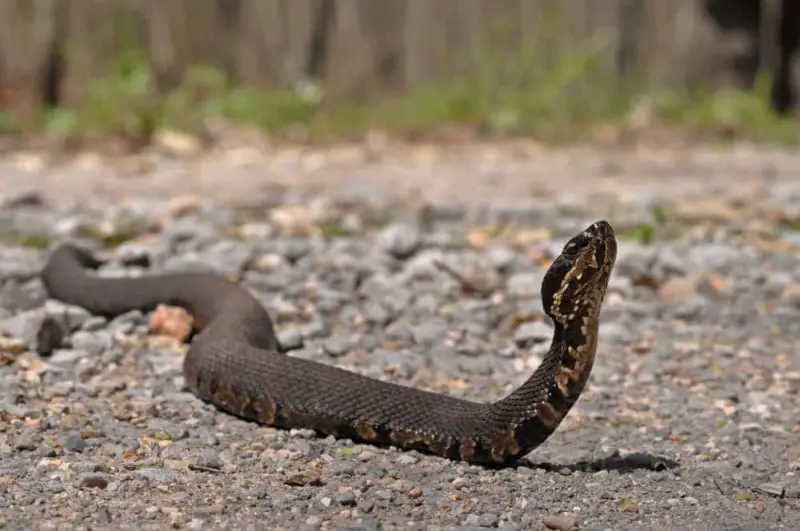
Water moccasins, scientifically known as Agkistrodon piscivorus, are venomous semi-aquatic pit vipers commonly referred to as cottonmouths. Their nickname comes from the bright white interior of their mouths, which they display dramatically when threatened. This open-mouth posture is a defensive warning meant to deter predators rather than invite confrontation.
These snakes are primarily native to the southeastern United States, where warm temperatures, wetlands, and abundant aquatic prey support their populations. Typical habitats include swamps, marshes, slow-moving rivers, floodplain forests, lakeshores, and coastal wetlands. Cottonmouths are strong swimmers and often hunt fish, frogs, salamanders, turtles, small mammals, and even carrion.
Physically, water moccasins have thick, muscular bodies, broad triangular heads, and dark coloration that may range from olive brown to nearly black. Their heavy build sometimes makes them appear slower than nonvenomous water snakes, though they are capable of quick defensive movement when threatened. Instead of fleeing immediately, cottonmouths may coil, vibrate their tails, flatten their bodies, or open their mouths wide in warning displays.
Despite their intimidating appearance, their behavior is primarily defensive. They prefer avoiding confrontation whenever possible.
Are Water Moccasins Found in Indiana?
Indiana lies near the northern boundary where cottonmouth habitat might theoretically extend, but confirmed stable populations are generally considered absent across most of the state. Wildlife authorities typically classify cottonmouth sightings in Indiana as rare, unconfirmed, or misidentified.
Instead, Indiana supports several common nonvenomous water snake species, especially the Northern Water Snake (Nerodia sipedon). These snakes inhabit lakes, rivers, reservoirs, ponds, and wetlands throughout the state. Their dark coloration, aquatic lifestyle, and defensive displays often lead to mistaken identity.
Many reported cottonmouth sightings actually involve these harmless native species. Because water snakes may flatten their heads, vibrate their tails, or hold defensive postures when threatened, observers unfamiliar with snake identification can easily assume they are venomous.
Recognizing this distinction helps reduce unnecessary fear while encouraging accurate wildlife awareness.
Why People Think Snakes Chase Them
The idea that snakes actively chase humans is widespread, yet scientific evidence does not support intentional pursuit behavior. Most reports stem from defensive escape responses that appear threatening in the moment.
When startled, a snake usually moves toward the nearest cover. For aquatic species, that cover is often water. If a person stands between the snake and the shoreline, the snake’s escape path may seem like an approach or pursuit.
Stress reactions also affect perception. Sudden wildlife encounters trigger adrenaline responses that heighten alertness, distort distance perception, and exaggerate speed. Memories formed during stressful events may unintentionally amplify perceived aggression.
These psychological and behavioral factors combine to create persistent chasing myths.
Defensive Behavior Versus Aggression
Snakes do not hunt humans. Defensive behavior is designed to prevent injury from large animals rather than initiate attack.
Common defensive actions include freezing to avoid detection, rapid escape toward shelter, defensive striking when cornered, tail vibration to mimic rattlesnakes, and open-mouth warning displays.
Cottonmouths sometimes stand their ground rather than fleeing immediately. This posture can appear aggressive, but it usually signals uncertainty about escape routes. Once a safe path appears, they typically retreat.
Most snake bites occur when people attempt to handle, harass, or corner snakes. Simply giving snakes space prevents nearly all incidents.
Avoidance remains the most effective safety strategy.
Common Indiana Snakes Mistaken for Cottonmouths
Several harmless Indiana snakes frequently resemble cottonmouths, especially under poor lighting or at a distance.
Northern water snakes are the most common source of confusion. They share aquatic habitats, dark coloration, and defensive behavior patterns. When threatened, they may flatten their bodies and appear more triangular-headed.
Plain-bellied water snakes, garter snakes, and even juvenile rat snakes may also be mistaken for venomous species. Color variation and defensive posture contribute to misidentification.
These snakes perform important ecological roles by controlling fish, amphibian, and rodent populations. Misidentification sometimes leads to unnecessary killing of harmless wildlife.
Education improves coexistence and conservation outcomes.
Habitat Preferences in Indiana
Indiana’s freshwater ecosystems provide excellent habitat for many native snakes. Lakes, rivers, marshes, wetlands, and ponds support diverse aquatic wildlife, including nonvenomous water snakes.
Cottonmouths prefer warmer southern climates where winters remain mild. Indiana’s colder winters limit survival potential for these subtropical reptiles. While occasional wandering individuals might theoretically appear near southern borders, long-term population establishment is unlikely.
Habitat suitability strongly influences species distribution. Climate, prey availability, shelter, and seasonal temperature patterns all shape where snakes thrive.
Understanding habitat helps interpret sightings realistically.
Seasonal Snake Activity
Snake encounters increase during warmer months because reptiles depend on external heat sources for metabolism.
Spring emergence occurs as snakes leave winter brumation sites. Rising temperatures stimulate feeding activity, mating behavior, and increased movement.
Summer warmth brings peak activity. Snakes hunt frequently, bask for thermoregulation, and travel between feeding areas.
Fall may produce additional sightings as snakes seek sheltered overwintering locations. Human outdoor activity also peaks during these seasons, increasing encounter probability.
Most seasonal encounters remain harmless.
Water Snake Behavior Around Humans
Nonvenomous water snakes often appear defensive precisely because they lack venom. Without chemical defense, they rely on bluff displays, rapid movement, and defensive biting when threatened.
These snakes rarely initiate interaction. Defensive strikes typically occur only when handled or cornered. Rapid escape toward water can easily be mistaken for pursuit if observers stand between the snake and its refuge.
Understanding normal snake behavior reduces misinterpretation.
Maintaining distance allows safe resolution.
How Climate Influences Snake Distribution
Climate plays a fundamental role in determining reptile distribution. Cottonmouths require warm, humid environments with relatively mild winters.
Indiana’s colder winters limit northern expansion of subtropical species. Even with gradual climate warming, stable cottonmouth populations remain unlikely across most of the state.
Shifting climate conditions sometimes fuel speculation about expanding snake ranges. Scientific monitoring helps track actual changes rather than anecdotal impressions.
Accurate data supports realistic wildlife management.
Safety Tips Around Water Habitats
Basic precautions reduce risk during outdoor activities near water.
Watch footing along shorelines and trails. Avoid reaching blindly into vegetation or rock crevices. Wear appropriate footwear when hiking or fishing. Keep pets supervised near wetlands. Maintain respectful distance from any snake encountered.
Snakes prefer avoidance over confrontation.
Simple awareness prevents most issues.
What to Do If You Encounter a Snake
Stay calm and avoid sudden movements. Most snakes retreat when given space.
Do not attempt to touch, capture, or provoke the snake. Slowly back away while allowing it a clear escape path. Blocking escape routes increases defensive responses.
If an unusual or potentially venomous species is observed, local wildlife authorities may be notified for identification.
Education reduces unnecessary panic and supports responsible coexistence.
The Role of Snakes in Ecosystems
Snakes play essential ecological roles as both predators and prey. They regulate rodent populations, helping reduce crop damage and disease transmission.
They also contribute to amphibian population control and support balanced aquatic ecosystems. Birds of prey, mammals, and other predators rely on snakes as food sources.
Healthy snake populations often indicate stable ecosystems.
Ecological awareness promotes appreciation rather than fear.
Why Snake Myths Persist
Fear of snakes has deep evolutionary roots. Humans evolved to recognize potential threats quickly, and stories amplify caution across generations.
Media portrayals frequently exaggerate snake aggression. Dramatic narratives spread faster than scientific explanations.
Misidentification, stress responses, and cultural storytelling all reinforce myths.
Education remains the most effective corrective tool.
Accurate knowledge improves safety and conservation.
Venomous Snakes Actually Found in Indiana
Indiana does host native venomous snakes, primarily the timber rattlesnake and eastern massasauga rattlesnake. Both species generally avoid human interaction and prefer forested hillsides or wetland habitats.
Bites remain rare because these snakes usually warn before striking. Rattlesnake rattling provides a clear auditory signal.
Understanding which species truly inhabit Indiana helps focus safety awareness accurately.
Correct identification reduces unnecessary alarm.
Human-Wildlife Coexistence in Indiana
Expanding suburbs, recreational lakes, and green corridors increase occasional wildlife encounters. Shared landscapes require balanced coexistence strategies.
Maintaining natural habitat buffers, supervising pets, and respecting wildlife space promote safe interactions.
Most wildlife prefers avoidance when given the opportunity.
Awareness and respect support both community safety and ecological health.
Balanced coexistence benefits everyone.
FAQs About Water Moccasins in Indiana
Are water moccasins native to Indiana?
Generally no. Confirmed populations are rare or absent, and most sightings involve harmless water snakes.
Do cottonmouths chase people?
No scientific evidence shows intentional pursuit of humans.
Why do snakes sometimes move toward people?
They often head toward water or shelter, which may coincide with a person’s location.
Are Indiana water snakes dangerous?
Most are nonvenomous and pose minimal risk if left alone.
What should I do if bitten?
Seek medical attention immediately, regardless of suspected species.
How can I identify a cottonmouth?
Look for heavy body shape, white mouth display, and southern habitat range.
Do snakes attack unprovoked?
Rarely. Most bites occur when snakes are handled or cornered.
Are snakes beneficial?
Yes. They control pests and support ecological balance.
Should snakes be killed if seen?
Wildlife authorities generally recommend leaving them alone.
Is climate change affecting snake ranges?
Some shifts are possible, but stable northern cottonmouth populations remain unlikely.
Final Thoughts
Water moccasins are often portrayed as aggressive snakes that chase people, but scientific evidence does not support this claim. In Indiana specifically, true cottonmouths are rare or absent, and most sightings involve harmless native water snakes exhibiting defensive behavior.
Understanding snake biology, habitat distribution, and human perception helps dispel myths while improving safety. Snakes play valuable ecological roles and generally prefer avoiding human interaction.
Awareness, respect, and accurate knowledge remain the best tools for safe coexistence with Indiana’s native wildlife.