
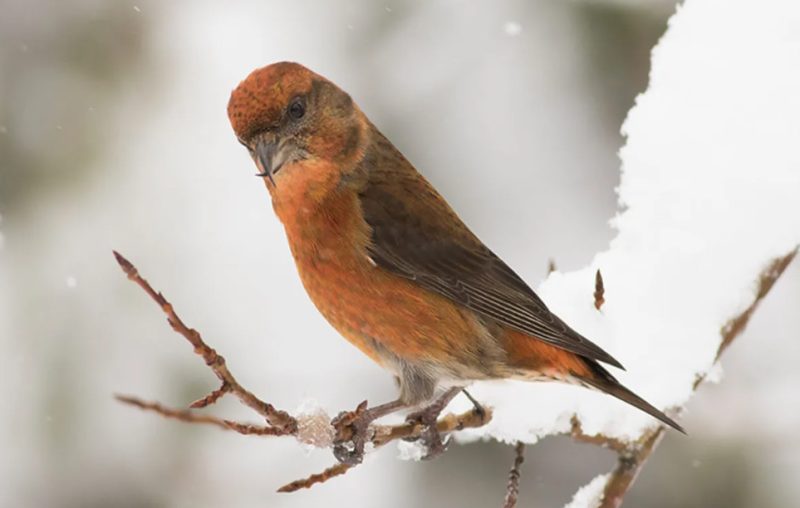
Colorado in winter is not gentle. Temperatures plunge below zero, winds scrape across pine forests, and food sources disappear beneath snow and ice. Yet in the middle of this long, unforgiving season, the Red Crossbill remains a bright, lively pulse of life in the cold. These small finches do not just endure winter. They are built for it. Their diet, their beaks, their movements, even their relationship with Colorado’s forests revolve around one core challenge—finding enough food to survive.
Unlike many birds that migrate when winter closes in, Red Crossbills stay. They depend on resources that last through the freeze and their bodies are engineered to unlock them. Their survival in Colorado’s coldest days is a story about cones, seeds, small but fierce energy needs, and a remarkable design that evolution sharpened like a precision tool.
Below is a detailed look at what they eat, how they find it, how they extract it in brutal conditions, and why their winter diet tells a much larger ecological story.
Table of Contents
- 1 The Red Crossbill’s Winter Reality in Colorado
- 2 Pine Seeds: The Foundation of Winter Survival
- 3 Spruce and Fir Seeds: Backup When Pine Is Scarce
- 4 The Specialized Bill: Why They Can Eat What Others Can’t
- 5 Insects in Winter? Rare but Possible
- 6 Grit, Minerals, and Snow
- 7 Colorado’s Harshest Zones and How Red Crossbills Cope
- 8 How Many Seeds Do They Need to Survive Winter?
- 9 Backyard Feeding in Colorado Winters: Can You Help Them?
- 10 Ecological Importance: Why Their Winter Diet Matters
- 11 Seasonal Shifts After Winter
- 12 FAQs About What Red Crossbills Eat in Winter in Colorado
- 12.1 Do Red Crossbills stay in Colorado all winter?
- 12.2 What is their main winter food?
- 12.3 How does their bill help them survive winter?
- 12.4 Do they eat insects in winter?
- 12.5 What happens when cones are scarce?
- 12.6 Can homeowners help Red Crossbills in winter?
- 12.7 Do Red Crossbills drink water or just eat snow?
- 12.8 Do young Red Crossbills survive winter well?
- 12.9 Are Red Crossbills affected by climate change?
- 12.10 Are they common to see in winter?
- 13 Final Thoughts
The Red Crossbill’s Winter Reality in Colorado
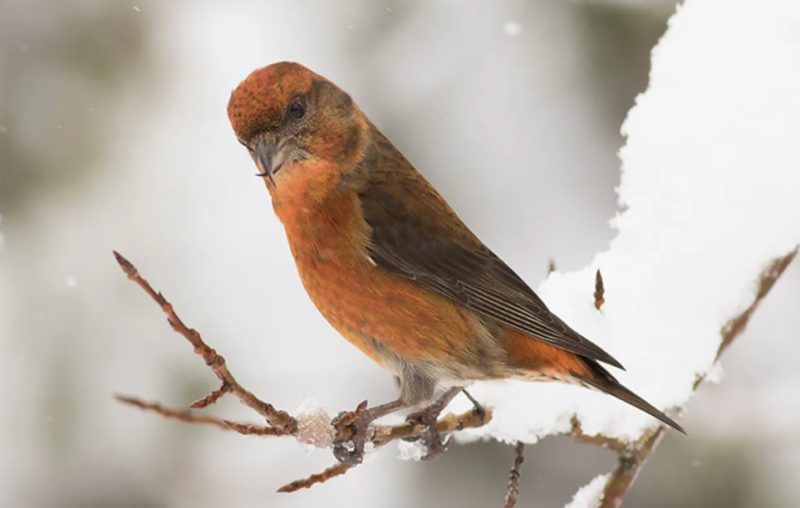
Colorado winters reshape landscapes. Snow buries grasses and hides insects. Many trees hold still, frozen in quiet survival mode. For most birds, winter becomes a desperate search for scraps. For Red Crossbills, however, winter is simply a season where their preferred food becomes even more valuable.
Red Crossbills are not random feeders. They are seed specialists. Their core winter survival strategy is built around one thing: conifer cones. Where other birds see a hard, armored cone sealed shut in ice, the Red Crossbill sees a pantry. Their crossed bills—strange, beautiful, and unmistakable—allow them to pry open cone scales and extract nourishing seeds inside. This one adaptation changes everything about how they live in Colorado during the coldest months.
Pine Seeds: The Foundation of Winter Survival
Lodgepole Pine Seeds
The lodgepole pine forests across the Rockies are winter lifelines for Red Crossbills. These trees retain cones that remain usable through long stretches of snow. Even when wind whips the treetops and temperatures fall sharply, seeds inside the cones stay protected. This reliability makes lodgepole pine a primary food source during harsh cold.
Red Crossbills cling to cones high above snow-covered ground, using their strong bills to twist and lever open scales. Inside are dense, energy-packed seeds. During deep winter, a Red Crossbill may work a tree methodically, cone by cone, hour after hour. In cold conditions, constant feeding is not optional—it is survival.
Ponderosa Pine Seeds
Ponderosa pine forests stretch across many areas of Colorado, and their cones also support wintering Red Crossbills. Ponderosa seeds are slightly larger and deliver solid nutritional value, supplying vital fats and calories that help maintain body heat. When windstorms or icy snaps reduce accessible sources, birds shift between pine stands depending on cone productivity.
Spruce and Fir Seeds: Backup When Pine Is Scarce
Engelmann Spruce Seeds
High-elevation regions and cooler forests provide Engelmann spruce, another critical winter tree. When pine cone crops fluctuate—as they naturally do—Red Crossbills turn heavily to spruce. These trees are often found in some of the coldest mountain zones, meaning the birds feeding here endure extreme winter exposure.
Even so, the birds thrive because spruce cones are accessible, abundant, and often remain intact throughout winter. Red Crossbills pry them open with incredible precision, extracting slender seeds that still supply just enough energy to keep their metabolisms running strong.
Douglas-fir Seeds
Douglas-fir forests also contribute to winter feeding security. These cones behave differently, but Red Crossbills are skilled at learning each tree type and adapting their feeding technique. This flexibility is a key reason they survive Colorado’s coldest days while many other finches simply cannot.
The Specialized Bill: Why They Can Eat What Others Can’t
The Red Crossbill’s diet cannot be separated from its bill. This unique crossed design is not a deformity, not a curiosity. It is a purpose-built tool. When the bird inserts its bill between cone scales and twists, the scale opens just enough to expose the seed. Then the tongue, surprisingly dexterous, pulls the seed free.
In winter, when cones freeze or harden, this adaptation becomes priceless. A straight-billed bird would starve. A Red Crossbill keeps eating.
Different “types” of Red Crossbills across North America even show subtle bill differences that match specific conifer preferences. In Colorado, some types align closely with particular pine systems, following cone abundance from region to region as winter progresses.
Insects in Winter? Rare but Possible
Red Crossbills are not insect hunters in winter, but occasionally, during milder spells or thaw periods, they may take advantage of small invertebrates exposed on bark or in tree crevices. These moments are exceptions rather than norms, but when available, insects provide an excellent boost of protein.
Still, winter insects are unpredictable. Cones are not. This is why seeds remain the core pillar of survival.
Grit, Minerals, and Snow
Red Crossbills also eat grit—tiny stones or sand swallowed to help grind seeds inside their gizzard. Without this, even the best seeds cannot be fully digested. Winter forces creativity, so birds may scrape grit from frozen ground or exposed roadsides.
They also consume snow for water. In extremely cold conditions, melting snow internally requires energy, but it remains sometimes the only hydration source. In early winter or during Chinook-style warm spells, melted snow or dripping pine branches offer easier moisture, but snow is often the winter standard.
Colorado’s Harshest Zones and How Red Crossbills Cope
The highest mountain forests and northern Colorado regions experience brutal winters. Yet these same places hold dense forests rich in pine, spruce, and fir. Red Crossbills do not choose warmth—they choose food security. When cone crops are heavy, birds stay, even if temperatures drop below zero for long stretches.
When cone crops fail in certain areas, Red Crossbills move. They may suddenly vanish from one region and appear hundreds of miles away. This wandering behavior is called “irruptive migration,” driven not by weather alone but by cone availability. Food, not temperature, dictates their winter map.
How Many Seeds Do They Need to Survive Winter?
Cold demands calories. A Red Crossbill must constantly feed to maintain its small body’s internal heat. Estimates suggest that winter finches may consume a significant portion of their body weight in seeds every day. In freezing conditions, feeding time becomes nearly continuous daylight labor.
They move in flocks because flocks increase efficiency. More eyes mean better detection of prime cone clusters. More birds working the same trees helps dislodge flakes of snow and open room to feed. Survival is individual—but supported by the group.
Backyard Feeding in Colorado Winters: Can You Help Them?
If you live in Colorado and keep feeders, you may occasionally host Red Crossbills, especially in mountain towns or forest-edge neighborhoods. They are attracted to:
-
Black oil sunflower seeds
-
Hulled sunflower hearts
-
Occasionally nyjer, though pine seeds remain superior
-
Large platform or hopper feeders that allow stable footing
Water can help even more. A heated bird bath in winter may literally save birds’ lives. However, the most powerful support you can give is maintaining native conifers. Healthy forests equal winter survival.
Ecological Importance: Why Their Winter Diet Matters
Red Crossbills are deeply tied to Colorado forests. Their feeding shapes cone dispersal patterns, affects seed availability, and reveals forest health. When cone crops are strong, Red Crossbills thrive. When drought or climate pressure weakens trees, their populations respond dramatically. Watching their winter diet is, in a way, watching the heartbeat of Colorado’s high forests.
Seasonal Shifts After Winter
As winter loosens, diets widen slightly. They still prefer cones, but spring brings limited insects, developing buds, and fresher water. However, unlike many birds that dramatically switch diets seasonally, Red Crossbills remain seed-centered year-round. Their entire biology is aligned with cones, and their winter survival simply represents the most intense and demanding phase of that relationship.
FAQs About What Red Crossbills Eat in Winter in Colorado
Do Red Crossbills stay in Colorado all winter?
Yes, many do. Instead of migrating south, they stay as long as cone crops are strong enough to feed them through winter.
What is their main winter food?
Pine, spruce, and fir seeds form the foundation of their winter diet, especially lodgepole pine, ponderosa pine, Engelmann spruce, and Douglas-fir.
How does their bill help them survive winter?
The crossed tips act like a lever, allowing them to pry open tightly closed cone scales and reach seeds other birds cannot access.
Do they eat insects in winter?
Rarely. Insects are scarce in winter, so while they may occasionally take advantage of a mild-weather opportunity, seeds remain their lifeline.
What happens when cones are scarce?
They move. Red Crossbills are known for sudden large-scale shifts in population location, driven purely by cone availability.
Can homeowners help Red Crossbills in winter?
Yes. Sunflower feeders, reliable water sources, and preserving native conifer trees can support them during harsh weather.
Do Red Crossbills drink water or just eat snow?
They do both. In winter, snow often becomes their main hydration source, although melted water is easier on their energy system.
Do young Red Crossbills survive winter well?
If cone crops are strong and weather conditions are relatively stable, young birds adapt well thanks to instinct and flock learning behavior.
Are Red Crossbills affected by climate change?
Likely yes. Climate shifts affect cone production cycles, drought stress, and forest health, all of which influence Red Crossbill survival.
Are they common to see in winter?
They can be common in cone-rich areas but nearly absent in low-cone years. Their winter visibility changes dramatically depending on forest productivity.
Final Thoughts
Red Crossbills survive Colorado’s fiercest winter days because they are perfectly matched to a difficult world. Where other birds leave, they stay. Where others starve, they pry open frozen cones and pull life from inside. Their survival is built on pine seeds, spruce scales, gritty determination, relentless feeding, and a bill unlike any other in the bird world.
In every icy breath of Colorado winter, they continue to feed, continue to sing lightly among snow-heavy branches, and continue to remind us that survival is not always about escaping the cold. Sometimes, it is about evolving to face it head-on.