
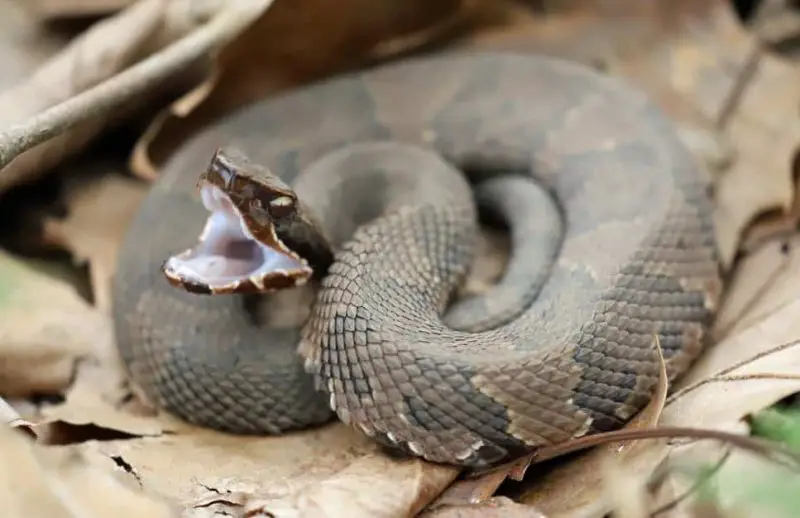
In Mississippi, few animals generate as much fear and argument as the water moccasin. Stories travel fast. A snake that “chases” people. A snake that stands its ground instead of fleeing. A snake that looks like it wants a fight.
For many residents, encounters feel different from other snakes. Cottonmouths do not always retreat quickly. They hold position. They gape their mouths. They remain visible instead of disappearing into cover.
That behavior gets labeled as aggression.
But biology tells a different story.
Water moccasins, also known as cottonmouths, are not aggressive in the way people imagine. What feels like hostility is the result of defensive strategy, habitat overlap, sensory limitations, and human misinterpretation amplified by Mississippi’s unique landscape.
Once those factors are understood, the behavior stops feeling threatening and starts making sense.
Table of Contents
- 1 Water Moccasins Are Built for Standing Their Ground
- 2 Mississippi’s Wetlands Shape Snake Behavior
- 3 Defensive Displays Are Misread as Aggression
- 4 Cottonmouths Rely on Visibility, Not Surprise
- 5 Why Cottonmouths Appear to “Chase” People
- 6 Limited Vision Contributes to Misinterpretation
- 7 Cottonmouths Are Less Likely to Flee Quickly
- 8 Mississippi’s High Encounter Rate Amplifies Fear
- 9 Cottonmouths Do Not Waste Venom on Defense
- 10 Why Cottonmouths Hold Position Instead of Retreating
- 11 Habitat Compression Increases Defensive Behavior
- 12 Juvenile Cottonmouths Are Often Misjudged
- 13 Temperature Affects Behavior
- 14 Why Cottonmouths Are More Visible Than Other Snakes
- 15 Defensive Biting Is Rare but Memorable
- 16 Mississippi Myths Reinforce Misunderstanding
- 17 Why Cottonmouths Do Not Need to Be Aggressive
- 18 How Human Behavior Triggers Defensive Displays
- 19 Why Cottonmouths Rarely Strike Without Warning
- 20 Dogs Increase the Risk of Misinterpreted Aggression
- 21 Why Cottonmouths Are Misidentified So Often
- 22 Education Reduces Conflict
- 23 What To Do During an Encounter
- 24 Why Cottonmouths Matter in Mississippi
- 25 When Professional Help Is Appropriate
- 26 The Science Is Clear
- 27 FAQs About Water Moccasin Behavior in Mississippi
- 27.1 Are water moccasins aggressive?
- 27.2 Do cottonmouths chase people?
- 27.3 Why do they open their mouths?
- 27.4 Are cottonmouths more dangerous than other snakes?
- 27.5 Why don’t they flee like other snakes?
- 27.6 Are juvenile cottonmouths more aggressive?
- 27.7 Should cottonmouths be killed on sight?
- 27.8 When do bites usually occur?
- 28 Conclusion
Water Moccasins Are Built for Standing Their Ground
Most snakes rely on speed and distance to survive. When threatened, they flee.
Water moccasins evolved a different strategy.
They are heavy-bodied, muscular snakes adapted for slow-moving wetlands, swamps, and muddy waterways. In these environments, rapid escape is not always possible. Thick vegetation, shallow water, and soft mud limit speed.
Instead of fleeing blindly, cottonmouths evolved to defend position.
This does not mean attack. It means deterrence.
Mississippi’s Wetlands Shape Snake Behavior
Mississippi contains one of the largest continuous wetland systems in the United States. Swamps, bayous, floodplains, oxbows, and slow rivers dominate much of the state.
These habitats reduce visibility and escape routes.
A snake fleeing through shallow water creates vibration and draws attention. Remaining still or posturing defensively often carries less risk.
In open fields, snakes flee. In Mississippi wetlands, standing ground is safer.
Defensive Displays Are Misread as Aggression
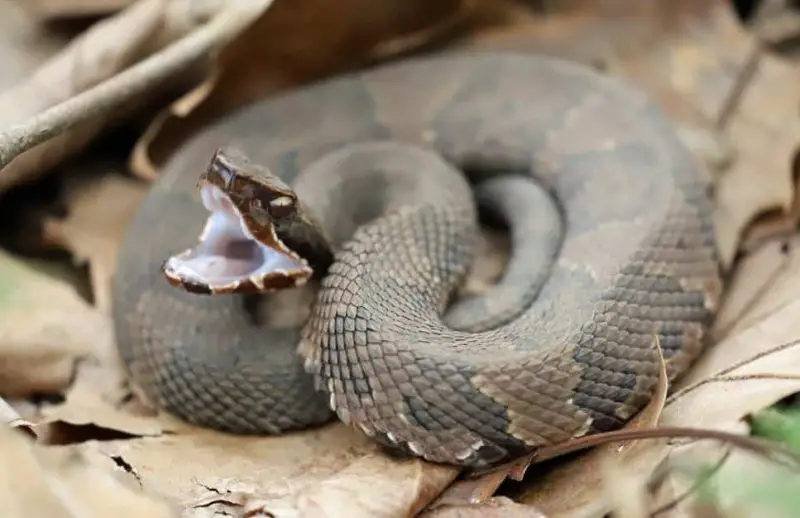
When a water moccasin feels threatened, it often performs a classic display.
The body coils. The head elevates. The mouth opens wide, revealing the bright white interior that gives cottonmouths their name.
This display is not preparation to strike.
It is a warning.
The snake is saying, “I am here. Do not come closer.”
Many snakes flee silently. Cottonmouths announce boundaries visually.
Humans often interpret that announcement as hostility.
Cottonmouths Rely on Visibility, Not Surprise
Venom is costly.
Water moccasins do not want to waste venom on unnecessary strikes. Venom is meant for prey, not defense.
Their goal is to avoid contact entirely.
By remaining visible and displaying openly, they reduce the chance of being stepped on or cornered. The display buys space without movement.
This strategy works well in dense Mississippi habitats.
Why Cottonmouths Appear to “Chase” People
One of the most persistent myths is that water moccasins chase humans.
What actually happens is far less dramatic.
When startled, a cottonmouth often moves toward open terrain or water. In Mississippi, water is frequently in the same direction people are standing or moving.
If a person retreats along the shoreline, the snake may move in the same direction, creating the illusion of pursuit.
The snake is not targeting the person. It is targeting the habitat.
Limited Vision Contributes to Misinterpretation
Water moccasins do not see the world the way humans do.
Their vision is tuned for detecting movement and contrast, not fine detail. In murky water or low light, they may struggle to identify objects clearly.
A moving human may appear as a large disturbance rather than a defined shape.
The snake’s response focuses on threat avoidance, not pursuit.
Cottonmouths Are Less Likely to Flee Quickly
Compared to racers or rat snakes, cottonmouths are slower.
Their thick bodies and short tails limit burst speed on land. Running blindly increases vulnerability.
Remaining still, displaying, and striking only if necessary conserves energy and reduces injury risk.
This calm resistance reads as confidence or aggression to humans.
Mississippi’s High Encounter Rate Amplifies Fear
Mississippi residents encounter water moccasins more frequently than people in many other states.
Fishing, boating, yard work near water, levees, drainage ditches, and rural roads all increase overlap.
More encounters create more stories.
More stories reinforce fear, regardless of accuracy.
Cottonmouths Do Not Waste Venom on Defense
When cottonmouths strike defensively, they often deliver dry bites or minimal venom.
The goal is deterrence, not envenomation.
This contradicts the idea of a snake eager to attack.
If aggression were the goal, venom delivery would be consistent.
Why Cottonmouths Hold Position Instead of Retreating
Retreating through water exposes the snake to predators such as birds, alligators, and large fish.
Remaining still reduces detection.
Holding position is safer than fleeing in many Mississippi environments.
What looks like defiance is actually caution.
Habitat Compression Increases Defensive Behavior
Human development compresses wetland habitat.
Drainage projects, levees, docks, and shoreline clearing force snakes into narrower corridors.
When space shrinks, flight options shrink.
Defensive displays increase.
This makes cottonmouths seem more confrontational in developed areas.
Juvenile Cottonmouths Are Often Misjudged
Young cottonmouths behave differently.
They may freeze instead of fleeing. Their coloring is brighter. Their defensive posture appears exaggerated.
This leads people to believe juveniles are more aggressive.
In reality, juveniles are more vulnerable and rely heavily on display to survive.
Temperature Affects Behavior
As ectotherms, cottonmouths depend on external heat.
On cool mornings or overcast days, movement is limited. A snake may be physically unable to flee quickly.
Remaining in place is not a choice. It is necessity.
Mississippi’s variable weather creates frequent conditions where flight is impractical.
Why Cottonmouths Are More Visible Than Other Snakes
Cottonmouths bask openly.
They often lie near water edges, logs, or banks. They do not always hide under cover.
Visibility increases encounter frequency and perception of boldness.
Other snakes may flee unseen. Cottonmouths remain noticed.
Defensive Biting Is Rare but Memorable
Actual defensive bites are uncommon.
When they occur, they are memorable and often reported widely.
This skews perception.
Thousands of non-events go unnoticed. One bite becomes legend.
Mississippi Myths Reinforce Misunderstanding
Folklore plays a role.
Generations of stories portray cottonmouths as hostile. Those stories persist even as science advances.
Fear passes culturally, not biologically.
Why Cottonmouths Do Not Need to Be Aggressive
Cottonmouths have few natural predators once mature.
Their size, venom, and defensive displays discourage attack.
Aggression would increase injury risk without benefit.
Evolution favors restraint.
How Human Behavior Triggers Defensive Displays
Sudden movement, vibration, and direct approach trigger response.
People often walk directly toward water edges, logs, or banks without scanning.
The snake responds when distance closes too quickly.
The reaction is defensive timing, not intent.
Why Cottonmouths Rarely Strike Without Warning
Cottonmouths almost always warn before striking.
Open mouth display. Coiling. Stillness.
Strikes typically occur only when escape routes are blocked or the snake is physically threatened.
This is the opposite of ambush aggression.
Dogs Increase the Risk of Misinterpreted Aggression
Dogs investigate snakes directly.
They bark, lunge, and circle.
This behavior triggers defensive strikes that would not occur with calm humans.
Owners often misinterpret the situation afterward.
Why Cottonmouths Are Misidentified So Often
Many harmless water snakes resemble cottonmouths.
Dark coloration, thick bodies, and swimming posture lead to misidentification.
Aggressive behavior is often attributed incorrectly.
Not every “aggressive” water snake is venomous.
Education Reduces Conflict
People who understand cottonmouth behavior experience fewer problems.
Distance, awareness, and calm movement prevent nearly all negative encounters.
Fear increases risk more than the snake does.
What To Do During an Encounter
Stop. Increase distance slowly. Do not throw objects. Do not attempt to move the snake.
Give it time and space.
The snake will eventually retreat when it feels safe.
Why Cottonmouths Matter in Mississippi
Cottonmouths control fish, amphibians, and rodent populations.
They are part of wetland balance.
Removing them creates ecological consequences.
When Professional Help Is Appropriate
If a cottonmouth occupies a high-traffic area near homes or docks, professional relocation may be necessary.
Killing snakes increases risk and disrupts ecosystems.
The Science Is Clear
Cottonmouths are defensive, not aggressive.
They rely on warning displays instead of flight.
Mississippi’s wetlands amplify visibility and misunderstanding.
The behavior feels hostile only because humans expect snakes to flee.
FAQs About Water Moccasin Behavior in Mississippi
Are water moccasins aggressive?
No. They display defensively and strike only when threatened.
Do cottonmouths chase people?
No. Apparent chasing is usually habitat-directed movement.
Why do they open their mouths?
It is a warning display designed to prevent closer contact.
Are cottonmouths more dangerous than other snakes?
They are venomous, but bites are rare when distance is maintained.
Why don’t they flee like other snakes?
Their habitat and body structure favor standing ground.
Are juvenile cottonmouths more aggressive?
No. They rely heavily on display because they are vulnerable.
Should cottonmouths be killed on sight?
No. Avoidance and education are safer and ecologically sound.
When do bites usually occur?
When snakes are cornered, handled, or stepped on.
Conclusion
The hidden reason water moccasins seem aggressive in Mississippi has nothing to do with temperament.
It is strategy.
Cottonmouths evolved to survive in dense wetlands where fleeing is dangerous. They warn instead of run. They display instead of disappear. They hold ground until space is restored.
When humans misread those signals, fear fills the gap.
Understanding replaces fear with respect, and respect keeps both people and snakes safer in the shared landscapes of Mississippi.