

Across Wisconsin, stories circulate every winter and spring about owls attacking pets. A small dog disappears from a backyard. A cat is found injured near a tree line. An owl is seen perched on a fence post nearby. The conclusion forms quickly. The owl must be responsible.
These stories spread fast, especially in rural areas and on neighborhood social media groups. Owls are large, silent, and active at night. They feel mysterious. When something goes wrong outdoors, they become an easy suspect.
But are owls in Wisconsin truly attacking pets, or is this belief driven more by fear than fact?
To answer that question, it is necessary to understand which owls live in Wisconsin, how they hunt, what they are physically capable of, and how pet injuries are often misinterpreted.
Table of Contents
- 1 Wisconsin Is Prime Owl Territory
- 2 Great Horned Owls Are the Only Real Concern
- 3 What Great Horned Owls Normally Eat
- 4 Size Limits Matter More Than People Realize
- 5 Why Attacks Are Often Misinterpreted
- 6 Cats Are More Vulnerable Than Dogs
- 7 Dogs Are Rarely Targeted
- 8 Why Owls Might Make a Defensive Strike
- 9 Nest Defense Explains Many Incidents
- 10 Owls Do Not Learn to Hunt Pets
- 11 Why Urban and Suburban Areas See More Reports
- 12 Snowy Owls Add to Confusion
- 13 What Science and Wildlife Data Show
- 14 Why Fear Persists
- 15 How To Reduce Risk for Pets
- 16 Why Killing Owls Is Not the Answer
- 17 What To Do If an Owl Appears Aggressive
- 18 Understanding the Real Risk
- 19 Why This Myth Matters
- 20 Wisconsin’s Owls Are Not Villains
- 21 FAQs About Owls and Pets in Wisconsin
- 22 Final Thoughts
Wisconsin Is Prime Owl Territory

Wisconsin supports a diverse and healthy owl population. Its forests, wetlands, farmlands, and suburban green spaces provide excellent hunting and nesting conditions.
Common owl species include the great horned owl, barred owl, eastern screech owl, snowy owl during winter irruptions, and northern saw-whet owl. Each species differs greatly in size, strength, and prey preference.
Most reported pet attacks are attributed to one species above all others. The great horned owl.
Great Horned Owls Are the Only Real Concern
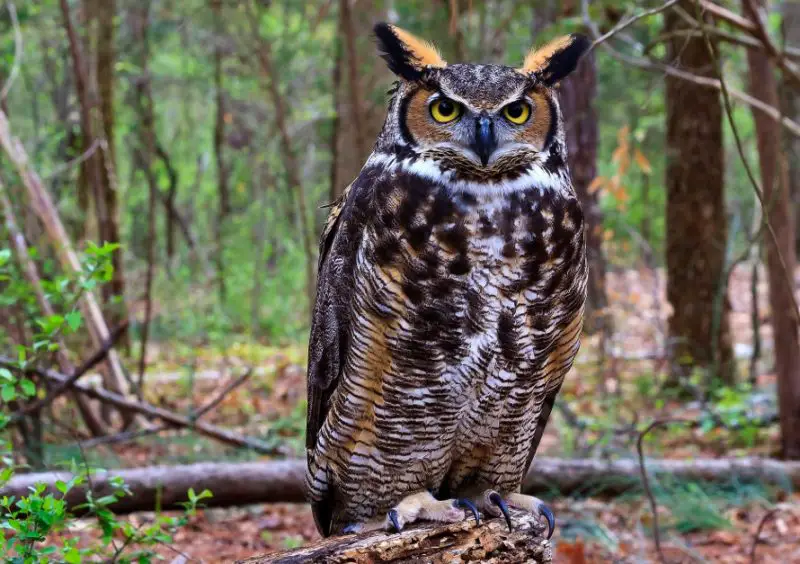
The great horned owl (Bubo virginianus) is Wisconsin’s largest and most powerful owl.
Adults can weigh up to four pounds and have wingspans exceeding four feet. Their talons are extremely strong, capable of exerting hundreds of pounds of pressure. They are skilled hunters of mammals and birds.
Because of their size and power, great horned owls are the only owls in Wisconsin physically capable of injuring a pet.
Even then, capability does not equal intent.
What Great Horned Owls Normally Eat
Great horned owls are opportunistic predators, but their diet is well documented.
They primarily hunt rabbits, squirrels, mice, voles, rats, skunks, and medium-sized birds. They may take ducks, pheasants, or other ground-dwelling birds. Occasionally, they prey on other raptors.
Small pets are not a preferred food source.
Owls hunt what is easiest and safest to capture. Wild prey fits that category far better than domestic animals.
Size Limits Matter More Than People Realize
Owls cannot carry heavy prey.
Despite their strength, great horned owls are limited by physics. Most can only lift prey weighing two to three pounds. Anything heavier becomes difficult to control or transport.
This means most dogs are completely outside an owl’s capacity. Even many adult cats are too heavy to be lifted.
Very small pets, such as kittens, puppies, rabbits, or toy-breed dogs under five pounds, fall into a more vulnerable category.
But even then, attacks are rare.
Why Attacks Are Often Misinterpreted
Many injuries blamed on owls are caused by other animals.
Coyotes, foxes, raccoons, feral cats, and even dogs frequently injure or kill pets. These predators are common across Wisconsin and often leave ambiguous signs.
Owls do not leave clear bite marks. They leave puncture wounds from talons. These wounds are small, paired, and often overlooked.
When people see feathers nearby or hear an owl calling, confirmation bias fills the gap.
Cats Are More Vulnerable Than Dogs
Outdoor cats face higher risk than dogs.
Cats roam freely, hunt at dawn and dusk, and often sleep in open areas. These behaviors overlap with owl hunting times.
A small or young cat could be attacked if mistaken for prey, especially in areas where rabbits and squirrels are scarce.
Even so, confirmed owl attacks on cats remain uncommon.
Dogs Are Rarely Targeted
Dogs are very rarely attacked by owls.
Most dogs are simply too large. They move differently than prey animals. They are often accompanied by humans or kept in lit yards.
Reports of owls attacking dogs almost always involve extremely small breeds or young puppies.
Even in those cases, successful attacks are unusual.
Why Owls Might Make a Defensive Strike
Not all owl encounters are hunting attempts.
Owls defend nests aggressively during breeding season, which in Wisconsin occurs from late winter through early spring.
A pet that approaches a nest tree may trigger a defensive swoop. The owl aims to scare, not kill.
These strikes often involve glancing contact to the head or shoulders and rarely result in serious injury.
Defensive behavior is often mistaken for predation.
Nest Defense Explains Many Incidents
Great horned owls nest early.
They often begin nesting in February, when snow still covers the ground. This catches people off guard.
Pets walking near nest sites may be targeted repeatedly until the owl perceives the threat is gone.
These encounters are seasonal and localized.
Owls Do Not Learn to Hunt Pets
Another common belief is that owls “learn” to hunt pets once they succeed.
There is no evidence supporting this idea.
Owls follow instinct and opportunity. They do not specialize in dangerous prey when safer options exist.
Wild prey is easier, more predictable, and less risky.
Why Urban and Suburban Areas See More Reports
Reports are more common in suburban Wisconsin.
Fragmented habitat brings owls and pets into closer proximity. Backyard bird feeders attract rodents, which attract owls.
Well-lit yards give the illusion of safety, but owls hunt silently and efficiently regardless of lighting.
Increased observation leads to increased reporting, not increased attacks.
Snowy Owls Add to Confusion
Snowy owls appear in Wisconsin during winter irruptions.
They are large and highly visible, often perched in open areas. This draws attention and concern.
However, snowy owls primarily hunt rodents and birds. They are not known to attack pets.
Their presence increases owl anxiety without increasing actual risk.
What Science and Wildlife Data Show
Wildlife agencies in Wisconsin do not document widespread owl attacks on pets.
Confirmed cases are rare and usually involve very small animals or defensive nest strikes.
The majority of missing pet cases are attributed to mammals rather than birds of prey.
Data does not support the idea of a growing threat.
Why Fear Persists
Fear thrives on uncertainty.
Owls are nocturnal. Their calls sound eerie. Their silent flight feels unnatural.
When a pet disappears without witnesses, the mind fills the silence with the most dramatic explanation.
Owls become symbols rather than culprits.
How To Reduce Risk for Pets
Risk can be minimized with simple steps.
Keep cats indoors, especially at night. Supervise small dogs outdoors. Avoid letting pets roam near wooded edges at dawn and dusk.
Remove attractants such as rodent populations around yards. Be cautious near known nesting sites during spring.
These measures reduce risk from all predators, not just owls.
Why Killing Owls Is Not the Answer
Owls are protected under federal and state law.
They play a vital role in controlling rodent populations. Killing or harming owls is illegal and ecologically harmful.
Removing owls does not remove risk. Other predators will fill the gap.
Education is far more effective than elimination.
What To Do If an Owl Appears Aggressive
If an owl repeatedly swoops, avoid the area.
Change walking routes. Keep pets leashed. Wear a hat if necessary.
These behaviors almost always stop once the breeding season ends.
Do not attempt to harass or harm the owl.
Understanding the Real Risk
The real risk from owls to pets in Wisconsin is low.
It exists, but it is not common. It is not increasing dramatically. It is often misunderstood.
Owls are not hunting pets as a food source. They are responding to instinct, territory, and opportunity.
Why This Myth Matters
Belief in widespread owl attacks can lead to fear-driven behavior.
People may harm protected wildlife or abandon responsible pet practices by focusing on the wrong threat.
Understanding reality allows coexistence rather than conflict.
Wisconsin’s Owls Are Not Villains
Owls are indicators of healthy ecosystems.
They reflect abundant prey and balanced habitats. Their presence is a sign of environmental health, not danger.
Seeing an owl should inspire respect, not panic.
FAQs About Owls and Pets in Wisconsin
Do owls attack pets in Wisconsin
Very rarely. Most reported cases are misidentified.
Which owl species poses the most risk
Great horned owls, due to size and strength.
Are cats at risk
Outdoor cats face more risk than dogs, but attacks are still uncommon.
Are small dogs in danger
Only very small dogs, and even then, incidents are rare.
Do owls hunt pets intentionally
No. Pets are not a preferred prey.
Are owl attacks increasing
There is no evidence showing an increase.
What should I do if an owl swoops
Avoid the area and keep pets away temporarily.
Are owls protected in Wisconsin
Yes. Harming them is illegal.
Final Thoughts
Owls in Wisconsin are not systematically attacking pets. While rare incidents can occur under specific conditions, the vast majority of stories are driven by misunderstanding, misidentification, or fear.
Owls hunt wild prey. They defend nests. They avoid unnecessary risk.
Understanding their behavior allows Wisconsin residents to protect their pets while respecting a native predator that plays an essential role in the state’s ecosystems.
The myth fades when facts take its place.