
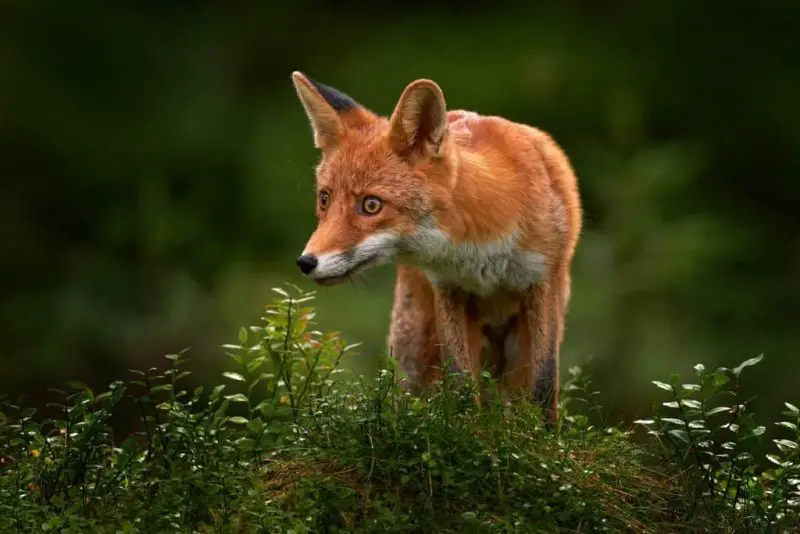
Foxes are frequently seen across Indiana’s farms, woodlots, river valleys, and even along the fringes of suburban neighborhoods. Red foxes slip along fence lines at dawn. Gray foxes vanish into hardwood forests with surprising agility. At the same time, domestic dogs are everywhere—on farms, in rural yards, and occasionally roaming freely.
When people see a fox-sized animal with unusual coloring or dog-like behavior, a question often follows:
Can foxes in Indiana breed with domestic dogs?
At first glance, the idea sounds plausible. Foxes and dogs look related. Both belong to the canid family. Both vocalize, hunt, and move in similar ways. Stories circulate online claiming “fox–dog hybrids,” strange litters, or mysterious animals that seem to fall somewhere in between.
But biology is far stricter than appearance. To answer this question accurately, we need to examine genetics, evolution, behavior, and what wildlife science actually shows.
Table of Contents
- 1 Foxes Are Native and Well Established in Indiana
- 2 Domestic Dogs Belong to a Different Canid Line
- 3 Genetic Incompatibility Prevents Hybridization
- 4 Why Family Similarity Causes Confusion
- 5 Behavior Creates Another Barrier
- 6 Size and Risk Make Mating Unrealistic
- 7 Why Indiana Residents Think Hybrids Exist
- 8 Coyotes Are the Biggest Source of Confusion
- 9 Domestic Dogs Come in Endless Shapes
- 10 Foxes Themselves Vary Widely
- 11 Trail Cameras Distort Reality
- 12 No Genetic Evidence Supports Hybrids
- 13 Why Hybrid Myths Persist
- 14 What Indiana Wildlife Experts Say
- 15 Why This Matters
- 16 What To Do If You See an Unusual Canid
- 17 Protecting Pets in Fox Country
- 18 Foxes Play an Important Ecological Role
- 19 FAQs About Foxes and Domestic Dogs in Indiana
- 19.1 Can foxes in Indiana mate with domestic dogs
- 19.2 Has a fox–dog hybrid ever been confirmed
- 19.3 Why do foxes and dogs look related
- 19.4 Are coyotes often mistaken for fox–dog hybrids
- 19.5 Do foxes recognize dogs as potential mates
- 19.6 Can foxes be dangerous to pets
- 19.7 Are unusual-colored foxes hybrids
- 19.8 Can trail camera photos prove hybridization
- 19.9 What do Indiana wildlife experts say
- 19.10 What should I do if I see a strange-looking fox
- 20 Final Thoughts
Foxes Are Native and Well Established in Indiana
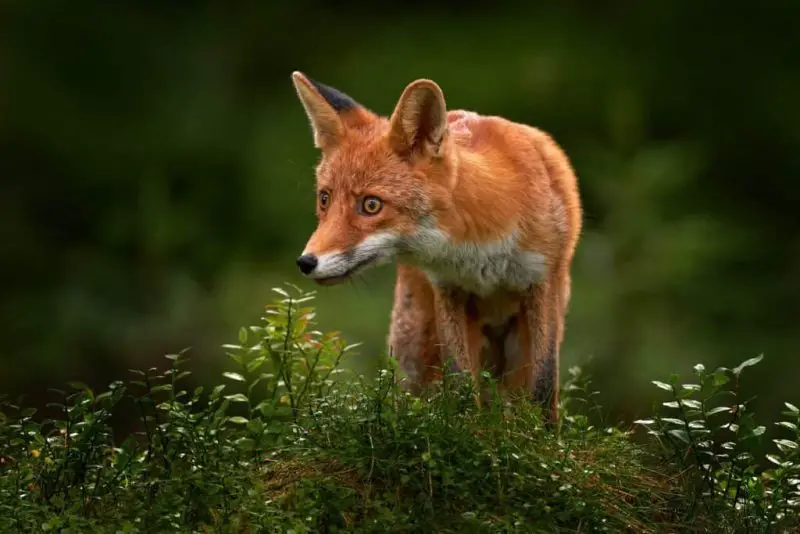
Indiana has supported native fox populations for thousands of years, long before modern settlement reshaped the landscape. Two fox species are firmly established across the state: the red fox (Vulpes vulpes) and the gray fox (Urocyon cinereoargenteus). Both species have adapted to Indiana’s changing environments without losing their core wild behaviors.
Red foxes are especially visible. They thrive in agricultural regions, open grasslands, pastures, and increasingly in suburban and exurban areas. Field edges, hedgerows, drainage ditches, and roadside corridors provide ideal travel routes and hunting grounds. Their ability to exploit rodents attracted to crops and human disturbance allows them to live close to people while remaining largely unseen.
Gray foxes occupy a different niche. They favor dense woodland, mature forests, and areas with heavy understory cover. They are far more secretive and are rarely observed in open spaces. Unlike red foxes, gray foxes are exceptional climbers. They routinely escape predators by climbing trees, using curved claws and flexible ankles. This behavior is unique among North American canids and often surprises people who assume foxes behave like small dogs.
Both fox species maintain stable breeding populations throughout Indiana. Their long presence and ecological success mean they are not recent arrivals, not invasive animals, and not products of recent genetic mixing.
Domestic Dogs Belong to a Different Canid Line
Domestic dogs follow a completely separate evolutionary path.
Dogs (Canis lupus familiaris) descend from gray wolves and belong to the genus Canis. This group includes wolves, coyotes, and jackals, all of which share relatively recent common ancestry and compatible genetic structures.
Foxes do not belong to this group.
Red foxes belong to the genus Vulpes. Gray foxes belong to Urocyon, a lineage that split even earlier from other canids. These separations occurred millions of years ago, long before modern species evolved.
This evolutionary distance is profound. It affects anatomy, behavior, reproductive biology, and genetic compatibility. Foxes are not simply smaller or lighter versions of dogs. They represent a different branch of the canid family tree entirely.
Genetic Incompatibility Prevents Hybridization
The most critical point is also the simplest.
Foxes and domestic dogs cannot interbreed.
The genetic barrier is absolute. Dogs have 78 chromosomes arranged in a specific structure. Red foxes have only 34 standard chromosomes plus additional variable B chromosomes. Gray foxes have yet another distinct chromosomal arrangement that differs from both dogs and red foxes.
For successful reproduction, chromosomes must pair precisely during cell division. Between foxes and dogs, this pairing cannot occur. Fertilization either fails entirely or embryos cannot develop.
This is not theoretical. It has been tested and confirmed repeatedly.
There are no scientifically verified fox–dog hybrids anywhere in the world. Not in Indiana. Not elsewhere. This limitation is biological, not geographic.
Why Family Similarity Causes Confusion
Much confusion arises from how people interpret biological classification.
Foxes and dogs belong to the same family, Canidae. This family-level grouping leads many people to assume that interbreeding should be possible.
In reality, family membership only indicates distant shared ancestry, not reproductive compatibility. Many animals within the same family cannot interbreed. Wolves and foxes cannot. Coyotes and foxes cannot. Dogs and foxes cannot.
Visual similarity reflects shared ancient traits, not modern genetic compatibility. Evolutionary distance matters far more than appearance.
Behavior Creates Another Barrier
Even if genetics were not a barrier, behavior alone would prevent mating.
Foxes are not social animals in the same way dogs are. They are solitary or loosely paired, forming temporary bonds during breeding season and dispersing soon after offspring are raised. Their courtship relies on specific vocalizations, scent marking patterns, and movement cues.
Domestic dogs do not recognize or respond to these signals. Likewise, foxes do not interpret dog behavior as mating behavior. Encounters between foxes and dogs are usually brief and tense.
Curiosity, avoidance, or aggression is far more common than tolerance. Courtship requires mutual recognition, repeated interaction, and precise timing. None of these conditions exist between foxes and dogs.
Size and Risk Make Mating Unrealistic
Physical differences reinforce the separation.
Most domestic dogs are significantly larger and heavier than foxes. Even smaller dogs outweigh foxes and differ in strength and posture. An attempted mating would carry a high risk of injury to the fox with no potential reproductive benefit.
Animals evolve to avoid high-risk behaviors that do not improve survival or reproduction. Natural selection removes such behaviors quickly.
From an evolutionary perspective, fox–dog mating makes no sense.
Why Indiana Residents Think Hybrids Exist
Despite the biological certainty, belief in hybrids persists.
Indiana’s landscape creates frequent overlap between wildlife and domestic animals. Farmland, woodlots, suburban developments, and rural properties blend together. Foxes, dogs, and coyotes may all be seen in the same general areas, often at night or in poor lighting.
When an animal looks unusual or behaves unexpectedly, the brain searches for explanation. Hybridization feels intuitive. It explains difference without requiring detailed knowledge.
Expectation fills in missing information.
Coyotes Are the Biggest Source of Confusion
Coyotes are the primary driver of fox–dog hybrid myths.
Coyotes belong to Canis and can interbreed with dogs. They are widespread across Indiana and vary enormously in size, color, and build. Small coyotes can resemble large foxes. Large coyotes can resemble dog–wolf mixes.
Seasonal coat changes, lighting, and distance further distort appearance. A coyote seen briefly may look fox-like or dog-like depending on context.
Because coyotes can hybridize with dogs, people often assume foxes must be able to as well. This assumption is incorrect.
Domestic Dogs Come in Endless Shapes
Domestic dogs display extraordinary variation.
Some breeds and mixed-breed dogs resemble foxes closely. Spitz-type dogs, Shiba Inu mixes, and certain shepherd or husky crosses have pointed ears, bushy tails, and narrow muzzles.
Feral or free-roaming dogs may behave cautiously and avoid humans, making them appear wild. Without scale reference, a dog seen briefly can easily be mistaken for a fox or imagined hybrid.
Foxes Themselves Vary Widely
Fox appearance is not uniform.
Red foxes range from bright red to gray to nearly black. Tail tips may be white, pale, or dark. Body size varies by sex, age, and nutrition. Gray foxes show even more variation, with mottled coats, rusty patches, and distinctive tail markings.
Juvenile foxes often look especially strange. They are lanky, oversized-eared, and awkward in movement. These traits fade with maturity but frequently trigger misidentification.
Trail Cameras Distort Reality
Trail cameras intensify confusion.
Wide-angle lenses distort body proportions. Night infrared mode exaggerates eyes and elongates limbs. Lack of scale makes size estimation unreliable.
An animal close to the lens may appear enormous. One farther away may appear smaller or oddly shaped. Still images remove motion cues that help identify species accurately.
Images without context invite speculation.
No Genetic Evidence Supports Hybrids
Genetic analysis is now routine in wildlife research.
DNA from hair, scat, tissue, and carcasses is analyzed regularly. Every suspected fox–dog hybrid examined through genetic testing has been identified as a known species.
If fox–dog hybrids existed, modern genetic tools would detect them immediately.
They have not.
Why Hybrid Myths Persist
Hybrid stories persist because they are compelling.
They offer simple explanations for complex sightings. They add danger and mystery. They spread easily through conversation and social media.
Scientific corrections lack emotional punch. As a result, myths travel farther than facts.
What Indiana Wildlife Experts Say
Indiana wildlife biologists are clear and consistent.
Foxes and domestic dogs do not interbreed. There is no evidence of hybridization. Unusual sightings are explained by coyotes, domestic dogs, age differences, seasonal coat changes, or lighting conditions.
Hybridization is not a wildlife management concern.
Why This Matters
Belief in fox–dog hybrids can shape public behavior.
It can increase fear, justify unnecessary killing, or distract attention from real issues such as habitat preservation, pet safety, and coexistence.
Accurate understanding leads to better decisions.
What To Do If You See an Unusual Canid
Observe calmly and without assumption.
Note size, tail carriage, ear shape, movement, and habitat. Consider coyotes and domestic dogs first. Avoid approaching or attempting to capture the animal.
If needed, report sightings to wildlife authorities and allow experts to evaluate.
Protecting Pets in Fox Country
Foxes generally avoid people and dogs, but they may prey on very small animals.
Supervision, secure fencing, and removal of attractants reduce risk. Understanding real fox behavior matters more than imagined hybrids.
Foxes Play an Important Ecological Role
Foxes help regulate rodent populations and contribute to balanced ecosystems throughout Indiana.
They are adaptable, intelligent, and long-established members of the state’s wildlife community.
Protecting them begins with separating myth from biology.
FAQs About Foxes and Domestic Dogs in Indiana
Can foxes in Indiana mate with domestic dogs
No. Foxes and domestic dogs are genetically incompatible and cannot produce offspring.
Has a fox–dog hybrid ever been confirmed
No. There are no scientifically verified fox–dog hybrids anywhere in the world.
They belong to the same family, but they split into different genera millions of years ago.
Are coyotes often mistaken for fox–dog hybrids
Yes. Coyotes are the most common source of confusion because they can resemble both foxes and dogs.
Do foxes recognize dogs as potential mates
No. Foxes and dogs do not share courtship behaviors or reproductive signals.
Can foxes be dangerous to pets
Foxes may prey on very small animals, but they generally avoid dogs and people.
Are unusual-colored foxes hybrids
No. Foxes naturally show wide coat color variation within their species.
Can trail camera photos prove hybridization
No. Camera distortion and lack of scale make visual identification unreliable.
What do Indiana wildlife experts say
They confirm fox–dog hybridization does not occur.
What should I do if I see a strange-looking fox
Observe from a distance, consider known species first, and report sightings to wildlife officials if needed.
Final Thoughts
Genetics, behavior, and decades of scientific observation make fox–dog hybridization impossible. What people see are foxes being foxes, dogs being dogs, and coyotes filling the space in between.
Understanding that reality replaces confusion with clarity and allows Indiana’s wildlife to be appreciated for what it truly is, not what rumor suggests.