

Across Tennessee, cicadas create the soundtrack of the warmest months. Their rhythmic calls sweep through towns, climb over hills, echo in river valleys, and settle along field edges and wooded areas from early June to late August. Yet despite how familiar their songs are, few people truly understand how complex a cicada’s life cycle can be. Their time above ground is short, but the years leading up to those loud summer choruses unfold in ways that most residents never see.
Tennessee provides an ideal environment for both annual cicadas and the famous periodical broods. Warm soils, long growing seasons, and tree-rich habitats allow these insects to complete one of the most unusual reproductive cycles in the natural world. Some spend more than a decade underground. Others emerge every year with little fanfare. All contribute to a seasonal rhythm that defines summer across the state.
This article explores ten surprising facts about cicada life cycles in Tennessee. These details highlight not only their biology and behavior but also the hidden patterns that shape their presence each summer.
Table of Contents
- 1 1. Periodical cicadas spend most of their lives underground
- 2 2. Annual cicadas follow a different life rhythm from the famous broods
- 3 3. Soil temperature controls when cicadas emerge in Tennessee
- 4 4. Cicadas only molt into adults once in their lives
- 5 5. Cicada calls are produced only by males
- 6 6. Female cicadas create tiny slits in tree branches to lay eggs
- 7 7. Cicada nymphs feed on tree roots without killing the tree
- 8 8. Cicadas play an important role in Tennessee ecosystems
- 9 9. Periodical broods are timed to avoid predators
- 10 10. Adult cicadas live only a few weeks, but their influence lasts decades
- 11 Frequently Asked Questions
- 11.1 Why are cicadas so loud in Tennessee summers?
- 11.2 Are cicadas dangerous?
- 11.3 Do cicadas damage trees?
- 11.4 Why do cicadas come out all at once?
- 11.5 What’s the difference between annual and periodical cicadas?
- 11.6 How long do cicadas live above ground?
- 11.7 What do cicadas eat underground?
- 11.8 Do predators rely on cicada emergences?
- 11.9 Why do cicadas leave shells on trees?
- 11.10 Can weather affect cicada emergence?
- 12 Final Thoughts
1. Periodical cicadas spend most of their lives underground
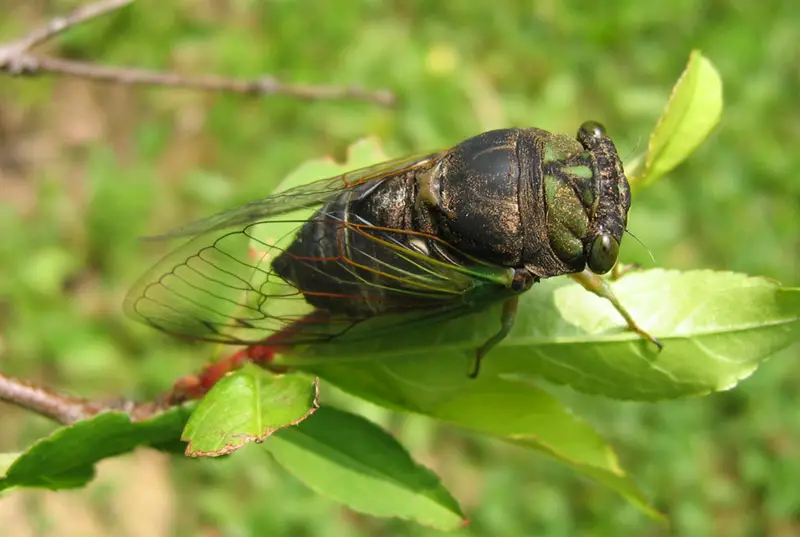
One of the most remarkable things about Tennessee cicadas is how little time they spend above ground. Periodical cicadas—those that emerge in synchronized 13- or 17-year broods—spend the majority of their lives beneath the soil.
While underground, they live as nymphs and feed on sap from the roots of hardwood trees. They move slowly through the soil as they grow, molting several times over the years. Only in their final year do they begin tunneling upward, preparing to emerge.
This long underground phase makes the explosive emergence of a periodical brood all the more dramatic. Thousands appear at once, climb trees, and begin calling. Most Tennessee residents only see the final few weeks of a life that has been developing quietly for more than a decade.
2. Annual cicadas follow a different life rhythm from the famous broods
While periodical cicadas dominate headlines, annual cicadas are the ones most Tennesseans hear every summer. They have a much shorter life cycle, usually lasting two to five years, but their generations overlap. This makes it seem as if they appear every year.
Annual cicadas are typically larger and darker than periodical cicadas. They also call later in the season, often from midsummer into early fall. Their songs are long, steady whines rather than the rhythmic pulsing typical of periodical species.
Because of their staggered generations, annual cicadas do not produce the overwhelming numbers seen with broods. Instead, they emerge consistently year after year, forming the familiar soundtrack of Tennessee’s warmest months.
3. Soil temperature controls when cicadas emerge in Tennessee
Cicada emergence is closely tied to soil temperature rather than calendar dates. In Tennessee, cicadas typically come out when the soil eight inches below the surface reaches about 64°F (18°C). Warm springs cause earlier emergences, while cool, wet springs delay them.
This temperature threshold helps synchronize periodical broods. When the soil warms consistently across large regions, millions of cicadas surface within days of one another. For annual cicadas, the same rule applies on a smaller scale, creating waves of individuals throughout the season.
Soil temperature is one reason cicada emergence varies across the state. West Tennessee often warms earlier than the mountains of East Tennessee, creating subtle differences in timing each year.
4. Cicadas only molt into adults once in their lives
When cicadas emerge from the soil as nymphs, they climb the nearest vertical surface—tree trunks, fence posts, deck railings, or even garden furniture. Then they begin their final molt.
This process is one of the most visually striking moments in their life cycle. The nymph’s shell splits open, and the soft-bodied adult slowly pulls itself free. Its wings unfold and harden, and its body shifts from pale green to its mature color.
Once this final molt is complete, the cicada never sheds its exoskeleton again. The empty shells left behind are a familiar summer sight in Tennessee, often clinging to bark or scattered across the ground.
5. Cicada calls are produced only by males
Female cicadas are silent. The loud summer calls that echo across Tennessee come exclusively from males, and each species has its own song. These calls serve two purposes: attracting mates and establishing territory among rival males.
Inside the male’s abdomen are two drum-like structures called tymbals. When the cicada flexes its muscles, the tymbals buckle and snap back repeatedly, creating rapid pulses of sound. Air-filled cavities in the abdomen amplify these clicks into the familiar buzzing drone.
Males call from branches, tree trunks, and even fences, choosing perches that allow their songs to carry across open spaces. The intensity of their chorus often rises during the heat of the day when they are most active.
6. Female cicadas create tiny slits in tree branches to lay eggs
After mating, female cicadas search for slender tree branches where they will deposit their eggs. Using a sharp, saw-like organ called an ovipositor, they cut small slits into the bark and insert their eggs inside.
These slits can sometimes cause minor twig dieback, a condition known as “flagging.” Although it may look concerning, it rarely harms mature trees. Tennessee’s native forests evolved alongside both annual and periodical cicadas, and most tree species tolerate this natural pruning.
When the eggs hatch, the newborn nymphs drop to the ground and burrow into the soil. There, they latch onto tree roots and begin the long process of feeding and growing underground.
7. Cicada nymphs feed on tree roots without killing the tree
While underground, cicada nymphs feed on sap from tree roots. Many people assume this behavior harms trees, but the feeding is generally light and rarely damaging.
Cicadas do not chew or bore into roots. Instead, they insert straw-like mouthparts into root tissue, drawing small amounts of fluid. Trees constantly produce new sap, so the impact is minimal. Even during periodical emergences when millions of nymphs feed at once, healthy trees usually recover easily.
This gentle feeding method allows cicadas and Tennessee’s hardwood forests to coexist. The insects rely on long-lived trees, and the trees continue to thrive despite decades of nymphal feeding.
8. Cicadas play an important role in Tennessee ecosystems
Although cicadas are famous for their sudden appearances, their ecological contributions are often overlooked. They provide nutrients, aerate the soil, and support a wide range of predators.
When periodical cicadas emerge, their sheer numbers create a temporary food wave. Birds, raccoons, foxes, fish, turtles, and even domestic pets take advantage of the abundance. This brief feast supports wildlife reproduction and boosts populations of certain species.
After adults die, their bodies decompose rapidly, enriching the soil with nitrogen. This natural fertilization benefits forests, gardens, and wild plant communities. Meanwhile, the tunnels cicadas leave behind improve soil aeration and water movement.
Every stage of the cicada life cycle influences Tennessee’s ecosystems in ways that ripple through the entire summer landscape.
9. Periodical broods are timed to avoid predators
One of the most astonishing facts about cicadas is the mathematical rhythm behind their emergence. Periodical cicadas use prime-number cycles—13 or 17 years—to reduce the chances that predators can synchronize with them.
A predator with a short life cycle cannot predict when cicadas will appear because the year of emergence never repeats in a predictable interval. When cicadas finally surface, they overwhelm predators through sheer numbers. Even with heavy predation, millions survive to reproduce.
This survival strategy relies on long periods underground and precise timing. Tennessee is home to several broods, and their carefully timed appearances create some of the state’s most unforgettable natural events.
10. Adult cicadas live only a few weeks, but their influence lasts decades
Although cicadas spend years underground, their adult stage is brief. Most live just three to six weeks after emerging. During this time, they mate, lay eggs, and contribute to the summer chorus before completing their life cycle.
Despite their short adult lives, the effects of each generation last far longer. The nutrients they return to the soil, the tunnels they leave behind, and the ecological interactions they trigger continue influencing Tennessee forests for decades.
As the next generation of cicada nymphs burrows deeper into the ground, they begin a cycle that won’t fully reveal itself until the next Tennessee summer—whether that’s next year or many years in the future.
Frequently Asked Questions
Why are cicadas so loud in Tennessee summers?
Male cicadas produce loud calls to attract mates. Tennessee’s warm climate and abundant trees amplify these sounds each year.
Are cicadas dangerous?
No. They do not bite, sting, or spread disease. They are harmless to people and pets.
Do cicadas damage trees?
Egg-laying can cause minor twig dieback, but mature trees usually recover without long-term effects.
Why do cicadas come out all at once?
Periodical cicadas emerge synchronously to overwhelm predators and ensure enough adults survive to reproduce.
What’s the difference between annual and periodical cicadas?
Annual cicadas appear every year due to overlapping generations, while periodical cicadas emerge in large broods every 13 or 17 years.
How long do cicadas live above ground?
Adults live for only a few weeks. The rest of their lives are spent underground as nymphs.
What do cicadas eat underground?
They feed on sap from tree roots using straw-like mouthparts.
Do predators rely on cicada emergences?
Many animals take advantage of cicada abundance, especially during periodical emergences.
Why do cicadas leave shells on trees?
Those shells are their final nymphal skins, shed during their transformation into adults.
Can weather affect cicada emergence?
Yes. Soil temperature determines when they surface, and unusual weather patterns can shift their timing.
Final Thoughts
Cicadas are one of the most distinctive elements of Tennessee summers. Their calls fill forests, river corridors, and neighborhoods with a sound unmatched by any other insect. Yet behind that sound lies an intricate life cycle shaped by long underground development, precise timing, and deep ecological connections.
Understanding these patterns adds new appreciation to their presence each year. Whether you encounter their empty shells, hear their evening choruses, or witness a rare brood emergence, cicadas offer a glimpse into how nature’s rhythms unfold quietly across Tennessee’s landscapes.