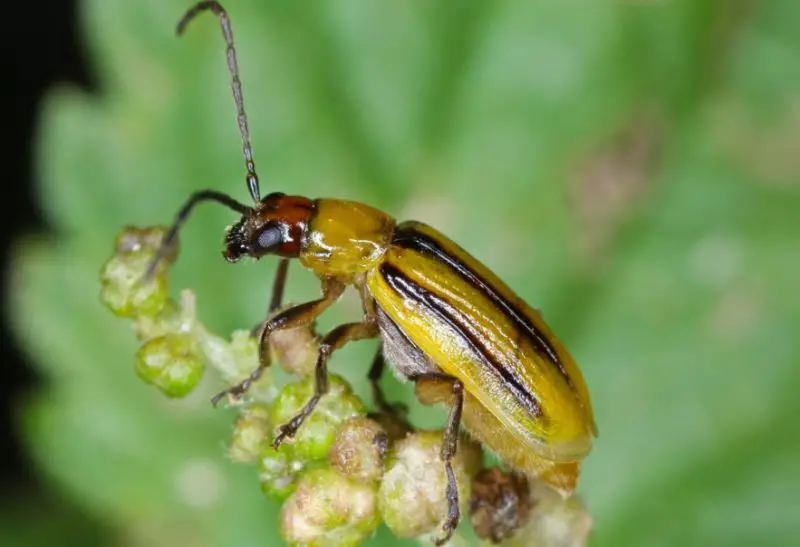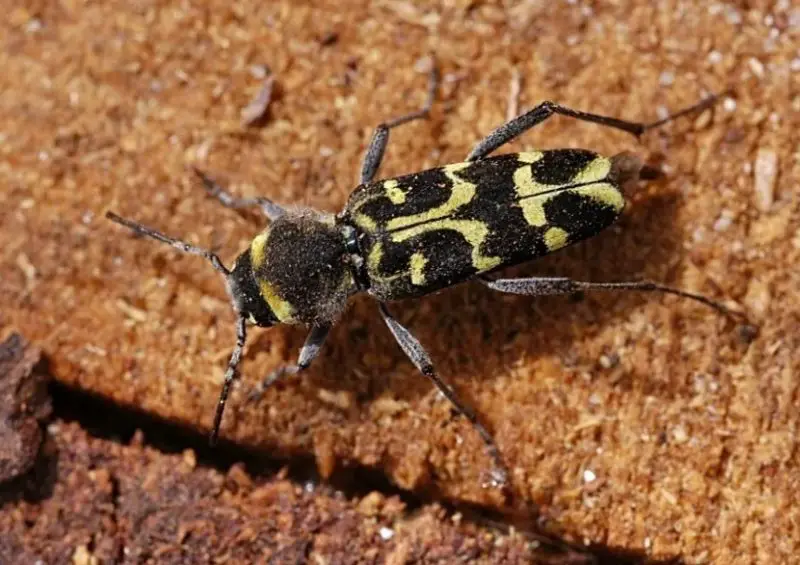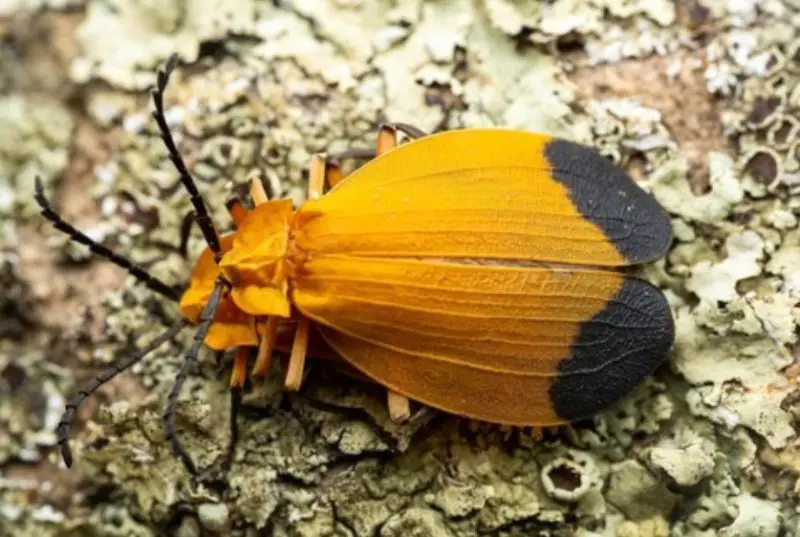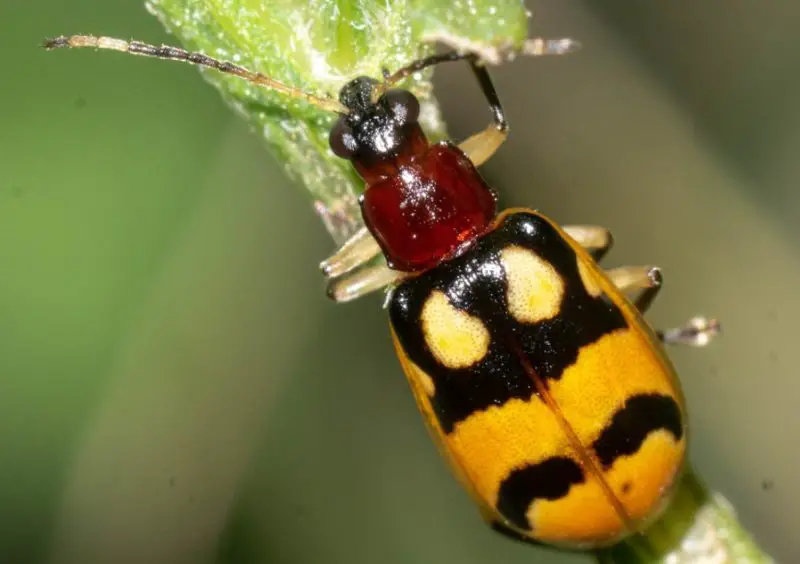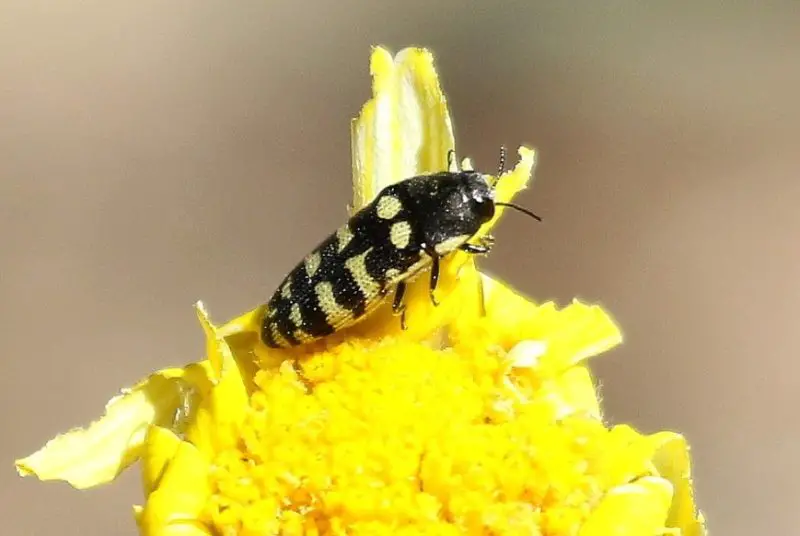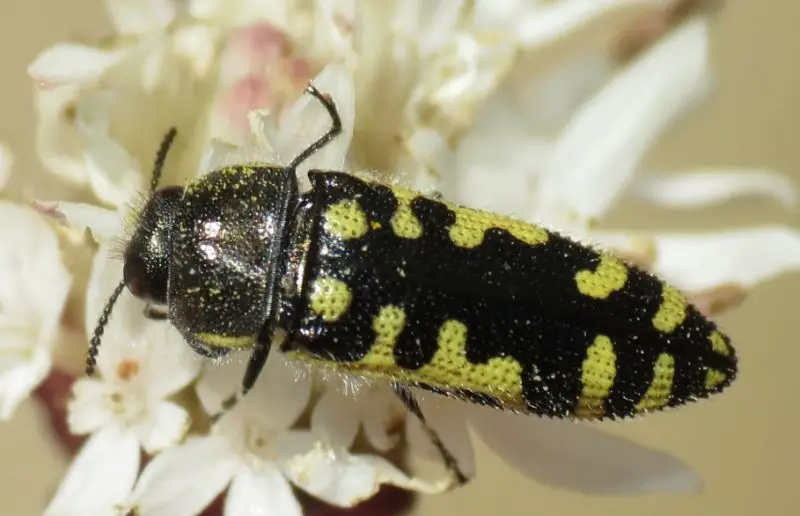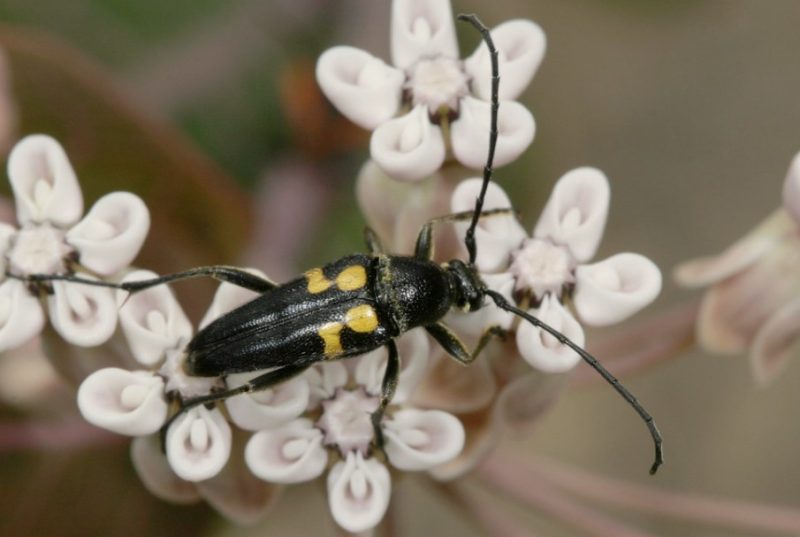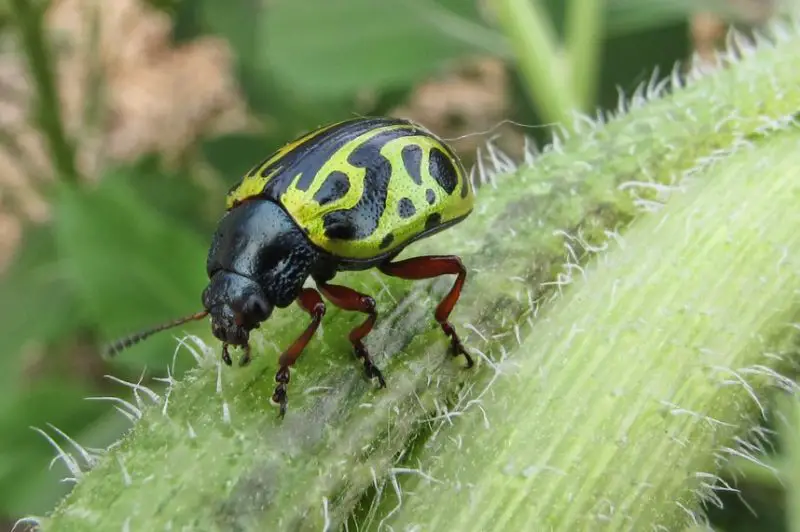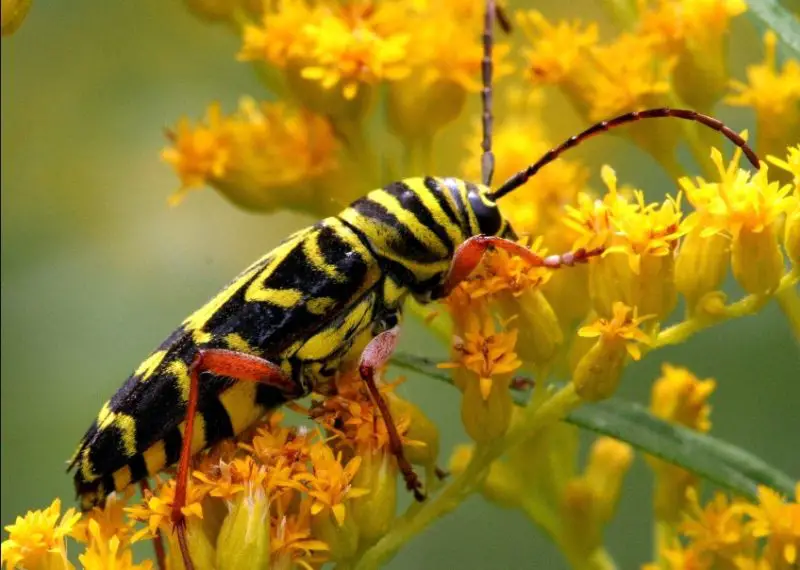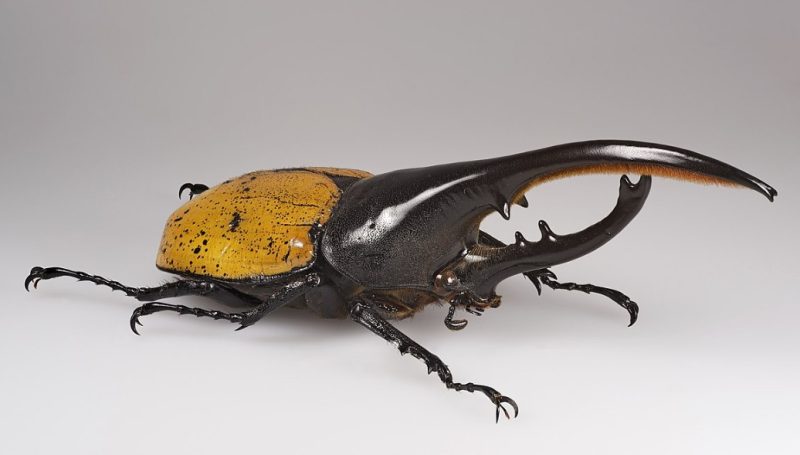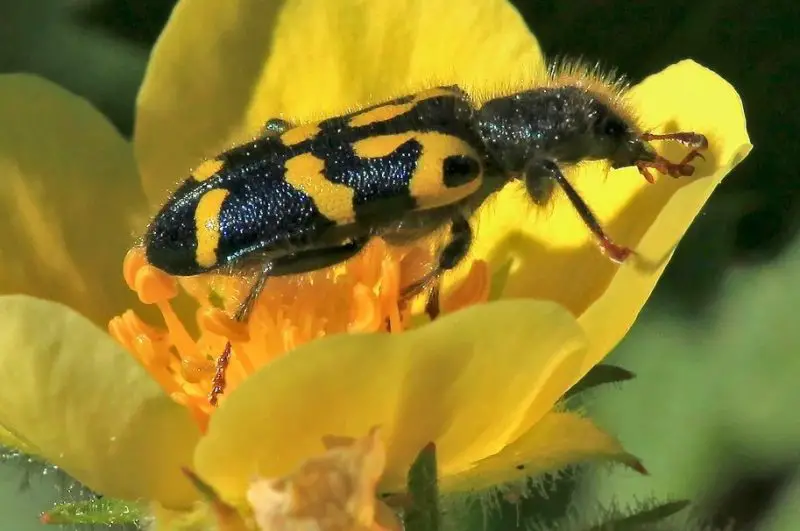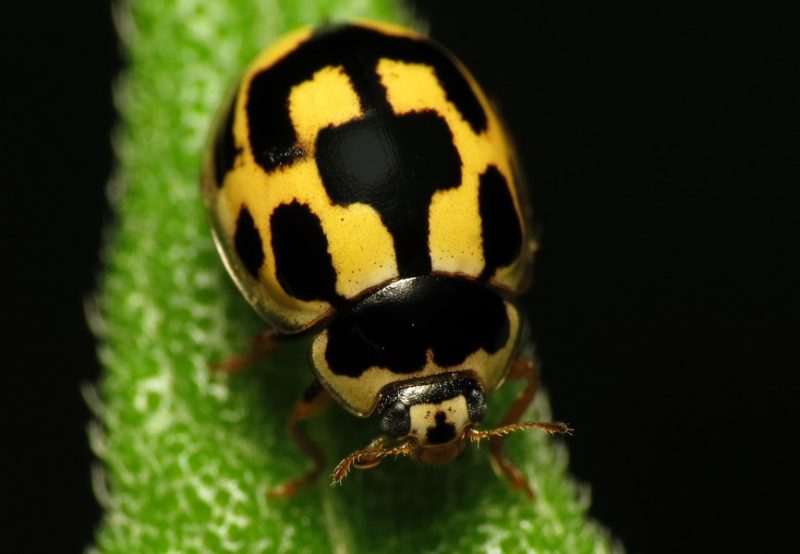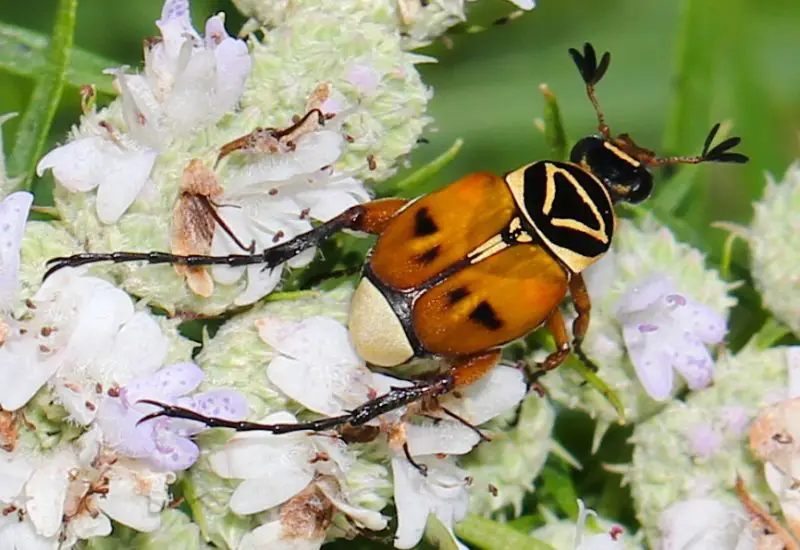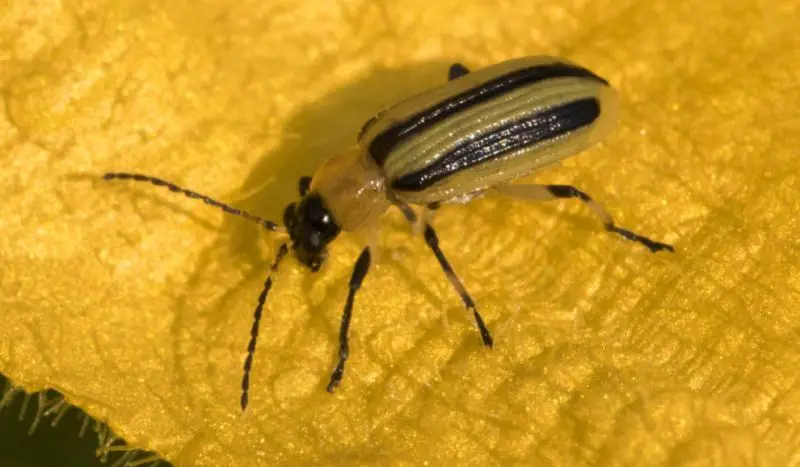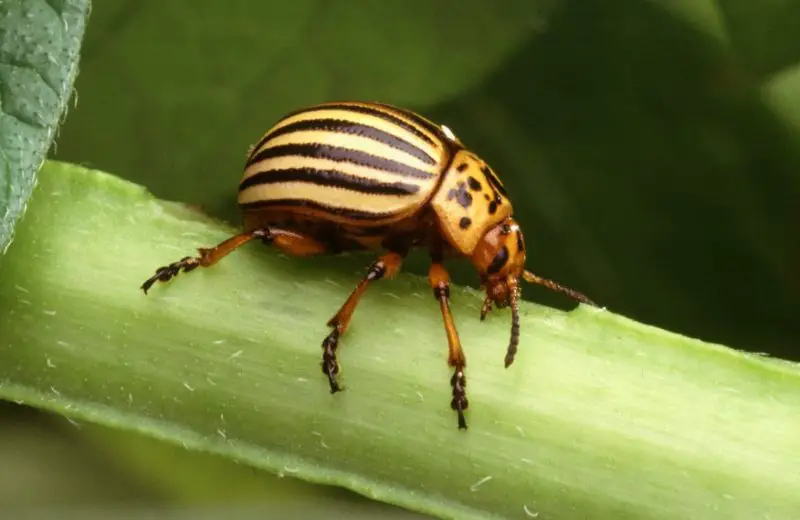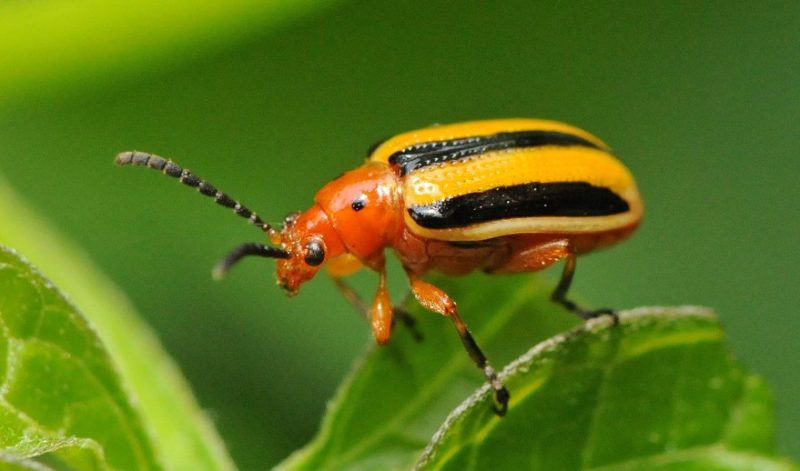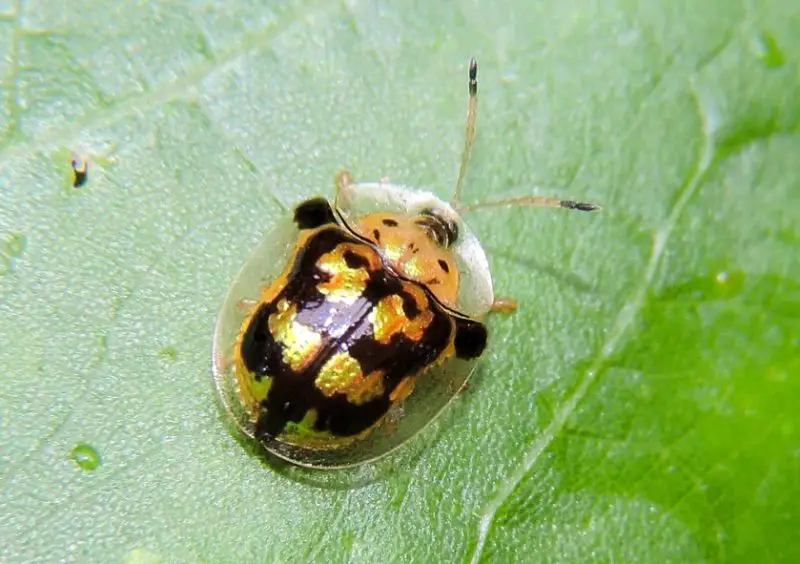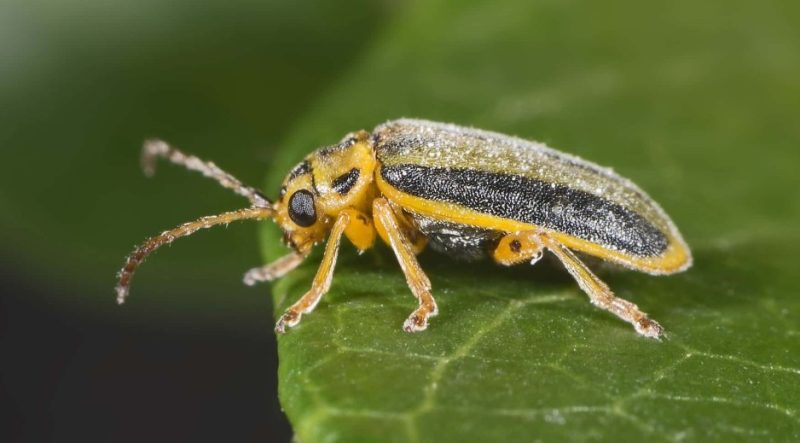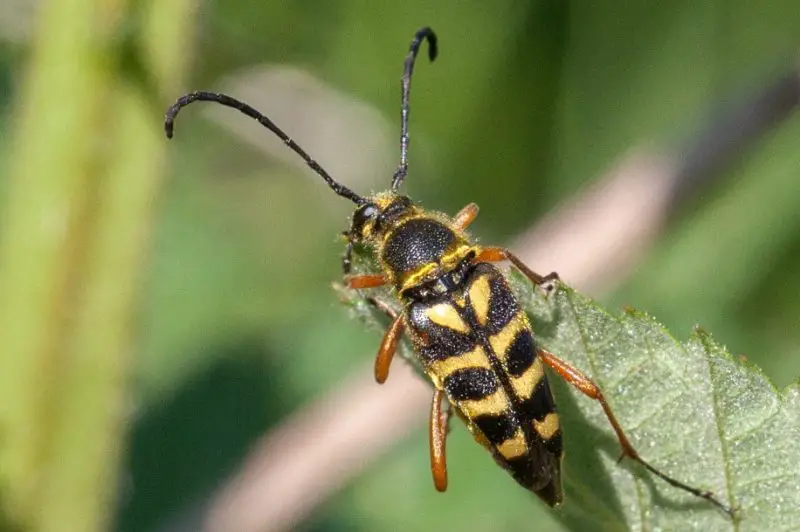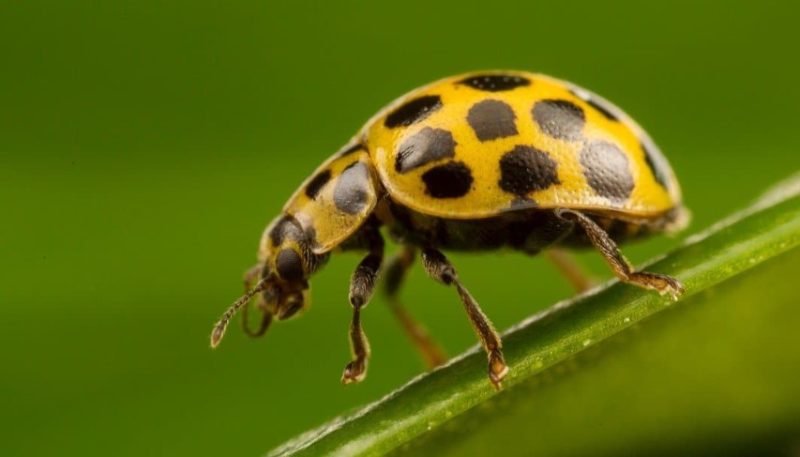
Yellow beetles with black spots are a familiar sight across North America, with each species distinguished by unique patterns and behaviors.
As adults, the majority of yellow beetles with black spots are harmless and feed mostly on plants. However, some species found in the United States are only able to eat particular kinds of plants or vegetables, like squash, cucumbers, and anacahuita shrubs.
Though they are rarely pests, beetles with black and yellow colors can occasionally make their way inside. Different strategies can be used to successfully eradicate them, depending on the species.
Table of Contents
- 1 Different Types of Yellow Beetles with Black Spots
- 1.1 Texas Soldier Beetle
- 1.2 Mesquite Borer
- 1.3 Typocerus Octonotatus
- 1.4 Trypherus Frisoni
- 1.5 Notched-Tipped Flower Longhorn Beetle
- 1.6 Sunburst Diving Beetle
- 1.7 Iron Cross Blister Beetle
- 1.8 Cryptocephalus Leucomelas
- 1.9 Eudiagogus Rosenschoeldi
- 1.10 Wild Olive Tortoise Beetle
- 1.11 Lewis’ Soldier Beetle
- 1.12 Redbud Borer
- 1.13 Rabbitbrush Beetle
- 1.14 Strophiona Tigrina
- 1.15 Acmaeodera Amplicollis
- 1.16 Banded Ash Borer
- 1.17 Western Corn Rootworm Beetle
- 1.18 Spruce Zebra Beetle
- 1.19 Arizona Net-Winged Beetle
- 1.20 Festive Diabrotica
- 1.21 Acmaeodera Alicia
- 1.22 Acmaeodera Solitaria
- 1.23 Typocerus Lunulatus
- 1.24 Globemallow Leaf Beetle
- 1.25 Systena Gracilenta
- 1.26 Amorpha Borer
- 1.27 Yerba Santa Beetle
- 1.28 Spotted Cucumber Beetle
- 1.29 Locust Borer
- 1.30 Eastern Hercules Beetle
- 1.31 Ornate Checkered Beetle
- 1.32 Fourteen-Spotted Lady Beetle
- 1.33 Delta Flower Scarab
- 1.34 Striped Cucumber Beetle
- 1.35 Colorado Potato Beetle
- 1.36 Three-Lined Potato Beetle
- 1.37 Mottled Tortoise Beetle
- 1.38 Elm Leaf Beetle
- 1.39 Zebra Longhorn Beetle
- 1.40 Squash Lady Beetle
- 1.41 Yellow-Horned Flower Longhorn Beetle
- 1.42 Bean Leaf Beetle
- 1.43 Alligatorweed Flea Beetle
- 1.44 Harlequin Flower Beetle
- 1.45 Round-Necked Longhorn Beetle
- 1.46 Painted Hickory Borer
- 1.47 Judolia Cordifera
Different Types of Yellow Beetles with Black Spots
Texas Soldier Beetle
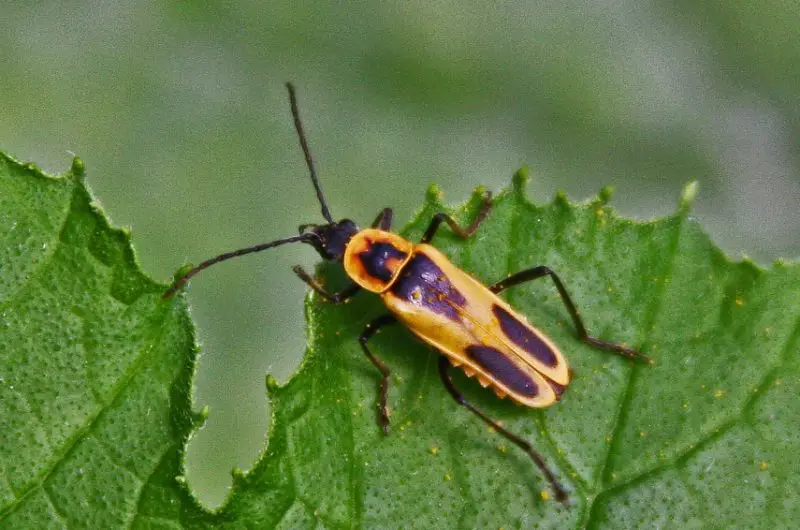
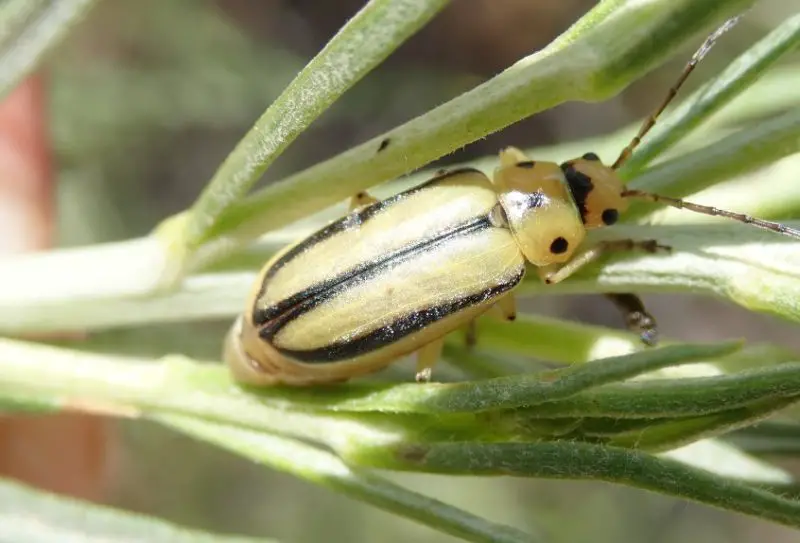
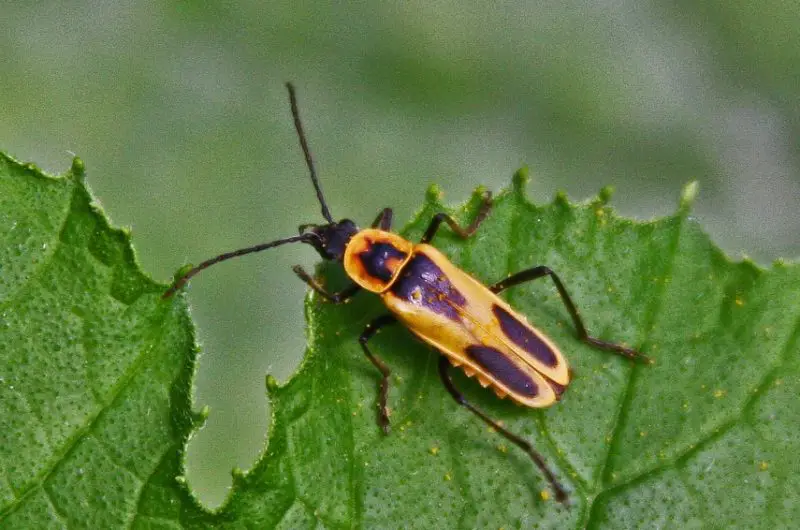
The Texas Soldier Beetle (Chauliognathus scutellaris) is native to North America and distinguished by its long yellow elytra adorned with four black spots. Predators avoid this species due to its vibrant yellow coloring. It features long, thin black legs and antennae. Found primarily in Texas, its presence is limited in other Southern states. Texas Soldier Beetles primarily feed on flower nectar, contributing to pollination efforts in their habitat.
Mesquite Borer
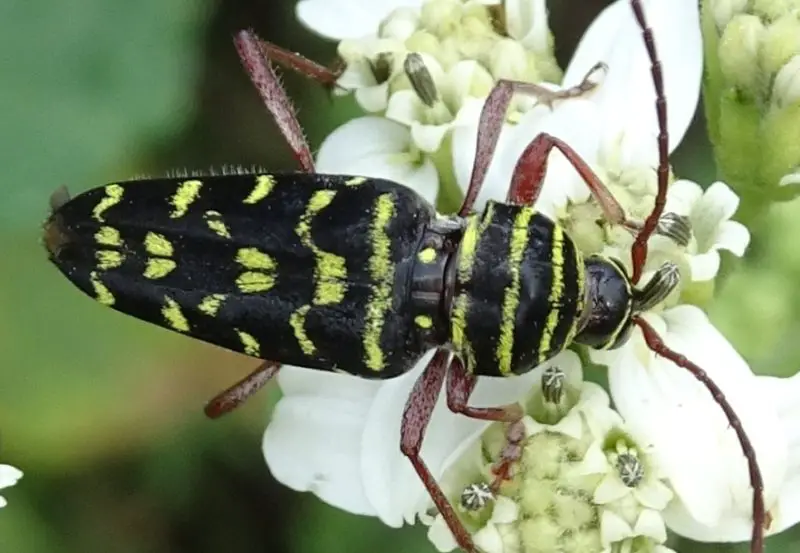
Mesquite borers (Placosternus difficilis) are commonly found on mesquite trees and are abundant in southern US regions, notably Texas. While rare in Arizona and New Mexico, these beetles lay eggs directly in mesquite trees, their larvae consuming the wood. Despite their presence, their impact on mesquite trees is limited as they move to feed on nectar after pupation. Mesquite trees hold historical significance in the US, with their lumber historically used for shipbuilding.
Typocerus Octonotatus
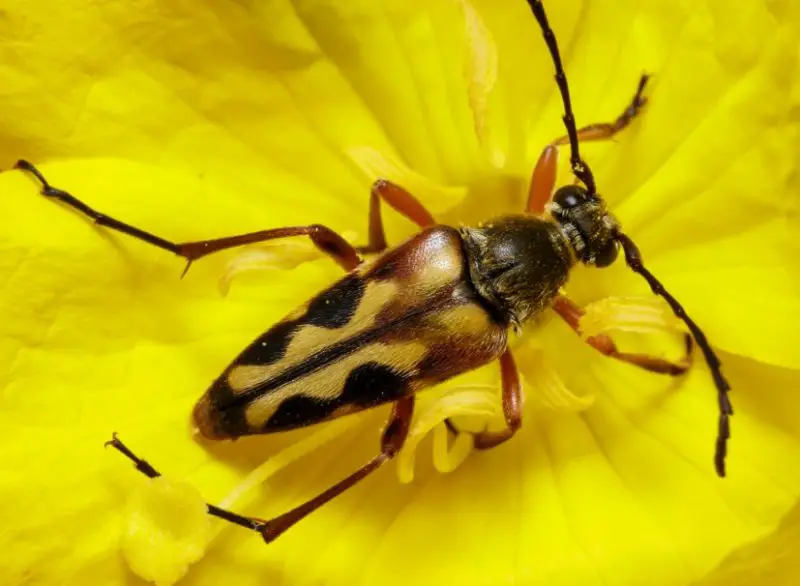
Typocerus octonotatus beetles exhibit a yellow-orange body with black markings. They are pollen and nectar feeders, often adopting the colors of their preferred yellow and orange flowers. Their predominantly yellow body with black spots provides effective camouflage while foraging on flower buds. Distinguishing features include their very long antennae, characteristic of the Longhorn genus. These beetles are adept at blending with their floral environments, relying on their antennae for sensory perception and navigation.
Trypherus Frisoni
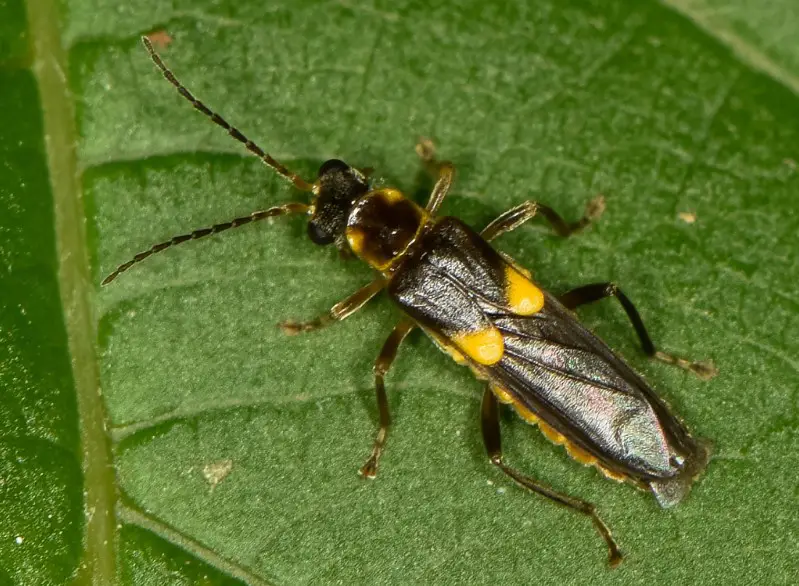
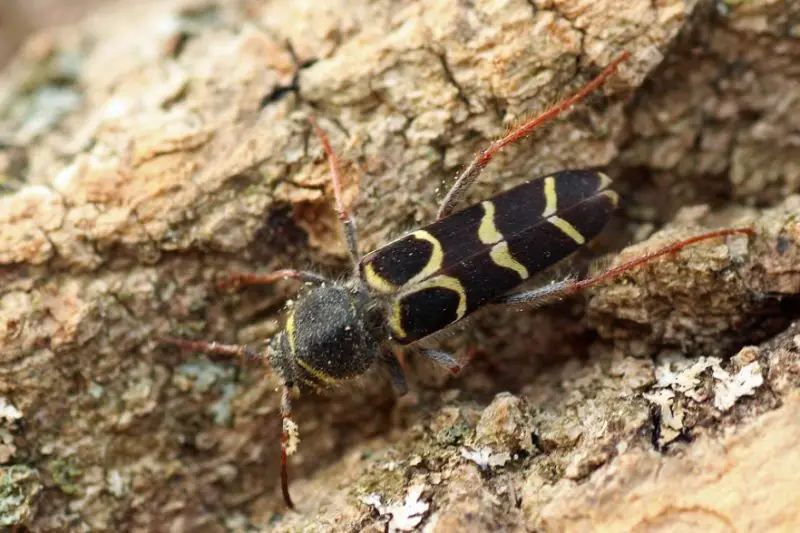
Trypherus frisoni beetles grow to a minimum size of ¼ inch, resembling black wasps with a mostly black body. They feature minimal yellow coloring, initially hard to discern on young beetles. Two distinct yellow stripes adorn their bodies, complemented by black antennae and red-brown legs. Found in northern states like Ohio, they contrast with other black and yellow beetles more common in Texas, Arizona, and California. This species thrives in diverse habitats, utilizing its distinctive markings for camouflage and identification.
Notched-Tipped Flower Longhorn Beetle
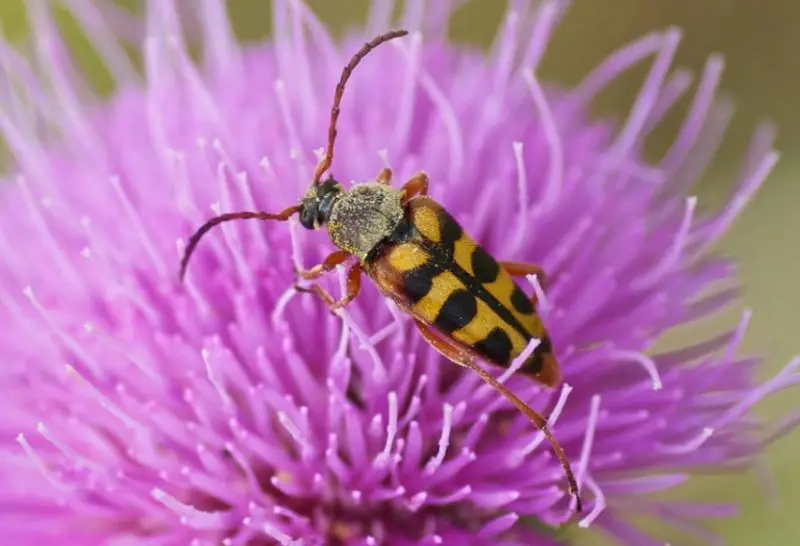
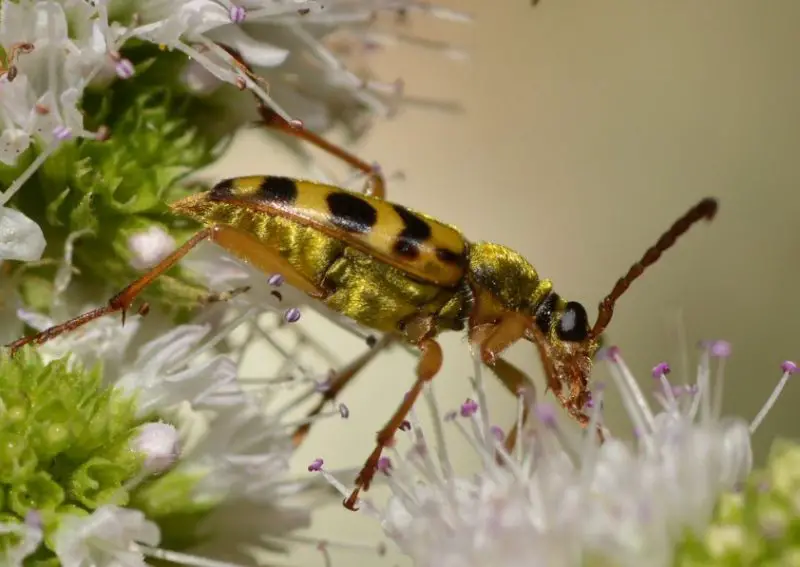
The Notched-tipped Flower Longhorn Beetle (Typocerus sinuatus), with its yellow and black coloring, mimics bees and is often mistaken for one due to its appearance. Like all longhorn beetles, it has long antennae. These beetles feed on nectar and pollen, particularly garden and park flowers. They are identifiable by six black spots on their elytra. Notched-tipped Flower Longhorn Beetles are active from spring through early fall, contributing to pollination efforts in their habitats.
Sunburst Diving Beetle
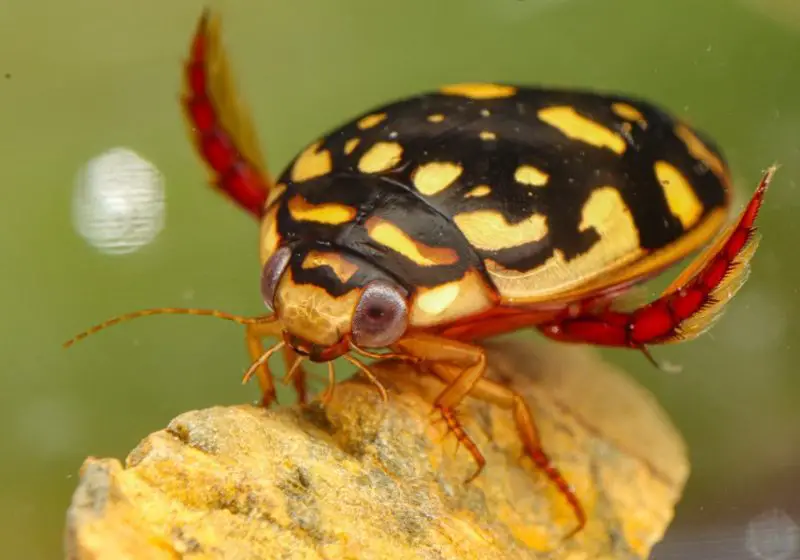
The Sunburst Diving Beetle (Thermonectus marmoratus) is an aquatic black and yellow beetle resembling water bugs in its flattened oval shape. Its black body is adorned with yellow and white dots, along with bright yellow lateral stripes. Native to California and Baja California, it thrives in water habitats, where it preys on various water insects, including mosquitoes and their eggs. Known for its swimming ability and keen vision, this beetle plays a crucial role in aquatic ecosystems, particularly during its larval stage when it feeds on insect eggs and other water creatures.
Iron Cross Blister Beetle
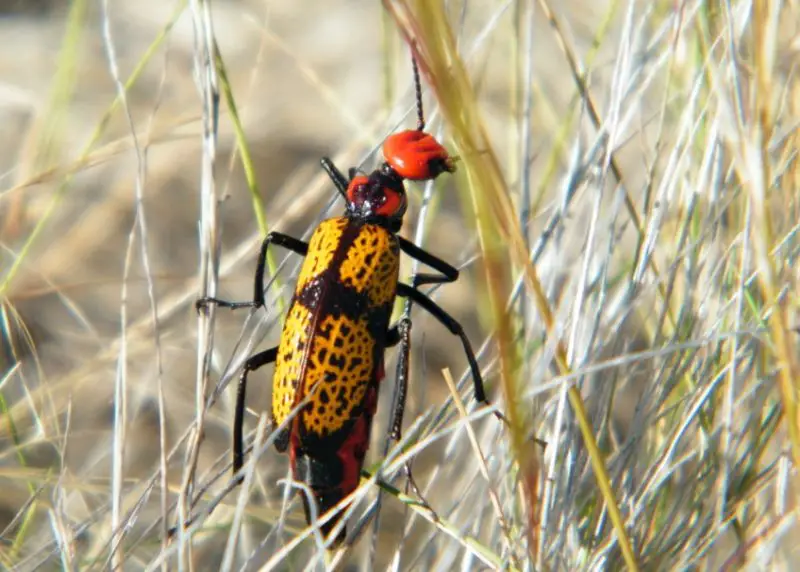
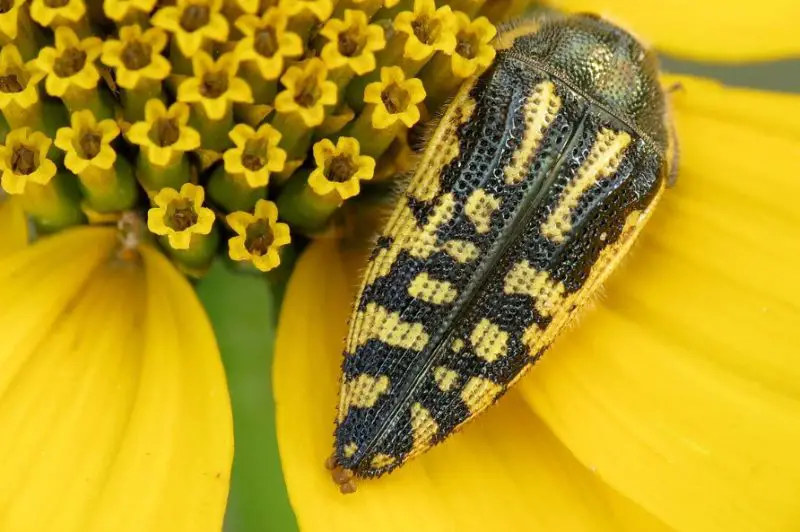
The Iron Cross Blister Beetle (Tegrodera aloga) sports a black body adorned with yellow mesh-like patterns on its elytra. Thriving in arid and desert environments, this species is medically significant due to its production of cantharidin, a toxin lethal to certain livestock and potentially harmful to humans through ingestion or contact, causing severe skin blisters. Interestingly, cantharidin from blister beetles like these is also utilized in medical procedures, including tattoo removal, and is under research for potential therapeutic applications in cancer treatment.
Cryptocephalus Leucomelas
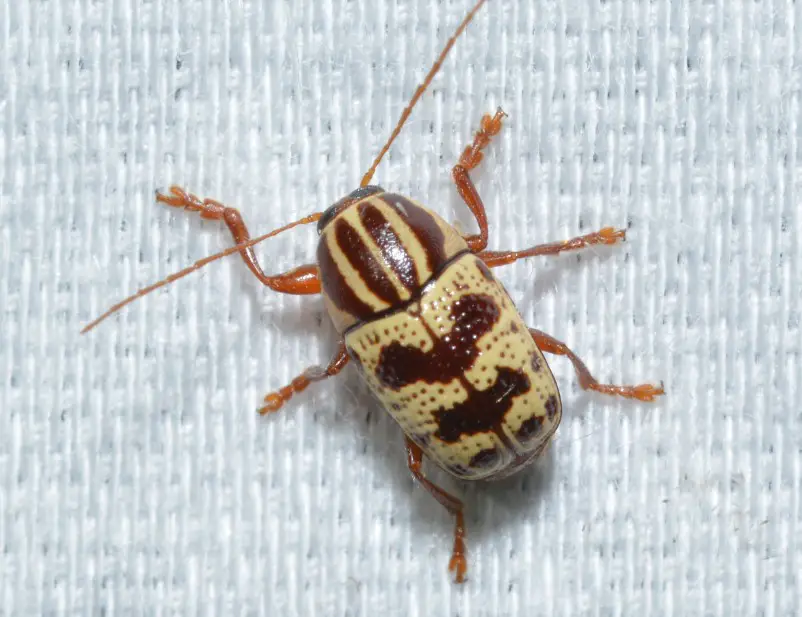
Cryptocephalus leucomelas is a prevalent yellow beetle with black spots found in northern states. Recognizable by its yellow elytra with two brown-black bands and four smaller spots, its body features yellow and brown or black stripes, complemented by brown legs and antennae. Primarily herbivorous in adulthood, it feeds on various plant tissues, notably leaves. Its distinctive long antennae set it apart from other leaf-eating insects, aiding in its identification in natural habitats and agricultural settings.
Eudiagogus Rosenschoeldi
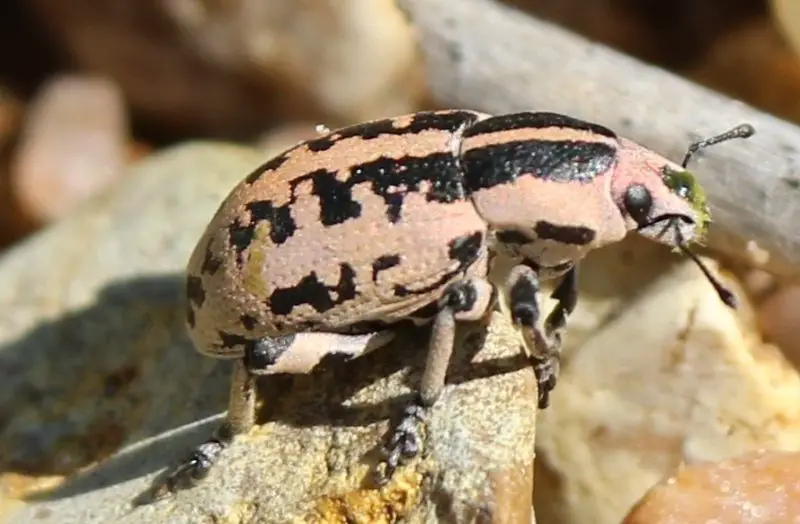
Eudiagogus rosenschoeldi is a beetle characterized by its elongated snout, exclusively feeding on plants and roots from the pea family (Fabaceae). Identified by bark-like coloring patterns—gray and dark gray, orange and black, or black and yellow—these true weevils feature a robust, wide body, a small head, and an elongated snout. They possess short, thick legs suitable for burrowing deep into the ground in search of pea roots, distinguishing them as specialized herbivores within their ecological niche.
Wild Olive Tortoise Beetle
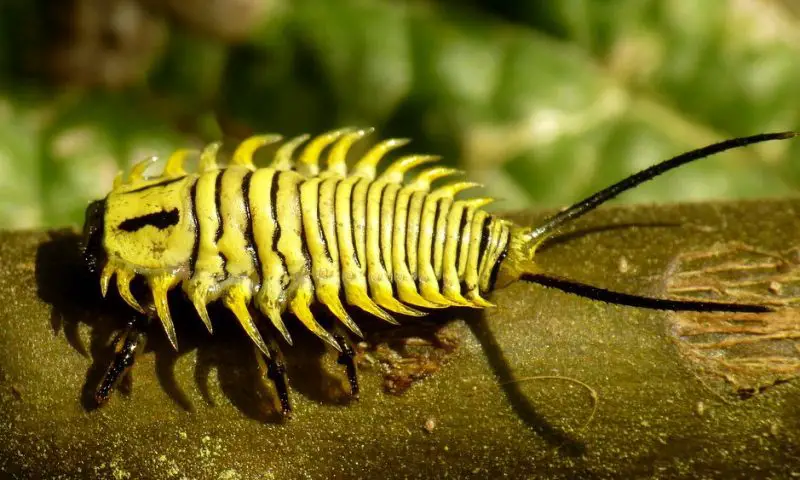
Wild Olive Tortoise Beetles (Physonota alutacea) derive their name from their flattened body, which resembles a turtle’s oval shape. Adults display a blend of yellow, black, and olive hues, while larvae sport striking black and yellow stripes. Common in southern Texas, Mexico, and Central America, they feed on Anacahuita flowers rather than olives. These shrubbery blooms thrive in warm Southern US climates and are prevalent further south into Mexico, defining the beetle’s habitat and feeding preferences.
Lewis’ Soldier Beetle
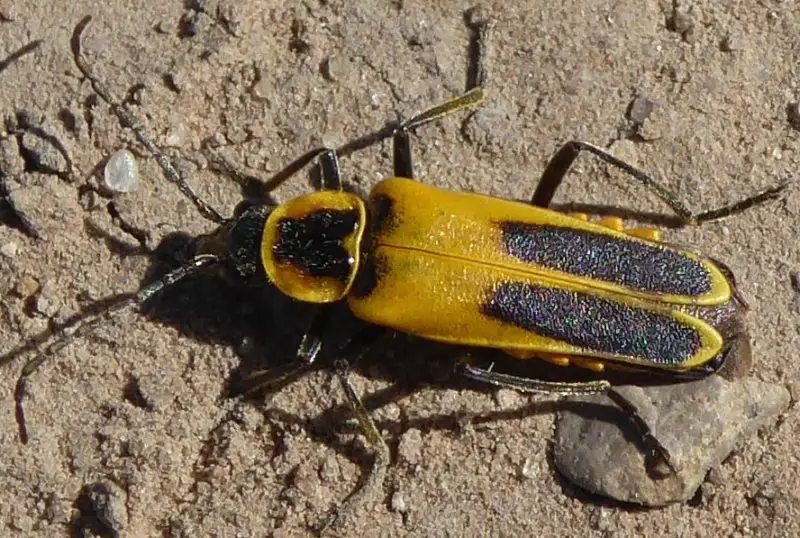
Lewi’s Soldier beetles (Chauliognathus lewisi) sport a distinctive black and yellow coloration, with elongated bodies and black wings edged in yellow. Their heads also feature yellow and black markings. Active as larvae feeding on insects, they transition to consuming pollen and nectar from various yellow flowers as adults. This coloration aids in camouflage among the yellow flower buds they frequent, ensuring they can efficiently feed while minimizing detection by predators.
Redbud Borer
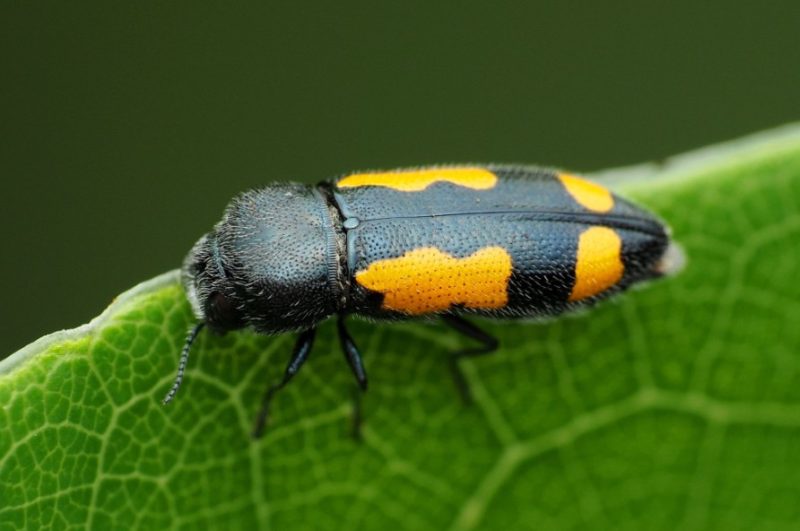
The Redbud Borer (Ptosima gibbicollis) is a metallic woodboring beetle characterized by glossy black and yellow coloring. Its ovoid body primarily features black, accentuated by four distinct yellow spots. With a dark black head devoid of bright or yellow markings, this species specializes in nesting within recently deceased wood. As a woodborer, it plays a crucial role in the decomposition process of trees, utilizing suitable wood habitats to establish nests and complete their life cycle.
Rabbitbrush Beetle