
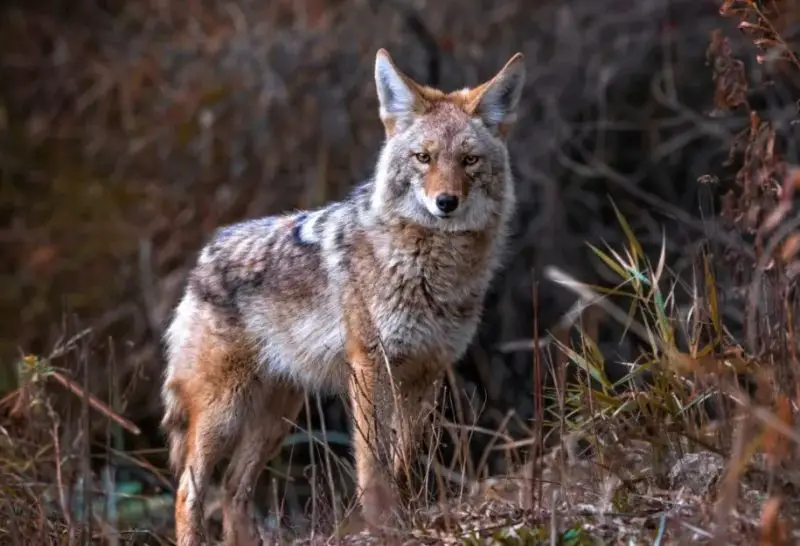
Across North Dakota, coyotes are a familiar presence. They move through open prairie, farmland, river corridors, and the edges of small towns. At the same time, rural North Dakota is home to thousands of domestic dogs living on farms, ranches, acreages, and remote properties. Where these animals share space, an old question keeps resurfacing.
Can domestic dogs mate with coyotes in rural North Dakota, or is that mostly a rumor passed down through generations?
The idea feels plausible. Coyotes and dogs are closely related. They can look similar at a distance. They sometimes vocalize at night in the same areas. Stories circulate of strange-looking animals seen along gravel roads or near cattle pastures. Over time, those stories harden into belief.
The reality, however, is far more nuanced than most people expect. While dog–coyote mating is biologically possible, it is far less common in the wild than many assume. Understanding why requires looking at genetics, behavior, breeding timing, and the specific environmental conditions found in North Dakota.
Table of Contents
- 1 Dogs and Coyotes Share a Close Genetic Relationship
- 2 Coyotes Are Highly Territorial Animals
- 3 Breeding Timing Rarely Aligns
- 4 Behavioral Differences Create a Natural Barrier
- 5 Coyotes Prefer Their Own Kind
- 6 What Science Says About Dog–Coyote Hybrids
- 7 Why People Believe Hybrids Are Common
- 8 Feral and Free-Ranging Dogs Add to the Confusion
- 9 Historical Cases vs Modern Reality
- 10 Survival Challenges for Hybrids
- 11 Coyotes Avoid Dogs Outside of Breeding Season Too
- 12 Why Coywolf Stories Increase Confusion
- 13 Wildlife Agencies Monitor Genetic Integrity
- 14 Why the Myth Persists in Rural Communities
- 15 Legal and Management Implications
- 16 Can It Happen at All?
- 17 Why This Understanding Matters
- 18 FAQs about Dog–Coyote Hybrids in North Dakota
- 18.1 Can dogs and coyotes biologically mate?
- 18.2 Does dog–coyote mating commonly occur in North Dakota?
- 18.3 Why don’t coyotes usually mate with dogs?
- 18.4 Are “coydogs” common in rural areas?
- 18.5 Have dog–coyote hybrids ever existed?
- 18.6 How do scientists check for hybrids?
- 18.7 Would hybrids survive easily in the wild?
- 18.8 Why do people believe coydogs are common?
- 18.9 Do wildlife agencies monitor this issue?
- 18.10 Is this belief harmful to wildlife?
- 19 Final Thoughts
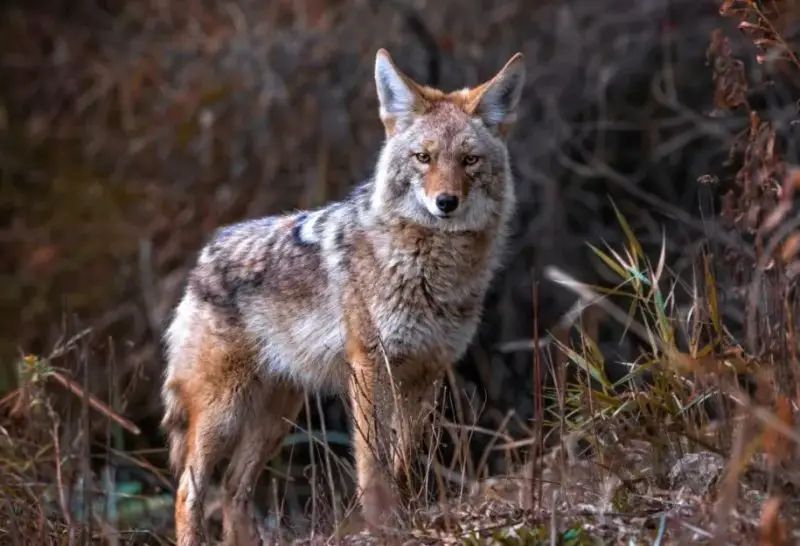
From a genetic standpoint, dogs and coyotes are compatible.
Domestic dogs and coyotes both belong to the genus Canis. They share the same number of chromosomes, which means producing offspring is biologically possible. This fact alone fuels much of the speculation surrounding wild hybrids.
But genetic compatibility does not guarantee frequent hybridization. In nature, many closely related species remain distinct because behavioral and ecological barriers prevent mating.
In North Dakota, those barriers are especially strong.
Coyotes Are Highly Territorial Animals
Coyotes are not casual roamers looking for mates outside their species.
They form territorial pairs or family groups and aggressively defend their space. Any unfamiliar canid entering that territory is treated as a potential threat, not a romantic opportunity.
A free-roaming dog wandering into coyote territory is far more likely to be chased, injured, or killed than accepted.
This territorial behavior alone dramatically reduces the chance of mating.
Breeding Timing Rarely Aligns
Timing is one of the most important obstacles.
Coyotes have a very specific breeding season, usually in late winter. Females come into heat once per year, and the window is short.
Domestic dogs, by contrast, may go into heat at different times depending on breed, health, and environment. Their cycles often do not overlap with coyote breeding periods.
In rural North Dakota, where winters are harsh and breeding seasons are tightly synchronized for wildlife, this mismatch makes encounters at the right moment extremely unlikely.
Behavioral Differences Create a Natural Barrier
Even when timing overlaps, behavior often does not.
Coyotes rely on specific courtship behaviors, vocalizations, and social cues. Domestic dogs do not consistently recognize or respond to these signals.
From the coyote’s perspective, a dog behaves unpredictably. From the dog’s perspective, a coyote may appear aggressive or threatening.
These behavioral mismatches act as a powerful reproductive barrier.
Coyotes Prefer Their Own Kind
Coyotes are not struggling to find mates in North Dakota.
The state supports a healthy, widespread coyote population. Coyotes occupy nearly every habitat type, from prairie to farmland to river bottoms.
When animals have abundant access to mates of their own species, they overwhelmingly choose them. Hybridization becomes unnecessary and evolutionarily unfavorable.
This is one of the main reasons dog–coyote mating remains rare.
What Science Says About Dog–Coyote Hybrids
Scientific evidence provides clarity.
Genetic studies across the Great Plains consistently show that wild coyotes remain genetically distinct. DNA testing rarely detects dog ancestry in coyote populations in the Midwest or northern Plains.
When suspected hybrids are tested, they almost always turn out to be pure coyotes, domestic dogs, or animals misidentified due to unusual coat color or size.
If dog–coyote hybrids were common in North Dakota, genetic surveys would clearly show it. They do not.
Why People Believe Hybrids Are Common
Despite scientific evidence, belief persists.
Part of the reason is visual confusion. Coyotes vary widely in size, color, and build. Some are large, pale, dark, or unusually shaped.
At a distance, especially in low light, these variations can resemble dog traits. Add brief sightings, trail camera distortion, or secondhand reports, and assumptions quickly take root.
The phrase “coydog” becomes a convenient explanation.
Feral and Free-Ranging Dogs Add to the Confusion
Rural North Dakota has its share of free-ranging dogs.
Some dogs live semi-feral lives, roaming large areas, hunting small prey, and avoiding people. Over time, they can appear leaner, more cautious, and more “wild.”
These dogs are often mistaken for hybrids.
In reality, they are still dogs adapting to rural conditions, not genetic blends.
Historical Cases vs Modern Reality
Historically, dog–coyote hybrids have existed.
Most documented cases occurred under unusual circumstances, such as extreme population pressure, human interference, or captivity. Some happened decades ago when wildlife populations were heavily disrupted.
Modern North Dakota does not resemble those conditions.
Coyotes are abundant, territories are established, and ecosystems are relatively stable. The ecological pressure that once made hybridization more likely no longer exists.
Survival Challenges for Hybrids
Even if a hybrid were born, survival would be difficult.
A hybrid may not integrate well into coyote family groups. It may lack proper hunting skills, social signals, or territorial behavior.
Natural selection does not favor individuals that fall between two ecological roles. This further limits the persistence of hybrids in the wild.
Coyotes Avoid Dogs Outside of Breeding Season Too
Coyotes avoid dogs year-round.
Dogs carry human scent, behave unpredictably, and pose a risk. Coyotes have learned through generations that avoiding dogs increases survival.
This avoidance behavior further reduces opportunities for mating, even outside breeding season.
Why Coywolf Stories Increase Confusion
Many people confuse coyotes with coywolves.
Coywolves are hybrids involving coyotes and wolves, primarily found in eastern North America. Their existence often leads people to assume dog–coyote hybrids must be equally common.
But coywolf formation involved very specific ecological conditions that do not apply to dog–coyote interactions in North Dakota.
The two phenomena are not comparable.
Wildlife Agencies Monitor Genetic Integrity
Wildlife agencies actively monitor canid genetics.
DNA testing helps track population health and detect hybridization if it occurs. In North Dakota and surrounding states, results consistently show stable, non-hybrid coyote populations.
If dog–coyote hybrids were widespread, management strategies would change. They have not—because evidence does not support the claim.
Why the Myth Persists in Rural Communities
Rural communities are closer to wildlife and rely heavily on firsthand experience.
When something unusual is seen, people look for explanations that fit local lore. Hybrid stories feel plausible and memorable.
Over time, repeated retelling turns speculation into belief.
Science, unfortunately, does not spread as quickly as stories.
Legal and Management Implications
Hybridization is not just an academic issue.
If widespread dog–coyote hybridization were occurring, it would affect wildlife management, hunting laws, and conservation policy.
The absence of such changes reflects the scientific consensus that hybrids are not a significant factor.
Can It Happen at All?
In theory, yes.
In practice, in rural North Dakota today, dog–coyote mating is extremely rare and biologically insignificant.
There is no evidence of established hybrid populations roaming the state.
Why This Understanding Matters
Belief in widespread hybrids can increase fear, misunderstanding, and hostility toward wildlife.
Coyotes already face intense pressure from control efforts. Adding myths to the mix does not help manage ecosystems responsibly.
Understanding reality supports informed coexistence rather than fear-driven reaction.
FAQs about Dog–Coyote Hybrids in North Dakota
Can dogs and coyotes biologically mate?
Yes. Dogs and coyotes are genetically compatible, so mating is possible in theory.
Does dog–coyote mating commonly occur in North Dakota?
No. There is no strong scientific evidence showing frequent or ongoing dog–coyote hybridization in the wild.
Why don’t coyotes usually mate with dogs?
Territorial behavior, breeding timing, and social differences prevent most mating attempts.
Are “coydogs” common in rural areas?
No. Most animals called coydogs are misidentified coyotes or free-ranging domestic dogs.
Have dog–coyote hybrids ever existed?
Yes, but mostly under rare or historical circumstances, not typical modern conditions.
How do scientists check for hybrids?
They use DNA testing from tissue, hair, or scat samples.
Would hybrids survive easily in the wild?
Survival would be difficult because hybrids may not fit well into coyote family groups.
Why do people believe coydogs are common?
Unusual appearances, brief sightings, and local stories fuel the belief.
Do wildlife agencies monitor this issue?
Yes. Agencies monitor coyote genetics and would detect hybrids if they were widespread.
Is this belief harmful to wildlife?
It can be, because myths can increase fear and misunderstanding of coyotes.
Final Thoughts
So, can domestic dogs mate with coyotes in rural North Dakota?
Biologically, it is possible. Ecologically and behaviorally, it is extraordinarily unlikely.
Coyotes are territorial, selective, and well-adapted to finding mates of their own kind. Domestic dogs do not fit into that system. What people are seeing are coyotes, dogs, or misidentified animals—not a hidden population of hybrids.
In North Dakota’s open landscapes, coyotes remain coyotes, dogs remain dogs, and the boundary between them remains far stronger than most myths suggest.